Confrontando al extractivismo y al poder corporativo
Defensoras de derechos humanos de todo el planeta defienden sus tierras, medios de subsistencia y sus comunidades ante las industrias extractivas y el poder corporativo. Ellas hacen frente a fuertes intereses económicos y políticos que promueven el robo de tierras, el desplazamiento de comunidades, la pérdida de los medios de subsistencia y la degradación del medioambiente.
¿Por qué resistir a las industrias extractivas?
El extractivismo es un modelo económico y político de desarrollo que mercantiliza la naturaleza y prioriza la ganancia por sobre los derechos humanos y el medioambiente. Arraigado en la historia colonial, refuerza las desigualdades sociales y económicas tanto a nivel local como global. Muchas veces, las mujeres negras, rurales e indígenas son las más afectadas por el extractivismo, y además son notablemente excluidas de la toma de decisiones. Desafiando estas fuerzas patriarcales y neocoloniales, las mujeres se alzan en defensa de los derechos, las tierras, las personas y la naturaleza.
Riegos críticos y violencia específica de género
Las defensoras que enfrentan a las industrias extractivas, experimentan una diversidad de riesgos, amenazas y violaciones, incluidas la criminalización, la estigmatización, la violencia y laintimidación. Sus historias dan cuenta de marcados aspectos de violencia sexual y de género. Entre los perpetradores se incluyen autoridades estatales y locales, las corporaciones, la policía, el ejército, las fuerzas paramilitares y de seguridad privada, y en algunos casos, sus propias comunidades.
Actuar juntxs
AWID y la Coalición Internacional de Mujeres Defensoras de Derechos Humanos (WHRDIC por su sigla en inglés) tienen el placer de anunciar «Defensoras de derechos humanos confrontado al extractivismo y al poder corporativo»; un proyecto interregional de investigación que documenta las experiencias vividas por las defensoras de Asia, África y América Latina.
Alentamos a activistas, integrantes de movimientos sociales, la sociedad civil organizada, donantes y responsables de políticas públicas, a leer y utilizar estas producciones para el trabajo de incidencia, con fines educativos y como fuente de inspiración:
-
«Defensoras de derechos humanos confrontando a las industrias extractivas: un panorama de los riesgos críticos y las obligaciones en materia de derechos humanos» es un informe sobre políticas desde la perspectiva de género (en inglés, pronto disponible en español). Analiza las formas de violaciones y los tipos de perpetradores, hace referencia a las obligaciones relevantes en derechos humanos e incluye recomendaciones de políticas para los estados, corporaciones, la sociedad civil y donantes.
-
«Tejiendo la Resistencia a través de la Acción: Las Estrategias de las Defensoras de Derechos Humanos contra a las Industrias Extractivas» es una guía práctica que expone formas creativas y deliberadas de acción, tácticas exitosas e inspiradoras historias de resistencias.
-
El video «Defendiendo a las Personas y al Planeta: Mujeres Confrontando a las Industrias Extractivas» está protagonizado por defensoras de derechos humanos de África, Asia y América Latina, que comparten sus luchas por la tierra y la vida, y hablan de los riesgos y desafíos que enfrentan en su activismo.
-
«Desafiar al poder corporativo: Las luchas por los derechos de las mujeres, la justicia económica y de género» es un informe de investigación que explica los impactos del poder corporativo y ofrece ideas sobre estrategias de resistencia.
¡Comparte tu experiencia y tus preguntas!
Cuéntanos cómo estás utilizando la herramienta sobre las defensoras que confrontan a las industrias extractivas y al poder corporativo.
◾️ ¿De qué manera estos recursos pueden ayudarte en tu activismo y tu trabajo de defensa?
◾️ ¿Qué informaciones o conocimientos adicionales necesitas para la mejor utilización de estos recursos?
◾️ ¿De qué manera estos recursos pueden ayudarte en tu activismo y tu trabajo de defensa?
◾️ ¿Qué informaciones o conocimientos adicionales necesitas para la mejor utilización de estos recursos?
¡Gracias!
AWID reconoce con gratitud las invaluables contribuciones de cada Defensora de Derechos Humanos que ha sido parte de este proyecto. Esta guía ha sido posible gracias su generosidad y apertura al compartir sobre sus experiencias y lecciones. Su coraje, creatividad y resiliencia son una inspiración para todxs nosotrxs. ¡Muchas gracias!
Contenido relacionado
Snippet - WITM Start the survey 1 - AR

الاستطلاع متاح باللغات العربية، الإنجليزية، الفرنسية، البرتغالية، الروسية والاسبانية!
Key impacts on the international human rights system
Anti-rights actors have had a substantive impact on our human rights framework and the progressive interpretation of human rights standards, especially rights related to gender and sexuality.
When it comes to the impact of conservative actors in international policy spaces, the overall picture today is of stasis and regressions.
We have witnessed the watering down of existing agreements and commitment; deadlock in negotiations; sustained undermining of UN agencies, treaty review bodies and Special Procedures; and success in pushing through regressive language in international human rights documents.
Commission on the Status of Women (CSW)
The CSW, held annually in March, has long been one of the most contested sites in the UN system. In March 2015, conservative efforts set the tone before events or negotiations even began; the outcome document of the Commission was a weak Declaration negotiated before any women’s rights activists even arrived on the ground.
At 2016’s CSW, the new Youth Caucus was infiltrated by large numbers of vocal anti-abortion and anti-SRHR actors, who shouted down progressive youth organizations. Again, intensive negotiations resulted in a lacklustre text, which included regressive language on ‘the family.’
Precisely when addressing women’s human rights is of urgent importance, the CSW has been rendered a depoliticized and weakened space. Using it to advance rights has become harder and harder since progressives’ energy is taken up trying to hold the ground against conservative backlash.
Human Rights Council (HRC)
As the intergovernmental body responsible for the promotion and protection of human rights around the globe, the HRC is a key entry point for conservative actors. In recent years, this mechanism has been the scene for a number of damaging anti-human rights moves.
In conversation with other anti-rights actors, one strategy of conservative states, and blocs of states, is to aggressively negotiate out positive language and to introduce hostile amendments to resolutions, most often resolutions focusing on rights related to gender and sexuality.
To take one example, during the June 2016 session of the HRC, opposition was mounted towards a resolution on discrimination against women by the member states of the Organization of Islamic Cooperation (OIC) and allies. During contentious negotiations, multiple provisions were removed, including women’s and girls’ right to have control over their sexuality, sexual and reproductive health, and reproductive rights; and the need to repeal laws which perpetuate the patriarchal oppression of women and girls in families, and those criminalizing adultery or pardoning marital rape.
The HRC has also been the site of pernicious conservative initiatives to co-opt human rights norms and enact conservative “human rights” language, such as that of the Russia-led “traditional values” resolutions, and more recently the “Protection of the Family” agenda.
Human Rights Committee
In 2015, moving their sights to another front, a number of religious right organizations began to target the Human Rights Committee, the treaty monitoring body for the International Covenant on Civil and Political Rights (ICCPR), a pivotal human rights instrument.
Anti-human rights groups mobilized in hopes of cementing their anti-abortion rhetoric into the treaty.
When the Committee announced it was drafting a new authoritative interpretation of the right to life, over 30 conservative non-state actors sent in written submissions, advocating their misleading discourse on ‘right to life’ - that life begins at conception and that abortion is a violation of the right - be incorporated in the Committee’s interpretation of article 6.
Conservative groups targeting the Human Rights Committee was a shift considering that historically anti-human rights actors have repeatedly attempted to undermine and invalidate the essential work of the treaty monitoring bodies, including the Human Rights Committee.

SDG negotiations and Agenda 2030
Anti-human rights actors were involved in lobbying towards the development of the new Sustainable Development Goals (SDGs) in 2015, focusing again on rights relating to gender and sexuality. These efforts had limited traction in their attempts to embed regressive language in Agenda 2030.
However, after successfully pushing back against progressive language in the final text, conservative actors then pivoted to another strategy. In an attempt to evade state accountability and undermine the universality of rights, several states have repeatedly made reservations to the Goals.
On behalf of the African Group, Senegal claimed that African states would only “implement the goals in line with the cultural and religious values of its countries.”
The Holy See also made a number of reservations, stating it was “confident that the related pledge ‘no one will be left behind’ would be read” as meaning “the right to life of the person, from conception until natural death.”
Saudi Arabia went one step further, declaring that the country would not follow any international rules relating to the SDGs that reference sexual orientation or gender identity, describing them as running “counter to Islamic law.”
General Assembly (GA)
Anti-rights actors have made increasing headway at the UN General Assembly (GA). Most recently, during the 71st session in 2016, the GA was the scene of feverish anti-rights organizing in opposition to the new mandate created by the Human Rights Council resolution on sexual orientation and gender identity in June 2016: the Independent Expert on SOGI. Four separate attempts were made to undercut the mandate in GA spaces.
One approach was to introduce a hostile resolution at the Third Committee[1], led by the African Group, which in essence aimed to indefinitely defer the new mandate. While this approach was not successful, such an attempt in the GA to retroactively block the creation of a mandate brought forward by the Human Rights Council represented a new and troubling tactic - anti-right actors are now working to directly undermine the HRC’s authority respective to the General Assembly.
Another approach targeted the Fifth Committee (responsible for administration and budgetary matters) as an entry point to attack the mandate. In an unprecedented move a number of States attempted (again, unsuccessfully) to block the funding of UN human rights experts, including the new IE on SOGI[2],.
While these multiple efforts were unsuccessful in blocking the creation and continuation of the new mandate, the significant support they received, the novel strategizing employed, and the strong alliances built along regional lines through negotiations point to difficulties ahead.
[1] The Third Committee of the GA deals with agenda items relating to a range of social, humanitarian affairs, and human rights issues. Each year it discusses and issues resolutions on issues including the advancement of women, the protection of children, family, and youth.
[2] While UN Special Procedures experts (i.e. Special Rapporteurs, Working Group members and Independent Experts) work pro bono, some funds are generally allocated to facilitate country visits on the invitation of the national government, and support staff.
Other Chapters
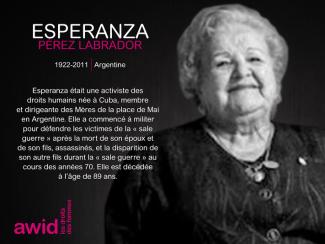
Esperanza Pérez Labrador
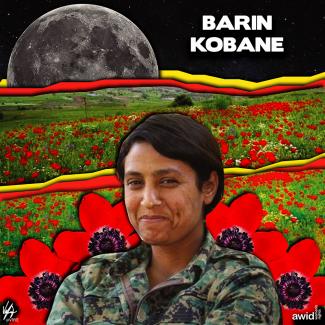
Barin Kobane
Barin integraba la unidad de batalla formada íntegramente por mujeres de la Unidad de Protección del Pueblo Kurdo (YPG).
La mataron cuando estaba en servicio activo.
La periodista libanesa Hifaa Zuaiter escribió: «Barin representa todo lo que hemos oído acerca del coraje de las combatientes kurdas, y su muerte es mucho más que el matar a un rival o el resultado de una lucha política o étnica. El horror de exhibir su cuerpo sólo porque es una mujer surge del hecho de que ella se atrevió a amenazar la hegemonía masculina al convertirse en una combatiente en un campo de batalla que se suponía era solo para hombres».
Margo Okazawa-Rey
Biography
Dr. Margo Okazawa-Rey ocupa la Cátedra Distinguida Barbara Lee en Liderazgo de Mujeres y es Profesora visitante de Estudios de Mujeres, Género y Sexualidad, y de Políticas Públicas en Mills College, en Oakland, California. También es Profesora Emérita en la Universidad Estatal de San Francisco.
Sus principales áreas de investigación y activismo durante los últimos 25 años han sido el militarismo, los conflictos armados y la violencia contra las mujeres, examinados de manera interseccional. La profesora Okazawa-Rey participa en el Consejo Consultivo Internacional de Du Re Bang en Uijongbu, Corea del Sur; en la Junta Internacional de Mujeres de Paz en el Mundo (PeaceWomen Across the Globe) en Berna, Suiza; y es co-presidente de la Junta del Centro Highlander para la Investigación y Educación en New Market, Tennessee, EE. UU.
Sus publicaciones recientes incluyen “Nation-izing” Coalition and Solidarity Politics for US Anti-militarist Feminists [«Coalición “nacio-nalizadora” y políticas de solidaridad para las feministas antimilitaristas de EE. UU.»], en prensa; “No Freedom without Connections: Envisioning Sustainable Feminist Solidarities” [«No hay libertad sin conexiones: contemplando solidaridad feminista sostenible»] (2018) in Feminist Freedom Warriors: Genealogies, Justice, Politics, and Hope [«Guerreras feministas por la libertad: genealogías, justicia, política y esperanza»], Chandra Talpade Mohanty and Linda Carty (eds.); Between a Rock and Hard Place: Southeast Asian Women Confront Extractivism, Militarism, and Religious Fundamentalisms [«Entre la espada y la pared: Las mujeres del sudeste asiático enfrentan el extractivismo, el militarismo y los fundamentalismos religiosos»] (2018); “Liberal Arts Colleges Partnering with Highlander Research and Education Center: Intergenerational Learning for Student Campus Activism and Personal Transformation,” Feminist Formations Special Issue on Feminist Social Justice Pedagogy (2018) [«Las universidades de artes liberales se asocian con el Centro Highlander para la Investigación y Educación: aprendizaje intergeneracional para el activismo estudiantil y la transformación personal», número especial de Formaciones Feministas sobre pedagogía de la justicia social feminista]
Position
Presidenta
Add to stories
Off
Snippet FEA lines of work Against (EN)

LABOR RIGHT VIOLATIONS
Snippet - WITM Our objectives - RU
Задачи исследования «Где деньги?»:
1 |
Предоставить членам AWID, партнерам и донорам обновленный, мощный, основанный на фактических данных и ориентированный на конкретные действия анализ ресурсных реалий феминистских движений, а также текущего состояния экосистемы финансирования феминистских инициатив. |
2 |
Выявить и продемонстрировать возможности для увеличения и улучшения финансирования феминистских организаций, выявить ошибочные решения и препятствовать тенденциям, приводящим к нехватке финансирования и/или противоречащим гендерной справедливости и межсекторальным феминистским повесткам. |
3 |
Сформулировать феминистское видение, предложения и программы по обеспечению ресурсами. |
Sala de prensa
AWID en los medios
Compilación de noticias sobre la organización y/o el trabajo de AWID
- Presentan disco con canciones para reír y reivindicar. La Nación, may 2018
- Día Internacional de la Mujer: la realidad de las mujeres latinoamericanas. La opinión digital, mar 2018
- Para fortalecer la resistencia global, hay que dar recursos a lxs jóvenes feministas. Open Global Rights, nov 2017
- Llamado mundial a las mujeres frente a la reunión de la OMC. Bilaterals, nov 2017
- Tejiendo la resistencia a través de la acción: Las estrategias de las Defensoras de Derechos Humanos contra las industrias extractivas. Movimiento 4, sep 2017
- Romani: banca internacional habilita a que se “lave olímpicamente” el dinero del narcotráfico. La diaria, ago 2017
- Global: Nueva guía y reporte sobre acciones de defensoras de derechos humanos ante proyectos extractivos empresariales. Business and human rights resources, ago 2017
- Cumbre sobre el Mundo del Trabajo: Un futuro mejor para las mujeres en el trabajo. Organización Internacional del Trabajo, jun 2017
- “Los Movimientos Importan”, arte visual colectivo en favor de las mujeres. El heraldo de Saltillo, mar 2017
- Violencia de género contra las mujeres en los medios, y la necesidad del activismo cotidiano. IFEX, dic 2016
- Ahora más que nunca. La razón, sep 2016
- Brasil: Cerró ayer la mayor conferencia sobre derechos de las mujeres. Fondo indígena, sep 2016
- Alerta Máxima Feminista ante involución de derechos de las y los migrantes en la 46 ª Conferencia de Población y Desarrollo. Calala, may 2015
- Todas las personas podemos ser defensoras de los Derechos Humanos de las mujeres. ALC noticias, ene 2015
Notas de prensa
Notas de prensa, dosieres y kits
Kits de social media
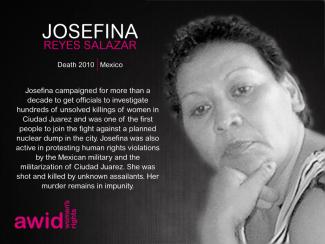
Josefina Reyes Salazar
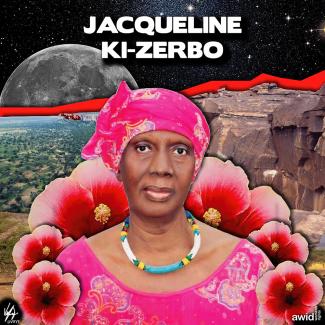
Jacqueline Coulibaly Ki-Zerbo
Jacqueline était une éducatrice malienne pionnière de la cause féministe et nationaliste.
Elle a d’abord enseigné l'anglais au Sénégal avant d'être recrutée en 1961 par le Lycée Philippe Zinda Kaboré à Ouagadougou, au Burkina Faso. Etant donné son engagement militant, elle a pris part au soulèvement populaire du 3 janvier 1966. Entre 1961 et 1966, Jacqueline était par ailleurs responsable de la presse syndicale, La voix des enseignants. Elle a été nommée directrice du Cours normal des jeunes filles (aujourd’hui connu sous le nom de lycée Nelson Mandela) jusqu'en 1974 et s'est consacrée à l'éducation des filles et à la promotion des droits des femmes.
En 1984, elle a reçu le prix Paul G. Hoffmann pour sa contribution remarquable en matière de développement national et international.
Claudia Montserrat Arévalo Alvarado
Biography
Claudia est Professeure en Egalité et équité pour le développement, psychologue féministe, activiste en faveur de la défense des droits humains depuis 30 ans et des droits des femmes depuis 24 ans.
Claudia, qui travaille au Salvador, est co-fondatrice et directrice générale de l’association Mujeres Transformando, et défend depuis 16 ans les droits du travail des travailleuses du secteur des maquiladoras textiles et de l’habillement. Elle a collaboré à la formulation d’initiatives législatives, à des propositions de politiques publiques et de recherches visant à améliorer la qualité de l’emploi pour les femmes travaillant dans ce secteur, en plus de travailler sans relâche au renforcement de l’organisation et de l’autonomisation des ouvrières des maquiladoras textiles et des couturières à domicile.
Elle participe activement à des actions de plaidoyer à l’échelle nationale, régionale et internationale pour la défense et la revendication des droits du travail de la classe ouvrière du Sud mondial d’un point de vue féministe, anticapitaliste, anti-patriarcal et dans une perspective de prise de conscience de la classe et du genre. Elle fait partie du Conseil d'administration de l'Initiative Spotlight et du Groupe national de référence de cette dernière. Elle fait également partie du Groupe consultatif de la société civile de l'ONU Femmes.
Position
Co-président
Add to stories
Off
Snippet FEA Wage Parity (ES)

PARIDAD SALARIAL
لماذا عليّ أن أفكر بتعبئة الاستطلاع؟
هنالك العديد من الأسباب لتعبئة الاستطلاع منها أنه لديك الفرصة لمشاركة تجربتك المعاشة المتعلقة بحشد الموارد لدعم تنظيمك، أن تعمل/ين من منطلق قوة كخبير/ة بما يتعلق بالأموال ولأين تتحرك ولأين تصل وبذلك المشاركة بالجهد المشترك والمناصرة لتحريك التمويلات الأكبر والأفضل. لقد أثبت استطلاع "أين المال" في العشرين عام الأخيرة أنه مصدر أساسي للشركاء/ الشريكات وكذلك للممولين/ات. ندعوك من كل قلبنا للمشاركة بالنسخة الثالثة لتسليط الضوء على الوضع الفعلي للموارد، وتحد الحلول الخاطئة، والإشارة إلى كيفية تغيير التمويل حتى تزدهر الحركات وتواجه التحديات المعقدة في عصرنا.
Reason to join 2
Encuentra y crea conexiones. AWID cuenta con más de 9000 afiliadxs, todxs dedicadxs a abordar cuestiones complementarias e interconectadas. En esta diversidad se apoya la sostenibilidad de los movimientos y actorxs feministas.
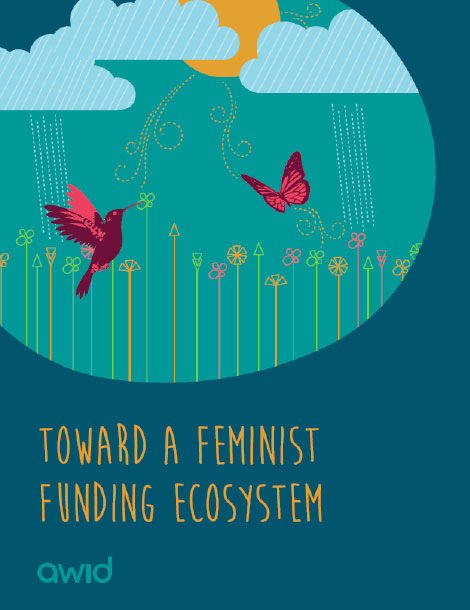
Here are your report and infographics: Toward a feminist funding ecosystem
Download the full guide
Click on the image to open the PDF
 |
Download the individual infographics
Where we are now |
Where we want to be |
Current funding by sector |
 |
 |
 |
| Download & share | Download & share | Download & share |
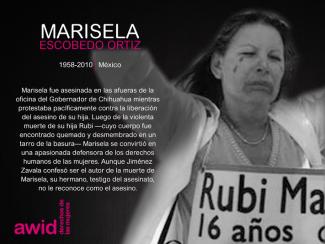
Marisela Escobedo Ortiz
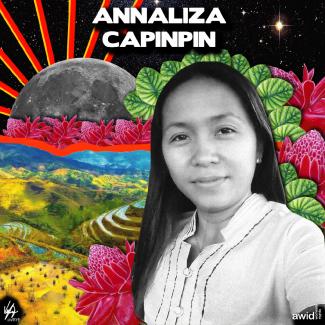
Annaliza Dinopol Gallardo Capinpin
Known as “Ate Liza,” Annaliza was the president of the Agrarian Reform Council for Mindanao Pioneers, an umbrella group in Tacurong City, Philippines.
A loved mother of four, teacher and community leader, Annaliza is remembered by her community as “she who leads when no one wants to lead, she who talks when no one wants to talk, she who stood with courage to help the agrarian reform beneficiaries to own lands.”
Annaliza was shot dead by unknown assailants in front of the Sultan Kudarat State University (SKSU) while on her way to Salabaca National High School in Esperanza.
Her family have said “Naghihintay pa rin kami ng hustisya para sa kanya” (we are still waiting justice for her).
Patience Chabururuka
Biography
Patience is a global human resources professional with over a decade of experience in human resources (HR) management in the not-for-profit sector. Patience previously worked at Mercy Corps as the Global HR Officer for Africa supporting the full employee life cycle for expatriates in the Eastern and Southern African region and provided HR technical guidance to Human Resources leaders in country offices within the African region. Before joining the global people team, she was the Country Human Resources and Safeguarding Focal Point, she was part of the senior management team leading on all human resources and safeguarding matters. Prior to Mercy Corps she led the HR and Operations department at SNV Netherlands Development Organization and was a member of the country management team. She also has HR Consultancy experience which she gained while she was still studying for her BSc Honors degree in Human Resource Management. She has a passion for HR, loves working with people and she takes wellbeing and safeguarding as her core values and in her professional work. As someone who loves sports, you can also find Patience at the basketball court, the tennis court or on the soccer field.
Position
Human Resources Coordinator
Add to stories
Off
Snippet FEA Map of Spain Union Otras (FR)