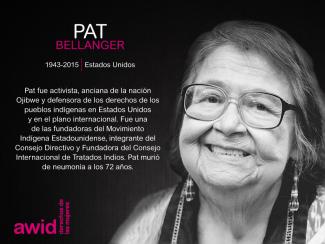
Pat Bellanger
Esta sección de análisis especial ofrece un análisis feminista crítico y acceso a los recursos clave relacionados con la «protección de la familia» en los espacios internacionales de derechos humanos.
Durante los últimos años, venimos observando una nueva y preocupante tendencia en el ámbito internacional de derechos humanos, donde se están empleando discursos sobre la «protección de la familia» para defender violaciones cometidas contra miembros de la familia, de modo de reforzar y justificar la impunidad y para coartar la igualdad de derechos en el seno de la familia y la vida familiar.
La campaña para «proteger a la familia» es impulsada por proyectos conservadores que tienen como fin imponer interpretaciones «tradicionales» y patriarcales de familia; quitando los derechos de las manos de sus miembros para ponerlos en las de la institución «familia».
Desde 2014 un grupo de estados opera como bloque en espacios de derechos humanos, bajo el nombre «Group of Friends of the Family» [Grupo de amigos de la familia], y a partir de entonces se han aprobado resoluciones sobre la «Protección de la familia» todos los años.
Esta agenda se ha extendido más allá del Consejo de Derechos Humanos (HRC, por sus siglas en inglés). Hemos visto cómo el lenguaje regresivo sobre «la familia» se ha introducido en la Comisión de la Condición Jurídica y Social de las Mujeres (CSW, por sus siglas en inglés), y hemos asistido a intentos por incluir este lenguaje en las negociaciones sobre los Objetivos de Desarrollo Sostenible.
AWID trabaja con asociadxs y aliadxs para resistir conjuntamente las agendas regresivas de «Protección de la familia» y otras, y para defender la universalidad de los derechos humanos.
En respuesta a la creciente influencia de actores regresivos en los espacios de derechos humanos, AWID se ha unido con aliadxs para formar el Observatorio de la Universalidad de los Derechos (OURs, por sus siglas en inglés). OURs es un proyecto colaborativo que monitorea, analiza y comparte información sobre iniciativas anti-derechos tales como la «Protección de la familia».
Derechos en Riesgo, el primer informe de OURs, traza un mapa de los actores que conforman el cabildeo global anti-derechos e identifica sus discursos y estrategias principales, señalando los efectos que estos discursos y estrategias están teniendo sobre nuestros derechos humanos.
El informe expone a la «Protección de la familia» como una agenda que ha promovido la colaboración entre una amplia gama de actores regresivos en las Naciones Unidas. La describe como un marco estratégico que aloja «múltiples posiciones patriarcales y anti-derechos, cuyo marco, a su vez, apunta a justificar e institucionalizar estas posiciones».
"Pero, ¿ fue el maestro alguna vez
seducido por el poder?
¿Alguna vez se rompió
un sistema con aceptación ?
¿Cuándo el JEFE te entregará el poder con amor?
¿En Jo'Burg, en Cancún o en la ONU? - Molara Ogundipe
A través de los diferentes continentes y países, la profesora Ogundipe enseñó literatura comparada, escritura, género y filología inglesa, y utilizó la literatura como vehículo para la transformación social y el replanteamiento de las relaciones de género.
Molara Ogundipe, como pensadora, escritora, editora, crítica social, poeta y activista feminista, logró combinar el trabajo teórico con la creatividad y la acción práctica. Se la considera una de las principales voces críticas de los feminismos africanos, los estudios de género y la teoría literaria.
Molara acuñó el concepto de "estiwanismo" a partir de las siglas STIWA (Social Transformations in Africa Including Women) [Transformaciones Sociales en África Incluyendo a las Mujeres], con el fin de reconocer la necesidad de “alejar la definición del feminismo y los feminismos en relación con Euro-América u otro lugar, y declamar lealtades o deslealtades". Con su obra fundamental, "Recreándonos Nosotras Mismas", de 1994, Molara Ogundipe (publicada bajo el nombre de Molara Ogundipe-Leslie) dejó tras de sí un inmenso cuerpo de conocimientos que descolonizó el discurso feminista y "re-centró a las mujeres africanas en sus completas y complejas narrativas... guiadas por una exploración de la liberación económica, política y social de las mujeres africanas y la restauración de la agencia femenina en las diferentes culturas de África".
Comentando los retos a los que se enfrentó como joven académica, dijo:
"Cuando empecé a hablar y escribir sobre el feminismo a finales de los años sesenta y en los setenta, se me veía como una chica buena y admirable que se había extraviado, una mujer cuya cabeza se había arruinado con un exceso de aprendizaje".
Molara Ogundipe se destacó por su liderazgo a la hora de combinar el activismo con el mundo académico; en 1977 fue una de las fundadoras de la Asociación de Mujeres en la Investigación y el Desarrollo, AAWORD (por sus siglas en inglés),. En 1982 fundó Mujeres en Nigeria, WIN (por sus siglas en inglés), con el fin de abogar por un acceso pleno a los "derechos económicos, sociales y políticos" para las mujeres nigerianas. Posteriormente, estableció y dirigió la Fundación Internacional para la Educación y el Monitoreo y pasó muchos años en el consejo editorial del periódico The Guardian.
Luego de haber crecido con el pueblo yoruba, sus tradiciones, cultura e idioma, dijo una vez:
"Creo que la celebración de la vida, de las personas que mueren después de una vida llena de logros, es uno de los aspectos más hermosos de la cultura yoruba".
El nombre de alabanza yoruba 'Oiki' de Molara era Ayike. Molara nació el 27 de diciembre de 1940 y falleció el 18 de junio de 2019 a la edad de 78 años, en Ijebu-Igbo, Estado de Ogun, Nigeria.
Our women ancestors form a circle
Sacred, alive, powerful
We are in the middle
Feeling their strength.
The drum beats a sound of earth
Our skin dresses in colours
We are green, red, orange, blue, violet, black
The drum beats a sound of earth
A voice vibrates, a scream emanates, a song rings out, lulling to sleep, awakening consciousness.
The drum beats a sound of earth
A gaze of complicity, friendship profound.
The drum beats a sound of earth
Ours is but one heart, beating a rhythm of the soul, inviting us to move, inspiring desire, and showing us a path.
One of communal togetherness, power of the people, self-government, a women’s revolution of subversive communal care.
The drum beats a sound of earth
And I invite you to join, to be voice, skin, gaze, seed, fire, song, communion.
The drum beats a sound of earth
And I invite you to discover it, to love it, to know it, and to defend it from the heart of the community
For 25 years they have lived along the same dusty streets, at the top of a hill named after a lion. They come from different places, many from traditional farming communities. Their skin is the colour of rebellion, the colour of a cardon cactus, because in them lives the spirit of the semi-arid Lara State, which is where their love for life comes from, their appreciation, care and protection of water and land. They are heiresses of the Gayon and Ayaman lineages, Indigenous communities that lived and live in the northern part of Lara State.
From the time they were very young they learned that maternity is a role from which it is not easy to escape. Caring for children, home and husband, washing, ironing, cooking, cleaning—everything had to be impeccable, people insisted.
And that was life—that and violence, insults, abuse, hitting, scheming, complaints were to be expected. It seemed almost natural, and that is how they spent their days. Everyday life on those dirt streets living in little houses of tin sheet metal without any electricity or running water. That was poverty, the precarity of when a man would arrive, yes, a man, a project. And then, an unusual revolution because it came about without war.
Then they were invited to go out, they were invited to take to the streets and occupy public space. In the process, the women tore down doors and windows, broke chains, let their hair down and they felt free, free like runaway slaves, Caribbean rebels, freedom fighters.
And those concepts of independence and sovereignty are something that those who had the chance to study had read about, but feeling it, feeling like the protagonists of a process of social transformation—that is an important victory that we have to mention and we cannot forget.
At the top of that hill one can feel the complicity, the shared fire, the years of struggle. They tell of how one of them would go around with her parasol in the afternoons from house to house having coffee and conversing with the people she would invite, convincing them
We are going to make a community council!
Let’s move forward together as a community!
Let’s make plans for education, sports, health, nutrition, a women and gender equality committee, the economy.
We can form our own People’s Government so our Neighbourhood can Be Beautiful!
And that is how the houses came, the doctor’s office, daycare, electricity, potable water. These are some of the community’s achievements, some of our common dreams come true.
And you might ask how a cuentera, a storyteller, made her way to a hill with the name of a lion
And I will tell you: it’s that I was born rowdy, always fighting, I was born a wanderer my grandmother would say, born ready Comandante Chavez would add, from so much walking, grumbling, fighting, and doubting that military man, that I would end up becoming convinced by the community project, by the idea of self-government, of the people managing their own resources, of all the power going to the communities, and so I was convinced.
But I knew something was missing because the women, the women of the community kept building up the people’s power and putting our hearts in the anti-imperialist and anti-capitalist fight, but there is something that hurts and continues to affect us. There are wounds from a patriarchy still present.
So one day, I found myself crying and the drum of the earth beat and our women ancestors spoke.
I found myself surrounded by a group of women who held me up, who contained me as I spilled over in front of them, as it both hurt and liberated me at the same time. That is how I discovered that love among women heals you, saves you, and that our friendship is profoundly political and that sisterhood is a way of being, of living life. From that moment on I never felt alone again, I never felt like an island again, because I know there is a group of women who carry me, bring me, love me, care for me and me for them. I know that this way of becoming a feminist with the mysticism of women loving life is an experience of feeling connected and loved by women, even if you never see them again. How not to want this that happened to me, to happen also to other women, this new beginning, this birth of a new heart is a gift from the goddesses that must be shared.
So I decided to join the women and I began walking from community to community to learn about others’ experiences. We began debating health, education, nutrition, we began preaching the anti-patriarchal word and calling for communities free of machismo. We insisted on recovering ancestral knowledge, intuition, we decided to defend life by talking about abortion and we found ourselves laughing, crying, debating, reflecting. I find myself with Macu, with the China, Yenni, Carolina, Maria, Ramona, Irma, and even with our sister Yenifer who left us not long ago.
This is my homage to them, the women of the hill, the lioness women, the ones who without a doubt have sown a seed in me with so much force it now beats with my heart.
Without a doubt they blaze a path, they are the ones who make caring for a family possible, collective care. They are also a force, a force in a territory that fights to overcome the embargo, the patriarchal violence, the political treason, to overcome the bureaucracy and the corruption.
Without a doubt they blaze a path
Without a doubt they are a compass
Without a doubt they are the heart of the community
Thank you.
All our change processes rely on the relationships we build at spaces like the AWID Forums where you dance together, your humour comes through, your real self, you tell stories. That is what makes the difference.
- Nicky Mcintyre, USA

Una investigación personal sobre la misteriosa vida de Sally (la tía de la directora), una aristócrata etíope que se convirtió en rebelde comunista y desapareció luego de la revolución que llevó al derrocamiento del Emperador Haile Selassie.
23 de junio a las 12:30 pm EST en IG Live
Publication de la version zéro du document final, mars 2015
Yamile Guerra était une avocate bien connue, leader communautaire et activiste politique dans la région de Santander en Colombie.
Activement impliquée dans la résolution de litiges entre les communautés locales et les promoteurs immobiliers, elle s’est battue contre l’appropriation des terres illégale. Yamile a occupé plusieurs fonctions politiques, dont celle de secrétaire générale du gouvernement de Santander à Bogota, et s’était également présentée comme candidate à la mairie de Bucaramanga. Au cours des dernières années de sa vie, Yamile s’était de plus en plus impliquée dans les causes environnementales, et particulièrement celle de la défense de la biodiversité des zones humides de Santurbán, une région qui approvisionnait près de deux millions de personnes en eau potable, contre les promoteurs du développement économique.
D’après sa famille et ses ami·e·s, Yamile recevait quotidiennement des menaces de mort et avait demandé la protection des autorités.
« Elle était tout à fait consciente de la question [du litige foncier] et avait à plusieurs reprises mentionné qu’elle se sentait en danger. » - Alixon Navarro Muñoz, journaliste et amie de la famille Guerra
Le 20 juillet 2019, Yamile a été tuée par balles par deux hommes à Floridablanca, Santander. Elle venait de clore une discussion avec eux en lien avec le litige foncier. Un suspect a ensuite été arrêté pour son meurtre, lequel a admis avoir été payé pour organiser son assassinat. Selon des rapports, Yamile est la troisième membre de sa famille a avoir été assassinée, en lien avec des litiges fonciers. Son père, Hernando Guerra, avait lui aussi été assassiné plusieurs années auparavant.
L’assassinat de Yamile s’inscrit dans une vague de violences et de meurtres systématiques de centaines d’activistes sociaux et défenseur·e·s des droits humains en Colombie. L’Institut d’études sur le développement et la paix (INDEPAZ) rapporte qu’au moment du décès de Yamile, plus de 700 leaders communautaires et activistes pour les droits humains ont été tué·e·s depuis la signature en août 2016 d’un traité de paix par la Colombie. La plupart furent assassiné·e·s pour s’être opposé·e·s à des trafics de drogue et des opérations minières; y compris les peuples autochtones, les Afro-Colombiens et les défenseures des droits humains étant les plus exposé·e·s.
Moins d’une semaine après le décès de Yamile, des milliers de Colombien·ne·s ont manifesté dans les petites et grandes villes, brandissant des photos en noir et blanc d’activistes tué·e·s, et sur lesquelles était écrit : « Il ne peut y avoir de paix sans leaders » et « Fini les bains de sang ».
Yamile Guerra n’avait que 42 ans au moment de son assassinat.
Por Marianne Mesfin Asfaw
Tengo muchos recuerdos queridos de mi recorridofeminista, pero hay uno en particular que se destaca. Fue durante mi época en la escuela de posgrado, una conferencia a la que asistí como parte de un curso de Teoría Feminista. La conferencia trataba sobre feminismo africano y, en ella, la profesora habló de la historia del panafricanismo, de su carácter patriarcal, centrado en los hombres, y de cómo los estudiosos panafricanistas perpetuaban el borramiento de las mujeres africanas. La conferencista señaló que las contribuciones de las mujeres africanas a las luchas anticoloniales y descoloniales en el continente rara vez, o nunca, se analizany no se les da el debido crédito. Leímos acerca de las académicas feministas africanas que desafían ese borramiento y dan a conocer activamente las historias de los movimientos y los esfuerzos de resistencia liderados por mujeres africanas. Parecetan sencillo, pero lo que más me llamó la atención fue que alguien juntara las palabras africana y feminista. Mejor aún: descubrir que había muchas más de nosotras ahí afuera, luchando contra las complicaciones de la historia, la política y las normas sociales en distintos rincones del continente, y que todas estábamos utilizando una perspectiva feminista para hacerlo. Salí de esa conferencia conmovida y completamente alucinada. res de mis amigas (todas feministas africanas) y yo nos quedamos un rato comentando fuera del aula. Todas estábamos impresionadas por la genialidad de la conferencia y su contenido pero, sobre todo, sentimos que estábamos siendo tenidas en cuenta. Ese sentimiento fue el que más me llamó la atención.
Enamorarse del feminismo fue electrizante. Fue como sentir que por fin puedes hablar con la persona que te gusta desde hace mucho tiempo y descubres que también le gustas. Lo llamo mi enamoramiento porque durante la escuela secundaria me consideraba feminista pero sentía que no sabía lo suficiente sobre el tema. ¿Había una forma correcta de ser feminista? ¿Y si no lo estaba haciendo bien? Cuando asistí a mi primera conferencia de Estudios de las Mujeres obtuve respuestas para algunas de estas preguntas. Fue emocionante conocer historias de resistencia feminista y de desmantelamiento del patriarcado. Me sentí muy afirmada y validada, pero también sentí que algo me faltaba.
Profundizar mi relación con el feminismo a través de la academia en una institución en la que el estudiantado y el personal docente eran en su mayoría blancx, significó que, durante esos primeros años, me diera cuenta de que rara vez hablábamos sobre cómo la raza y la antinegritud se ponen en juego en los movimientos feministas hegemónicos. En la mayoría de las asignaturas teníamos tal vez una semana, o peor aún, una clase, dedicada a la raza donde por lo general leíamos algo de bell hooks, el trabajo de Kimberly Crenshaw sobre interseccionalidad, y tal vez, a Patricia Hill Collins. A la semana siguiente volvíamos a dejar de lado el tema. Lidié con todo esto dándole un lugar central a la raza y al feminismo negro en casi todas mis tareas, escribiendo sobre el pelo negro y las políticas de respetabilidad, la hipersexualización de los cuerpos de las mujeres negras, y mucho más. Con el tiempo me di cuenta de que intentaba llenar un vacío, pero no sabía muy bien cuál era.
El momento en que el círculo se cerró de manera perfecta fue cuando descubrí que había un feminismo africano y lo estudié. Me di cuenta de que teníamucho más por aprender, principalmente que mi africanidad y mi práctica feminista no tenían por qué estar separadas. Al contrario: tenían mucho que aprender la una de la otra, y había feministas africanas que ya estaban haciendo este trabajo. Esa era la pieza que faltaba y que me fue tan esquiva durante mi exploración del feminismo a lo largo de mi carrera académica.
Para mí, el feminismo es la antítesis de la apatía social y política. También significa que una vez que adoptas una perspectiva feminista, nada puede ser igual. Con mis amigas solíamos decir que era como ponerse unos anteojos que nunca te puedes quitar porque ahora ves el mundo tal y como es, con todos sus desastres. Desastres que no puedes ignorar ni dejar de lado. Es por eso que mi compromiso con el movimiento feminista es no dejar nunca de aprender, seguir ampliando el alcance de mi empatía y no vivir nunca de forma pasiva. Dedicar más tiempo y espacio en mi vida a los movimientos feministas, y seguir amplificando, celebrando, documentando y citando el trabajo de las feministas africanas. También me comprometo a darle un lugar central al cuidado y a dar prioridad al placer en este recorrido feminista porque no podemos sostener nuestros movimientos sin esto.
Cada Foro se lleva a cabo en una región diferente, ¡y es hora de que el Foro de AWID regrese a Asia! Visitamos muchos países de la región, consultamos a los movimientos feministas y realizamos evaluaciones detalladas de logística, accesibilidad, seguridad, visas y más. Finalmente, la Junta Directiva de AWID aprobó con entusiasmo Bangkok, Tailandia, como la mejor opción. Nos sentimos muy emocionadxs de volver a Bangkok, donde celebramos el Foro de AWID en 2005.
Today, a complex and evolving network of anti-rights actors is exerting more influence in international and regional spaces as well as domestic politics. Anti-rights actors are entering multilateral spaces (spaces where multiple countries come together for international collaboration) to transform and undermine them from the inside out. They employ a range of persuasive discourses to gain legitimacy, often co-opting the language of rights and justice to hide their true agendas.
This report is the second in a series on human rights trends reports produced by the Observatory on the Universality of Rights (OURs). As well as analysis of key anti-rights actors, discourses, strategies, and impacts, the report features inspiring short stories of feminist action, and knowledge-building exercises to help strengthen our collective resistance.
The effect on our rights has already been grave, but this is not a done deal. We can all play a part in resisting anti-rights agendas and reclaiming our rights.
Join the collective call-to-action today!

Filter your search by funders from different sectors i.e., philanthropic foundations, multilateral funders, women’s and feminist funds
Development financing has specific threats and opportunities for women's and all people’s human rights. Transformative development financing and policies can make an important contribution to the systemic changes that are needed to ensure the respect, protection and fulfillment of women’s human rights.
2015 is an important year for the FfD process. The Third International Conference on FfD took place from 13-16 July 2015 in Addis Ababa, Ethiopia and governments are finalising the post-2015 development agenda including agreements on how the new Sustainable Development Goals will be financed.
The current stage of the FfD process is an important opportunity to establish a financing framework that will ensure effective financing for the implementation of the post 2015 agenda and the Sustainable Development Goals (SDGs). It is also an opportunity to address the structural conditions, and systemic changes needed, for the full implementation of other agendas and commitments such as Human Rights Conventions, and the Beijing Platform for Action.
Over the last 13 years, women’s rights and feminist organizations have actively engaged in the FfD process.
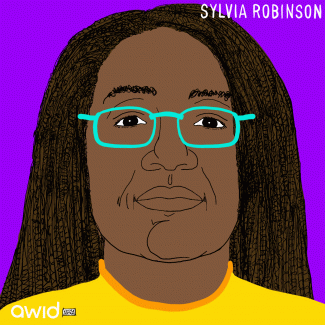
"Life is...about living in joy - waking up with purpose, feeling our creative energy, answering your calling." - Sylvia Robinson
This hub and performance space combine education, civic engagement, arts, social and spiritual services, and sustainable environmental practices. Sylvia envisioned it as a home where “there was a balance and synergy with the activities that people needed in order to sustain life.”
She was also one of the founding members of the Georgia Avenue Community Development Taskforce, a neighborhood group that works on social justice and organizing in Northwest DC to make sure the community has a voice in redevelopment and gentrification in the area.
“We're asking for affordable housing. We're asking that the small businesses that have been here for a long time don't get wiped out by new retail. We're asking for green space and space for people to get together to socialize. We're asking for streetscape improvements—better roads and lighting in the corridor.” - Sylvia Robinson about the Taskforce
Prior to becoming an organizer and after receiving a degree in computer science, Sylvia worked in air traffic control systems for over a decade. She then moved into drug and alcohol counselling, becoming increasingly engaged in community work.
“It was my call to be involved in community.” - Sylvia Robinson
Born in Washington D.C. on 14 August 1961, Sylvia passed away on 18 September 2017 after a battle with cancer.
“Sylvia's spirit and legacy will continue to inspire this community for many years to come.” - ECAC