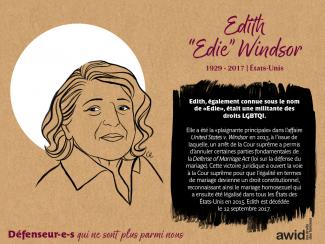
Francisca das Chagas Silva
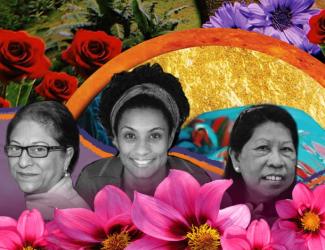
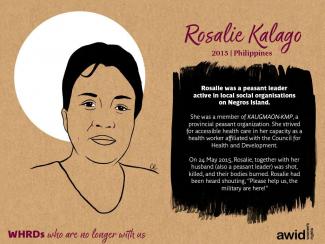
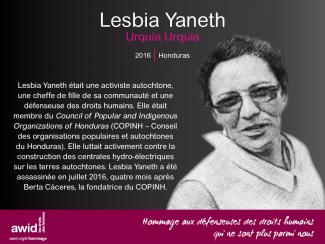
L’hommage se présente sous forme d’une exposition de portraits d’activistes du monde entier qui ne sont plus parmi nous qui ont lutté pour les droits des femmes et la justice sociale.
Cette année, tout en continuant à convoquer la mémoire de celleux qui ne sont plus parmi nous, nous souhaitons célébrer leur héritage et souligner les manières par lesquelles leur travail continue à avoir un impact sur nos réalités vécues aujourd’hui.
49 nouveaux portraits de féministes et de défenseur·e·s viennent compléter la gallerie. Bien que de nombreuses des personnes que nous honorons dans cet hommage sont décédé·e·s du fait de leur âge ou de la maladie, beaucoup trop d’entre iels ont été tué·e·s à cause de leur travail et de qui iels étaient.
Visiter notre exposition virtuelle
Les portraits de l'édition 2020 ont été illustrés par Louisa Bertman, artiste et animatrice qui a reçu plusieurs prix.
L’AWID tient à remercier nos membres, les familles, les organisations et les partenaires qui ont contribué à cette commémoration. Nous nous engageons auprès d’elleux à poursuivre le travail remarquable de ces féministes et défenseur·e·s et nous ne ménagerons aucun effort pour que justice soit faite dans les cas qui demeurent impunis.
« Ils ont essayé de nous enterrer. Ils ne savaient pas que nous étions des graines » - Proverbe mexicain
Le premier hommage aux défenseur-e-s des droits humains a pris la forme d’une exposition de portraits et de biographies de féministes et d’activistes disparu·e·s lors du 12e Forum international de l’AWID en Turquie. Il se présente maintenant comme une gallerie en ligne, mise à jour chaque année.
Depuis, 467 féministes et défenseur-e-s des droits humains ont été mis·es à l'honneur.
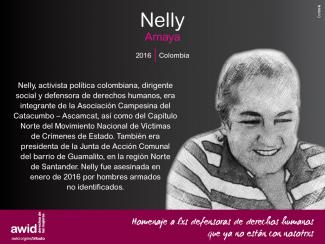
Suivez la campagne:
Rejoignez-nous
Devenir membre| Rejoignez notre communauté
Ne ratez rien des actualités
Abonnez-vous pour les actualités
Des questions ?
Contactez : communications @ awid.org
Graphismes basés sur des illustrations de Vectorarte.
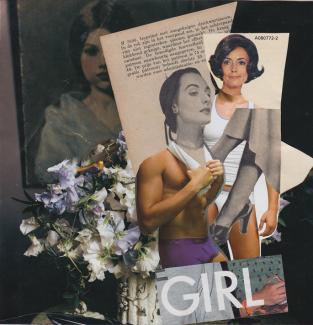
Bunga ou fleur en francais est un symbole qui est souvent associé aux femmes en Indonésie. Ce qui signifie qu'une fleur peut également être associée aux femmes transgenres. Parce que les femmes transgenres sont des femmes. Aussi belles, aussi fortes, l’une comme l’autre a vécu sans attendre d'être "cueillie", mais en grandissant, en s'épanouissant et en mourant à sa guise. Cette œuvre est un hommage à mes ami·e·s transgenres à l'occasion de la Journée Internationale de la Visibilité des Personnes Transgenres.
يومَ دعتني أنجليكا وفابي لأكون القَيِّمة على تشكيلة نصوص شبقية من تحرير نسوة سود لم أكن أعرف ما يعنيه عملُ القيِّم. الشبق ومشتقاته، هذه فهمتها جيداً، لكن عمل القَيِّم...
The rights of the child (EU & GRULAC)
Birth registration and the right of all to recognition as a person before the law (Mexico, Turkiye)
Adequate housing as a component of the right to an adequate standard of living and the right to non-discrimination in this context (Germany, Finland)
Negative impact of unilateral coercive measures on the enjoyment of human rights (Non-Aligned Movement)
Effects of foreign debt and other international financial obligations on the enjoyment of human rights (mandate renewal) (Cuba)
Rights of persons with disabilities, digital technologies, and inclusive disability infrastructure (Mexico, New Zealand)
Rights of the child (focus: Children in armed conflict) (Uruguay on behalf of a group of States from Latin America and the Caribbean and European Union)
Right to work (Egypt, Greece)
Right to food (Cuba)
Promotion of the enjoyment of cultural rights of all and respect for cultural diversity (Cuba)
Human rights situation in the Occupied Palestinian Territory, including East Jerusalem and the obligation to ensure accountability and justice (Organisation of Islamic Cooperation)
Right of the Palestinian people to self-determination (Organisation of Islamic Cooperation)
Israeli settlements in the Occupied Palestinian Territory, including East Jerusalem and in the occupied Syrian Golan (Organisation of Islamic Cooperation)
While fundamentalisms, fascisms and other systems of oppression shapeshift and find new tactics and strategies to consolidate power and influence, feminist movements continue to persevere and celebrate gains nationally and The rising power of anti-rights actors is not happening in a vacuum. Understanding the rise of ultra-nationalism, unchecked corporate power, growing repression, and diminishing civic space is key to contextualize the anti-rights threats we face today.
Today, considerably more than half of the world’s population is governed by far-right leaders. Against this backdrop, human rights defenders and feminists are working hard to “hold the line” and protect multilateralism and the international human rights system. They also face the risk that their engagement may bring with it violent reprisals. At the same time, these institutions are increasingly subject to private sector interests. Large businesses, particularly transnational corporations, are occupying seats at the negotiating table and leadership positions in a number of multilateral institutions, including the UN. This nexus of ultra-nationalism, closing civic space, and corporate capture is having a tremendous impact on whether human rights for all can ever be achieved.
المستشفيات مؤسسات، ومواقع حيّة للرأسمالية، وما يحدث عندما يكون من المفترض أن يستريح شخصٌ ما ليس إلّا نموذجاً مصغّراً من النظام الأكبر.
Contenido relacionado
Reporteros sin Fronteras: India: Asesinada la periodista Gauri Lankesh
Global Voices: Asesinan a Gauri Lankesh, periodista crítica con la derecha india, a la entrada de su casa
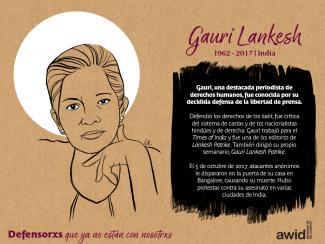
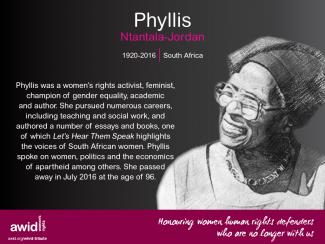
Enciende tu fuego feminista leyendo nuestras investigaciones y publicaciones varias sobre financiamiento, defensoras de derechos humanos, construcción de movimientos, fundamentalismos, justicia económica, seguimiento y evaluación feminista y más
Mientras los fundamentalismos, los fascismos y otros sistemas de opresión cambian de forma y encuentran nuevas tácticas y estrategias para consolidar su poder e influencia, los movimientos feministas siguen perseverando y celebrando logros a nivel nacional y en espacios regionales e internacionales.
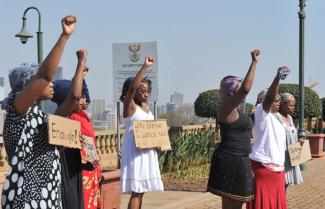
Por ejemplo, en 2019, se dio un paso significativo en el Consejo de Derechos Humanos, cuando la ONU reconoció por primera vez el derecho a la integridad y autonomía corporal. Varias resoluciones del Consejo sobre la discriminación contra mujeres y niñas también reconocen que la reacción está vinculada con grupos de presión regresivos, con perspectivas ideológicas o con el uso inapropiado de la cultura o la religión para oponerse a los derechos igualitarios de mujeres y niñas. También hemos visto progresos feministas en el trabajo de Procedimientos Especiales de la ONU (funcionarixs independientes), tales como enfatizar la obligación de los Estados de oponerse a las narrativas de ideología de género, denunciar el uso inapropiado por parte de los actores antiderechos de referencias a la «cultura», y enfatizar que las creencias religiosas no pueden ser utilizadas como justificación de la violencia o la discriminación.
جلسة عامة | التنظيم لتحقيق النصر
مع نازك أبيلجازيفا وأمارانتا جوميز ريجالادو وسيندي ويزنر ولوسينيا فريتا
Contenu lié
Rolling Stone Magazine: Décès d’Edith Windsor: la communauté LGBT pleure une icône
Le Monde: L’Américaine Edith Windsor, figure LGBT, est morte