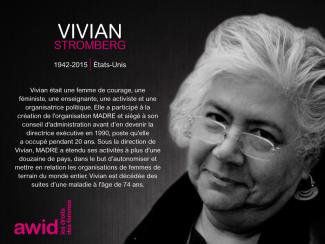
Vivian Stromberg
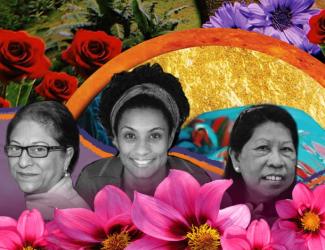
L’hommage se présente sous forme d’une exposition de portraits d’activistes du monde entier qui ne sont plus parmi nous qui ont lutté pour les droits des femmes et la justice sociale.
Cette année, tout en continuant à convoquer la mémoire de celleux qui ne sont plus parmi nous, nous souhaitons célébrer leur héritage et souligner les manières par lesquelles leur travail continue à avoir un impact sur nos réalités vécues aujourd’hui.
49 nouveaux portraits de féministes et de défenseur·e·s viennent compléter la gallerie. Bien que de nombreuses des personnes que nous honorons dans cet hommage sont décédé·e·s du fait de leur âge ou de la maladie, beaucoup trop d’entre iels ont été tué·e·s à cause de leur travail et de qui iels étaient.
Visiter notre exposition virtuelle
Les portraits de l'édition 2020 ont été illustrés par Louisa Bertman, artiste et animatrice qui a reçu plusieurs prix.
L’AWID tient à remercier nos membres, les familles, les organisations et les partenaires qui ont contribué à cette commémoration. Nous nous engageons auprès d’elleux à poursuivre le travail remarquable de ces féministes et défenseur·e·s et nous ne ménagerons aucun effort pour que justice soit faite dans les cas qui demeurent impunis.
« Ils ont essayé de nous enterrer. Ils ne savaient pas que nous étions des graines » - Proverbe mexicain
Le premier hommage aux défenseur-e-s des droits humains a pris la forme d’une exposition de portraits et de biographies de féministes et d’activistes disparu·e·s lors du 12e Forum international de l’AWID en Turquie. Il se présente maintenant comme une gallerie en ligne, mise à jour chaque année.
Depuis, 467 féministes et défenseur-e-s des droits humains ont été mis·es à l'honneur.
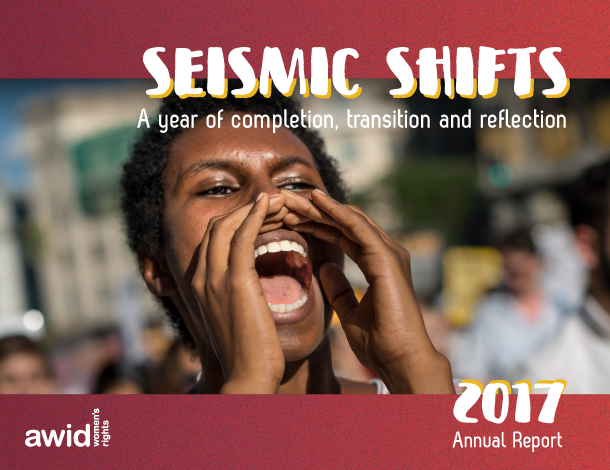
We have contributed to some major victories, like expanding the women’s rights funding landscape with ground-breaking, far-reaching research and advocacy. At the same time, we have experienced some devastating setbacks, including the assassination of Women Human Rights Defenders (WHRDs) like Berta Cacares of Honduras, Gauri Lankesh of India and Marielle Franco of Brazil, as well as the rise of anti-rights mobilizing in human rights spaces.
Five years ago, we committed to our movement-building role by producing knowledge on anti-rights movement trends, as well as on issues that feminists often engage with less, like illicit financial flows. We advocated side by side with our movement partners, strengthening young feminist and inter-generational activism, and expanding the holistic protection of WHRDs. As we close out the strategic plan, we are proud of our accomplishments and our growth as an organization. We end 2017 with renewed commitment, insights and learning for the continued struggle ahead!
«Mientras estaba en la primera línea de la protesta, fui sometida a violencia sexual, a lesiones físicas y a otras formas de violencia. Pero no me detendré hasta que logremos pleno gobierno civil en Sudán. Debemos impedir la militarización del Estado. Nuestros cuerpos no deben seguir siendo tratados como campos de batalla»
dijo Amal,1 una manifestante de 23 años.2
Durante los últimos cuatro años, las mujeres lideraron la revolución en Sudán. Su liderazgono fue solo callejero, sino que constituyó el poder que impulsó la resistencia constante en todos los niveles. Las mujeres y las jóvenes feministas se convirtieron en la conciencia alerta del movimiento de cambio y democratización sudanés. Desde la primera protesta del 13 de diciembre de 2018 contra el régimen anterior, en la ciudad de Aldmazein, en el área de conflicto del Nilo Azul, las jóvenes estudiantes fueron las voces que demandaron el fin de la dictadura de los militares y los Hermanos Musulmanes, que ya lleva treinta años en el poder.
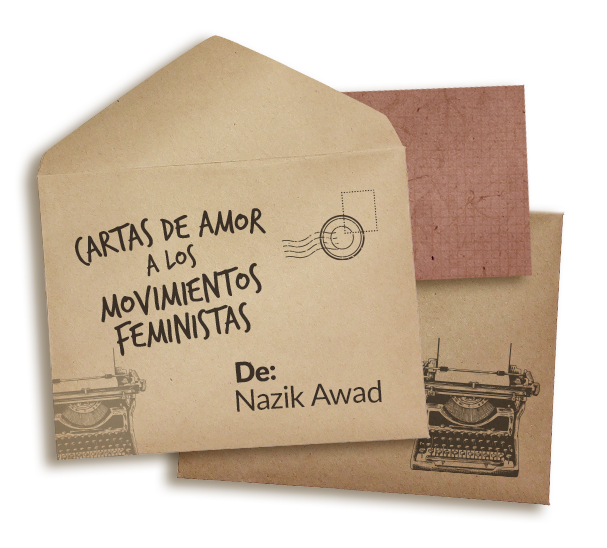
El movimiento feminista, liderado por mujeres de entre 16 y 35 años, ha entablado una revolución dentro de la revolución en Sudán durante los últimos cuatro años de lucha ininterrumpida. Las potentes voces de las jóvenes que ocupan espacios en las calles, las redes sociales, la sociedad civil y las organizaciones políticas se elevaron lo suficiente como para reconfigurar la opinión pública y desafiar las normas sociales. Por primera vez en la historia de Sudán, las discusiones sobre violencia sexual y de género y sobre los tabúes de la violencia doméstica y los procesos de toma de decisiones dominados por los hombres se convirtieron en debates generalizados. Los equipos de fútbol de mujeres designaron voceras ante los comités de resistencia, y los sindicatos profesionales liderados por mujeres son parte de la expresión de la nueva ola del movimiento feminista de Sudán. El logro más importante es que las jóvenes se identifican como feministas en forma orgullosa y pública, en un país regido por el fundamentalismo islámico durante tres décadas. Los jóvenes varones que apoyan el activismo feminista -y se identifican como feministas- son otra señal de progreso notable.
Bajo el actual régimen del golpe militar, las jóvenes que lideran estas iniciativas y los grupos de mujeres que trabajan en el territorio no pueden mencionarse aquí debido a varios problemas de seguridad. Pero su resiliencia, su fuerza y su valentía serán incluidas en los libros de historia. Las audaces jóvenes que encabezan la resistencia en las calles y detrás de las pantallas, y que trabajan en diferentes profesiones y áreas de activismo están dando forma al futuro de Sudán. Las jóvenes feministas de Sudán están creando nuevos espacios para que las narrativas y los discursos feministas reestructuren la distribución del poder a nivel político, económico y social.
A pesar de la inmensa violencia, del resurgimiento del islamismo fundamentalista, de la militarización y de la reducción de los espacios cívicos, las activistas feministas de Sudán se mantienen arraigadas en su sororidad. Siguen siendo una gran inspiración para los movimientos feministas de todo el mundo.
Nazik Awad
1 «Amal» es un seudónimo utilizado para proteger a la joven activista citada.
2 Desde 2018, Sudán vive en una revolución constante. Una nueva ola opositora arrancó a partir del golpe militar del 25 de octubre de 2021.
Isabel Cabanillas de la Torre était une jeune artiste et activiste féministe très appréciée de Ciudad Juárez, au Mexique. Elle était connue pour ses belles peintures textiles, très expressives. Les yeux faisaient partie des représentations emblématiques de son travail. Ses peintures murales ont métamorphosé les immeubles décrépis et laissés à l’abandon du centre-ville de Ciudad Juárez, ornant leurs façades de messages de vie et de commentaires politiques.
Isabel voulait, à travers son art et son activisme politique, attirer l’attention sur les violences basées sur le genre omniprésentes dans sa ville natale. Elle était bénévole dans le réseau Mesa de Mujeres pour l’Observatoire citoyen sur le genre, qui supervise le travail des juges, procureurs et avocats de la défense dans les affaires de féminicides et autres violations basées sur le genre. Elle était également membre de Hijas de su Maquilera Madre, un collectif féministe dont le nom fait référence aux filles de mères qui travaillent dans les maquiladoras, ou zones de traitement pour l’exportation. Certaines de ces mères ont figuré parmi les premières victimes de féminicide dans la ville.
Le dernier projet d’Isabel, toujours en cours, était une installation artistique pour protester contre une entreprise canadienne qui cherchait à extraire du cuivre dans le désert de Samalayuca.
Le 18 janvier 2020, Isabel a été tuée par balle alors qu’elle rentrait chez elle à vélo dans le centre de Juárez, dansce qui semble avoir été un acte ciblé, son corps ayant été retrouvé à côté de son vélo.
Le meurtre d’Isabel a déclenché une nouvelle vague d’indignation contre les féminicides dans la région, des centaines de personnes ont manifesté jusqu’au pont frontalier entre le Mexique et les États-Unis, le bloquant pendant des heures et scandant « Ni Una Menos » (pas une de plus) alors que des collectifs féministes continuaient de manifester contre les meurtres de femmes dans tout le pays. Au cours de la seule année 2019, 3 142 femmes et filles ont été tuées au Mexique. Un grand nombre ont été spécifiquement ciblées du fait de leur genre.
Elle adorait faire du vélo.
« Le vélo était son symbole de liberté. Il symbolisait le fait d’être libre dans les rues. » - Marisol (une amie d’Isabel)
AWID no ofrece descuentos para grupos, pero sí ofrece descuentos en la inscripción a sus afiliadxs. (Haz clic aquí para obtener más información sobre cómo sumarte a la membresía)
In the African Commission and the Inter-American System, anti-rights actors push essentialist notions of culture and gender to hamper progress on rights and undermine accountability. As we see, anti-rights actors are exerting influence in regional human rights systems, as well as international spaces.

In 2021, AWID, along with many other organizations, was coming to grips with the implications of the on-going global pandemic for how we work and our role in this particular time. The year taught us three critical lessons about navigating this moment as a global feminist movement-support organization.
Download the full 2021 Annual review
Our experience in 2021 reaffirmed the importance of building and sustaining a global feminist community, and AWID’s core mission to support feminist movements as a whole. We believe that at this moment, a strong community bound by a shared vision and collective care is the foundation of all social change and transformation.
We’re beginning a new year--2023. COVID-19 continues to infect and re-infect many, many people around the world. We are witnessing the resurgence of right-wing and fascist governments, even in places we may not have expected like Sweden. War, armed conflict, and dramatic increase in militarization, militarism, and military spending are enabling the unbridled capital accumulation by the few, with participation of seemingly “strange” alliances locking arms, both visibly and invisibly, where economic and political elites of the Global North and Global South are benefitting beyond our wildest imagination. In the meanwhile, our people and the natural environment pay enormous costs and suffer all the expected and unexpected consequences.
As all of you and all of us at AWID know, feminists in multiple movements around the world are resisting and organizing against multiple faces of tyranny, creating alternative structures, implementing grassroots strategies, and building transnational alliances. We are generating joy, inspiring one another, singing, and dancing within and against the prevailing culture of killing and cynicism that seems to have engulfed so much of the world.
We--Staff and Board--of AWID are prepared and inspired more than ever before to face challenges by strengthening our relationships with our members and organizational partners, meeting and getting to know those who we are yet to meet and do what we do best: support the global feminist movements. Although we were sad facing the departures of our beloved former Co-Eds Cindy and Hakima, our wonderful new Co-EDS Faye and Inna along with committed and creative staff have embraced the moment that encapsulates both opportunities and threats.
For sure, all of us at AWID and all our movement folks know: As the Caribbean US poet and activist June Jordan wrote to the South African women activists during the height of the apartheid regime, “We are the ones we have been waiting for”!
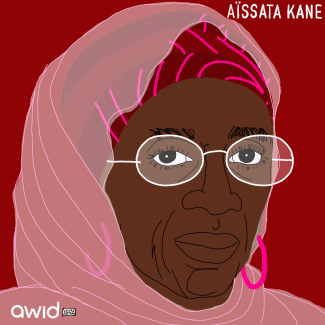
Aïssata Kane, also fondly known as “Yaye Kadia” (Mother Kadia), was a feminist with a lifelong committment in advocating for African and especially Mauritanian women’s rights.
In her career as a politician, she was appointed Minister of Family Protection and Social Affairs in 1975, the first time a woman held such a position and in which Aïssata fervently worked to improve the status of women in her country.
This work included advancing girls’ and women’s education, fighting against the practice of force-feeding of young women, lobbying for an inclusion of a marital rights provision, and advocating for a female representation quota to be created in the Parliament.
“[Aïssata] realized all her passions with humility, courage and determination. She didn’t want to disturb anyone by her fight on all these fronts at the same time.” Ball Halimata Dem, Aïssata’s niece
She founded the National Union of Women of Mauritania (UNFM), co-creating and publishing Marienou for them, a magazine dedicated to the emancipation of Mauritanian women. Aïssata also directed several sub-regional and local organizations, including as the President of the International Association of Francophone Women (AIFF) and as a resolute ecologist, she was President of the Association for the Protection of the Environment in Mauritania (APEM).
In 2018 she received the Pioneer Woman Award. It honors her work in advancing Mauritania’s women’s status and recognizes her strong leadership and sense of innovation.
Aïssata passed away on 10 August 2019.
Ayant conscience des nombreuses difficultés que les déplacements impliquent, nous vous fournirons davantage d’informations et de détails sur les modalités de voyage jusqu’à Bangkok lorsque les Inscriptions ouvriront, au début de l’année prochaine.
¿Quieren sumarse al creciente número de personas que le están diciendo «basta» a la infiltración de lxs actores anti-derechos en la ONU?
In 2023, feminist and women's rights organizations had a median annual budget of USD 22,000. Behind that median lies disparity and inequality: while a few groups access large-scale resources, the vast majority survive on shoestring budgets.
A closer look at actual budgets reveals major income diversity and inequality.
We know feminists still need and deserve more and better resources! We have revised our funder database.
The Who Can Fund Me? Database is an easy-to-use, practical tool for movements looking for funders from philanthropic foundations, multilateral funders to women’s and feminist funds to support vital lifesaving efforts.
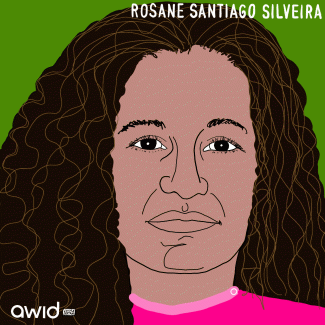
Rosane Santiago Silveira era conocida afectuosamente como «Rô Conceição». Fue una activista ambiental y por los derechos humanos que luchó fervientemente para proteger el medio ambiente en las zonas más amenazadas.
Esta lucha incluyó la defensa así como también la protección ambiental en la isla de Barra Velha, cuando estuvo amenazada por la exploración petrolera, mediante campañas contra la apropiación de tierras y la expansión de las plantaciones de eucaliptus en el Estado de Bahía, donde Rosane integraba el Consejo de la Reserva Extractivista de Cassurubá.
«La Reserva Extractiva es un área protegida donde las familias residentes se ganan la vida con productos naturales extraídos del bosque. Estas actividades ayudan a mantener la integridad del bosque.» - Global Justice Ecology Project (fuente original: Rede Brasil Atual)
Rosane participó en actividades sindicales, y en movimientos culturales y por los derechos humanos. Dedicó gran parte de sí misma, no solamente a las causas que la afectaban directamente, sino a problemas de la tierra, los bosques, los ríos y las comunidades cuyos derechos y vidas están continuamente en riesgo.
Fue torturada y asesinada el 29 de enero de 2019 en Nova Viçosa, una ciudad del sur de Bahía.
«Lamentablemente, hoy existe un sentimiento de inseguridad total, por la ausencia del Estado en la investigación de estos delitos. Estuvimos con ella en Navidad, todos se dieron cuenta de que estaba preocupada, y ahora sabemos que había recibido tres amenazas de muerte.» - Tuian, hijo de Rosane, en una entrevista con Rádio Brasil Atual (fuente original: Rede Brasil Atual)
Asking ourselves the same question, we believe there are no simple answers. For many participants the AWID Forum might be one of the few international trips they undertake in their life. The pandemic taught us the possibilities but also the limitations of virtual spaces for movement-building: there is nothing like in-person connection. Movements need cross-border connections to build our collective power in the face of the threats we face, notably the climate crisis. We believe that the upcoming AWID Forum can be a strategic space to hold these conversations and to explore alternatives to international travel. The hybrid element of the Forum is an important part of this exploration.