L´AWID est une organisation féministe mondiale qui consacre ses efforts à la justice de genre, au développement durable et aux droits humains des femmes
S'opposer à l’extractivisme et au pouvoir des entreprises
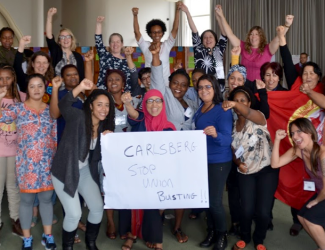
Dans le monde entier, les femmes défenseuses des droits humains défendent leurs terres, leurs moyens de subsistance et leurs communautés contre le pouvoir des entreprises et des industries extractives. Elles se mobilisent et défient de puissants intérêts économiques et politiques qui motivent la spoliation de terres, le déplacement de communautés, la perte des moyens de subsistance et la dégradation de l'environnement.
Pourquoi résister à des industries extractives?
L’extractivisme est un modèle économique et politique de développement qui œuvre à la marchandisation de la nature et privilégie le profit au détriment des droits humains et de l'environnement. Enraciné dans l'histoire coloniale, il creuse les inégalités sociales et économiques au niveau local et mondial. Le plus souvent, les femmes rurales, noires ou autochtones sont les plus touchées par l’extractivisme et sont largement exclues des espaces de prise de décision en la matière. Les femmes se mobilisent pour défier ces forces patriarcales et néocoloniales et défendre les droits, les terres, les personnes et la nature.
Les principaux risques et les violences basées sur le genre
Les femmes qui s’opposent aux industries extractives vivent une série de risques, de menaces et de violations de leurs droits comme la criminalisation, la stigmatisation, la violence et l'intimidation. Leurs histoires révèlent des aspects évidents de violences sexuelles et basées sur le genre. Parmi les auteurs de ces abus se trouvent les autorités locales et fédérales, les entreprises, la police, les militaires, les forces de sécurité paramilitaires et privées, et parfois mêmes leurs propres communautés.
Agir ensemble
L'AWID et la Coalition internationale des femmes défenseures des droits humains (WHRDIC) ont le plaisir d'annoncer la sortie de leur publication « Les défenseuses des droits humains résistent à l’extractivisme et aux pouvoir des entreprises », un rapport basé sur un projet de recherche transrégional qui relate les expériences vécues par des défenseuses en provenance d'Asie, d'Afrique et d'Amérique latine.
Nous encourageons les activistes, les membres de mouvements sociaux, la société civile, les donateurs et les décideurs à lire et à faire usage des documents suivants pour leur travail de plaidoyer, comme outil pédagogique et comme source d’inspiration :
Dites-nous comment vous utilisez la boîte à outils sur les défenseur-e-s des droits humains qui résistent à l'extractivisme et aux pouvoir des entreprises.
◾️ Comment ces ressources peuvent-elles soutenir votre activisme et votre plaidoyer ?
◾️ De quelles informations ou connaissances supplémentaires avez-vous besoin pour utiliser au mieux ces ressources ?
C’est avec gratitude que l’AWID reconnaît les contributions précieuses de chaque défenseur-e des droits humains qui a participé à ce projet. Cette recherche a été rendue possible grâce à votre volonté à partager vos expériences. Votre courage, créativité et résilience est une source d’inspiration pour nous toutes et tous. Merci !
Contenu lié
Snippet - CSW69 - What’s a feminist like you - EN
What’s a feminist like you doing in a place like this?
A conversation on international advocacy and global governance
📅 Friday, March 14, 2025
🕒 2.30pm EST
🏢 Blue Gallery, The Blue Building, 222 East 46th Street
🎙️Facilitated by: Anissa Daboussi, Manager, Advancing Universal Rights and Justice team
Organizer: SRI, AWID
About the AWID International Forum
More than an event!
The AWID International Forum is both a global community event and a space of radical personal transformation. A one-of-a-kind convening, the Forum brings together feminist, women’s rights, gender justice, LBTQI+ and allied movements, in all our diversity and humanity, to connect, heal and thrive.
About the 15th AWID International Forum
Rising Together: Connect, Heal, Thrive
The Forum theme – Rising Together – is an invitation to engage with our whole selves, to connect with each other in focused, caring and brave ways, so that we can feel the heartbeat of global movements and rise together to meet the challenges of these times.
A Hybrid Experience
For the first time, the AWID Forum offered three modes of participation:
In Person
at the Queen Sirikit National Convention Centre in Bangkok, Thailand.
Online
in Virtual Space (Capacity: 3000 participants).
Hubs
Connected in Cross Border Space.
With over 4,000 participants, 15th AWID International Forum in 2024 created a sweeping force to resist oppression towards collective healing and liberation. Keep watching this space for more forum stories and future forums updates!
In December 2020, the AWID board took the difficult decision to cancel the 14th AWID International Forum which had been scheduled to take place from September 20-23, 2021, in the City of Taipei.
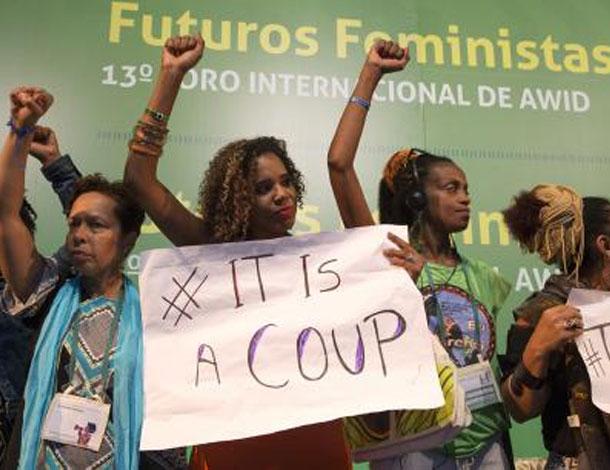
2016 - Feminist Futures: Building Collective Power for Rights and Justice (Costa de Sauipe, Brazil)
Participants at the Black Feminisms Forum in Brazil, 2016
Given the complex world that we face today, the 2016 AWID Forum did not focus on a particular “issue”, but rather on creating more effective ways of working together!
Despite the challenging contexts in which the 2016 Forum took place (the Zika epidemic, a strike by Brazilian foreign-service workers, the impeachment of President Dilma Rousseff and subsequent turmoil), it succeeded in bringing together over 1800 participants from 120 countries and territories across all regions of the world.
What happened at the 13th AWID international Forum:
For 96% of participantswho responded to the post Forum evaluation survey, the Forum was a major source of inspiration and energy.
98% of participants considered it an important convening space for feminist movements and expressed hope that AWID continues to organize forums.
59% of Forum evaluation survey respondents declared to be very satisfied with the Forum and 34% somewhat satisfied.
Over 150 sessions were delivered in different formats on a variety of topics ranging from bodily integrity and freedoms, to gender-based violence in the workplace, to strategies for building collective power.
The first-time Black Feminisms Forum (BFF), held just before the main AWID Forum, brought together 250 Black feminists from all over the world to co-create a powerful space to build and strengthen ongoing, intergenerational, transnational connections
Read more about what the 2016 AWID Forum achieved:
2012 - Transforming Economic Power to Advance Women's Rights and Justice (Istambul, Turkey)
AWID International Forum, in Cape Town, South Africa, 2008
The 12th AWID Forum was the largest and most diverse AWID Forum to date, bringing together 2239 women’s rights activists from 141 countries. Of these participants, around 65% were from the Global South and close to 15% were young women under 30, and 75% attended an AWID Forum for their first time.
The Forum program focused on transforming economic power to advance women’s rights and justice and featured over 170 different kinds of sessions including feminist economics toolbox skills-building sessions, breakout sessions representing all 10 Forum themes, in-depth sessions, and solidarity roundtables.
Building on the momentum of the 2012 Forum, we transformed the website into a resource and learning Hub, which builds on the content generated by participants by featuring multi-media resources on all Forum components.
1999: Leading Solutions for Equality and Justice (US)
1996: Beyond Beijing From Words to Action (US)
1993: Joining Forces to Further Shared Visions (US)
1991: Working Together/Learning Together: A South North Dialogue (US)
1989/1990: Global Em-Powerment for Women (US)
1987: Moving Forward: Innovations in Development Policy, Action and Research (US)
1985: Women Creating Wealth; Transforming Economic Development (US)
1983: ‘Women in Development’ (Washington D.C, US)
What is the AWID International Forum?
Every three to four years, AWID hosts its flagship international event. It is the world’s largest event that wholeheartedly centers feminist and gender justice movements in all their diversity. It is a global gathering of feminist activists, allied movements, scholars, funders and policymakers. The Forums rotate between different regions and countries in the global South.
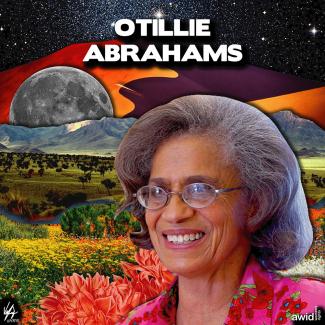
Ottilie fue una activista feminista, educadora y política de Namibia.
Fue una de las fundadoras de la Organización Popular del Sudoeste Africano (SWAPO), del Club Yu Chi Chan (un grupo armado revolucionario) y del Frente Nacional de Liberación del Sudoeste Africano (SWANLIF). También fue una de las fundadoras de la Asociación de Mujeres de Namibia y del Proyecto Niñas. A lo largo de su vida, Ottilie defendió el derecho a discutir, a pensar, a disputar y a exigir. Movilizó a las mujeres, organizó a estudiantes y docentes y criticó a otrxs camaradas por su elitismo y su corrupción.
Ottilie trabajó intensamente para desmantelar el patriarcado y para crear una democracia participativa concreta, feminista, transformadora y liberadora.
A menudo decía: «Descansaré cuando muera».
Clone of Snippet FEA Environments Of Shelter (EN)
Metzineres provides the following kinds of support, known as
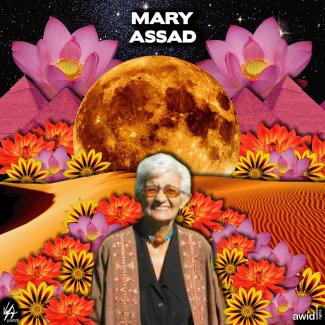
Experte en développement social et anthropologue de formation, Mary était surtout connue pour être une pionnière de la lutte contre les mutilations génitales féminines (MGF).
Née au Caire en 1922, les travaux de Mary en matière de développement ont commencé tôt, dès son adhésion à la YWCA (Association chrétienne des jeunes femmes). Mary était membre du Conseil œcuménique des Églises et s'est progressivement intéressée aux questions relatives à la santé des femmes. Sa longue lutte contre les MGF a porté ses fruits en 2008, lorsque l'Egypte a finalement criminalisé cette pratique.
On se souvient d'elle comme d'une mentor pour de nombreuses féministes et militant-e-s égyptien-ne-s
Student, Writer, Leader, Advocate. Each of the four women honored below had their own way of activism but what they had in common is that they all promoted and defended Lesbian Gay Bisexual Transgender Queer and Intersex rights. Join us in remembering and honoring these Women Human Rights Defenders, their work and legacy by sharing the memes below and tweeting by using the hashtags #WHRDTribute and #16Days.
Please click on each image below to see a larger version and download as a file
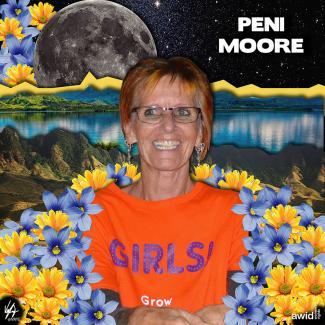
Peni was a radical feminist philosopher, poet, writer, playwright and songwriter.
As the first coordinator for the Fiji Women’s Rights Movement, she left a legacy that was infused with her deep concern for women’s human rights, justice and peace. Peni’s commitment to social, economic and ecological justice and her outstanding work gained local and international respect. She was one of the first in mainstream feminist movements in Fiji to work with, and beside LGBTQI people as a real accomplice, and provided practical assistance to the early Fiji sex worker movement.
Her colleagues described her as a formidable individual and visionary leader for change. She inspired many by her creativity and courage. Her work provided platforms for people to be heard, attain new skills and forge new pathways both at the personal and community level.
Snippet FEA Nous Sommes la Solution (ES)
Nous Sommes la Solution es un movimiento de mujeres rurales por la soberanía alimentaria en África Occidental. Originalmente fundada como una campaña contra la agricultura hiper-industrializada, Nous Sommes la Solution se ha convertido en un movimiento de más de 500 asociaciones de mujeres rurales de Burkina Faso, Senegal, Ghana, Gambia, Guinea Bissau, Malí y Guinea.
Este movimiento liderado por mujeres está construyendo y fortaleciendo la soberanía alimentaria y de semillas en África Occidental. Alimentan a las comunidades, fortalecen las economías locales, amplían el conocimiento de las mujeres agricultoras y mitigan los efectos devastadores de la crisis climática a través de las prácticas agroecológicas. También organizan talleres, foros y transmisiones de radio comunitarias para compartir sus mensajes, conocimientos tradicionales y prácticas agroecológicas en las comunidades rurales.
En colaboración con universidades y centros públicos de investigación, Nous Sommes la Solution trabaja para restaurar las variedades indígenas de arroz (un alimento esencial de África Occidental) y promover economías alimentarias locales basadas en principios agroecológicos para influir en la formulación de políticas nacionales, mientras apoya a las mujeres en la creación de asociaciones agrícolas y su acceso a la propiedad y gestión colectiva de las tierras agrícolas.
Ever wondered what budgets for feminist organizations look like?
In 2023, feminist and women's rights organizations had a median annual budget of USD 22,000. Behind that median lies disparity and inequality: while a few groups access large-scale resources, the vast majority survive on shoestring budgets.
A closer look at actual budgets reveals major income diversity and inequality.
Los derechos de las personas trans* requieren una mayor protección
Estas mujeres trans* fueron asesinadas por su activismo y por su identidad de género. Son escasas las leyes que reconocen los derechos de las personas trans* e, incluso donde están vigentes, es muy poco lo que se ha hecho para salvaguardar sus derechos. Únete a AWID para honrar a estas defensoras de derechos humanos, su trabajo y su legado, compartiendo los memes aquí incluidos con tus colegas, amistades y redes; y tuiteando las etiquetas #WHRDTribute y #16Días.
Por favor, haz click en cada imagen de abajo para ver una versión más grande y para descargar como un archivo.