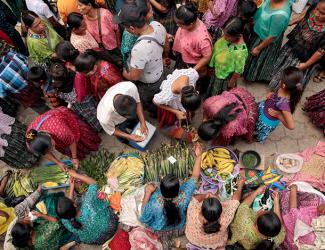
UN Women / Flickr (CC BY-NC-ND 2.0)
Guatemala - Rural Women Diversify Incomes and Build Resilience
Left
Half
Left

Priority Areas

Supporting feminist, women’s rights and gender justice movements to thrive, to be a driving force in challenging systems of oppression, and to co-create feminist realities.

Building Feminist Economies

Building Feminist Economies is about creating a world with clean air to breath and water to drink, with meaningful labour and care for ourselves and our communities, where we can all enjoy our economic, sexual and political autonomy.


In the world we live in today, the economy continues to rely on women’s unpaid and undervalued care work for the profit of others. The pursuit of “growth” only expands extractivism - a model of development based on massive extraction and exploitation of natural resources that keeps destroying people and planet while concentrating wealth in the hands of global elites. Meanwhile, access to healthcare, education, a decent wage and social security is becoming a privilege to few. This economic model sits upon white supremacy, colonialism and patriarchy.

Adopting solely a “women’s economic empowerment approach” is merely to integrate women deeper into this system. It may be a temporary means of survival. We need to plant the seeds to make another world possible while we tear down the walls of the existing one.


We believe in the ability of feminist movements to work for change with broad alliances across social movements. By amplifying feminist proposals and visions, we aim to build new paradigms of just economies.

Our approach must be interconnected and intersectional, because sexual and bodily autonomy will not be possible until each and every one of us enjoys economic rights and independence. We aim to work with those who resist and counter the global rise of the conservative right and religious fundamentalisms as no just economy is possible until we shake the foundations of the current system.


Our Actions

Our work challenges the system from within and exposes its fundamental injustices:

  • Advance feminist agendas: We counter corporate power and impunity for human rights abuses by working with allies to ensure that we put forward feminist, women’s rights and gender justice perspectives in policy spaces. For example, learn more about our work on the future international legally binding instrument on “transnational corporations and other business enterprises with respect to human rights” at the United Nations Human Rights Council.

  • Mobilize solidarity actions: We work to strengthen the links between feminist and tax justice movements, including reclaiming the public resources lost through illicit financial flows (IFFs) to ensure social and gender justice.

  • Build knowledge: We provide women human rights defenders (WHRDs) with strategic information vital to challenge corporate power and extractivism. We will contribute to build the knowledge about local and global financing and investment mechanisms fuelling extractivism.

  • Create and amplify alternatives: We engage and mobilize our members and movements in visioning feminist economies and sharing feminist knowledges, practices and agendas for economic justice.


“The corporate revolution will collapse if we refuse to buy what they are selling – their ideas, their version of history, their wars, their weapons, their notion of inevitability. Another world is not only possible, she is on her way. On a quiet day, I can hear her breathing”.

Arundhati Roy, War Talk

Related Content

ฉันสามารถลงทะเบียนเข้าร่วมฟอรัมได้เมื่อไร ค่าลงทะเบียนเท่าไร และการลงทะเบียนจะครอบคลุมอะไรให้บ้าง

การลงทะเบียนจะเริ่มขึ้นช่วงต้นปี 2567 เราจะประกาศวันที่ในการเปิดให้ลงทะเบียนและค่าลงทะเบียนเร็วๆนี้ การลงทะเบียนจะครอบคลุมการเข้าร่วมฟอรัม รวมถึงอาหารเที่ยง ขนม และอาหารเย็นภายในงานหนึ่งมื้อ (อาหารเช้าจะถูกจัดเตรียมไว้ที่โรงแรม)

#1 - Sexting like a feminist Tweets Snippet EN

and my number 1... Because you know it’s gotten real when higher powers are invoked.

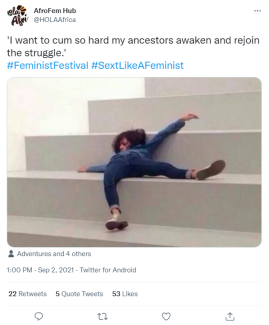
Image of a tweet with a woman fainted on a set of stairs. Text says: I want to cum so hard my ancestors awaken and rejoin the struggle.

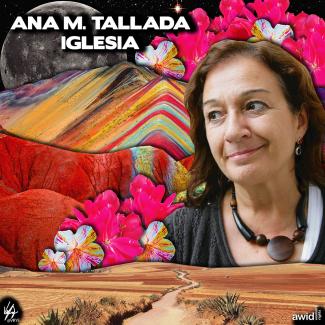
Ana M. Tallada Iglesia

Ana was a strong advocate of women’s rights and worked with a broad cross-section of women, from those in grassroots networks to those in the private sector.

She believed in building bridges across sectors. Ana was a member of the National Network for the Promotion of Women (RNPM), and was active in developing many social programs that address issues such as sexual and reproductive health and rights. 


Ana M. Tallada Iglesia, Peru

คุณจะเปิดรับให้เสนอกิจกรรมภายในงานหรือไม่

แน่นอน! กรุณาอ่านการเปิดรับสมัครกิจกรรมภายในงานและสมัครได้ที่นี่ กำหนดเส้นตายในการปิดรับรายละเอียดกิจกรรมใหม่ : 1 กุมภาพันธ์ 2567

Manal Tamimi | Snippet EN

Portrait Manal Tamimi

Manal Tamimi is a Palestinian activist and human rights defender. She is a mother of four who holds a master’s degree in international humanitarian law. Due to her activism, she was arrested three times and got wounded more than once, including with live explosive bullets which are banned internationally. Her family is also a target: her children have been arrested and wounded with live ammunition more than once. The last incident was an assassination attempt of her son Muhammad who was shot in the chest, near the heart, a few weeks after his liberation from the occupation prisons where he had spent two years. Her philosophy on life: if I have to pay the price for being a Palestinian and not for a crime I have committed, I refuse to die in silence.

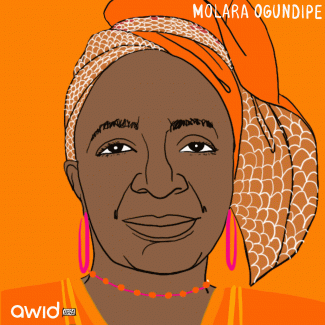
Molara Ogundipe

“But when was the master
ever seduced from power?
When was a system ever broken
by acceptance?
when will the BOSS hand you power with love?
At Jo’Burg, at Cancun or the U.N?
– Molara Ogundipe

In an interview at the 2010 Ghana International Book Fair, Molara Ogundipe introduced herself with the words: “...I’m a Nigerian. I’ve lived possibly all over the world except for the Soviet Union and China.”

Across the different continents and countries, Professor Ogundipe taught comparative literature, writing, gender, and English studies using literature as a vehicle for social transformation and re-thinking gender relations. 

A feminist thinker, writer, editor, social critic, poet, and activist Molara Ogundipe succeeded in combining theoretical work with creativity and practical action. She is considered to be one of the leading critical voices on African feminism(s), gender studies and literary theory.

Molara famously coined the concept of “stiwanism’ from the acronym STIWA – Social Transformations in Africa Including Women recognizing the need to move “away from defining feminism and feminisms in relation to Euro-America or elsewhere, and from declaiming loyalties or disloyalties.”

In her seminal work ‘Re-creating Ourselves’ in 1994, Molara Ogundipe (published under Molara Ogundipe-Leslie) left behind an immense body of knowledge that decolonized feminist discourse and “re-centered African women in their full, complex narratives...guided by an exploration of economic, political and social liberation of African women and restoration of female agency across different cultures in Africa.”

In speaking about the challenges she faced as a young academic she said: 

”When I began talking and writing feminism in the late sixties and seventies, I was seen as a good and admirable girl who had gone astray, a woman whose head has been spoilt by too much learning".

Molara Ogundipe stood out for her leadership in combining activism and academia; in 1977 she was among the founding members of AAWORD, the Association of Women in Research and Development. In 1982 she founded WIN (Women In Nigeria) to advocate for full “economic, social and political rights” for Nigerian women. She then went on to establish and direct the Foundation for International Education and Monitoring and spent many years on the editorial board of The Guardian.

Growing up with the Yoruba people, their traditions, culture, and language she once said :

“I think the celebration of life, of people who pass away after an achieved life is one of the beautiful aspects of Yoruba culture.” 

Molara’s Yoruba ‘Oiki’ praise name was Ayike. She was born on 27 December 1940 and at the age of 78, Molara passed away on 18 June 2019 in Ijebu-Igbo, Ogun State, Nigeria.
หากผู้นำเสนอต้องการนำเสนอเป็นภาษษมืออื่นๆที่ไม่ใช่ภาษามือสากล จะมีการสนับสนุนการล่ามในภาษษมืออื่นๆหรือไม่

หากกิจกรรมของคุณได้รับการคัดเลือกคุณจะได้รับการติดต่อจาก AWID ที่จะช่วยสนับสนุนและตอบคำถามถึงการล่ามและการช่วยในการเข้าถึงที่จำเป็น

Mariam Mekiwi | Snippet EN

Mariam Mekiwi Portrait

Mariam Mekiwi is a filmmaker and photographer from Alexandria and living and working in Berlin.

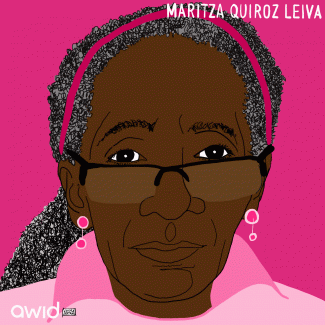
Maritza Quiroz Leiva

Maritza Quiroz Leiva was an Afro Colombian social activist, a community leader and women human rights defender. Among the 7.7 million Colombians internally displaced by 50 years of armed conflict, Maritza dedicated her advocacy work to supporting the rights of others, particularly in the Afro Colombian community who suffered similar violations and displacement.

Maritza was the deputy leader of the Santa Marta Victim's Committee, and an important voice for those seeking justice in her community, demanding reparations for the torture, kidnapping, displacement, and sexual violence that victims experienced during the armed conflict. She was also active in movement for land redistribution and land justice in the country. 

On 5 January 2019, Maritza was killed by two armed individuals who broke into her home. She was 60 years old. 

Maritza joined five other Colombian social activists and leaders who had been murdered just in the first week of 2019. A total of 107 human rights defenders were killed that year in the country. 

จะมีมาตราการด้านการเข้าถึงสำหรับฟอรัมที่จะเกิดขึ้นหรือไม่

ตอบแบบสั้นคือ ใช่! AWID กำลังทำงานร่วมกับคณะกรรมการการเข้าถึงเพื่อให้มั่นใจว่าฟอรัมนี้จะสามารถเข้าถึงได้มากที่สุดเท่าที่จะเป็นไปได้ เรากำลังทำการตรวจสอบการเข้าถึงสถานที่จัดงานฟอรัม โรงแรมโดยรอบ และการคมนาคมขนส่ง ข้อมูลโดยละเอียดเกี่ยวกับการช่วยการเข้าถึงของ AWID ฟอรัม จะถูกอัปเดทเนื้อหาที่นี่ก่อนที่จะเปิดการลงทะเบียน ในระหว่างนี้ หากมีคำถามใดๆ โปรดติดต่อเรา

Hospital | Content Snippet EN

“Now might be a good time to rethink what a revolution can look like. Perhaps it doesn’t look like a march of angry, abled bodies in the streets. Perhaps it looks something more like the world standing still because all the bodies in it are exhausted—because care has to be prioritized before it’s too late.” 
- Johanna Hedva (https://getwellsoon.labr.io/)

Hospitals are institutions, living sites of capitalism, and what gets played out when somebody is supposed to be resting is a microcosm of the larger system itself. 

Institutions are set out to separate us from our care systems – we find ourselves isolated in structures that are rigidly hierarchical, and it often feels as if care is something done to us rather than given/taken as part of a conversation. Institutional care, because of its integration into capitalist demand, is silo-ed: one person is treating your leg and only your leg, another is treating your blood pressure, etc. 

Photographer Mariam Mekiwi had to have surgery last month and documented the process. Her portraits of sanitized environments – neon white lights, rows after rows of repetitive structures – in a washed-out color palette reflect a place that was drained of life and movement. This was one of the ways Mariam kept her own spirit alive. It was a form of protest from within the confines of an institution she had to engage with.

The photos form a portrait of something incredibly vulnerable, because watching someone live through their own body’s breakdown is always a sacred reminder of our own fragility. It is also a reminder of the fragility of these care systems, which can be denied to us for a variety of reasons – from not having money to not being in a body that’s considered valuable enough, one that’s maybe too feminine, too queer or too brown.  

Care experienced as disembodied and solitary, that is subject to revocation at any moment, doesn’t help us thrive. And it is very different from how human beings actually behave when they take care of each other. How different would our world look like if we committed to dismantling the current capitalist structures around our health? What would it look like if we radically reimagined it?

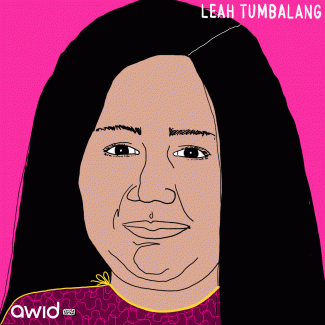
Leah Tumbalang

Leah Tumbalang was a Lumad woman of Mindanao in the Philippines. The story of Lumad Indigenous peoples encompasses generations of resistance to large-scale corporate mining, protection of ancestral domains, resources, culture, and the fight for the right to self-determination. 

Leah was a Lumad  leader as well as a leader of Kaugalingong Sistema Igpasasindog to Lumadnong Ogpaan (Kasilo), a Lumad and peasant organization advocating against the arrival of mining corporations in Bukidnon, Mindanao province. She was unwavering in her anti-mining activism, fervently campaigning against the devastating effects of mineral extraction on the environment and Indigenous peoples’ lands. Leah was also an organizer of the Bayan Muna party-list, a member of the leftist political party Makabayan.

For almost a decade, Leah (along with other members of Kasilo) had been receiving threats for co-leading opposition against the deployment of paramilitary groups believed to be supported by mining interests. 

“Being a Lumad leader in their community, she is at the forefront in fighting for their rights to ancestral land and self-determination.” - Kalumbay Regional Lumad Organization

Being at the forefront of resistance also often means being a target of violence and impunity and Leah not only received numerous death threats, but was murdered on 23 August 2019 in Valencia City, Bukidnon. 

According to a Global Witness report, “the Philippines was the worst-affected country in sheer numbers” when it comes to murdered environmental activists in 2018. 


Read the Global Witness report, published July 2019

Find out more about Lumad women in the Philippines and their inter-generational struggle for self-determination
 

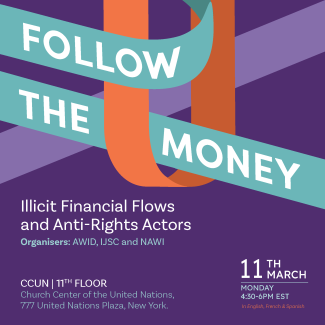
Snippet - CSW68 - Follow the Money Post - EN

Image to promote the event Follo the Money for AWID at CSW68

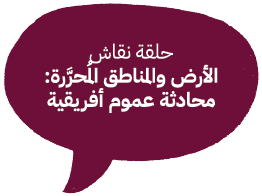
Snippet Kohl - Panel | Liberated Land & Territories | AR

Speech bubble: Panel liberated land and territories

حلقة نقاش | الأرض والمناطق المُحرَّرة: محادثة عموم أفريقية 
مع لوام كيدان ومريامة سونكو ويانيا صوفيا غرسون ڤالنسيا ونوسمة سيزاني

YOUTUBE| SOUNDCLOUD

Snippet - WITM To share - EN

To share your lived experience with mobilizing funding for your organizing

#5 - Sexting like a feminist Tweets Snippet AR

تقديم تحليل كفء للأجساد البحثيّة، يستوجب بالضرورة تسخيرًا شاملا لكافّة الأدوات الحميميّة…

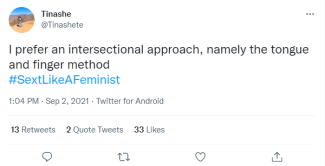
Image of a tweet. Text says: I prefer an intersectional approach, namely the tongue and finger method.

أفضّل المقاربة التقاطعيّة لما تشتمل عليه من مداعبة ممنهجة باللسان والأصابع

Snippet - WITM Acknowledgements - EN

Acknowledgements

AWID gratefully acknowledges the many people whose ideas, analysis and contributions have shaped the “Where is the Money for Feminist Organizing?” research and advocacy over the years.

First and foremost, our deepest thanks goes to the AWID members and activists who engaged in WITM consultations and piloted this survey with us, sharing so generously of their time, analysis and hearts.

Our appreciation to feminist movements, allies and feminist funds, including but not limited to: Black Feminist Fund, Pacific Feminist Fund, ASTRAEA Lesbian Foundation for Justice, FRIDA Young Feminist Fund, Purposeful, Kosovo Women’s Network, Human Rights Funders Network, Dalan Fund and PROSPERA International Network of Women's Funds - for your rigorous research on the state of resourcing, sharp analysis and continued advocacy for more and better funding and power for feminist and gender justice organizing in all contexts.

Join the global community of feminists speaking up about the state of resourcing, demanding more and better funding and power for feminists everywhere

My language is not one of the official survey languages and I am struggling to complete it, what can I do?

AWID is committed to language justice and we regret that, at this point, having the WITM survey available in more languages is not feasible. However, if you need support with translations or want to fill the survey in any other language, please reach out to us at witm@awid.org.

When will survey results be available?

We will analyze the survey responses, derive insights and trends, and present the results during the 15th AWID International Forum in Bangkok, and online, in December 2024. Register to attend the Forum here!

Snippet - WITM To build - AR

لبناء وقائع نسوية ترتكز على الأدلة عن كيف يتحرك المال ولمن يصل