Contenido relacionado
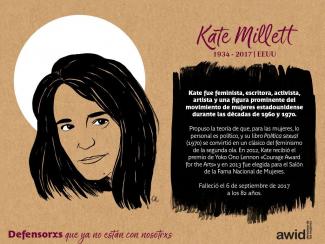
Huffington Post: Muere Kate Millett, activista y referente feminista
TeleSUR: Muere la autora feminista Kate Millett a los 82 años
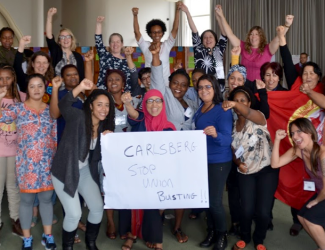
Women human rights defenders (WHRDs) worldwide defend their lands, livelihoods and communities from extractive industries and corporate power. They stand against powerful economic and political interests driving land theft, displacement of communities, loss of livelihoods, and environmental degradation.
Extractivism is an economic and political model of development that commodifies nature and prioritizes profit over human rights and the environment. Rooted in colonial history, it reinforces social and economic inequalities locally and globally. Often, Black, rural and Indigenous women are the most affected by extractivism, and are largely excluded from decision-making. Defying these patriarchal and neo-colonial forces, women rise in defense of rights, lands, people and nature.
WHRDs confronting extractive industries experience a range of risks, threats and violations, including criminalization, stigmatization, violence and intimidation. Their stories reveal a strong aspect of gendered and sexualized violence. Perpetrators include state and local authorities, corporations, police, military, paramilitary and private security forces, and at times their own communities.
AWID and the Women Human Rights Defenders International Coalition (WHRD-IC) are pleased to announce “Women Human Rights Defenders Confronting Extractivism and Corporate Power”; a cross-regional research project documenting the lived experiences of WHRDs from Asia, Africa and Latin America.
"Women Human Rights Defenders confronting extractive industries: an overview of critical risks and Human Rights obligations" is a policy report with a gender perspective. It analyses forms of violations and types of perpetrators, quotes relevant human rights obligations and includes policy recommendations to states, corporations, civil society and donors.
"Weaving resistance through action: Strategies of Women Human Rights Defenders confronting extractive industries" is a practical guide outlining creative and deliberate forms of action, successful tactics and inspiring stories of resistance.
The video “Defending people and planet: Women confronting extractive industries” puts courageous WHRDs from Africa, Asia, and Latin America in the spotlight. They share their struggles for land and life, and speak to the risks and challenges they face in their activism.
Challenging corporate power: Struggles for women’s rights, economic and gender justice is a research paper outlining the impacts of corporate power and offering insights into strategies of resistance.
AWID acknowledges with gratitude the invaluable input of every Woman Human Rights Defender who participated in this project. This project was made possible thanks to your willingness to generously and openly share your experiences and learnings. Your courage, creativity and resilience is an inspiration for us all. Thank you!
Tout à fait, ces questions sont facultatives, et nous reconnaissons votre droit à l’anonymat. Merci de répondre aux questions de l’enquête, peu importe votre décision quant à la mention du nom de votre groupe, organisation et/ou mouvement et de vos coordonnées.
Contenido relacionado
Huffington Post: Muere Kate Millett, activista y referente feminista
TeleSUR: Muere la autora feminista Kate Millett a los 82 años
1 de cada 3 personas trans y travesti en Argentina vive en un hogar de bajos ingresos.

Une fois que vous aurez analysé l’ensemble des données issues du sondage, des interviews, de la recherche documentaire et possiblement d’autres sources, vous pourrez créer votre produit final.
Dans cette section :
- Créez votre produit final
1. Écrivez clairement
2. Rendez-le attrayant- Recueillez des commentaires à la suite des révisions
1. Peaufinez vos résultats
2. Encouragez les réactions
Votre produit final sera le document qui synthétisera, analysera et posera un regard critique sur vos données. Ce sera la composante que vous partagerez avec votre communauté afin de présenter et d’expliquer votre recherche à votre auditoire.
À l’AWID, nous rédigeons fréquemment un rapport complet qui analyse chaque ensemble de données et qui synthétise tous nos résultats pour ensuite créer des produits plus concis comme des infographies et des sommaires (expliqué plus loin dans la section « Finalisez et mettez en forme »).
L’importance de la révision
La personne chargée de la révision relira votre document, s’assurera qu’il est rédigé de manière concise, procédera à la vérification des faits, soulèvera les incohérences qui doivent être résolues, assurera la fluidité du texte et suggérera éventuellement des titres.
Il est préférable que cette personne connaisse et comprenne votre travail WITM, sans être engagée dans la recherche. Ainsi, elle apportera au document une nouvelle perspective.
Rappel : Plus votre produit est accessible, plus les gens auront envie de le lire…et de le partager!
À cette étape, vous avez recueilli toutes vos données, vous les avez analysées et vous avez transformé ces renseignements en produit final, probablement en un long rapport.
Avant de passer à la prochaine étape, vous devriez partager votre produit final avec les organisations, les activistes et les donateurs qui vous conseillent.
C’est le moment idéal pour vérifier les aspects suivants :
Lorsque vous aurez intégré toutes les réactions de vos conseillers et conseillères, assurez-vous de présenter le document à la personne chargée des révisions.
Vous aurez ainsi en main la version finale et complète de votre rapport. Si vous prévoyez de publier votre rapport final en d’autres langues, il est temps de le faire traduire.
Il s’agit d’une contribution considérable de la part de vos conseillers et conseillères. Pensez à leur offrir une forme de reconnaissance.
6. Menez une recherche documentaire

• 2 - 5 mois
• 1 personne (ou plus) chargée de la recherche
• 1 éditeur-trice (spécialisé-e web si vous créez des prduits en ligne)
• Traducteur(s)-trice(s), si vous réalisez votre recherche en différentes langues
• Liste d’organisations, de donateurs et d’activistes agissant à titre consultatif
• Note conceptuelle (définie par votre cadre de référence)
• Résultats préliminaires de votre sondage
• Questions d'interview
• Résultats de vos interview
• Données de votre recherche documentaire
• Toutes les données utilsées dans le rapport
6. Menez une recherche documentaire
8. Finalisez et mettez en forme
Yes, please do! We encourage you to share the survey link with your networks. The more diverse perspectives we gather, the more comprehensive our understanding of the financial landscape for feminist organizing will be.
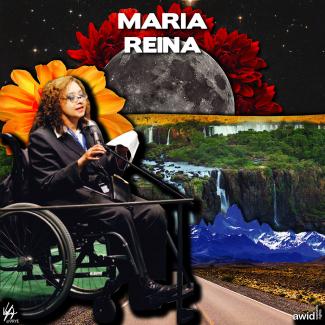
Elle a représenté l'International Disability and Development Consortium (consortium international sur le développement et le handicap) lors de la négociation de la Convention des Nations Unies relative aux droits des personnes handicapées (2001-2006). Son travail a été consacré à la réalisation de l'objectif de la Convention, à savoir la réalisation des droits humains universels par, pour et avec les personnes handicapées pour un monde inclusif, accessible et durable.
Selon ses propres mots, son leadership consistait à « … servir la communauté des personnes handicapées, en commençant par de petites tâches que d'autres pourraient ne pas vouloir faire».
Elle est décédée le 27 octobre 2017 dans sa ville natale de Rosario, en Argentine.
Pour en savoir plus sur María Verónica Reina, retrouvez son témoignage.
LE QUOTA D'EMPLOI TRANS
n'est pas respecté par les entreprises
As feminists struggling for gender, peace, economic, social and environmental justice, we know there is no single recipe for success but an array of possibilities that can and are making change happen. The menu of options is as diverse as our movements and the communities in which we live and struggle.
Before we dare to present some of the feminist imaginations for another world, here are the principles around which we base our propositions:
We believe there is no one model for all and that everyone has a right to claim and contribute to building another world that is possible, as the World Social Forum motto puts it.
This includes the right to participate in democratic governance and to influence one’s future – politically, economically, socially and culturally.
Economic self-determination gives peoples the ability to take control over their natural resources and use those resources for their own ends or collective use. Furthermore, women’s economic agency is fundamental to mitigating the often cyclical nature of poverty, denial of education, safety, and security.
The principle of substantive equality is laid out in the Convention on the Elimination of All Forms of Discrimination against Women (CEDAW) and other international human rights instruments. This principle is fundamental for development and achieving a just economy as it affirms that all human beings are born free and equal.
Non-discrimination is an integral part of the principle of equality that ensures that no one is denied their rights because of factors such as race, gender, language, religion, sexual orientation, gender identity, political or other opinion, national or social origin, property or birth.
The inherent dignity of all persons without distinction must be upheld and respected. While States are responsible for ensuring the use of maximum available resources for the fulfilment of human rights, reclaiming rights and dignity is fundamentally a key space for civil society struggle and popular mobilization.
This principle, exercised through organized efforts to transform unjust institutions, guides the restoration of balance between "participation" (input) and "distribution" (output) when either principle is violated.
It puts limits on monopolistic accumulations of capital and other abuses of property. This concept is founded on an economy model that is based on fairness, and justice.
In order to make change happen, we need strong and diverse feminist networks. We need movements building solidarity from the personal to the political, from the local to the global and back.
Building collective power through movements helps convert the struggle for human rights, equality and justice into a political force for change that cannot be ignored.
“Only movements can create sustained change at the levels that policy and legislation alone cannot achieve.”
See more on this at Batliwala, S: 2012 “Changing Their World. Concepts and Practices of Women’s Movements” 2nd Edition. AWID
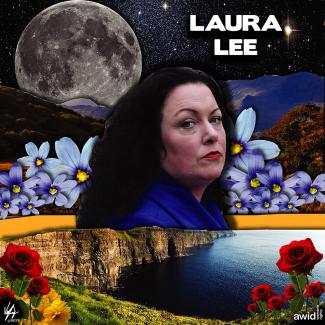
Laura was a leading activist and lawyer who campaigned fearlessly for the decriminalisation of sex work in Ireland.
She is remembered as “a freedom fighter for sex workers, a feminist, a mother to a daughter and a needed friend to many.”
Laura advocated for individuals in the sex industry to be recognised as workers deserving of rights. She advanced demands for decriminalisation, including initiating a judicial review at Belfast’s high court in respect of the provisions criminalising the purchase of sex. Laura stated that her intention was to bring the case to the European Court of Human Rights.
Las propuestas de decrecimiento cuestionan la premisa de que la economía de los países debe ‘crecer o perecer’ y muestran la falsedad del lugar central que se le otorga al crecimiento medido por un aumento del Producto Bruto Interno (PIB).
Un modelo de decrecimiento propone un cambio hacia niveles de producción y consumo más bajos y sostenibles. En esencia postula una reducción del sistema económico para dejarle más espacio a la cooperación entre personas y a los ecosistemas humanos.
Esta propuesta incluye:
Las perspectivas feministas dentro de la teoría y práctica del decrecimiento sostienen que también es necesario redefinir y revalidar el trabajo no remunerado y remunerado, de cuidados y en el mercado, para superar los estereotipos tradicionales de género así como las brechas laborales y las desigualdades en el ingreso prevalecientes que devalúan el trabajo de cuidado.


Опрос доступен на английском, арабском, испанском, португальском, русском и французском языках!
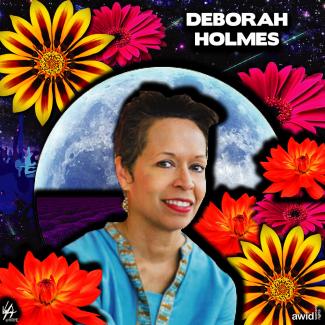
Al momento de su muerte, luego de una corta pero denodada batalla contra el cáncer, Deborah era la Jefa de Comunicaciones y Participación en la Women’s Funding Network (WFN, Red de financiamiento para mujeres).
Deborah también trabajó para el Fondo Global de Mujeres entre 2008 y 2017. Era sumamente querida y respetada por el consejo asesor, el personal y lxs colaboradorxs de la organización.
Kavita Ramdas, anterior directora ejecutiva del Fondo, acertadamente señaló que Deborah era un «pequeño paquete que explotaba de calidez, generosidad, inteligencia, estilo y un apasionado compromiso por unir la belleza con la justicia. Ella entendía el poder de las historias. El poder de la voz de las mujeres. El poder de la experiencia vivida. El poder de levantarse de las cenizas y decirle a otrxs que era posible. Y todavía nos levantamos».
Musimbi Kanyoro, actual directora ejecutiva del Fondo Global de Mujeres, añadió: «Hemos perdido a una hermana y su vida ilumina valores que nos unen y nos inspiran. Al reunirnos para llorar el fallecimiento de Deborah, recordemos y celebremos su notable, audaz y apasionada vida».