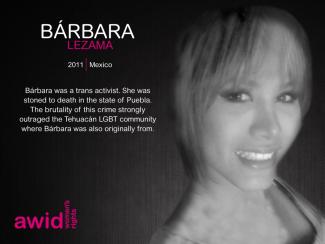
Barbara Lezama
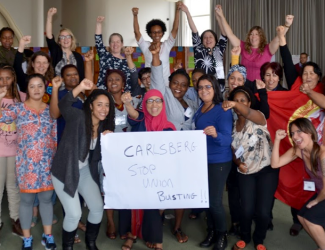
Women human rights defenders (WHRDs) worldwide defend their lands, livelihoods and communities from extractive industries and corporate power. They stand against powerful economic and political interests driving land theft, displacement of communities, loss of livelihoods, and environmental degradation.
Extractivism is an economic and political model of development that commodifies nature and prioritizes profit over human rights and the environment. Rooted in colonial history, it reinforces social and economic inequalities locally and globally. Often, Black, rural and Indigenous women are the most affected by extractivism, and are largely excluded from decision-making. Defying these patriarchal and neo-colonial forces, women rise in defense of rights, lands, people and nature.
WHRDs confronting extractive industries experience a range of risks, threats and violations, including criminalization, stigmatization, violence and intimidation. Their stories reveal a strong aspect of gendered and sexualized violence. Perpetrators include state and local authorities, corporations, police, military, paramilitary and private security forces, and at times their own communities.
AWID and the Women Human Rights Defenders International Coalition (WHRD-IC) are pleased to announce “Women Human Rights Defenders Confronting Extractivism and Corporate Power”; a cross-regional research project documenting the lived experiences of WHRDs from Asia, Africa and Latin America.
"Women Human Rights Defenders confronting extractive industries: an overview of critical risks and Human Rights obligations" is a policy report with a gender perspective. It analyses forms of violations and types of perpetrators, quotes relevant human rights obligations and includes policy recommendations to states, corporations, civil society and donors.
"Weaving resistance through action: Strategies of Women Human Rights Defenders confronting extractive industries" is a practical guide outlining creative and deliberate forms of action, successful tactics and inspiring stories of resistance.
The video “Defending people and planet: Women confronting extractive industries” puts courageous WHRDs from Africa, Asia, and Latin America in the spotlight. They share their struggles for land and life, and speak to the risks and challenges they face in their activism.
Challenging corporate power: Struggles for women’s rights, economic and gender justice is a research paper outlining the impacts of corporate power and offering insights into strategies of resistance.
AWID acknowledges with gratitude the invaluable input of every Woman Human Rights Defender who participated in this project. This project was made possible thanks to your willingness to generously and openly share your experiences and learnings. Your courage, creativity and resilience is an inspiration for us all. Thank you!
Check out the AWID Feminist Film Club program “Holding up the Skies” - a film series on Feminist Realities from Africa and the African Diaspora curated by Gabrielle Tesfaye
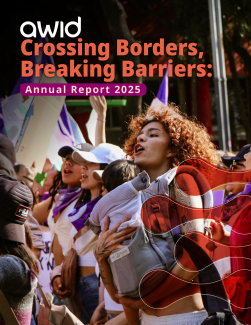
2025 was the year many of the storms we had long anticipated arrived all at once. From an avalanche of funding cuts, to intensified militarization and authoritarianism; from growing border violence to climate crises.
We asked what feminist movements will need not only to survive this moment, but to grow our collective strength and to shape our future. Our answer focused our work around three pillars: infrastructure, leadership and sustainability.
This is also the work of reinventing what it means for us at AWID to be global, to build solidarity and belonging across borders, to support movement and to mobilize action. There is no doubt that this is a time for courage, experimentation and collective imagination.
→Region
→Level of organizing
→Registration status
→Priorities and Agendas
Fadila M. was a Soulaliyate tribal activist from Azrou, the Ifrane region of Morocco. She fought against a specific form of land discrimination directed against tribal women.
As part of the Soulaliyate Women’s Land-Use Rights Movement, she worked towards overhauling the framework legislation relating to the management of community property through the 2019 adoption of three projects of laws guaranteeing the equality of women and men.
According to the customary laws in force, women had no right to benefit from the land, especially those who were single, widowed or divorced. The rights to collective land in Morocco were transmitted traditionally between male members of a family of over 16 years of age. Since 2007, Fadila M. had been part of the women’s movement, the first grassroots nationwide mobilization for land rights. Some of the achievements included that in 2012 for the first time Soulaliyate women were able to register on the lists of beneficiaries and to benefit from compensation relating to land cession. The movement also managed to get the 1919 dahir (Moroccan King's decree) amended to guarantee women the right to equality.
Fadila M. died on 27 September 2018. The circumstances of her death are unclear. She was part of a protest march connected to the issue of collective land and while authorities reported her death as being accidental, and her having a cardiac arrest on the way to the hospital, the local section of the Moroccan Association of Human Rights (AMDH) pointed out that Fadila was suffocated by a member of the police force using a Moroccan flag. Her family requested investigation but the results of the autopsy were not known.
Find out more about the Soulaliyate Women’s Land-Use Rights Movement
Please note: As there was no photograph/image of Fadila M. available to us, the artwork (instead of a portrait) aims to represent what she fought and worked for; land and rights to live and have access to that land and what grows on it.

Registration will start early 2024. We will announce the exact registration date and registration fee soon. Registration will include participation in the Forum, plus lunch and snacks (breakfast to be provided at the hotels), and one onsite dinner.
Les discours antidroits continuent à évoluer. Outre le recours à des arguments religieux, culturels et traditionnels, les acteur·rice·s antidroits s’approprient le langage de la justice sociale et des droits humains pour travestir leurs véritables programmes et gagner ainsi en légitimité.
Inna is a feminist queer activist and sociologist with many years of deep engagement in feminist and LGBTQI+ struggles, political education and organizing by and for migrant women, and Palestine liberation and solidarity. She joined AWID in 2016 and served in different roles, most recently as Director of Programs. She is based in Berlin, Germany, grew up in Haifa, Palestine/Israel, was born in St. Petersburg, Russia, and carries these political geographies and resistance to colonial past and present into her feminism and transnational solidarity.
Inna is the author of “Women's Economic Empowerment: Feminism, Neoliberalism, and the State” (Palgrave Macmillan, 2022), based on the dissertation which earned her a doctoral degree from the Humboldt University of Berlin. As an academic, she taught courses on globalization, knowledge production, identity and belonging. Inna holds an MA in Cultural Studies from the Hebrew University of Jerusalem. She is a Board Member of the Jewish Voice for a Just Peace in the Middle East (Germany), and previously of +972 Advancement of Citizen Journalism. Previously Inna worked with the Coalition of Women for Peace and she is passionate about mobilizing resources for grassroots activism.
This new report shines a light on the resourcing realities of feminist and women’s rights organizations amid unprecedented political and financial upheaval. Drawing on over a decade of analysis since AWID last Where is the Money? report it takes stock of the gains, gaps, and growing threats in the funding landscape.
Rosa Cándida Mayorga Muñoz fue una trabajadora social guatemalteca, líder sindical y defensora de los derechos laborales. La llamaban cariñosamente «Rosita».
En la década de 1980, Rosa se convirtió en la primera mujer integrante del Comité Ejecutivo del Sindicato de Trabajadores del Instituto Nacional de Electrificación (STINDE), un sindicato al que se había incorporado originalmente para defender los derechos laborales de las mujeres. Para ella, esto significaba luchar por la igualdad de oportunidades en una empresa en la que muchas mujeres enfrentaban un sistema discriminatorio y violento creado por las autoridades de la compañía. Rosa también había sufrido acoso sexual en su lugar de trabajo, tanto por parte de sus compañeros de trabajo, como de los funcionarios. Sin embargo, no era alguien a quien se pudiera acallar.
Rosa continuó con su pelea y fue parte del esfuerzo por configurar la lucha en una forma más específica, la del «Pacto colectivo de condiciones de trabajo INDE -STINDE». Este pacto fue pionero: el primero en tipificar el concepto de acoso (sexual) en Guatemala. Sirve como referencia para la legislación guatemalteca en temas laborales, y es un estímulo para otros sindicatos.
«No tenía herramientas de lucha más que sus propios ideales... Muchas veces fue intimidada, hostigada para dejar por un lado la lucha, pero su valentía a enfrentar generaba la imagen de la esperanza para los sindicalistas de bases. Rosita se trazó una imagen de respeto, no solo dentro de su sindicato, sino ante las autoridades de la institución, ante el movimiento de mujeres; fue reconocida, como pionera, del movimiento de mujeres sindicalistas, en un espacio que había sido más desarrollado por hombres.» - Maritza Velasquez, ATRAHDOM
Rosa falleció el 4 de abril de 2018, a la edad de 77 años.
Nuestro Fondo de Acceso ofrecerá un número limitado de becas para financiar la participación de activistas que de otra manera no podrían asistir y que no tienen relaciones con donantes que puedan cubrir su participación. Por lo tanto, si tienes otras posibilidades, te animamos a explorarlas. Haremos todo lo posible para ofrecer la mayor cantidad de becas y compartiremos más información sobre este proceso y cómo postular a principios de 2024.
The most recent report from the Observatory on the Universality of Rights unpicks discourses like “gender ideology”, “prenatal genocide”, and “cultural imperialism”. It also digs into CitizenGo, Alliance Defending Freedom, and anti-rights funding flows. You’ll also find analysis on regional human rights systems and successful feminist strategies and wins!
Dr. Margo Okazawa-Rey ocupa la Cátedra Distinguida Barbara Lee en Liderazgo de Mujeres y es Profesora visitante de Estudios de Mujeres, Género y Sexualidad, y de Políticas Públicas en Mills College, en Oakland, California. También es Profesora Emérita en la Universidad Estatal de San Francisco.
Sus principales áreas de investigación y activismo durante los últimos 25 años han sido el militarismo, los conflictos armados y la violencia contra las mujeres, examinados de manera interseccional. La profesora Okazawa-Rey participa en el Consejo Consultivo Internacional de Du Re Bang en Uijongbu, Corea del Sur; en la Junta Internacional de Mujeres de Paz en el Mundo (PeaceWomen Across the Globe) en Berna, Suiza; y es co-presidente de la Junta del Centro Highlander para la Investigación y Educación en New Market, Tennessee, EE. UU.
Sus publicaciones recientes incluyen “Nation-izing” Coalition and Solidarity Politics for US Anti-militarist Feminists [«Coalición “nacio-nalizadora” y políticas de solidaridad para las feministas antimilitaristas de EE. UU.»], en prensa; “No Freedom without Connections: Envisioning Sustainable Feminist Solidarities” [«No hay libertad sin conexiones: contemplando solidaridad feminista sostenible»] (2018) in Feminist Freedom Warriors: Genealogies, Justice, Politics, and Hope [«Guerreras feministas por la libertad: genealogías, justicia, política y esperanza»], Chandra Talpade Mohanty and Linda Carty (eds.); Between a Rock and Hard Place: Southeast Asian Women Confront Extractivism, Militarism, and Religious Fundamentalisms [«Entre la espada y la pared: Las mujeres del sudeste asiático enfrentan el extractivismo, el militarismo y los fundamentalismos religiosos»] (2018); “Liberal Arts Colleges Partnering with Highlander Research and Education Center: Intergenerational Learning for Student Campus Activism and Personal Transformation,” Feminist Formations Special Issue on Feminist Social Justice Pedagogy (2018) [«Las universidades de artes liberales se asocian con el Centro Highlander para la Investigación y Educación: aprendizaje intergeneracional para el activismo estudiantil y la transformación personal», número especial de Formaciones Feministas sobre pedagogía de la justicia social feminista]
The climate summit by movements, for movements.
📅 November 12 - November 16, 2025
📍 Universidade Federal do Pará, Belém
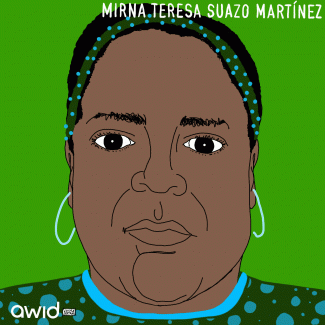
Mirna Teresa Suazo Martínez faisait partie de la communauté garifuna (afro-descendante et autochtone) Masca et vivait sur la côte nord des Caraïbes du Honduras. Elle était leader de sa communauté et fervente défenseure du territoire autochtone, une terre qui a été violée le jour où l'Institut national agraire du Honduras a accordé des licences territoriales à des personnes extérieures à la communauté.
Ce fait déplorable a été à l'origine de harcèlements, d'abus et de violences répétés contre Masca, où les intérêts économiques de différents groupes se sont heurtés à ceux des forces armées et des autorités honduriennes. Selon l'Organisation fraternelle noire du Honduras (OFRANEH), la stratégie de ces groupes consiste à expulser et exterminer la population autochtone.
« Masca, la communauté garifuna située près de la vallée du Cuyamel, se trouve dans la zone d’influence de l’une des villes présumées modèles, une situation qui a déclenché des pressions territoriales le long de la côte garifuna. » - OFRANEH, 8 septembre 2019
Mirna Teresa, présidente du conseil d'administration de la communauté de Masca à Omoa, avait elle aussi fermement rejeté la construction de deux centrales hydroélectriques sur la rivière Masca, qui porte le même nom que sa communauté.
« La communauté garífuna attribue l'aggravation de la situation dans leur région à son opposition à l'exploitation touristique, à la monoculture de palmiers africains et au trafic de drogue, tandis qu'elle cherche parallèlement à construire une vie alternative au travers de la culture de la noix de coco et d'autres produits d'autoconsommation ». - Voces Feministas, 10 septembre 2019
Mirna Teresa a été assassinée le 8 septembre 2019 dans son restaurant « Champa los Gemelos ».
Elle est l'une des six femmes défenseures garifunas à avoir été assassinées rien qu'entre septembre et octobre 2019. Selon l'OFRANEH, les autorités n'ont pas mené d'enquête sur ces crimes.
« En ce qui concerne les communautés garífuna, une grande partie des homicides sont liés au régime foncier et à la gestion des terres. Cependant, les querelles entre les organisations criminelles ont abouti à des meurtres, à l’instar de ceux ayant eu lieu récemment à Santa Rosa de Aguán ». - OFRANEH, 8 septembre 2019
Nous pensons que oui ! Le processus de planification n'en est qu'à ses débuts, alors restez à l'écoute car les plans sont en pleine préparation.
Sigue a nuestra superheroína mientras se embarca en una misión para recuperar las narrativas capturadas por los actores antiderecho en todo el mundo.