Contenido relacionado
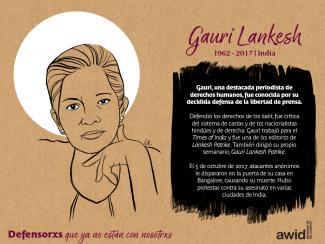
Reporteros sin Fronteras: India: Asesinada la periodista Gauri Lankesh
Global Voices: Asesinan a Gauri Lankesh, periodista crítica con la derecha india, a la entrada de su casa
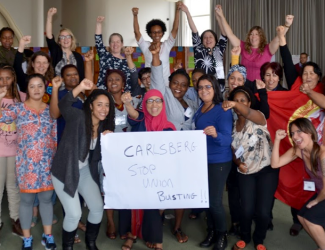
Women human rights defenders (WHRDs) worldwide defend their lands, livelihoods and communities from extractive industries and corporate power. They stand against powerful economic and political interests driving land theft, displacement of communities, loss of livelihoods, and environmental degradation.
Extractivism is an economic and political model of development that commodifies nature and prioritizes profit over human rights and the environment. Rooted in colonial history, it reinforces social and economic inequalities locally and globally. Often, Black, rural and Indigenous women are the most affected by extractivism, and are largely excluded from decision-making. Defying these patriarchal and neo-colonial forces, women rise in defense of rights, lands, people and nature.
WHRDs confronting extractive industries experience a range of risks, threats and violations, including criminalization, stigmatization, violence and intimidation. Their stories reveal a strong aspect of gendered and sexualized violence. Perpetrators include state and local authorities, corporations, police, military, paramilitary and private security forces, and at times their own communities.
AWID and the Women Human Rights Defenders International Coalition (WHRD-IC) are pleased to announce “Women Human Rights Defenders Confronting Extractivism and Corporate Power”; a cross-regional research project documenting the lived experiences of WHRDs from Asia, Africa and Latin America.
"Women Human Rights Defenders confronting extractive industries: an overview of critical risks and Human Rights obligations" is a policy report with a gender perspective. It analyses forms of violations and types of perpetrators, quotes relevant human rights obligations and includes policy recommendations to states, corporations, civil society and donors.
"Weaving resistance through action: Strategies of Women Human Rights Defenders confronting extractive industries" is a practical guide outlining creative and deliberate forms of action, successful tactics and inspiring stories of resistance.
The video “Defending people and planet: Women confronting extractive industries” puts courageous WHRDs from Africa, Asia, and Latin America in the spotlight. They share their struggles for land and life, and speak to the risks and challenges they face in their activism.
Challenging corporate power: Struggles for women’s rights, economic and gender justice is a research paper outlining the impacts of corporate power and offering insights into strategies of resistance.
AWID acknowledges with gratitude the invaluable input of every Woman Human Rights Defender who participated in this project. This project was made possible thanks to your willingness to generously and openly share your experiences and learnings. Your courage, creativity and resilience is an inspiration for us all. Thank you!
Sesiones adicionales para redactar el Documento Final de Adís Abeba
Para saber más sobre este proceso, puedes consultar la CSO Hitchhiker’s Guide (en inglés).
Contenido relacionado
Reporteros sin Fronteras: India: Asesinada la periodista Gauri Lankesh
Global Voices: Asesinan a Gauri Lankesh, periodista crítica con la derecha india, a la entrada de su casa
Meet Aura Roig, the visionary feminist activist, anthropologist, director and founder of the Metzineres cooperative.
She spent the last two decades researching, designing and implementing drug policies from the perspective of harm reduction, human rights and intersectional feminism.
Having experienced and learned from communities who use drugs around the world, she returned to Barcelona and created Xarxa de Dones que Usen Drogues (the Network of Women Who Use Drugs, XADUD). XADUD was a space of mutual support and solidarity with the struggle to secure rights for marginalized groups, which later became the Metzineres cooperative.
Aura is currently working on expanding the Metzineres model to provide support to bigger constituencies, while also extensively documenting their prolific journey and learnings.
‘A geopolitical Analysis of Financing for Development’ by Regions Refocus 2015 and Third World Network (TWN) with DAWN.
The Zero Draft Language Map, by Regions Refocus
‘Addis Ababa financing conference: Will the means undermine the goals?‘ by RightingFinance
Contenu lié
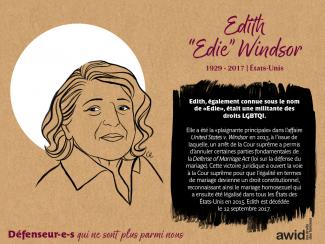
Rolling Stone Magazine: Décès d’Edith Windsor: la communauté LGBT pleure une icône
Le Monde: L’Américaine Edith Windsor, figure LGBT, est morte
Mientras estés en São Paulo, Brasil, puedes visitar la Ocupação 9 de Julho y pedir una comida colaborativa. También puedes comprar sus productos en su tienda online desde el extranjero.
Visita la tienda en línea de la Asociación de Mujeres Afrodescendientes del Norte del Cauca (ASOM) donde puedes encontrar hermosos productos hechos a mano.
Hay varias formas de apoyar a Metzineres: puedes hacer una donación económica, donar materiales y servicios, o proponer una formación, un taller o una actividad (para más información, ¡ver aquí!)
AWID gratefully acknowledges the many people whose ideas, analysis and contributions have shaped the “Where is the Money for Feminist Organizing?” research and advocacy over the years.
First and foremost, our deepest thanks goes to the AWID members and activists who engaged in WITM consultations and piloted this survey with us, sharing so generously of their time, analysis and hearts.
Our appreciation to feminist movements, allies and feminist funds, including but not limited to: Black Feminist Fund, Pacific Feminist Fund, ASTRAEA Lesbian Foundation for Justice, FRIDA Young Feminist Fund, Purposeful, Kosovo Women’s Network, Human Rights Funders Network, Dalan Fund and PROSPERA International Network of Women's Funds - for your rigorous research on the state of resourcing, sharp analysis and continued advocacy for more and better funding and power for feminist and gender justice organizing in all contexts.
作為對AWID論壇各方面可訪問性承諾的一部分,我們接受那些無法提交書面申請的個人/組織/團體提交自己的音頻或視頻等。
如果您選擇以音頻/視頻格式提交提案,請按照相同的順序回答活動申請表格中詳細的問題。
若您要提交音頻/視頻文件,請與我們聯繫,選擇“論壇活動徵集”作為電子郵件的主題。

Absolutely, we want to hear about your experience with resourcing.
所有參與者的AWID論壇註冊費包括:
NOUS SOMMES LA SOLUTION
El financiamiento externo incluye donaciones y otras formas de financiamiento provenientes de fundaciones filantrópicas, gobiernos, donantes bilaterales, multilaterales y corporativos y de donantes individuales, ya sea que estos se encuentren radicados en tu país o en el exterior. Excluye aquellos recursos que las agrupaciones, organizaciones o movimientos generan de manera autónoma como, por ejemplo, cuotas de membresía, contribuciones voluntarias del personal, afiliadxs o adherentes, colectas comunitarias, alquiler de espacios propios o venta de servicios. Para consultar más referencias, en la propia encuesta se encuentran incluidas las definiciones de los distintos tipos de financiamiento y descripciones breves de distintos tipos de donantes.