Special Focus

AWID is an international, feminist, membership organisation committed to achieving gender equality, sustainable development and women’s human rights

Confronting Extractivism & Corporate Power

Women human rights defenders (WHRDs) worldwide defend their lands, livelihoods and communities from extractive industries and corporate power. They stand against powerful economic and political interests driving land theft, displacement of communities, loss of livelihoods, and environmental degradation.


Why resist extractive industries?

Extractivism is an economic and political model of development that commodifies nature and prioritizes profit over human rights and the environment. Rooted in colonial history, it reinforces social and economic inequalities locally and globally. Often, Black, rural and Indigenous women are the most affected by extractivism, and are largely excluded from decision-making. Defying these patriarchal and neo-colonial forces, women rise in defense of rights, lands, people and nature.

Critical risks and gender-specific violence

WHRDs confronting extractive industries experience a range of risks, threats and violations, including criminalization, stigmatization, violence and intimidation.  Their stories reveal a strong aspect of gendered and sexualized violence. Perpetrators include state and local authorities, corporations, police, military, paramilitary and private security forces, and at times their own communities.

Acting together

AWID and the Women Human Rights Defenders International Coalition (WHRD-IC) are pleased to announce “Women Human Rights Defenders Confronting Extractivism and Corporate Power”; a cross-regional research project documenting the lived experiences of WHRDs from Asia, Africa and Latin America.

We encourage activists, members of social movements, organized civil society, donors and policy makers to read and use these products for advocacy, education and inspiration.

Share your experience and questions!

Tell us how you are using the resources on WHRDs Confronting extractivism and corporate power.

◾️ How can these resources support your activism and advocacy?

◾️ What additional information or knowledge do you need to make the best use of these resources?

Share your feedback


Thank you!

AWID acknowledges with gratitude the invaluable input of every Woman Human Rights Defender who participated in this project. This project was made possible thanks to your willingness to generously and openly share your experiences and learnings. Your courage, creativity and resilience is an inspiration for us all. Thank you!

Related Content

Clone of Snippet - WITM About the survey - ES

Acerca de la encuesta

  • GLOBAL Y DIVERSA: Reflexiona acerca de las realidades de la dotación de recursos entre las organizaciones feministas a escala mundial y desglosada por regiones.
  • CONTEXTUALIZADA: Se centra en las voces, perspectivas y experiencias de los movimientos feministas en toda su riqueza, audacia y diversidad, en sus respectivos contextos.
  • DE CREACIÓN CONJUNTA: Desarrollada y puesta a prueba en consulta estrecha con lxs afiliadxs y movimientos aliados de AWID.
  • COMPLEMENTARIA: Contribuye a la evidencia disponible acerca del estado de la dotación de recursos para las organizaciones feministas, por los derechos de las mujeres y la justicia de género por parte de activistas, donantes feministas y aliadxs, y la difunde.
  • PLURILINGÜE: Disponible en árabe, español, francés, inglés, portugués y ruso.
  • CONFIDENCIAL: Damos prioridad a tu privacidad y anonimato. En ningún caso, AWID divulgará información acerca de una organización en particular ni exhibirá información que permita identificar a una organización por su ubicación o características. Los detalles de nuestra política de privacidad se encuentran disponibles aquí.
  • ACCESIBLE: Es accesible a personas con distinto grado de capacidades auditivas, de movilidad, visuales y cognitivas, y responderla toma aproximadamente 30 minutos.
  • REPLICABLE: Es susceptible de ser replicada por los movimientos en sus respectivos contextos; las herramientas y los conjuntos de datos de la encuesta estarán disponibles al público como forma de apoyar una mayor investigación y la promoción colectiva.

Hevrin Khalaf

Hevrin Khalaf était une grande dirigeante politique kurde de Syrie dans la région autonome du Rojava, où les femmes kurdes risquent leur vie pour résister aux offensives turques et pour bâtir un système féministe.

Elle a travaillé en tant que secrétaire-générale du Parti du Futur de la Syrie, un groupe qui souhaitait construire des ponts, réconcilier les différents groupes ethniques et mettre sur pied une « Syrie démocratique, pluraliste et décentralisée ».

Véritable symbole de cet effort de réconciliation, elle a également oeuvré à la promotion de l’égalité entre les femmes et les hommes et fut représentante auprès des journalistes en visite, des humanitaires et des diplomates.

Hevrin a de plus été diplômée en tant qu’ingénieure civile, à la ville de Derik, ainsi que l’une des fondatrices de la Fondation pour la Science et la Libre pensée en 2012.

Elle a été torturée et assassinée le 12 octobre 2019 par la milice Ahrar al-Sharqiya, soutenue par la Turquie, lors d’une opération militaire contre les Forces démocratiques syriennes dans le Rojava.

 « L’assassinat de Khalaf est un tournant majeur dans l’histoire moderne de la Syrie, celui-ci ayant une fois de plus confirmé la validité du vieux proverbe kurde qui dit : « Il n’y a de véritable ami·e que la montagne ». Je serai toujours ami avec Khalaf et sa vision d’un monde meilleur. » – Ahed Al Hendi

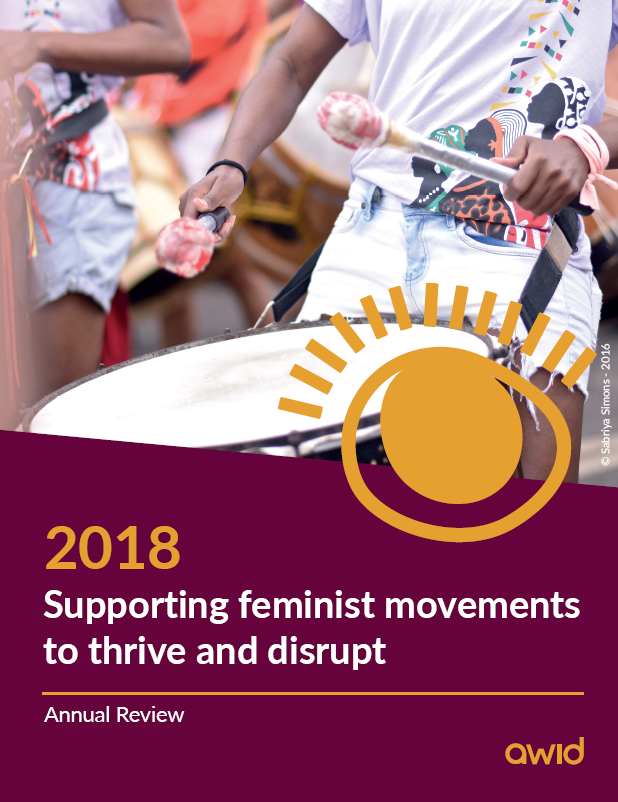
2018: Supporting feminist movements to thrive and disrupt

This report looks back and celebrates the first year of AWID’s new strategic plan as we took our first steps towards our desired outcomes of supporting feminist movements to thrive, challenging anti-rights agendas and co-creating feminist realities.

Download the full report


We worked with feminists to disrupt anti-rights agendas, achieving important victories fought and won within the United Nations system when ground-breaking language on structural discrimination, sexual rights, and states’ obligations were included in a number of resolutions. Yes, the multilateral system is in crisis and in need of serious strengthening but these victories are important as they contribute to the legitimacy of feminist demands, providing feminist movements with more pressure points and momentum to advance our agendas.

We tried and tested different ways to build knowledge with feminist movements through webinars, podcasts and ‘live’ conversations. We developed facilitation guides with popular educators to reclaim knowledge in the interest of social and gender justice, even about a topic as seemingly opaque as illicit funding flows. We commissioned blogs and opinions about how feminist groups fund and resource themselves and threw light on the threats facing our human rights systems.

Within AWID, we practiced and learned from our shared leadership approach, and told the story of the trials and tribulations of co-leading a global, virtual organization. We don’t have a definitive answer to what feminist leadership looks like, but we know, a year on, that a continued commitment to collective experimentation and learning has enabled us to keep building an organization that we are all excited to contribute to.

As we look back on this year, we want to thank all our friends and supporters, colleagues and companions, who have given their time and shared their wealth of knowledge and wisdom with us. We want to thank our members who helped frame our strategic plan and joined us to make feminist demands. We could not do this work without you.

Download the full report

Snippet FEA Objectives NSS - Traditional Knowledge (ES)

CONOCIMIENTOS TRADICIONALES

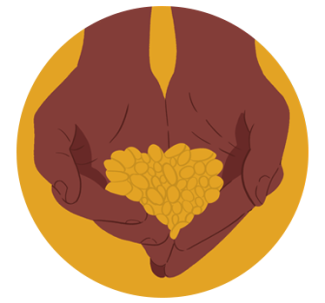
Brown hands with yellow seeds in the palms
Utilizar y promover los conocimientos y prácticas tradicionales transmitidos de generación en generación, que apoyen la soberanía alimentaria y la preservación de las semillas campesinas

WITM - Refreshed INFOGRAPHIC 3 EN

How feminists resource themselves

Feminist and women’s rights organizations don’t just rely on institutional funding, we resource ourselves. Our organizing is powered by passion, political commitment, solidarity and collective care.
These resources are self- generated and autonomous, and often invisible in our budgets, but they are the backbone of our organizing.

 Explore the data on autonomous resourcing

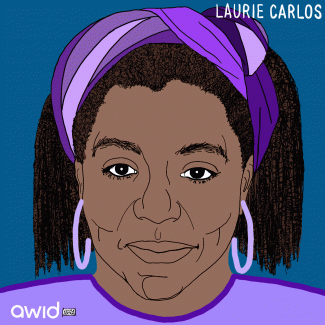
Laurie Carlos

Laurie Carlos was an actor, director, dancer, playwright, and poet in the United States. An extraordinary artist and visionary with powerful ways of bringing the art out in others. 

“Laurie walked in the room (any room/every room) with swirling clairvoyance, artistic genius, embodied rigor, fierce realness—and a determination to be free...and to free others. A Magic Maker. A Seer. A Shape Shifter. Laurie told me once that she went inside people’s bodies to find what they needed.” - Sharon Bridgforth 

She combined performance styles such as rhythmic gestures and text. Laurie mentored new actors, performers, writers and helped amplify their work through Naked Stages, a fellowship for emerging artists. She was an artistic fellow at Penumbra Theater and supported with identifying scripts to produce, with a goal of “bringing more feminine voices into the theater”. Laurie was also a member of Urban Bush Women, a renowned contemporary dance company telling stories of women of the African diaspora.

In 1976, as Lady in Blue, she made her Broadway debut in Ntozake Shange’s original and award-winning production of the poetic drama For colored girls who have considered suicide / when the rainbow is enuf. Laurie’s own works include White Chocolate, The Cooking Show, and Organdy Falsetto. 

“I tell the stories in the movement—the inside dances that occur spontaneously, as in life—the music and the text. If I write a line, it doesn’t necessarily have to be a line that is spoken; it can be a line that’s moved. A line from which music is created. The gesture becomes the sentence. So much of who we are as women, as people, has to do with how we gesture to one another all the time, and particularly through emotional moments. Gesture becomes a sentence or a state of fact. If I put on a script ‘four gestures,’ that doesn’t mean I’m not saying anything; that means I have opened it up for something to be said physically.” Laurie Carlos

Laurie was born and grew up in New York City, worked and lived in Twin Cities. She passed away on 29 December 2016, at the age of 67, after a battle with colon cancer.


Tributes:  

“I believe that that was exactly Laurie’s intention. To save us. From mediocrity. From ego. From laziness. From half-realized art making. From being paralyzed by fear.
Laurie wanted to help us Shine fully.
In our artistry.
In our Lives.” - Sharon Bridgforth for Pillsbury House Theatre

“There’s no one that knew Laurie that wouldn’t call her a singular individual. She was her own person. She was her own person, her own artist; she put the world as she knew it on stage with real style and understanding, and she lived her art.” - Lou Bellamy, Founder of Penumbra Theater Company, for Star Tribune 

Read a full Tribute by Sharon Bridgforth
2022: Transitions, Inspiration & Collective Power

Our strategic plan “Feminist Realities” completed its final year at the end of 2022. For the past five years, this bold framework pushed us to go beyond feminist futures and to recognize the feminist solutions and ways of life that already exist in the here and now. Realities that must be uplifted, celebrated, and popularized. The Feminist Economies We Love multimedia story project and Our:Resource knowledge hub on autonomous ways to resource feminist activism are just two examples of this visionary work, always deeply collective with diverse feminist movements.

Download the full 2022 Annual review


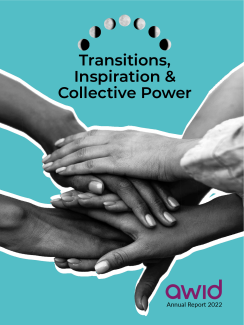
Cover for AWID's 2022 Annual Report. The cover is light blue and shows a group of people joining hands. Over the text "Transitions, Inspiration and Collective Power" there is a semi circle formed by little moons, representing the transtions.

2022 was a year of transitions in AWID.

With this reflection on the year, we invite you to celebrate with us beautiful closures and promising beginnings. Change and transitions are an inseparable part of life and movements, which we seek to embrace with intention and care.

Download the full 2022 Annual review

Snippet FEA NSS Quote (FR)

« Les savoirs et pratiques indigènes ont toujours soutenu la souveraineté alimentaire, et ce savoir-faire est entre les mains des femmes [...] L'écoféminisme pour moi, c'est le respect de tout ce que nous avons autour de nous » -

Mariama Sonko

Snippet - COP30 - Radical Democracy - EN

Radical Democracy and Climate Justice - the missing debate of COP30

As the world struggles with multiple intersecting crises, local communities and collectives of various kinds are resisting as also creating constructive alternatives.

📅 Wednesday, November 12, 2025
📍 Seminario Mar Nossa Sra Da Assunção, Pará, Brazil

More info here

Fadila M.

Fadila M. fue una activista tribal soulaliyate de Azrú, en la región Ifrane de  Marruecos. Luchó contra una forma específica de discriminación territorial dirigida a  las mujeres tribales.

Como parte del Movimiento de Mujeres Soulaliyate por el Derecho a la Tierra, trabajó para reformar el marco legislativo relacionado con la administración de la propiedad comunitaria, a través de la adopción, en 2019, de tres proyectos de ley que garantizan la igualdad de mujeres y varones.

Según las leyes consuetudinarias vigentes, las mujeres no tenían derecho a beneficiarse de la tierra, en especial aquellas que eran solteras, viudas o divorciadas. En Marruecos, los derechos a las tierras colectivas eran transmitidos tradicionalmente entre los varones de la familia mayores de 16 años. Desde 2007, Fadila M. ha sido parte del movimiento de mujeres, la primera movilización nacional de base por los derechos a la tierra. Una de sus conquistas ha sido que, en 2012, las mujeres soulaliyate pudieron registrarse por primera vez en las listas de beneficiarixs, y recibir compensaciones relacionadas con la cesión de tierras. El movimiento también logró la enmienda del dahir (decreto del Rey de Marruecos) de 1919, para garantizar el derecho a la igualdad de las mujeres.

Fadila M. falleció el 27 de septiembre de 2018. Las circunstancias de su muerte no son claras. Participó en una marcha de protesta relacionada con el tema de las tierras colectivas y, si bien las autoridades informaron que su muerte fue accidental y que tuvo un paro cardíaco camino al hospital, la sección local de la Asociación de Derechos Humanos de Marruecos (AMDH) señaló que Fadila fue sofocada por un miembro de la fuerza policial utilizando una bandera marroquí. Su familia solicitó una investigación, pero los resultados de la autopsia no fueron dados a conocer.

Más información sobre el Movimiento de Mujeres Soulaliyate por el Derecho a la Tierra (en inglés)


Nota: Como no ninguna fotografía/imagen de Fadila M. disponible, la obra de arte (en lugar de un retrato) pretende representar por lo que luchó y trabajó: la tierra y los derechos a vivir y tener acceso a esa tierra y lo que crece en ella.

Lucy O.

Biography

Avec plus de dix ans d'expérience en finance, Lucy a consacré sa carrière à développer les missions du secteur lucratif et non lucratif. Elle a notamment travaillé et été bénévole auprès d'organisations à but non lucratif. Issue du monde trépidant de la finance, Lucy reste à l'écoute des nouvelles compétences technologiques du domaine de la finance avec passion. Elle a rejoint l'AWID en 2014. Pendant son temps libre, elle aime écouter de la musique, voyager et pratiquer divers sports.

Position
Coordonnatrice de la Comptabilité
Add to stories
Off

Snippet FEA argentina history cooperatives (EN)

Argentina has a long history of worker-run cooperatives and workplaces.

In 2001, the country experienced one of the worst economic crises in its history.

As a response to the recession and a form of resistance and resilience, workers across the country started occupying their workplaces.

The Nadia Echazú Textile Cooperative was the first cooperative created by and for trans and travesti people in search of economic autonomy and decent living conditions.

It provides work opportunities, access to social security, sustainable income and economic rights for the communities it serves.

Snippet - COP30 - Actions - ES

Eventos y acciones en la COP30

8-16 de noviembre de 2025

Rosa Candida Mayorga Muñoz

Rosa Candida Mayorga Muñoz était une travailleuse sociale, leader syndicale et défenseure des droits humains du Guatemala. On la surnommait affectueusement Rosita. 

Dans les années 1980, Rosa devient la première femme à siéger au comité exécutif du syndicat de l’Institut d’électrification nationale (STINDE), syndicat qu’elle avait rejoint en premier lieu pour défendre les droits des femmes au travail. Cela signifiait, à ses yeux, de lutter pour l’égalité des chances dans une entreprise où de nombreuses femmes affrontaient un système discriminatoire et violent mis en place par la direction de l’entreprise. Rosa avait également subi du harcèlement sexuel sur son lieu de travail, tant de la part de collègues que de responsables. Elle n’entendait cependant pas rester silencieuse. 

Rosa a continué à se battre et fait partie des efforts pour façonner la lutte afin qu’elle prenne la forme du « Pacte collectif pour les conditions de travail du INDE-STINDE ». Ce pacte était le premier du genre et le premier au Guatemala à caractériser le concept de harcèlement (sexuel). Il fait désormais référence dans la loi guatémaltèque pour les questions de travail, et sert d’encouragement aux autres syndicats.

« Elle n’avait d’autres outils pour se battre que ses propres idéaux... Elle a été intimidée à plusieurs reprises, harcelée pour abandonner la lutte, mais son courage a fait naître l’espoir chez les syndicalistes de la base. Rosita a créé une image de respect non seulement au sein de son syndicat mais également face aux autorités de l’institution et au sein du mouvement des femmes. Elle a été reconnue comme une pionnière du mouvement des femmes du syndicat, dans un espace qui avait davantage été dominé par les hommes. » - Maritza Velasquez, ATRAHDOM

Rosa est décédée le 4 avril 2018, elle avait 77 ans.

Priscilla Hon

Biography

Priscilla has nearly two decades of experience working in the non-profit sector with social justice organizations that worked on women and youth rights, conservation, peacebuilding and development. Her interests are in setting up progressive processes and systems that will help an organization live to their values and principles and thrive, and finding ways to support organizations and fundraisers to locate and secure the resourcing they need to do good work. . Priscilla joined AWID in 2018 as Resource Mobilization Manager and in July 2023, took on the role of Director of Operations and Funding Partnerships.

Priscilla holds an MSc in International Politics from the School of Oriental and African Studies (SOAS), a growing pile of books she is still trying to find time to read, and sits on the Board of Hodan Somali Community, a London-based charity.

Position
Director of Operations and Funding Partnerships
Add to stories
Off

Snippet FEA Life expectancy of a trans and travesti (ES)

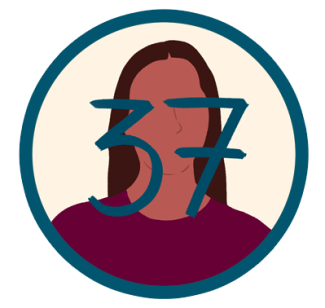
This illustration depicts a faceless person with long dark hair and a burgundy shirt, with the number 37 written across the image (37 being the life expectancy of a trans and travesti person in Argentina)

La expectativa de vida de una persona trans y travesti en Argentina es de 37 años - la edad promedio de la población general es de 77 años.