Maria Enriqueta Matute
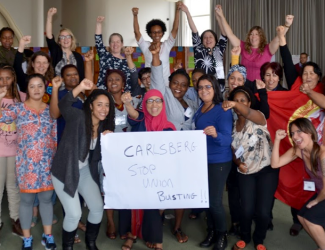
Women human rights defenders (WHRDs) worldwide defend their lands, livelihoods and communities from extractive industries and corporate power. They stand against powerful economic and political interests driving land theft, displacement of communities, loss of livelihoods, and environmental degradation.
Extractivism is an economic and political model of development that commodifies nature and prioritizes profit over human rights and the environment. Rooted in colonial history, it reinforces social and economic inequalities locally and globally. Often, Black, rural and Indigenous women are the most affected by extractivism, and are largely excluded from decision-making. Defying these patriarchal and neo-colonial forces, women rise in defense of rights, lands, people and nature.
WHRDs confronting extractive industries experience a range of risks, threats and violations, including criminalization, stigmatization, violence and intimidation. Their stories reveal a strong aspect of gendered and sexualized violence. Perpetrators include state and local authorities, corporations, police, military, paramilitary and private security forces, and at times their own communities.
AWID and the Women Human Rights Defenders International Coalition (WHRD-IC) are pleased to announce “Women Human Rights Defenders Confronting Extractivism and Corporate Power”; a cross-regional research project documenting the lived experiences of WHRDs from Asia, Africa and Latin America.
"Women Human Rights Defenders confronting extractive industries: an overview of critical risks and Human Rights obligations" is a policy report with a gender perspective. It analyses forms of violations and types of perpetrators, quotes relevant human rights obligations and includes policy recommendations to states, corporations, civil society and donors.
"Weaving resistance through action: Strategies of Women Human Rights Defenders confronting extractive industries" is a practical guide outlining creative and deliberate forms of action, successful tactics and inspiring stories of resistance.
The video “Defending people and planet: Women confronting extractive industries” puts courageous WHRDs from Africa, Asia, and Latin America in the spotlight. They share their struggles for land and life, and speak to the risks and challenges they face in their activism.
Challenging corporate power: Struggles for women’s rights, economic and gender justice is a research paper outlining the impacts of corporate power and offering insights into strategies of resistance.
AWID acknowledges with gratitude the invaluable input of every Woman Human Rights Defender who participated in this project. This project was made possible thanks to your willingness to generously and openly share your experiences and learnings. Your courage, creativity and resilience is an inspiration for us all. Thank you!
El tema del 14° Foro Internacional de AWID es «Realidades feministas: nuestro poder en acción».
Entendemos las realidades feministas como los diferentes modos de existir y ser que nos muestran lo que es posible, a pesar de los sistemas de poder dominantes, y en desafío y resistencia contra ellos. Entendemos estas realidades feministas como recuperaciones y corporizaciones de esperanza y poder, multidimensionales, dinámicas, y arraigadas en contextos y momentos históricos específicos.
Nació en Bahía, la parte noreste de Brasil. Es inmigrante, activista social y madre de 8 hijxs.
Carmen experimentó la falta de vivienda a los 35 años, después de migrar sola a São Paulo. Esto la llevó a convertirse en una feroz defensora de las comunidades vulnerables, marginalizadas e invisibilizadas más afectadas por la crisis de la vivienda. Eventualmente se convirtió en una de las fundadoras del MSTC en 2000.
Como organizadora política visionaria y líder actual del MSTC, el trabajo de Carmen ha puesto al descubierto la crisis de la vivienda de la ciudad y ha inspirado a otrxs sobre diferentes formas de organizar y gestionar las ocupaciones.
Se mantuvo firme al frente de varias ocupaciones. Uno de ellos es la Ocupación 9 de Julho, que ahora sirve como escenario para la democracia directa y un espacio donde todxs pueden ser cuidadxs, escuchadxs, apreciadxs y trabajar juntos.
Carmen ha sido celebrada durante mucho tiempo por su audacia al devolver la vida a edificios abandonados en el corazón de São Paulo.
¡Si quieres saber más sobre Carmen, puedes seguir su cuenta de Instagram!
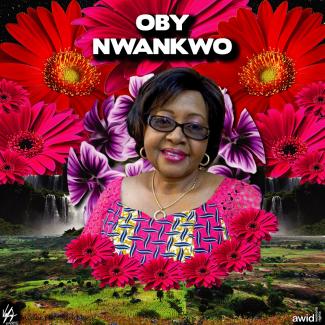
With a legal career spanning more than 30 years, Oby was known across Africa and around the world as a champion for gender justice and human rights.
She founded and served as Executive Director of the Civil Resource Development and Documentation Centre (CIRDDOC), a Nigerian NGO which sponsors trainings and network-building activities for members of civil society, parliamentarians and other key stakeholders to promote human rights, good governance and access to justice and rule of law.
Oby is remembered fondly by activists in Nigeria as an “extraordinary activist who displayed energy and passion towards the fight for gender equality and gender justice in Nigeria and across Africa.”
Siempre hemos trabajado para garantizar que nuestros Foros sean desarrollados conjuntamente con nuestrxs afiliadxs, los movimientos, y nuestros colectivos prioritarios.
Para el Foro 2020 queremos profundizar y fortalecer este espíritu y esta práctica de creación conjunta y colaboración. También reconocemos la necesidad de mejorar el equilibrio entre la inclusión de muchas voces y experiencias y el espacio para que lxs participantes y el equipo respiren, se tomen una pausa, y disfruten de un poco de tiempo de inactividad.
Este Foro será diferente en cuanto a que:
Día 1
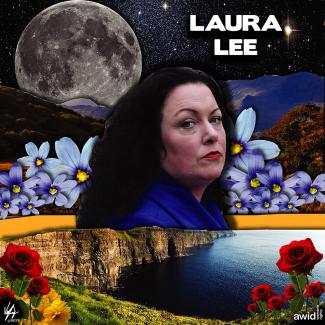
Laura fue una abogada y líder activista que luchó valientemente por la descriminalización del trabajo sexual en Irlanda.
Es recordada como «una combatiente por la libertad de lxs trabajadorxs sexuales, una feminista, una madre para su hija y una amiga necesaria para mucha gente».
Laura promovió el reconocimiento de las personas de la industria del sexo como trabajadorxs merecedorxs de derechos. Presentó demandas por la descriminalización, e inició una revisión judicial en la Corte Suprema de Belfast respecto de las provisiones que criminalizan la compra de servicios sexuales. Declaró que su intención era llevar el caso a la Corte Europea de Derechos Humanos.
Por favor consulta la página «Financiamiento» para obtener algunas ideas sobre cómo puedes financiar tu participación en el próximo Foro. Esto incluye el limitado apoyo que AWID podrá brindar.
(¡con invitades especiales!)
📅Martes 12 de marzo
🕒6:00 p. m. - 9:30 p. m. EST
🏢 Blue Gallery, 222 E 46th St, New York
Entrada solo con confirmación previa
When walking in the heart of the Raval district of Barcelona, you might come across Metzineres, a feminist cooperative by and for womxn2 who use drugs surviving multiple situations of vulnerability.
Imagine a place free of stigma, where womxn can be safe. A safe place that provides shelter, support and accompaniment for womxn whose rights are systematically violated by the war on drugs and those who experience violence, discrimination and repression as a result.
Right outside the entrance, passers by and visitors are greeted with a massive chalkboard that outlines tips, tricks, wishes and drawings by drug users. There is also a calendar that boasts a range of activities self-organized by the Metzineres community. Whether it’s hairdressing and cosmetics workshops, radio shows, theater, communal meals offered to the community, or self-defense classes - there is always something going on.
The cooperative provides safe consumption sites as well as utilities that cover people’s basic needs. There are beds, storage spaces, showers, toilets, washing machines and a small outdoor terrace where people can chill or have a goat gardening.
Metzineres operates within a harm reduction framework, which attempts to reduce the negative consequences of using drugs. But harm reduction is so much more than a set of practices: it is a politics anchored in social justice, dignity and rights for people who use drugs.
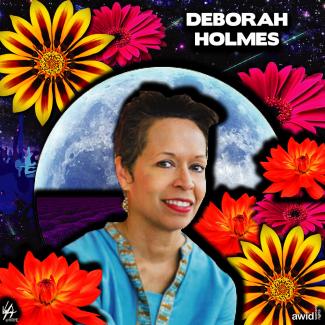
2 Womxn is a term used by the collective to describe cis and trans women as well as non-binary peopleJusqu’à son décès, à la suite d’une lutte brève mais agressive contre le cancer, Deborah était la directrice de la communication et de la mobilisation au Women’s funding network (le réseau de financement des femmes), WFN.
Entre 2008 et 2017, elle avait également travaillé auprès du Fonds mondial pour les femmes. Deborah était extrêmement appréciée et respectée par le conseil d'administration, l’équipe et les partenaires du Fonds mondial pour les femmes.
Kavita Ramdas, ex-PDG a déclaré, à juste titre, que Deborah était « la combinaison unique d’un être mêlant chaleur, générosité, intelligence et style, avec un engagement passionné pour faire fusionner la beauté et la justice. Elle avait compris le pouvoir des histoires. Le pouvoir de la voix des femmes. Le pouvoir de l'expérience vécue. Le pouvoir de renaître de ses cendres et de dire aux autres que c'était possible. Et nous continuons à nous relever. »
Musimbi Kanyoro, l'actuelle PDG du Fonds mondial pour les femmes, a ajouté: « Nous avons perdu une sœur et sa vie illumine des valeurs qui nous unissent et nous inspirent tou-te-s. Alors que nous sommes tou-te-s réuni-e-s pour pleurer le décès de Deborah, souvenons-nous et célébrons sa vie remarquable, audacieuse et passionnée. »
Nuestrxs asociadxs globales y regionales nos han contactado con algunas ideas para reuniones pre-Foro, y pronto compartiremos más información sobre estas ideas.
Si planeas organizar una reunión antes del Foro, ¡por favor avísanos!
Muchas cosas hermosas surgieron del Foro de Feminismos Negros (BFF) de 2016, organizado por un Grupo Asesor y financiado por AWID. Parte del activismo independiente que surgió del BFF incluye al activismo feminista negro de Brasil. Si bien este año no tendremos otro BFF, seguimos comprometidxs a compartir algunas de las enseñanzas fundamentales con cualquier persona interesada en continuar el trabajo sobre el activismo feminista negro.
L’enquête s’adresse aux groupes, organisations et mouvements qui travaillent spécifiquement, ou principalement, à la défense des droits des femmes, des personnes LBTQI+ et pour la justice de genre dans tous les contextes, à tous les niveaux, dans toutes les régions. Si c’est un des principaux piliers du travail de votre groupe, collectif, réseau ou tout autre type d’organisation, que votre structure soit déclarée ou non, récemment constituée ou plus ancienne, nous vous invitons à participer à cette enquête.

*Nous ne collectons pas les réponses à titre individuel ou de fonds féministes et pour les femmes à l’heure actuelle.
En savoir plus sur l'enquête :
Consultez la foire aux questions
El cuidado como base de las economías
La pandemia de COVID-19 puso de relieve la crisis mundial de los cuidados y demostró los fracasos del modelo económico dominante que está destruyendo servicios públicos esenciales, infraestructuras sociales y sistemas de atención en todo el mundo.
Cozinha Ocupação 9 Julho, Asociación de Mujeres Afrodescendientes del Norte del Cauca (ASOM) y Metzineres son solo algunos ejemplos de economías de cuidado que centran las necesidades de las personas marginalizadas y la Naturaleza, así como el trabajo de cuidados, el trabajo reproductivo, invisibilizado y no remunerado necesario para garantizar la sostenibilidad de nuestras vidas, nuestras sociedades y nuestros ecosistemas.
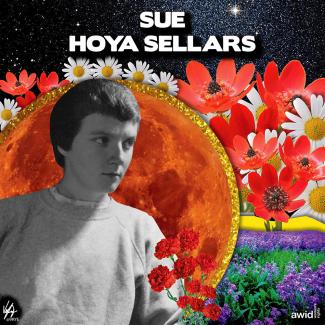
Sue was an artist, activist and teacher born in 1936 in Maryland, USA.
Sue created art for women, about women. As a lesbian feminist, and for a time, a separatist, she was committed to creating women-only spaces. In 1976 she purchased land that is still held by women who visit to make art. Sue took a fierce stand on the protection of women and girls.
With her groundbreaking futuristic, classical and anthropological approach, she filled any room she entered with intellect, authentic eccentricity, unforgiving wit, and humor. Her ideas about consciousness and creativity continue to inspire many people.