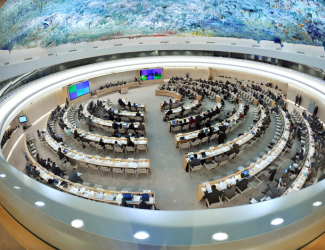
The Human Rights Council (HRC) is the key intergovernmental body within the United Nations system responsible for the promotion and protection of all human rights around the globe. It holds three regular sessions a year: in March, June and September. The Office of the UN High Commissioner for Human Rights (OHCHR) is the secretariat for the HRC.
The HRC works by:
Debating and passing resolutions on global human rights issues and human rights situations in particular countries
Examining complaints from victims of human rights violations or activist organizations on behalf of victims of human rights violations
Appointing independent experts (known as “Special Procedures”) to review human rights violations in specific countries and examine and further global human rights issues
Engaging in discussions with experts and governments on human rights issues
Assessing the human rights records of all UN Member States every four and a half years through the Universal Periodic Review
AWID works with feminist, progressive and human rights partners to share key knowledge, convene civil society dialogues and events, and influence negotiations and outcomes of the session.
With our partners, our work will:
◾️ Monitor, track and analyze anti-rights actors, discourses and strategies and their impact on resolutions
◾️Support the work of feminist UN experts in the face of backlash and pressure
◾️Advocate for state accountability
◾️ Work with feminist movements and civil society organizations to advance rights related to gender and sexuality.
Related Content
Snippet Forum Quoate Jac s m Kee, Malaysia (EN)
No hay nada como estar en un espacio compartido, intercambiar energías corporales, mirar a alguien a los ojos y establecer conexiones, ver el mundo y hacer algo juntxs. Eventos como el Foro se encuentran entre los más fuertes del movimiento feminista mundial... - Jac s m Kee, Malasia
Snippet - WCFM Preferred languages: - EN
Preferred languages:
Boil them down to communications language preferences
«Quiero transmitir el siguiente mensaje a todos los tunecinos y tunecinas: Tenemos que unirnos para decir no a la censura y a los juicios contra el derecho a opinar.» - Lina Ben Mhenni (entrevista de 2013)
Lina Ben Mhenni fue bloguera, activista y docente de lingüística tunecina. Se expresaba en contra de la censura en Internet, defendía la libertad de expresión, y era una defensora de los derechos humanos y de las mujeres. Lina luchó también por la liberación de lxs estudiantes arrestadxs durante el gobierno del anterior presidente Zine El Abidine.
«Es cierto que la información y la Internet son importantes, pero para hacer una revolución es crucial estar en el territorio. Algunas personas aquí en Túnez piensan que el cambio se dará mediante un simple “me gusta” en Internet. Yo creo que hay que estar activxs en el terreno. Y, por supuesto, que hay que combinar las acciones en el terreno con la acción en las redes.» - Lina Ben Mhenni (entrevista en POCIT)
En 2010 co-organizó una protesta que desafió la decisión gubernamental de suprimir medios de comunicación e instalar la censura de Internet. Lina era muy conocida por su blog «A Tunisian Girl», y por su trabajo durante la revolución tunecina de 2011. En su blog, difundió la información sobre el levantamiento, compartió imágenes que documentaban las protestas, y fue una de las pocas voces que hablaron sobre los asesinatos y la represión de lxs manifestantes de Sidi Bouzid. Lina publicaba en su blog utilizando su nombre real en lugar de un seudónimo que protegiera su identidad, y fue una de lxs pocxs bloguerxs en hacerlo.
«Nuestra libertad de expresión corre verdadero peligro. Me temo que estamos perdiendo los extraordinarios frutos de la revolución: la desaparición del miedo y nuestra libertad de expresión. Tenemos que seguir luchando para proteger y preservar este derecho.» - Lina Ben Mhenni (entrevista de 2013)
Lina tenía solamente 36 años cuando falleció, el 27 de enero de 2020, debido a complicaciones derivadas de una enfermedad autoinmune.
«Libertad, mejor educación y mejor salud—eso era lo que todxs queríamos. Cuando fracasábamos, ella nos empujaba.» - Hala, maestra de Lina
Film club - outrun
Out Run (2016) Anglais | Tagalog avec sous-titres anglais
Mobilisant des coiffeurs·ses transgenres de la classe ouvrière et des reines de beauté, les leaders dynamiques du seul parti politique LGBT au monde mènent une quête historique pour élire une femme trans au Congrès philippin.
Curated by Jess X. Snow With assistance from Kamee Abrahamian and Zoraida Ingles
Across Asia and the Pacific, and all of it’s vast diaspora, fierce women and trans folks have been fighting for a future where they can all be free. As rising sea levels threaten the Pacific islands, and the coasts of continental Asia, the fight to protect other Earth and the Ocean intensifies all over the globe. Our planet stores a geologic memory of everything that it has experienced. The rise of colonization, industrialization, and environmental destruction is connected to the rise of the binary patriarchal nation state. The power within the Earth, to reincarnate, heal, and bloom in the face of violence, must then be connected to the woman, to motherhood, to indigeneity and all forces that are expansive, sacred and queer. It is no coincidence that Feminist Realities unite the fight to protect the rights of women, trans and LGBTQ+ people with the fight to protect the Earth. From mother-daughter protectors of Mauna Kea in the Kingdom of Hawaii, to the complex mother-child relationships of Vietnamese refugees, to queer sexual awakenings in conservative India, the reclaimation of home in Inner Mongolia, to the struggle toward LGBTQ liberation in the Phillipines -- this collection of films is a cosmology of the ways current-day Asian Pacific women and queer and trans folks champion the journey to our collective liberation across oceans and borders.
All of these films have a strong sense of place: indigenous activists protect their sacred lands, youth peel back colonial narratives of their homeland to uncover hidden truths, complex motherhood and relations of care are explored, and characters turn to their own bodies and sexuality as sanctuary when the family and city that surrounds them threaten their safety.
AFTEREARTH
By Jess X. Snow
“A haunting film with stunning shots invoking feminist environmental resistance and how deeply rooted this is in connection to cultural history and land…”
- Jessica Horn, PanAfrican feminst strategist, writer and co-creator of the temple of her skin
In the experimental documentary, Afterearth, four women fight to preserve the volcano, ocean, land and air for future generations. Through music, poetry, and heartfelt testimonial that honors locations touched by the Pacific Ocean–Hawaiʻi, the Philippines, China, and North America, Afterearth is a poetic meditation on four women’s intergenerational and feminist relationship to the lands and plants they come from.
STANDING ABOVE THE CLOUDS
By Jalena Keane Lee
In Standing Above the Clouds, Native Hawaiian mother-daughter activists stand together to protect their sacred mountain, Mauna Kea from being used as a site to build one of the world’s largest telescopes. As protectors of Mauna Kea, this film highlights the interconnected relationship between Aloha ʻĀina (love of the land) and love for one’s elders and the future generations to come.
NƯỚC (WATER/HOMELAND)
By Quyên Nguyen-Le
In the experimental narrative short, Nước (Water/Homeland) a Vietnamese-American genderqueer teen challenges dominant narratives of the Vietnam War in Los Angeles, California. Through striking dream sequences and breaks from reality, this film follows their journey to piece together and understand their mother's experience as a Vietnam War refugee.
KAMA’ĀINA
By Kimi Lee
In Kama’āina, a queer sixteen-year-old girl must navigate life on the streets in Oahu, until she eventually finds refuge by way of guidance from an auntie at Pu’uhonua o Wai’anae–Hawaiʻi’s largest organized homeless encampment.
DEVI
By Karishma Dev Dube
In Devi (goddess in Hindi) a young closeted lesbian, Tara risks both family and tradition to embrace her attraction to her family’s maid. Set in New Delhi, Devi is a coming of age story, as it is a commentary on the social and class lines that divide women in contemporary India today.
HEADING SOUTH
By Yuan Yuan
In Heading South, Chasuna, an 8 year old girl, raised by her mother in the Inner Mongolian Plateau, visits her abusive father in the big city. While at her father’s house, she is introduced to a new addition to the family, and must come to terms with the fact that her true home is inseparable from her mother and land.
Outrun
By Johnny Symons & S. Leo Chiang
In the feature film, Outrun, we follow the journey of the first transgender woman in the Philippine Congress. Facing oppression in a predominantly Catholic nation, her triumphant journey becomes an outcry for the rights of LGBTQ+ people globally.
Spanning documentary, narrative, and experimental forms, these films illustrate that community care, self-love, and deep transformative listening between our loved ones is a portal to the Feminist Realities we are bringing into existence today. From all across the Asia Pacific and it’s diaspora, these stories teach us that in the face of violence, tenderness is the sharpest force of resistance.
Jess X. Snow is a film director, artist, pushcart-nominated poet, children’s book author and community arts educator who creates queer asian immigrant stories that transcend borders, binaries and time.
Follow us on Social Media to receive news about upcoming events and screenings:
Le Forum international de l’AWID est un événement phare que l’association organise tous les trois ou quatre ans. C'est la plus importante manifestation au monde entièrement consacrée aux mouvements féministes et de justice de genre dans toute leur diversité. Il s'agit d'un rassemblement mondial qui réunit activistes féministes, mouvements alliés, universitaires, bailleurs de fonds et décideur·e·s politiques. Les forums se tiennent successivement dans différentes régions et différents pays du sud mondial.
Snippet2 - WCFM type of funder - EN
Type of funder:
Filter your search by funders from different sectors i.e., philanthropic foundations, multilateral funders, women’s and feminist funds
María Digna Montero était une défenseuse Garifuna (d’origine africaine et autochtone) du droit à la terre et membre de l’Organisation fraternelle noire hondurienne (OFRANEH), une organisation communautaire oeuvrant à protéger les communautés Garifunas, leurs droits, leur culture, leurs ressources et leur territoire ancestraux.
María a également enseigné dans l'école locale et été membre du groupe de travail sur l'éducation bilingue interculturelle de l'OFRANEH.
Le 12 octobre 2019, jour de la Résistance autochtone, des inconnus ont tiré à plusieurs reprises sur María, alors qu’elle se trouvait dans l’arrière-cour de sa maison.
Elle est l'une des six défenseuses Garifunas à avoir été assassinées entre septembre et octobre 2019 et selon OFRANEH, ces crimes n’ont fait l’objet d’aucune enquête de la part des autorités. Dans une déclaration officielle, l'organisation a également souligné le lien entre la violence à l’encontre des dirigeants Garifunas et le développement des industries extractives qui exploitent les ressources naturelles de leurs communautés, affirmant que cette violence s’inscrivait dans une "stratégie d'intimidation et d'expulsion systématique" menée par l'État hondurien.
“La tension accrue et les risques croissants pour la sécurité et les droits humains des dirigeants des communautés et des territoires ancestraux sont le résultat de la dépossession, du déplacement et de la criminalisation des communautés et des mégaprojets d'extraction promus par l'État en collaboration avec les entreprises nationales et internationales". - Communiqué de l'OFRANEH, 12 octobre 2019
Feminist film club - holding up the skies
Check out the AWID Feminist Film Club program “Holding up the Skies” - a film series on Feminist Realities from Africa and the African Diaspora curated by Gabrielle Tesfaye
Tendencias anti-derechos en los sistemas regionales de derechos humanos
Chapter 6
En la Comisión Africana y en el Sistema Interamericano, los actores antiderechos impulsan nociones esencialistas de cultura y género para impedir el avance de los derechos y socavar las responsabilidades. Como vemos, los actores anti-derechos están ejerciendo su influencia sobre los sistemas regionales de derechos humanos, así como en los espacios internacionales.
La Comisión Africana de Derechos Humanos y de los Pueblos ha comenzado a definir a los derechos sexuales y de las mujeres como un menoscabo a su capacidad de ocuparse de los «derechos reales» y como contrarios a los «valores africanos», con lo cual se establece un precedente anti-derechos preocupante. La anulación del estatus de observador de la Coalición de Lesbianas Africanas es un ejemplo de esta tendencia y muestra la forma en que el espacio para el involucramiento feminista panafricanista está siendo restringido.
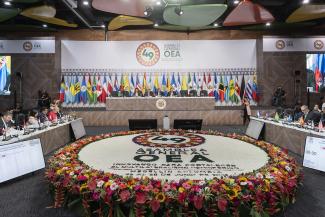
En la Organización de Estados Americanos (OEA) y en el Sistema Interamericano de Protección de los Derechos Humanos, las estrategias anti-derechos incluyen la oenegización de grupos religiosos, la utilización de discursos seculares, y la cooptación de marcos de discriminación. La influencia antiderechos se ha materializado de diversas maneras, que incluyen la intimidación de activistas trans y la obstrucción de la introducción de lenguaje progresista en las resoluciones.
Índice de contenidos
Silenciamiento de feministas en el Sistema Africano de Derechos Humanos
Grupos anti-derechos en América Latina: Asamblea General de la Organización de Estados Americanos (OEA) y el Sistema Interamericano de Protección de los Derechos Humanos
When can I register for the Forum? How much does it cost to register? What does Registration Include?
Registration will start early 2024. We will announce the exact registration date and registration fee soon. Registration will include participation in the Forum, plus lunch and snacks (breakfast to be provided at the hotels), and one onsite dinner.
Clone of Snippet - Intro WITM - EN
Where is the Money for Feminist Organizing? Survey Results
Thanks to our global feminist community! From May to August 2024, nearly 1,200 organizations working for Women's rights, gender justice, and LBTQI+ equality shared their experiences in the WITM survey. The results offer a unique picture of how feminist movements are resourced and where gaps remain.
Stay tuned for the upcoming report for more analysis!
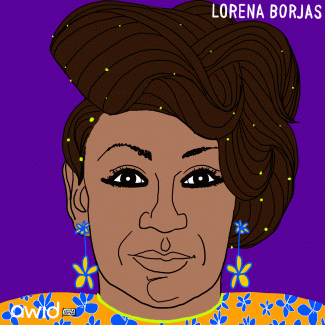
Lorena Borjas, a trans Latina woman and activist, lived and worked in the Jackson Heights neighborhood of Queens, New York City. In those streets, she looked after her community for years, advocating for trans and immigrant rights, supporting survivors of human trafficking and abuse, campaigning for sex workers’ rights and those of people living with HIV and AIDS.
Lorena was strong and tireless in her fight to support, defend, and have the back of those most marginalized and discriminated by transphobia, misogyny and racism.
“She pushed us to shine authentically, to become a scream of subversion that says, ‘I am here, and I deserve happiness, too.’” - Cecilia Gentili, a trans activist and Lorena’s friend
Having faced numerous traumas and hardships herself, as a trans immigrant woman and victim of human trafficking, Lorena pulled knowledge and emotional memory from the well of her experiences in order to help build and strengthen the community she was part of and which was part of her. Some of the ways she did this was to organize and mobilize support ranging from providing condoms and connecting trans women to different services, to setting up an HIV testing clinic in her own home.
"She was such a beautiful soul who helped others when her journey was difficult and painful as an immigrant, as a trans immigrant. She believed the trans community needed love, acceptance, and compassion, and she gave it all.” - Luchia Dragosh, QPTV Supervising producer of a documentary about Lorena
In more than 25 years of activism, she also founded the Lorena Borjas Community Fund together with Chase Strangio (lawyer and trans rights activist). The Fund helps the many different members of her community (and especially trans persons) dealing with immigration challenges to avoid the cycle of arrest-jail-deportation.
Lorena passed away in March 2020 of complications from COVID-19.
Her enormous and beautiful legacy will be taken forward through the streets of Queens by the network and community she co-created.
“We will pick up her work where she left it, work that is essential to the well-being of “mis pajaras” as she called the trans girls of Queens under her wing.” - Cecilia Gentili
Tributes:
"Lorena brought light to us when we were living through a very dark time here in New York. She brought us light when we were dealing with the crack epidemic, when we were dealing with the AIDS crisis, dealing with changes in immigration policies." - Cristina Herrera, founder and CEO of Translatina Network and Lorena’s friend
"Lorena has done more than anyone else I know to shine a light on the epidemic of trafficking in transgender communities and to help other trans women escape exploitation." - Lynly Egyes (represented Borjas on behalf of the Transgender Law Center)
Les discours antidroits continuent à évoluer. Outre le recours à des arguments religieux, culturels et traditionnels, les acteur·rice·s antidroits s’approprient le langage de la justice sociale et des droits humains pour travestir leurs véritables programmes et gagner ainsi en légitimité.
Nuestro Fondo de Acceso ofrecerá un número limitado de becas para financiar la participación de activistas que de otra manera no podrían asistir y que no tienen relaciones con donantes que puedan cubrir su participación. Por lo tanto, si tienes otras posibilidades, te animamos a explorarlas. Haremos todo lo posible para ofrecer la mayor cantidad de becas y compartiremos más información sobre este proceso y cómo postular a principios de 2024.
WITM - Refreshed DATA SNAPSHOTS - ES
Un vistazo a los datos
Nuestro poder colectivo, nuestra sabiduría y nuestro compromiso no tienen límites. Pero nuestras cuentas bancarias sí.
Las instantáneas de datos están basadas en las respuestas de 1.174 organizaciones feministas, por los derechos de las mujeres, LGBTQI+ y aliadas (en adelante «organizaciones feministas y por los derechos de las mujeres») de 128 países a ¿Dónde está el dinero para las organizaciones feministas? la encuesta de AWID.
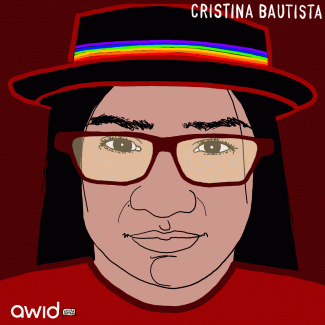
“Si nos mantenemos en silencio, nos matan. Si hablamos (nos matan) también. Así que, hablemos” Cristina Bautista, 2019.
Cristina Bautista fue una integrante de la comunidad Indígena Nasa, cuyo hogar se sitúa en la región del norte del Cauca, en Colombia. Cristina formó parte de la resistencia Nasa como líder y defensora de los derechos de la tierra, pero también como trabajadora social y gobernadora de la reserva Indígena Nasa Tacueyó.
Incansable defensora de los derechos del pueblo Nasa, Cristina habló alto y claro sobre la violencia dirigida contra su comunidad. En un discurso ante las Naciones Unidas, Cristina reclamó la protección de las vidas de las mujeres indígenas, y su participación en las diferentes esferas de la vida. En 2017, Cristina entró en el programa de Becas Indígenas de la Oficina de Derechos Humanos de la ONU y en 2019 recibió una subvención del Fondo de Contribuciones Voluntarias de la ONU para los Pueblos Indígenas.
"Me gustaría sacar a la luz la situación actual de los pueblos indígenas en Colombia, el asesinato de líderes indígenas, la represión de las protestas sociales. El acuerdo de paz, en lugar de ayudar, lo que ha hecho es reforzar el conflicto y la explotación de territorios sagrados en Colombia... En la situación actual, en casi todas las naciones indígenas, como mujeres, estamos trabajando para encontrar un futuro mejor para nuestras familias. No quiero que más mujeres del campo vivan en estas circunstancias. Las mujeres indígenas necesitamos oportunidades para participar en la vida política, económica, en la sociedad y en la cultura. Hoy me da fuerzas ver a todas estas mujeres aquí y ver que no estoy sola". - Cristina Bautista, 2019
El 29 de octubre de 2019, Cristina fue asesinada junto a cuatro guardias indígenas desarmados en un ataque que, supuestamente, fue llevado a cabo por miembros armados del grupo disidente de las FARC "Dagoberto Ramos".
Según Global Witness, "en los últimos años el asesinato de líderes comunitarios y sociales ha aumentado dramáticamente en Colombia".
"La comunidad Nasa ha alertado repetidamente a las autoridades sobre las amenazas que reciben y que ponen en peligro su seguridad. Sin embargo, a pesar de los esfuerzos que ponen los sucesivos gobiernos colombianos, los pueblos indígenas siguen corriendo grandes riesgos, especialmente, las figuras clave religiosas o comunitarias como Cristina Bautista". - Reunión informativa de la ONU para la prensa (en inglés), 1 de noviembre de 2019.