Left
Half
Left

Special Focus

AWID is an international, feminist, membership organisation committed to achieving gender equality, sustainable development and women’s human rights

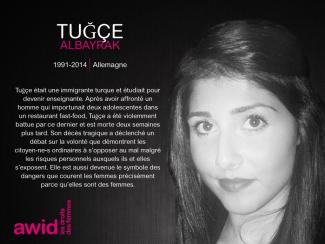
Memory as Resistance: A Tribute to WHRDs no longer with us

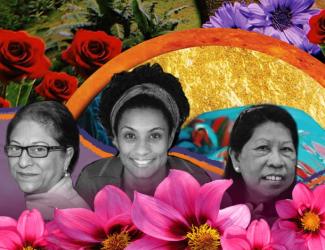
AWID’s Tribute is an art exhibition honouring feminists, women’s rights and social justice activists from around the world who are no longer with us. 


In 2020, we are taking a turn

This year’s tribute tells stories and shares narratives about those who co-created feminist realities, have offered visions of alternatives to systems and actors that oppress us, and have proposed new ways of organising, mobilising, fighting, working, living, and learning.

49 new portraits of feminists and Women Human Rights Defenders (WHRDs) are added to the gallery. While many of those we honour have passed away due to old age or illness, too many have been killed as a result of their work and who they are.

This increasing violence (by states, corporations, organized crime, unknown gunmen...) is not only aimed at individual activists but at our joint work and feminist realities.

The stories of activists we honour keep their legacy alive and carry their inspiration forward into our movements’ future work.

Visit the online exhibit

The portraits of the 2020 edition are designed by award winning illustrator and animator, Louisa Bertman. 

AWID would like to thank the families and organizations who shared their personal stories and contributed to this memorial. We join them in continuing the remarkable work of these activists and WHRDs and forging efforts to ensure justice is achieved in cases that remain in impunity.

“They tried to bury us. They didn’t know we were seeds.” - Mexican Proverb 


The Tribute was first launched in 2012

It took shape with a physical exhibit of portraits and biographies of feminists and activists who passed away at AWID’s 12th International Forum, in Turkey. It now lives as an online gallery, updated every year.

To date, 467 feminists and WHRDs are featured.

Visit the online exhibit
Related Content

Snippet FEA São Paulo City Center (EN)

São Paulo’s City Center

Source: Centro de população de rua da cidade de São Paulo

A woman sitting on the floor on a piece of cloth and a cup for change in front of her
   

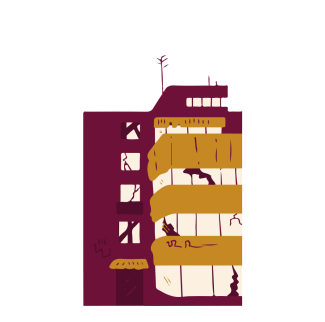
Abandoned / Unoccupied Buildings

Illustration of an abandoned, run down building to depict the housing crisis

Population living in the streets 


31,000


40.000

Нужно ли мне как-то подготовиться, чтобы пройти опрос?

Поскольку опрос посвящен исследованию реалий обеспечения феминистских организаций ресурсами, большинство вопросов касаются финансирования вашей организации в период с 2021 по 2023 год. Вам необходимо будет иметь при себе данную информацию для заполнения анкеты (например, годовые бюджеты и информацию об основных источниках финансирования).

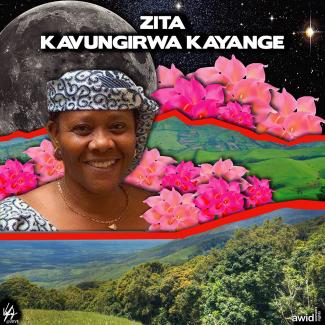
Zita Kavungirwa Kayange

Zita était une défenseure des droits des femmes de la région du Grand Kivu.

Elle a été la première directrice exécutive d’UWAKI, une organisation de femmes bien connue. Par son travail avec le Réseau des Femmes pour la Défense des Droits et la Paix (RFDP) et le Caucus des femmes du Sud-Kivu pour la paix, elle a consacré sa vie à rétablir la paix dans l'est de la RDC. Elle a très fermement dénoncé l'utilisation de la violence sexuelle comme arme de guerre.

En 2006, elle s'est présentée comme candidate aux premières élections démocratiques en RDC. Bien qu’elle n’ait pas gagné, elle a continué à défendre les droits des femmes et la communauté du Sud-Kivu se souvient d’elle avec affection.


Zita Kavungirwa Kayange, Republic Democratic of Congo

My question isn’t answered here

For additional questions, please use our contact form, and select “14th AWID Forum" from the dropdown menu.

Contact us

Snippet FEA Occupation’s kitchen Instagram (EN)

Campaña publicitaria de Ocupação 9 de Julho:

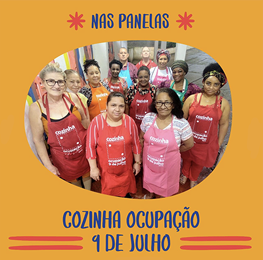
Photo of Cozinha Ocupação 9 de Julho team in aprons
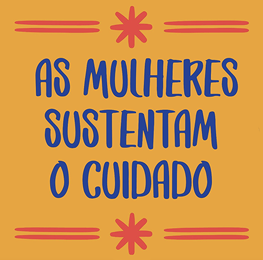
Yellow square that says "As mulheres sustentam o cuidado" or Women sustain care in Portuguese.
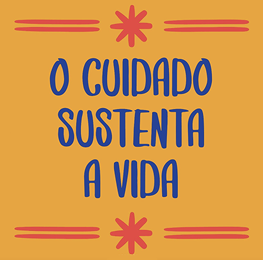
Yellow square that says "O cuidado sustenta a vida" or "Care sustains life" in Portuguese.
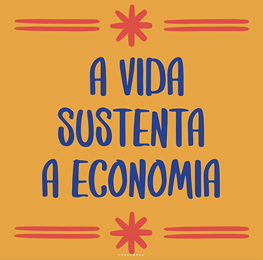
Yellow square that says "A vida sustenta a economia" or "Life sustains the economy" in Portuguese.
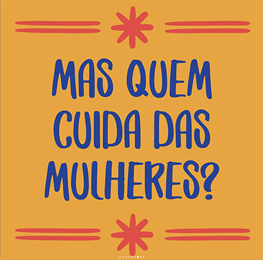
Yellow square that says: "Mas quen cuida das mulheres?" or "But who is taking care of women?" in Portuguese.
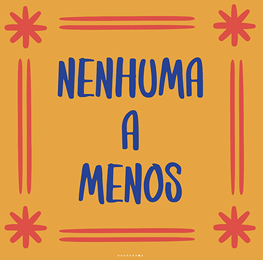
A yellow square that says "Nenhuma a menos" which translates to "Not another woman less"
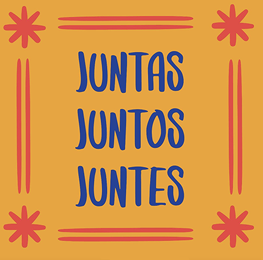
Yellow square that says "Juntas, Juntos, Juntes" which translates to "Together, together, together"
Yellow square announcing Sunday Lunch at the Occupation's Kitchen

Las Mujeres Sostienen el Cuidado | El Cuidado Sostiene la Vida | La vida Sostiene la Economía | ¿Quién Cuida a las Mujeres? | Ni Una Menos1 | Juntas, Juntos, Juntes | Almuerzo de Domingo

1Nenhuna a menos se traduce literalmente como "ni una menos" en español, un eslogan feminista famoso en América Latina que surgió en Argentina como respuesta a la creciente violencia de género.

A minha participação é confidencial?

É claro que sim. As suas respostas serão eliminadas no final do processamento e da análise dos dados, e só serão usadas para fins de investigação. Os dados NUNCA serão divulgados fora da AWID e serão processados apenas por colaboradores e consultores da AWID que trabalham no projeto WITM connosco. Damos prioridade à sua privacidade e ao seu anonimato. Consulte a nossa política de privacidade detalhada aqui.

Bessy Ferrera

Bessy Ferrera a défendu sans relâche les droits humains des personnes trans, travailleuses du sexe et séropositives au Honduras. 

 Bessy était aussi membre d’Arcoíris, une organisation qui soutient la communauté LGBTI+. Elle était en outre la personne référente de la plateforme Derechos aquí y Ahora (les droits ici et maintenant) au Honduras et plaidait fermement en faveur d’une pleine citoyenneté pour les personnes trans, ainsi que pour l’adoption d’une loi sur l’identité de genre qui permettrait aux personnes trans de changer légalement d’identité de genre. 

« Depuis le début de l’année [2019], la communauté trans a été victime d’une série d’attaques, parce qu’elle a défendu et demandé des droits. » Rihanna Ferrera (sœur de Bessy)
Bessy était une travailleuse du sexe qui a été tuée par balle par deux hommes, au début du mois de juillet 2019, alors qu’elle travaillait dans les rues Comayagüela. Ses assaillants ont par la suite été arrêtés.  

Bessy fait partie des nombreux·ses activistes des droits LGBTI+ du Honduras, assassiné·e·s en raison de leur identité et de leur travail, parmi qui se trouvent : Cynthia Nicole, Angy Ferreira, Estefania "Nia" Zuniga, Gloria Carolina Hernandez Vasquez, Paola Barraza, Violeta Rivas et Sherly Montoya.

Le cas de Bessy incarne l’injustice, de même qu’un problème plus large de violence systémique à laquelle se confronte la communauté LGBTI+ au Honduras, puisque l’État ne parvient pas à garantir l’offre de droits ni à fournir une protection. Cela est à l’origine d’une culture de l’impunité.   

Malgré les risques auxquels sont confronté.e.s les activistes LGBTI+ au Honduras,  tous et toutes continuent leur travail pour défier et résister à la violence, ainsi que pour combattre la stigmatisation et la discrimination au quotidien.

« Si je meurs, il faut que ce soit pour quelque chose de bien, pas pour une futilité. Je ne veux pas mourir en fuyant, en étant lâche. Si je meurs, je veux que les gens disent que je suis mort·e en me battant pour ce qui m’appartient » - membre d’Arcoíris

Why did AWID choose Taipei as the location for the Forum?

We see Taipei as the location in the Asia Pacific region that will best allow us to build that safe and rebelious space for our global feminist community.

Taipei offers a moderate degree of stability and safety for the diversity of Forum participants we will convene. It also has strong logistical capacities, and is accessible for many travellers (with a facilitated e-visa process for international conferences).

The local feminist movement is welcoming of the Forum and keen to engage with feminists from across the globe.

Read more about our considerations when choosing Taipei

Snippet FEA LINES OF ACTION (FR)

Sur quoi travaillent-iels?
Illustration of a hand with a pencil writing on white paper

Droits humains et ethno-territoriaux

Assurer la défense des droits humains et des droits de la Nature par la construction d'alliances avec des acteur·rices et organisations locales, nationales, régionales et mondiales.

A person holding a plant in a pink pot in their hands

Développement Durable

Garantir que toutes les activités économiques, culturelles et environnementales contribuent au développement durable, à la sécurité alimentaire et à la génération de revenus, dans le respect de l'autodétermination et de l'autonomie gouvernementale des communautés afro-descendantes.

Three women sitting next to each other

Education and training

Former les femmes et leur donner les moyens d'exercer la défense de leurs droits dans différents espaces politiques, sociaux et économiques.

Pour plus d'informations, cliquez ici!

ما هو عدد الردود الذي ترغبون بجمعها؟

نهدف للوصول الى 2000 رد، وهذا تقريباً ضعف الردود التي جمعناها من استطلاع "أين المال" الأخير عام 2021.

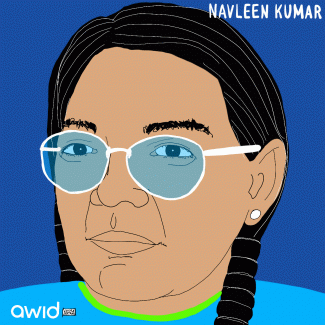
Navleen Kumar

"She was not a person. She was a power."
- a fellow activist remembering Navleen Kumar

Navleen Kumar was a fervent land rights and social justice activist in India.

With commitment and integrity, she worked for more than a decade to protect and restore the lands of Indigenous people (adivasi) in Thane district, an area taken away by property and land developers using such means as coercion and intimidation. She fought this injustice and crime through legal interventions at different courts, realizing that manipulation of land records was a recurrent feature in most cases of land acquisition. In one of the cases, that of the Wartha (a tribal family), Navleen found out that the family had been cheated with the complicity of government officials.

Through her work, she helped restore the land back to the Wartha family and continued to pursue other cases of adivasi land transfers.

“Her paper on the impact of land alienation on adivasi women and children traces the history and complexities of tribal alienation from the 1970s, when middle class families began to move to the extended suburbs of Mumbai as the real estate value in the city spiralled.

Housing complexes mushroomed in these suburbs, and the illiterate tribals paid the price for this. Prime land near the railway lines fetched a high price and builders swooped down on this belt like vultures, to grab land from tribals and other local residents by illegal means.”
-Jaya Menon, Justice and Peace Commission 

During the course of her activism, Navleen received numerous threats and survived several attempts on her life. Despite these, she continued working on what was not only important to her but contributed to changing the lives and realities of many she supported in the struggle for social justice. 

Navleen was stabbed to death on 19 June 2002 in her apartment building. Two local gangsters were arrested for her murder. 

Snippet FEA Metzineres activists (EN)

 
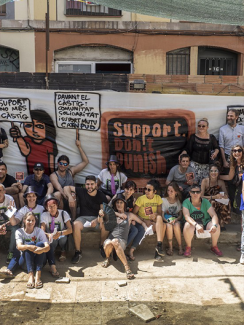
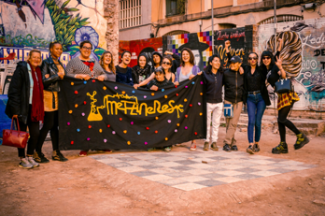
A crowd of people sitting in front of a banner which says ‘support, don't punish”;
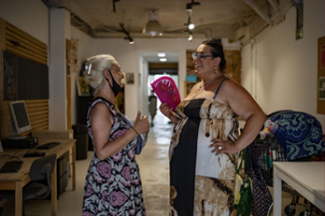
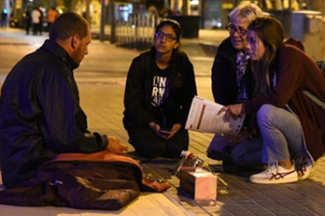
Photo of two women talking to each other, one of them is holding a handheld fan.
Crowd of people with a black banner that says Metzineres in yellow.
Photo of four people sitting on the ground and talking
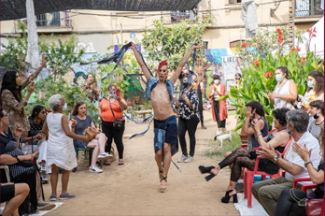
Photo people with plants around them, most of them sitting and clapping to a person who is walking in the middle

Metzineres activists in action

Snippet - AWID Community - EN

AWID Community

AWID Community is an online social networking platform for specifically for AWID members. It’s a feminist space for connection, resistance and celebration. A space for critical  feminist conversations, collective power and solidarity. It is also a space for post-event dialogues, navigating difficult political learnings and community care

Nadyn Jouny

Lo personal es político, y la apasionada y valiente Nadyn Jouny personificó este mantra feminista. Nadyn experimentó de primera mano el dolor de la violencia estructural de los sistemas legales que despojan a las mujeres de sus derechos.

Cuando Nadyn decidió solicitar el divorcio, los tribunales religiosos chiítas, bajo las Leyes de Estatuto Personal Libanesas, le negaron la custodia de su joven hijo Karam. Nadyn, como tantas otras mujeres del Líbano y de otros países, se vio atrapada entre el dolor imposible de dejar una relación no deseada y abusiva y de perder a la vez los derechos sobre su hijo.  Sin embargo, Nadyn se defendió, y lo habría de hacerlo hasta el último día.

Nadyn utilizó su  habilidad con los medios de comunicación para convertirse en una voz  franca a favor de las mujeres que luchan contra la discriminación en la legislación familiar, en el Líbano y a nivel internacional. Nadyn cofundó el grupo autofinanciado "Protecting Lebanese Women" [Protegiendo a las Mujeres Libanesas] (PLW, por sus siglas en inglés) y se unió a muchas otras madres libanesas que se enfrentaban a problemas similares de custodia. Juntas, trabajaron para crear conciencia sobre las injusticias extremas a las que se enfrentaban, a nivel nacional, protestaron ante los tribunales religiosos por sus derechos y, a nivel internacional, llamaron la atención de los medios de comunicación.

Nadyn también trabajó con ABAAD - Resource Center for Gender Equality [Centro de Recursos para la Igualdad de Género], otra organización por los derechos de las mujeres en el Líbano, para realizar campañas en favor de los derechos de las mujeres, la igualdad en la legislación familiar y relativa a las custodias y contra los matrimonios forzados y precoces.

Para muchxs de sus colegas, Nadyn llegó a "simbolizar la lucha de una madre libanesa contra la supresión y la misoginia de todo tipo" (en inglés), al utilizar "su experiencia personal y trayectoria individual de empoderamiento, dio a otras mujeres esperanza para que ellas también pudieran ser un catalizador para el cambio positivo" - ABAAD - Centro de Recursos para la Igualdad entre los Géneros, Líbano.

El 6 de octubre de 2019, Nadyn murió trágicamente en un accidente de automóvil cuando se dirigía a protestar por los injustos aumentos de impuestos en un país que ya se enfrentaba a una espiral de crisis financiera. Nadyn Jouny tenía solo 29 años en el momento de su muerte.