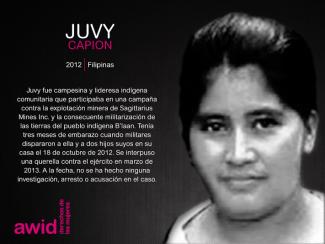
Juvy Capion
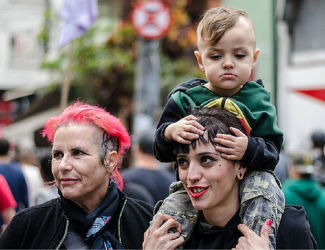
Over the past few years, a troubling new trend at the international human rights level is being observed, where discourses on ‘protecting the family’ are being employed to defend violations committed against family members, to bolster and justify impunity, and to restrict equal rights within and to family life.
The campaign to "Protect the Family" is driven by ultra-conservative efforts to impose "traditional" and patriarchal interpretations of the family, and to move rights out of the hands of family members and into the institution of ‘the family’.
Since 2014, a group of states have been operating as a bloc in human rights spaces under the name “Group of Friends of the Family”, and resolutions on “Protection of the Family” have been successfully passed every year since 2014.
This agenda has spread beyond the Human Rights Council. We have seen regressive language on “the family” being introduced at the Commission on the Status of Women, and attempts made to introduce it in negotiations on the Sustainable Development Goals.
AWID works with partners and allies to jointly resist “Protection of the Family” and other regressive agendas, and to uphold the universality of human rights.
In response to the increased influence of regressive actors in human rights spaces, AWID joined allies to form the Observatory on the Universality of Rights (OURs). OURs is a collaborative project that monitors, analyzes, and shares information on anti-rights initiatives like “Protection of the Family”.
Rights at Risk, the first OURs report, charts a map of the actors making up the global anti-rights lobby, identifies their key discourses and strategies, and the effect they are having on our human rights.
The report outlines “Protection of the Family” as an agenda that has fostered collaboration across a broad range of regressive actors at the UN. It describes it as: “a strategic framework that houses “multiple patriarchal and anti-rights positions, where the framework, in turn, aims to justify and institutionalize these positions.”
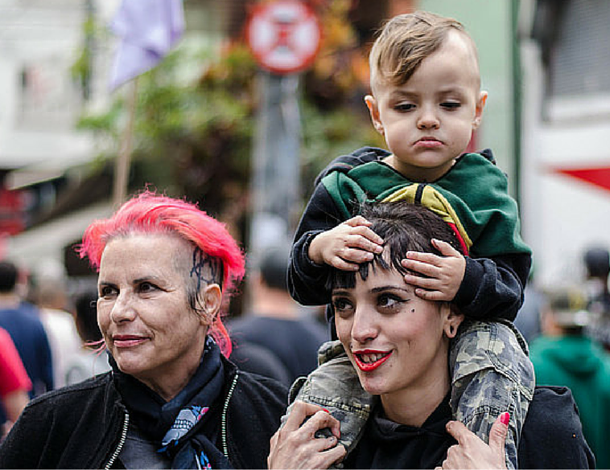
This journal edition in partnership with Kohl: a Journal for Body and Gender Research, will explore feminist solutions, proposals and realities for transforming our current world, our bodies and our sexualities.
AWID works towards the realization of gender justice and women’s human rights worldwide. We work to strengthen the voices and impact of women’s rights advocates, organizations and movements. Our main Priority Areas relate to themes that are closely linked to dominant global trends.
These themes reflect growing challenges that negatively impact women’s rights worldwide.
El Foro de AWID siempre ha sido un espacio que no elude las conversaciones difíciles y muy necesarias. Aceptaremos estas propuestas si lxs organizadorxs pueden garantizar un espacio respetuoso y seguro para quienes participen.
Para inspirarte, te aconsejamos leer las propuestas que estamos ofreciendo antes de acercarnos tus ideas. Tal vez alguien ya haya pensado lo que quieres proponer. Puedes enviarnos tus propuestas a contribute@awid.org.
Revisaremos las propuestas que recibamos e iremos incluyendo las nuevas en este sitio de Internet.
Todos nuestros informes anuales estan disponibles en línea.
Oui, tout à fait. Le formulaire actuel vous demande d’énumérer les noms des personnes qui interviendront sur l’activité, même si elles ne sont pas encore confirmées. Nous comprenons bien que des changements peuvent se produire au cours de l’année.
เราจะติดต่อกับองค์กรพาร์เนอร์ในอดีตเพื่อให้มั่นใจว่าความพยายามที่เคยเตรียมไว้ในอดีตมีความหมาย หากองค์กรของคุณมีการเปลี่ยนแปลงข้อมูลติดต่อจากฟอรัมครั้งก่อนหน้ากรุณาแจ้งให้พวกเราทราบเพื่อให้เราสามารถติดต่อถึงคุณได้
Margarita Salas, AWID
Nazik Abylgaziva, Labrys
Amaranta Gómez Regalado, Secretariado Internacional de Pueblos Indígenas frente al VIH/sida, la Sexualidad y los Derechos Humanos
Cindy Weisner, Grassroots Global Justice Alliance
Lucineia Freitas, Movimento Sem Terra
Second High-level Dialogue on Financing for Development