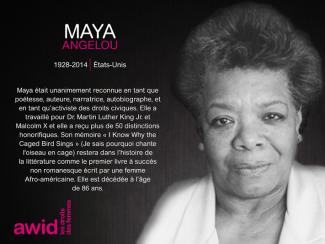
Maya Angelou
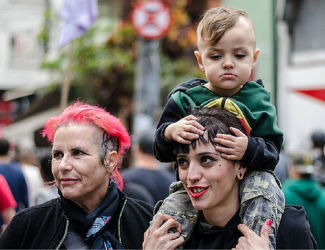
Over the past few years, a troubling new trend at the international human rights level is being observed, where discourses on ‘protecting the family’ are being employed to defend violations committed against family members, to bolster and justify impunity, and to restrict equal rights within and to family life.
The campaign to "Protect the Family" is driven by ultra-conservative efforts to impose "traditional" and patriarchal interpretations of the family, and to move rights out of the hands of family members and into the institution of ‘the family’.
Since 2014, a group of states have been operating as a bloc in human rights spaces under the name “Group of Friends of the Family”, and resolutions on “Protection of the Family” have been successfully passed every year since 2014.
This agenda has spread beyond the Human Rights Council. We have seen regressive language on “the family” being introduced at the Commission on the Status of Women, and attempts made to introduce it in negotiations on the Sustainable Development Goals.
AWID works with partners and allies to jointly resist “Protection of the Family” and other regressive agendas, and to uphold the universality of human rights.
In response to the increased influence of regressive actors in human rights spaces, AWID joined allies to form the Observatory on the Universality of Rights (OURs). OURs is a collaborative project that monitors, analyzes, and shares information on anti-rights initiatives like “Protection of the Family”.
Rights at Risk, the first OURs report, charts a map of the actors making up the global anti-rights lobby, identifies their key discourses and strategies, and the effect they are having on our human rights.
The report outlines “Protection of the Family” as an agenda that has fostered collaboration across a broad range of regressive actors at the UN. It describes it as: “a strategic framework that houses “multiple patriarchal and anti-rights positions, where the framework, in turn, aims to justify and institutionalize these positions.”
AWID began preparing this annual report just as the global pandemic began to unravel how we gather, organize and live our lives. It is impossible to review what we have done without COVID-19 tinting our assessment.
Download the full 2019 Annual review
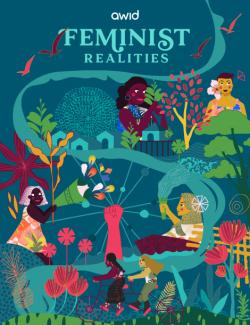
It is an urgently needed affirmation that there are other, more just ways of organizing our lives. During 2019 hundreds of groups shared their experiences and proposals for feminist realities with us, ranging from radical networks of community support in Latin America facilitating self-managed abortion, to practices of community-centered economies in Indonesia and community-centered food systems in India and the US, to a re-imagination and new practice of harm-free rites of passage in Sierra Leone. These are the experiences that will chart a path forward for a “new normal”.
Yet long histories of oppression and violence can make it difficult to imagine the possible. A key part of our work in 2019 was to spark these explorations through a toolkit AWID launched to support groups interested in unearthing the stories and aspirations that are the building blocks of feminist propositions.
Through the Observatory on the Universality of Rights, Feminists for a Binding Treaty, Count Me In! and other alliances, AWID has continued to push back against unfettered corporate power and fascist and fundamentalist agendas that undermine women’s rights and gender justice. With dim prospects for transformative change through multilateral processes and limited responsiveness from most states, we are redoubling our efforts to ensure that feminist movements, in all their diversity, are resourced in ways that match the critical roles they play - supporting their communities, demanding rights and responding to crises. In 2019 we introduced feminist principles and approaches to ground-breaking funds like the Spotlight Initiative and the Equality Fund, and succeeded in leveraging resources through feminist reality seed grant funding from feminist funders.
As we look ahead, it is clear that the context is calling for a transformation of our organizing strategies:
AWID is embarking on a new membership model that lowers barriers to access and emphasizes opportunities for engagement and cross-member connection. We will continue to experiment with different online tools and processes for building community. Cross-movement engagement will stay at the center of our work. AWID’s actions in solidarity with oppressed movements and identities, even and especially where these are marginalized in feminist movements, are important to drive change and support broad and inclusive movements for all.
We are resilient, we adapt, and we show up for each other. And we have to keep doing better. Thank you to all who are part of the journey with us.
Download the full 2019 Annual review
Cette œuvre est la collaboration photographique et illustrative réalisée par Siphumeze et Katia pendant le confinement. Elle se penche sur les récits de sexe et de plaisir des queers noirs, le bondage, le sexe protégé, les jouets, la santé mentale et le sexe et bien d'autres choses encore. Elle a été créée pour accompagner l'anthologie Touch.
From the rising right in many countries and the flurry of funding cuts hitting hard civil society of the Global Majority, to the ongoing genocide in Gaza, the intensification of violent conflicts in Sudan, and climate crisis in many parts of our planet, we are facing real forces of fascism and a world order of impunity. This makes our opportunities to come together and build solidarity particularly valuable and imperative for our survival as a global feminist community. Of course, in 2024, the 15th AWID International Forum finally happened, and what a powerful space it was.
Download the full 2024 Annual Report
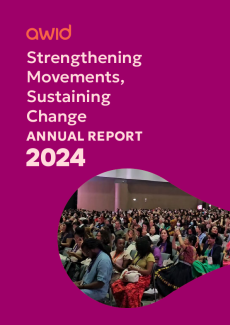
As we look ahead, we build on the powerful calls to action made by feminists at the AWID Forum; Together we can build a world where justice, liberation and care are not aspirations but realities.
This journal edition in partnership with Kohl: a Journal for Body and Gender Research, will explore feminist solutions, proposals and realities for transforming our current world, our bodies and our sexualities.
The Call for Activities lists a number of suggested formats and methodologies. Be creative and make sure to read the section “What you need to know”.
Ritu est une technologue féministe qui apporte son expérience au secteur non lucratif, animée par une passion pour l'utilisation d'approches innovantes pour trouver des solutions technologiques féministes. Titulaire d'un master en technologie des applications informatiques de l'Institut indien de technologie, son rôle au sein de l'AWID couvre un large spectre de responsabilités. De la supervision de la sécurité numérique et gestion des serveurs à l'administration des bases de données, en passant par le renforcement des capacités, l'évaluation technologique, la mise en œuvre de logiciels et de solutions cloud, Ritu veille à ce que l'infrastructure informatique de l'AWID soit résiliente et efficace. Avant de rejoindre l'AWID, elle a joué un rôle central dans l'avancement des initiatives technologiques des secteurs de la promotion de la santé et de l'environnement, alimentée par son engagement à tirer parti de la technologie pour le bien social.
Para inspirarte, te aconsejamos leer las propuestas que estamos ofreciendo antes de acercarnos tus ideas. Tal vez alguien ya haya pensado lo que quieres proponer. Puedes enviarnos tus propuestas a contribute@awid.org.
Revisaremos las propuestas que recibamos e iremos incluyendo las nuevas en este sitio de Internet.
Si tu actividad es seleccionada, el equipo de AWID te contactará para evaluar y responder a tus necesidades de interpretación y accesibilidad.
Marianne Mesfin Asfaw is a Pan-African feminist who is dedicated to social justice and building community. She has a BA in Gender Studies and International Relations from the University of British Columbia (UBC), and an MA in Gender Studies and Law from SOAS University of London. She has previously worked in academic administration and international student support, and has worked as a researcher and facilitator in feminist and non-profit spaces. She has also worked and volunteered at non-governmental organizations including Plan International in administrative roles. Prior to taking up her current role she worked in logistics and administrative support at AWID. She is from Ethiopia, was raised in Rwanda and is currently based in Tkaronto/Toronto, Canada. She enjoys reading, traveling and spending time with her family and friends. In the warmer months she can be found strolling around familiar neighborhoods in search of obscure cafés and bookstores to wander into.
يعقد كل منتدى في منطقة مختلفة، وقد حان الوقت لعودة منتدى جمعية حقوق المرأة في التنمية إلى آسيا! قمنا بزيارة العديد من البلدان في المنطقة، واستشرنا الحركات النسوية، وأجرينا تقييمات مفصلة للخدمات اللوجستية، وإمكانية الوصول، والسلامة، والتأشيرات، وغيرها من التفاصيل. وفي نهاية المطاف، وافق مجلس إدارة جمعية حقوق المرأة في التنمية على إقامة المنتدى في بانكوك، تايلاند، باعتبارها الخيار الأفضل. نحن متحمسون/ات للعودة إلى بانكوك، حيث عقدنا منتدى جمعية حقوق المرأة في التنمية في عام 2005.
Umyra Ahmad es una feminista de Malasia con antecedentes en incidencia política internacional y regional y educación en derechos humanos. En AWID, trabaja en la incidencia de los derechos asociados con el género y la sexualidad en las Naciones Unidas. Antes de incorporarse, se desempeñaba como oficial de programa en International Women’s Rights Action Watch Asia y el Pacífico (IWRAW, Observatorio Internacional de los Derechos de las Mujeres), donde colaboró con organizaciones regionales, nacionales y de base en el uso de mecanismos de los órganos de tratados de las Naciones Unidas como herramientas para la rendición de cuentas de los Estados y el acceso a la justicia. En Malasia, trabaja con colectivos queer y de personas refugiadas y brinda apoyo en las tareas de coordinación de diferentes iniciativas de ayuda mutua.
Margarita Salas, AWID
Nazik Abylgaziva, Labrys
Amaranta Gómez Regalado, Secretariado Internacional de Pueblos Indígenas frente al VIH/sida, la Sexualidad y los Derechos Humanos
Cindy Weisner, Grassroots Global Justice Alliance
Lucineia Freitas, Movimento Sem Terra