
Ana Fabricia Cordóba Cabrera
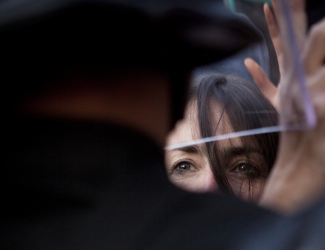
WHRDs are self-identified women and lesbian, bisexual, transgender, queer and intersex (LBTQI) people and others who defend rights and are subject to gender-specific risks and threats due to their human rights work and/or as a direct consequence of their gender identity or sexual orientation.
WHRDs are subject to systematic violence and discrimination due to their identities and unyielding struggles for rights, equality and justice.
The WHRD Program collaborates with international and regional partners as well as the AWID membership to raise awareness about these risks and threats, advocate for feminist and holistic measures of protection and safety, and actively promote a culture of self-care and collective well being in our movements.
WHRDs are exposed to the same types of risks that all other defenders who defend human rights, communities, and the environment face. However, they are also exposed to gender-based violence and gender-specific risks because they challenge existing gender norms within their communities and societies.
We work collaboratively with international and regional networks and our membership
We aim to contribute to a safer world for WHRDs, their families and communities. We believe that action for rights and justice should not put WHRDs at risk; it should be appreciated and celebrated.
Promoting collaboration and coordination among human rights and women’s rights organizations at the international level to strengthen responses concerning safety and wellbeing of WHRDs.
Supporting regional networks of WHRDs and their organizations, such as the Mesoamerican Initiative for WHRDs and the WHRD Middle East and North Africa Coalition, in promoting and strengthening collective action for protection - emphasizing the establishment of solidarity and protection networks, the promotion of self-care, and advocacy and mobilization for the safety of WHRDs;
Increasing the visibility and recognition of WHRDs and their struggles, as well as the risks that they encounter by documenting the attacks that they face, and researching, producing, and disseminating information on their struggles, strategies, and challenges:
Mobilizing urgent responses of international solidarity for WHRDs at risk through our international and regional networks, and our active membership.
Care as the foundation of economies
The COVID-19 pandemic put the global crisis of care into sharp focus and demonstrated the failures of the dominant economic model that is decimating essential public services, social infrastructures and systems of care around the world.
Cozinha Ocupação 9 Julho, the Association of Afro-Descendant Women of the Northern Cauca (ASOM) and Metzineres are only some examples of caring economies that center the needs of marginalized people and nature, as well as the reproductive, invisibilized, and unpaid care work required to ensure the sustainability of our lives, societies and eco-systems.
Опрос предназначен для групп, организаций и движений, работающих исключительно или главным образом по вопросам защиты прав женщин, ЛГБТКИ+, гендерной справедливости во всех контекстах, на всех уровнях и во всех регионах. Если одно из этих направлений является основным видом деятельности вашей группы, коллектива, сети или любого другого типа организации – независимо от того, зарегистрирована она или нет, недавно создана или существует уже давно, мы приглашаем вас принять участие в этом опросе.

* На данном этапе мы не ожидаем ответов от частных лиц или женских и феминистских фондов.
Узнайте больше об опросе:
загляните в часто задаваемые вопросы
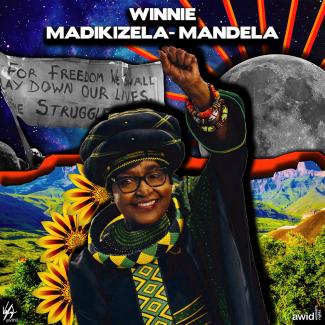
Winnie a été décrite comme une « militante enflammée » qui a combattu le régime de l’apartheid en Afrique du Sud.
Son engagement lui a valu d’être emprisonnée et placée en cellule d’isolement de nombreuses fois.
Affectueusement surnommée Ma’Winnie, elle était connue pour être quelqu’un qui parlait ouvertement des défis auxquels les femmes noires étaient confrontées pendant et après l’apartheid et cela, après avoir elle-même subi ces brutalités en tant que mère, épouse et militante pendant la lutte. Elle a su transcender l'idée couramment répandue selon laquelle le leadership est fondé sur le genre, la classe ou la race. Bien qu’étant une personnalité controversée, elle était connue par son nom xhosa, « Nomzamo », qui signifie « celle qui supporte les épreuves ».
Ma’Winnie continue d’être une source d’inspiration pour de nombreuses personnes, en particulier des jeunes femmes sud-africaines.
Sa mort a impulsé la naissance d’un mouvement qui a pour mantra : « Elle n’est pas morte, elle s’est multipliée ».
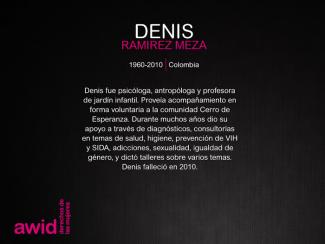
These 21 Women Human Rights Defenders (WHRDs) worked as journalists and more widely in the media sector in Mexico, Colombia, Fiji, Libya, Nepal, United States, Nicaragua, Philippines, Russia, Germany, France, Afghanistan, and the United Kingdom. 17 of them were murdered and in one case the cause of death is still unclear. On this World Press Freedom Day, please join us in commemorating the life and work of these women by sharing the images below with your colleagues, friends and networks using the hashtags #WPFD2016 and #WHRDs.
The contributions of these women were celebrated and honoured in our Tribute to Women Human Rights Defenders (WHRDs) Who Are No Longer With Us.
Please click on each image below to see a larger version and download as a file


Para dar ênfase à complexidade do financiamento de várias formas de organização feminista;
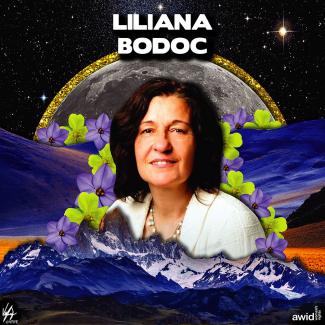
Liliana was a teacher, a weaver, and a well recognized writer from Argentina.
Her trilogy La saga de los confines received several awards and is unique in the fantasy genre for its use and re-imagining of South American Indigenous mythology.
Liliana’s commitment to feminism was expressed in the diverse, rich and strong women voices in her writing, and particularly in her extensive work for young readers. She also took public positions in favour of abortion, economic justice and gender parity.
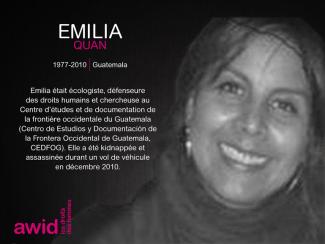
La información compilada para nuestro Tributo indica que México es un país particularmente peligroso para las defensoras. De las 12 defensoras de derechos humanos mexicanas que conmemoramos en el Tributo de este año, 11 fueron asesinadas. Eran periodistas, activistas por los derechos de las mujeres, activistas de los derechos trans* y sociales. Únete a nosotras para recordar y honrar a estas defensoras de derechos humanos, su trabajo y su legado, compartiendo los memes aquí incluidos con tus colegas, amistades y redes; y tuiteando las etiquetas #WHRDTribute y #16Días.
Por favor, haz click en cada imagen de abajo para ver una versión más grande y para descargar como un archivo.


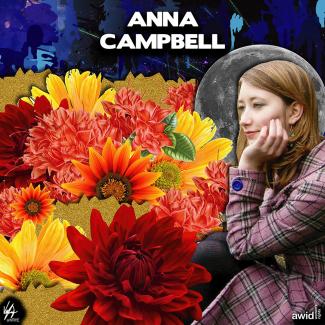
Anna creció en Lewes, Sussex (Reino Unido) y se mudó a Bristol, donde se hizo plomera, luego de decidir que no iba a continuar con su carrera de Inglés en la Universidad de Sheffield.
Dedicó mucho de su tiempo a defender a las personas marginadas y sin privilegios, a participar de marchas antifascistas y a ofrecer apoyo a las mujeres de la Granja Dale cuando estuvieron bajo amenaza de desalojo. Vegana y amante de los animales, participó en sabotajes a partidas de caza y su nombre es honrado en el Monumento «Árbol de la vida», de PETA. En mayo de 2017, Anna se trasladó a Rojava llevada por su fuerte compromiso con el empoderamiento de las mujeres, la plena representación de todas las identidades étnicas y la protección del ambiente.
Murió el 15 de marzo de 2018, al ser alcanzada durante un bombardeo aéreo de fuerzas turcas a la ciudad de Afrin, en el norte de Siria. Anna cayó combatiendo junto a las Unidades de Protección de las Mujeres (YPJ).
Cette année, dans le cadre de notre hommage en ligne aux défenseuses des droits humains qui ne sont plus parmi nous, nous célébrons la mémoire de quatre femmes originaires d’Afrique subsaharienne. Trois d’entre elles ont été assassinées en raison de leur travail et/ou à cause de leur identité de genre ou de leur orientation sexuelle. Leur mort souligne la violence à laquelle les personnes LGBT* sont confronté-e-s dans cette région et dans le monde entier. Nous vous invitons à vous joindre à nous pour commémorer la vie de ces femmes, leur activisme et l’héritage qu’elles nous ont laissé. Faites circuler ces mèmes après de vos collègues et amis ainsi que dans vos réseaux et twittez en utilisant les hashtags #WHRDTribute et #16Jours.
S'il vous plaît cliquez sur chaque image ci-dessous pour voir une version plus grande et pour télécharger comme un fichier


“Nous Sommes la Solution tiene una visión de una África donde, en solidaridad, las mujeres rurales involucradas en la toma de decisiones puedan cultivar, procesar, vender y consumir productos de la agricultura familiar preservando el medio ambiente, para un desarrollo sostenible, armonioso y duradero”.
