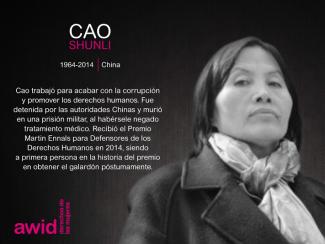
Cao Shunli
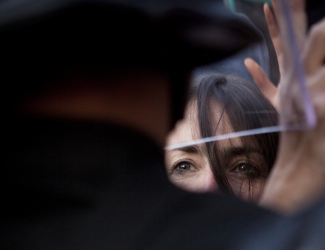
WHRDs are self-identified women and lesbian, bisexual, transgender, queer and intersex (LBTQI) people and others who defend rights and are subject to gender-specific risks and threats due to their human rights work and/or as a direct consequence of their gender identity or sexual orientation.
WHRDs are subject to systematic violence and discrimination due to their identities and unyielding struggles for rights, equality and justice.
The WHRD Program collaborates with international and regional partners as well as the AWID membership to raise awareness about these risks and threats, advocate for feminist and holistic measures of protection and safety, and actively promote a culture of self-care and collective well being in our movements.
WHRDs are exposed to the same types of risks that all other defenders who defend human rights, communities, and the environment face. However, they are also exposed to gender-based violence and gender-specific risks because they challenge existing gender norms within their communities and societies.
We work collaboratively with international and regional networks and our membership
We aim to contribute to a safer world for WHRDs, their families and communities. We believe that action for rights and justice should not put WHRDs at risk; it should be appreciated and celebrated.
Promoting collaboration and coordination among human rights and women’s rights organizations at the international level to strengthen responses concerning safety and wellbeing of WHRDs.
Supporting regional networks of WHRDs and their organizations, such as the Mesoamerican Initiative for WHRDs and the WHRD Middle East and North Africa Coalition, in promoting and strengthening collective action for protection - emphasizing the establishment of solidarity and protection networks, the promotion of self-care, and advocacy and mobilization for the safety of WHRDs;
Increasing the visibility and recognition of WHRDs and their struggles, as well as the risks that they encounter by documenting the attacks that they face, and researching, producing, and disseminating information on their struggles, strategies, and challenges:
Mobilizing urgent responses of international solidarity for WHRDs at risk through our international and regional networks, and our active membership.
มี! ขณะนี้พวกเรากำลังค้นหานวัตกรรมทางเทคโนโลยีที่จะช่วยให้เกิดการเชื่อมต่อและการเข้าร่วมอย่างมีความหมาย
Contenido relacionado
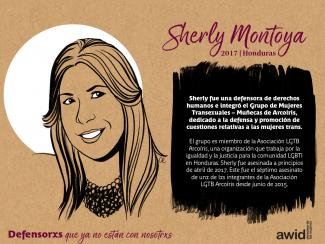
Organización Mundial Contra la Tortura: Honduras: Asesinato de Sherly Montoya, integrante del Grupo de Mujeres Transexuales “Muñecas de Arcoíris”
Nous avons toujours veillé à ce que nos Forums soient développés conjointement avec nos partenaires, nos mouvements et nos groupes prioritaires.
Pour cette édition 2020, nous visons à approfondir et renforcer cet esprit et cette pratique de co-création et de collaboration. Nous reconnaissons également la nécessité d’améliorer l’équilibre entre l’inclusion de nombreuses voix et les expériences, tout en laissant aux participant-e-s et au personnel la possibilité de respirer, faire une pause et profiter de certains temps d’arrêt.
Ce Forum sera différent des diverses façons suivantes:
COZINHA OCUPAÇÃO 9 DE JULHO
Veuillez visiter la page « Financement » pour obtenir des idées et vous inspirer sur les façons dont financer votre participation au prochain Forum, y compris pour vous informer sur le soutien limité que l’AWID sera en mesure de fournir.
Es un centro comunitario, donde unx puede tomar cursos y capacitarse en actividades creativas que generan ingresos como peluquería local, cocina y creación artística. Lxs niñxs también pueden disfrutar de actividades culturales y educativas.
El MSTC no trabaja solo. Colabora con instituciones y colectivos de arte para producir experiencias culturales, deportivas y educativas, junto con el acceso crítico a la atención médica. Desde su inicio, este proyecto participativo ha sido liderado y llevado a cabo principalmente por mujeres, bajo el liderazgo de la activista afro-brasileña Carmen Silva, quien alguna vez fue una persona sin hogar.
Des partenaires mondiaux et régionaux nous ont déjà communiqué certaines idées de rassemblements préalables au Forum, dont nous vous ferons part sous peu.
Si vous projetez d’organiser une réunion avant le Forum, n’hésitez pas à nous le faire savoir !
Plusieurs belles choses ont émergé du Forum des féminismes noires (BFF, selon son acronyme anglais), qui avait été organisé en 2016 par un Groupe consultatif et financé par l’AWID. À l’issue de ce BFF, certaines organisations indépendantes ont ainsi pu voir le jour, telles ques des organisations féministes noires au Brésil. Bien que le BFF n’aura pas lieu cette année, nous nous engageons à partager certains apprentissages clés avec toute personne intéressée à poursuivre le travail d'organisation féministe noire.
L'organisation communautaire des femmes noires dans le Cauca du Nord en Colombie remonte au passé colonial du pays, marqué par le racisme, le patriarcat et le capitalisme qui ont soutenu l'esclavage comme moyen d'exploiter les riches sols de la région. Ces organisatrices sont les héroïnes d'un vaste mouvement pour l'autonomie des personnes noires, luttant pour la gestion durable des forêts et des ressources naturelles de la région, vitales pour leur culture et leur subsistance.
Depuis 25 ans, la Asociación de Mujeres Afrodescendientes del Norte del Cauca (l’Association des Femmes Afro-Descendantes du Cauca du Nord, ASOM) se consacre à la promotion de l'organisation des femmes afro-colombiennes du Cauca du Nord.
L’association a été créée en 1997 en réponse aux violations continues des droits humains, à l'absence de politiques publiques, à la gestion inadéquate des ressources naturelles et au manque d'opportunités pour les femmes dans le territoire.
Elles ont forgé la lutte pour garantir les droits ethno-territoriaux, pour mettre fin aux violences contre les femmes et pour faire reconnaître le rôle des femmes dans la construction de la paix en Colombie.
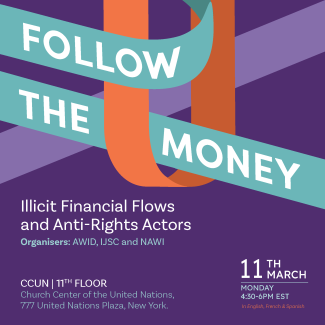
📅Wednesday, March 13 🕒10.30am-12pm EST
Organisers: AWID, ESCR-Net, Franciscan International, Womankind Worldwide as part of Feminists For a Binding Treaty
🏢 Church Center of the United Nations, 777 United Nations Plaza, New York, 11th Floor
AWID正密切關注全球新冠肺炎疫情,目前會按原訂計畫推動論壇事宜。
若屆時情況有變,我們會立即通知您。
第十四屆AWID國際論壇將於西元2021年9月20日至23日在台北举行。
更多資訊 (in English)
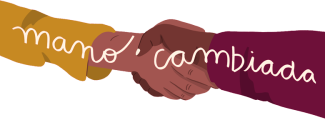
("exchange hand")
Term of the black communities of the Northern Cauca for the minga, the collective work based on solidarity and mutual support.