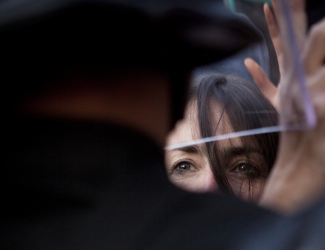
Philippe Leroyer | Flickr (CC BY-NC-ND 2.0)

Special Focus

AWID is an international, feminist, membership organisation committed to achieving gender equality, sustainable development and women’s human rights

Women Human Rights Defenders

WHRDs are self-identified women and lesbian, bisexual, transgender, queer and intersex (LBTQI) people and others who defend rights and are subject to gender-specific risks and threats due to their human rights work and/or as a direct consequence of their gender identity or sexual orientation.

WHRDs are subject to systematic violence and discrimination due to their identities and unyielding struggles for rights, equality and justice.

The WHRD Program collaborates with international and regional partners as well as the AWID membership to raise awareness about these risks and threats, advocate for feminist and holistic measures of protection and safety, and actively promote a culture of self-care and collective well being in our movements.


Risks and threats targeting WHRDs  

WHRDs are exposed to the same types of risks that all other defenders who defend human rights, communities, and the environment face. However, they are also exposed to gender-based violence and gender-specific risks because they challenge existing gender norms within their communities and societies.

By defending rights, WHRDs are at risk of:

  • Physical assault and death
  • Intimidation and harassment, including in online spaces
  • Judicial harassment and criminalization
  • Burnout

A collaborative, holistic approach to safety

We work collaboratively with international and regional networks and our membership

  • to raise awareness about human rights abuses and violations against WHRDs and the systemic violence and discrimination they experience
  • to strengthen protection mechanisms and ensure more effective and timely responses to WHRDs at risk

We work to promote a holistic approach to protection which includes:

  • emphasizing the importance of self-care and collective well being, and recognizing that what care and wellbeing mean may differ across cultures
  • documenting the violations targeting WHRDs using a feminist intersectional perspective;
  • promoting the social recognition and celebration of the work and resilience of WHRDs ; and
  • building civic spaces that are conducive to dismantling structural inequalities without restrictions or obstacles

Our Actions

We aim to contribute to a safer world for WHRDs, their families and communities. We believe that action for rights and justice should not put WHRDs at risk; it should be appreciated and celebrated.

  • Promoting collaboration and coordination among human rights and women’s rights organizations at the international level to  strengthen  responses concerning safety and wellbeing of WHRDs.

  • Supporting regional networks of WHRDs and their organizations, such as the Mesoamerican Initiative for WHRDs and the WHRD Middle East and North Africa  Coalition, in promoting and strengthening collective action for protection - emphasizing the establishment of solidarity and protection networks, the promotion of self-care, and advocacy and mobilization for the safety of WHRDs;

  • Increasing the visibility and recognition of  WHRDs and their struggles, as well as the risks that they encounter by documenting the attacks that they face, and researching, producing, and disseminating information on their struggles, strategies, and challenges:

  • Mobilizing urgent responses of international solidarity for WHRDs at risk through our international and regional networks, and our active membership.

Related Content

Snippet - WITM Infographic annual budget 2 in 4- EN

Ever Wondered What Budgets for Feminist  Organizations Look Like?

A closer look at actual budgets reveals major income diversity and inequality.


Gloria Chicaiza

Activiste sociale et de l’environnement équatorienne, Gloria Chicaiza était une fervente défenseuse du droit à la terre et à l’eau. Elle s’est opposée au statu quo en luttant contre un modèle de développement fondé sur l’extraction et a oeuvré sans relâche pour la justice écologique et les droits des communautés affectées par l’exploitation minière.   

Dans divers endroits de l’Équateur, Gloria a participé à des actions de résistance en faveur de la protection de l’écosystème. Avec passion et dévouement, Goria a apporté son soutien au mouvement autochtone et environnemental, à ces communautés et organisations qui s’opposent aux projets miniers et protègent leurs territoires et leurs projets de vie collectifs. Elle est intervenue au sein de forums locaux et internationaux contre la criminalisation des dissident·e·s et des résistant·e·s, contre les pressions et la violence exercées à l’encontre des activistes communautaires, en particulier des femmes défenseuses des droits humains, et pour soutenir les efforts déployés par les communautés en faveur de la souveraineté alimentaire et de la durabilité. 

Elle était la coordonnatrice de la justice minière à Acción Ecológica, membre du Réseau latino-américain des femmes défenseuses des droits sociaux et environnementaux, et membre du conseil d'administration de l'Observatoire latino-américain des conflits miniers.

En octobre 2010, Gloria a été accusée par la société minière Curimining/Salazar Resources S.A. (dont le siège est à Vancouver, au Canada) d’avoir commandité un acte de terrorisme, de sabotage et d’association illégale dans le but de commettre un crime. Acción Ecológica a estimé qu’il s’agissait là de “représailles pour son travail de dénonciation concernant l’impact des activités minières dans le pays”.

En 2015, Gloria a facilité la coordination d’une délégation, composée de 25 femmes autochtones d’Amérique latine, affectée au Dialogue sur le changement climatique de la COP 20 des Nations Unies.

Gloria est décédée le 28 décembre 2019 des suites de complications liées à une transplantation pulmonaire. On se souvient d’elle pour ses actes de résistance et son travail acharné. 

"Le moyen le plus rapide de parvenir à la durabilité reste encore la résistance.” -  Gloria Chicaiza (2010 interview)


Hommages :

“Pour GLORIA. GLORIA Eau. GLORIA Terre. GLORIA Mère. GLORIA Révolution. GLORIA Soeur. GLORIA Ciel. GLORIAmie. GLORIAstrale. Merci de nous avoir entrelacé·e·s.” -Liliana Gutierrez

“Merci Glorita, d’avoir nourri l'espoir, d’avoir préservé la solidité de la structure, d’avoir tissé des liens avec la communauté, pour les mains unies, pour la solidarité, merci Glorita de t’être tenue à nos côtés dans les moments les plus difficiles. Merci de nous avoir appris que tout au long de la vie, personne ne se fatigue.” (Chakana News)

“Gloria Chicaiza appréciait ne pas sortir du lot et s’y épanouissait. Et aussi humble qu'elle fût, elle avait une capacité inouïe à mener et garder un rythme régulier et étourdissant, un pouls de vie qui guidait, mobilisait et inspirait les communautés et les réseaux dans la protection de la Terre Mère. Elle a dénoncé toutes les formes de violence contre les “cuerpos-territorios” (les corps comme territoires). Elle soutenait le “buen vivir" (“bien vivre”). - Gabriela Jiménez, coordonnatrice des partenariats en Amérique latine, KAIROS

“Merci Gloria Chicaiza, nous sommes sûr·e·s que depuis l’infini, tu continueras à soutenir notre combat. Toi qui as continué de te battre en dépit de ta santé défaillante. Tu continueras de vivre dans les forêts et les eaux que tu as défendues avec tant de courage. Tu vivras dans nos coeurs.” - La communauté d’Intag en Équateur
Lire d'autres d'hommages à Gloria 

Jemimah Naburri-Kaheru

Biography

Jemimah Naburri-Kaheru est une stratège internationale accomplie en matière de ressources humaines à impact profond dans la région de la Corne de l'Afrique. Jemimah était auparavant responsable régionale des ressources humaines et du bureau de l'Initiative stratégique pour les femmes dans la Corne de l'Afrique (SIHA) . Son influence s’est étendue jusqu’à la direction des ressources humaines de plus de 70 employé·e·s régionaux·ales, alors que l'organisation connaissait une croissance rapide, avec une augmentation de 40 % de ses revenus annuels. Tout au long de sa carrière, Jemimah a orchestré avec succès des efforts de recrutement, introduit des systèmes de performance basés sur le mérite, de même que supervisé les relations avec les employé·e·s et les politiques RH. Elle a joué un rôle central dans le soutien aux stratégies mondiales de personnel. Avec une formation universitaire en Études de Développement de l'Université de Makerere (Ouganda) et un Master en Gestion des Ressources Humaines, Jemimah est évidemment engagée envers le développement professionnel. Sa contribution à des effectifs hautement performants et à un leadership international en matière de ressources humaines la positionne comme un atout inestimable dans toute entreprise mondiale.

Position
Directrice adjointe des ressources humaines
Add to stories
Off

Does AWID provide scholarships to attend the Forum?

Our Access Fund will offer a limited number of scholarships to fund the participation of activists who cannot otherwise make it, and don’t have relationships with funders who could cover their participation. So if you have other possibilities, please explore them. We will do our best to offer as many scholarships as we can, and will share more information about this process and how to apply in early 2024.

Donation Success


Thank you for taking a step further to change the world!

Your generous contribution will help us support feminist movements across the globe working to achieve gender justice and women’s human rights worldwide.

You can also support our work as an AWID Member. Find out how here.

Résumé : Identifiez les principaux groupes et réfutez leurs arguments

Résumé :

Identifiez les principaux groupes et réfutez leurs arguments

Décideur·se politique à l’ONU, vous souhaitez apprendre à repérer les principaux groupes et discours antidroits au sein de l’institution ? Vous êtes un·e féministe, à la recherche de contre-arguments éclairs ? Ce résumé vous propose les informations essentielles en 8 pages seulement.

Obtenir le résumé

WITM - Refreshed INFOGRAPHIC 3 FR

Comment les féministes s’autofinancent ?

Les organisations féministes et de défense des droits des femmes ne dépendent pas uniquement des financements institutionnels, elles s’autofinancent. Nos mouvements sont animés par la passion, la solidarité, l’engagement politique et le soin collectif.
Ces ressources autonomes et autogénérées sont souvent invisibles dans les budgets, mais elles sont le pilier de notre action collective.

 Explorez les données sur l’autofinancement

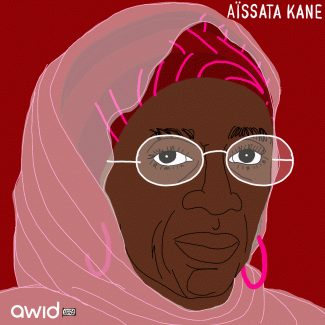
Aïssata Kane

Aïssata Kane, also fondly known as “Yaye Kadia” (Mother Kadia), was a feminist with a lifelong committment in advocating for African and especially Mauritanian women’s rights.

In her career as a politician, she was appointed Minister of Family Protection and Social Affairs in 1975, the first time a woman held such a position and in which Aïssata fervently worked to improve the status of women in her country.  

This work included advancing girls’ and women’s education, fighting against the practice of force-feeding of young women, lobbying for an inclusion of a marital rights provision, and advocating for a female representation quota to be created in the Parliament. 

“[Aïssata] realized all her passions with humility, courage and determination. She didn’t want to disturb anyone by her fight on all these fronts at the same time.” Ball Halimata Dem, Aïssata’s niece

She founded the National Union of Women of Mauritania (UNFM), co-creating and publishing Marienou for them, a magazine dedicated to the emancipation of Mauritanian women. Aïssata also directed several sub-regional and local organizations, including as the President of the International Association of Francophone Women (AIFF) and as a resolute ecologist, she was President of the Association for the Protection of the Environment in Mauritania (APEM). 

In 2018 she received the Pioneer Woman Award. It honors her work in advancing Mauritania’s women’s status and recognizes her strong leadership and sense of innovation.

Aïssata passed away on 10 August 2019. 

Khaoula Ksiksi

Biography

Khaoula Ksiksi is a passionate advocate for justice, equity, and liberation. As a Gender, Equality, Diversity, and Inclusion (GEDI) Advisor, she works to make inclusivity a lived reality, not just a policy, across humanitarian programs and crisis contexts. She collaborates with teams to challenge structural oppression using bold, transformative tools rooted in lived experience.

Her activism began on the frontlines of Tunisia’s anti-racism movement. With Mnemty, she helped push through the country’s first anti-discrimination law, forcing a national reckoning with racial injustice. She later co-founded Voices of Black Tunisian Women to amplify Black women’s leadership, build solidarity networks, and demand visibility in a society that often silences them.

Khaoula is also a founding member of Falgatna, a radical queer-feminist movement fighting for SOGIESC rights and supporting LGBTQI+ communities through direct action, digital resistance, and survivor-centered advocacy.

Previously, she led regional feminist and climate justice projects at the Rosa Luxemburg Foundation in North and West Africa.

At the heart of her work is a deep belief: no one is free until we all are. Her activism is both a fight and a love letter to her people, her communities, and the world we deserve.

Add to stories
Off

¿Habrá encuentros regionales, temáticos o de otro tipo previos al Foro?

¡Creemos que sí! Todavía estamos en las etapas iniciales del proceso de planificación, así que mantente atentx mientras les vamos dando a estos planes.

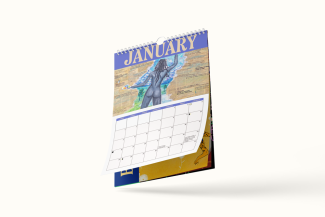
Calendario Feminista AWID 2026

Considera este calendario como un obsequio, que te llega a ti y a 9500 afiliades de nuestra comunidad feminista mundial. Un obsequio de esperanza, conexiones renovadas, acción y comunidad en un momento de inmensas injusticias y violencias.

Que estas historias te recuerden que a través de las fronteras y a lo largo de las luchas, somos muches, somos fuertes y, en conjunto, construimos los mundos que merecemos.

Descárgalo aquí, en tu idioma preferido.

Español
Français
English
Português
عربي
Русский

Animation: Calling all Feminist Superheroes!

Animation:

Calling all Feminist Superheroes!

Follow our Superhero as she embarks on a quest to reclaim the narrative from anti-rights actors across the globe.

Watch animation

Snippet - COP30 - Radical Democracy - EN

Démocratie radicale et justice climatique - le débat absent de la COP30

Modèles de gouvernance alternative comme moyens de sortir de la crise climatique.

📅 Mercredi 12 novembre 2025
📍 Seminario Mar Nossa Sra Da Assunção, Pará, Brésil

Plus d'infos ici

Site web en anglais

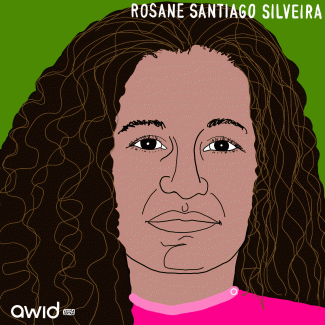
Rosane Santiago Silveira

Rosane Santiago Silveira era conocida afectuosamente como «Rô Conceição». Fue una activista ambiental y por los derechos humanos que luchó fervientemente para proteger el medio ambiente en las zonas más amenazadas.

Esta lucha incluyó la defensa así como también la protección ambiental en la isla de Barra Velha, cuando estuvo amenazada por la exploración petrolera, mediante campañas contra la apropiación de tierras y la expansión de las plantaciones de eucaliptus en el Estado de Bahía, donde Rosane integraba el Consejo de la Reserva Extractivista de Cassurubá.

«La Reserva Extractiva es un área protegida donde las familias residentes se ganan la vida con productos naturales extraídos del bosque. Estas actividades ayudan a mantener la integridad del bosque.» - Global Justice Ecology Project (fuente original: Rede Brasil Atual)

Rosane participó en actividades sindicales, y en movimientos culturales y por los derechos humanos. Dedicó gran parte de sí misma, no solamente a las causas que la afectaban directamente, sino a problemas de la tierra, los bosques, los ríos y las comunidades cuyos derechos y vidas están continuamente en riesgo.

Fue torturada y asesinada el 29 de enero de 2019 en Nova Viçosa, una ciudad del sur de Bahía.

«Lamentablemente, hoy existe un sentimiento de inseguridad total, por la ausencia del Estado  en la investigación de estos delitos. Estuvimos con ella en Navidad, todos se dieron cuenta de que estaba preocupada, y ahora sabemos que había recibido tres amenazas de muerte.» - Tuian, hijo de Rosane, en una entrevista con Rádio Brasil Atual (fuente original: Rede Brasil Atual)

Cinthia Galan

Biography

Cinthia has collaborated with NGOs in Mexico, Peru, and Ecuador on projects related to human mobility, the environment, and political advocacy through transmedia storytelling and web development. She holds a Master’s in Visual Anthropology from FLACSO Ecuador and a degree in Animation and Digital Art from Tecnológico de Monterrey. She loves experimenting with code and visual media to craft new forms of storytelling and keep exploring the intersection between art, technology, and social change.

Position
Communications Multimedia Production Lead
Add to stories
Off

Je suis un bailleur de fonds ou un donateur individuel. Comment puis-je soutenir le Forum de l'AWID ?

Nous vous invitons à prendre contact avec nous pour trouver des moyens d’apporter un soutien significatif au Forum.

Advancing Universal Rights and Justice

Uprooting Fascisms and Fundamentalisms

Across the globe, feminist, women’s rights and gender justice defenders are challenging the agendas of fascist and fundamentalist actors. These oppressive forces target women, persons who are non-conforming in their gender identity, expression and/or sexual orientation, and other oppressed communities.


Discriminatory ideologies are undermining and co-opting our human rights systems and standards,  with the aim of making rights the preserve of only certain groups. In the face of this, the Advancing Universal Rights and Justice (AURJ) initiative promotes the universality of rights - the foundational principle that human rights belong to everyone, no matter who they are, without exception.

We create space for feminist, women’s rights and gender justice movements and allies to recognize, strategize and take collective action to counter the influence and impact of anti-rights actors. We also seek to advance women’s rights and feminist frameworks, norms and proposals, and to protect and promote the universality of rights.


Our actions

Through this initiative, we:

  • Build knowledge: We support feminist, women’s rights and gender justice movements by disseminating and popularizing knowledge and key messages about anti-rights actors, their strategies, and impact in the international human rights systems through AWID’s leadership role in the collaborative platform, the Observatory on the Universality of Rights (OURs)*.
  • Advance feminist agendas: We ally ourselves with partners in international human rights spaces including, the Human Rights Council, the Commission on Population and Development, the Commission on the Status of Women and the UN General Assembly.
  • Create and amplify alternatives: We engage with our members to ensure that international commitments, resolutions and norms reflect and are fed back into organizing in other spaces locally, nationally and regionally.
  • Mobilize solidarity action: We take action alongside women human rights defenders (WHRDs) including trans and intersex defenders and young feminists, working to challenge fundamentalisms and fascisms and call attention to situations of risk.  


Related Content