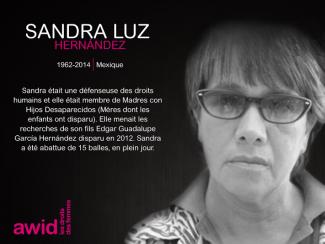
Sandra Luz Hernandez
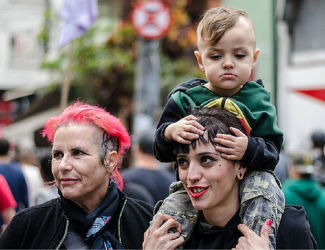
Over the past few years, a troubling new trend at the international human rights level is being observed, where discourses on ‘protecting the family’ are being employed to defend violations committed against family members, to bolster and justify impunity, and to restrict equal rights within and to family life.
The campaign to "Protect the Family" is driven by ultra-conservative efforts to impose "traditional" and patriarchal interpretations of the family, and to move rights out of the hands of family members and into the institution of ‘the family’.
Since 2014, a group of states have been operating as a bloc in human rights spaces under the name “Group of Friends of the Family”, and resolutions on “Protection of the Family” have been successfully passed every year since 2014.
This agenda has spread beyond the Human Rights Council. We have seen regressive language on “the family” being introduced at the Commission on the Status of Women, and attempts made to introduce it in negotiations on the Sustainable Development Goals.
AWID works with partners and allies to jointly resist “Protection of the Family” and other regressive agendas, and to uphold the universality of human rights.
In response to the increased influence of regressive actors in human rights spaces, AWID joined allies to form the Observatory on the Universality of Rights (OURs). OURs is a collaborative project that monitors, analyzes, and shares information on anti-rights initiatives like “Protection of the Family”.
Rights at Risk, the first OURs report, charts a map of the actors making up the global anti-rights lobby, identifies their key discourses and strategies, and the effect they are having on our human rights.
The report outlines “Protection of the Family” as an agenda that has fostered collaboration across a broad range of regressive actors at the UN. It describes it as: “a strategic framework that houses “multiple patriarchal and anti-rights positions, where the framework, in turn, aims to justify and institutionalize these positions.”
«Si podemos heredar un trauma, ¿podemos heredar una huella relacionada con el amor?»
Una nómada de las culturas, nacida en Hong Kong y con raíces turco-paquistaníes, el amor de Fatima por la narración, ya sea su lectura o su creación conjunta, le infundió la pasión por el activismo de las comunicaciones. Formada en periodismo, ha trabajado durante siete años en los ámbitos de la comunicación digital y los medios de comunicación con ONG que brindan oportunidades educativas y asistencia jurídica a personas refugiadas y solicitantes de asilo, así como con el movimiento feminista musulmán, que aplica un enfoque feminista y de derechos para comprender y buscar la igualdad y la justicia en la tradición jurídica musulmana. Escribe con habitualidad artículos de opinión sobre asuntos feministas en el Sur Global.
Mediante la narración en esta era hiperdigital de las redes sociales, Fatima sigue colaborando con organizadores comunitaries y activistas de base para crear contenido audiovisual, a fin de tender puentes de comprensión hacia la liberación colectiva y la descolonización. Durante los días en que no trabaja, mira atentamente largometrajes feministas independientes de Irán, Marruecos y Pakistán, e interpreta poesía oral con sus camaradas de Kuala Lumpur.
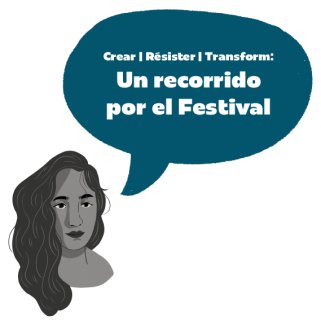
Mientras el capitalismo heteropatriarcal continúa forzándonos al consumismo y el acatamiento, observamos que nuestras luchas están siendo compartimentadas y separadas por fronteras tanto físicas como virtuales.
Nana est militante féministe et chercheuse spécialisée dans les droits reproductifs et les politiques démographiques. Elle exerce ses activités en Égypte. Elle collabore avec Realizing Sexual and Reproductive Justice (RESURJ), siège au conseil consultatif de l’A Project au Liban et fait partie du comité communautaire de Mama Cash. Nana est diplômée d’un master en santé publique de l’Institut KIT et de l’Université Vrije d’Amsterdam. Son travail consiste à analyser et contextualiser les politiques démographiques nationales tout en documentant les questions liées à l’eugénisme contemporain, aux programmes d’aide internationale régressifs et aux régimes autoritaires. Auparavant, elle a collaboré avec la Fondation genevoise pour la formation et la recherche médicales, l’Initiative égyptienne pour les droits de la personne, ainsi qu’avec le Collectif féministe Ikhtyar au Caire.
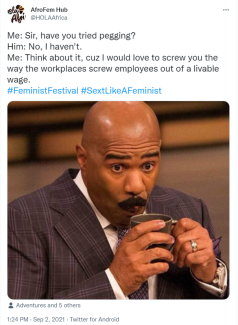
Yo: Señor, ¿probó por el culo?
Él: No, no probé.
Yo: Piénselo, porque me gustaría cogérmelo / joderlo tal como a lxs trabajadorxs nos cogen / joden en los trabajos cuando lo que nos pagan no alcanza para vivir.
Nous œuvrons à renforcer les répercussions et l’influence des organisations, mouvements et défenseur-euse-s des droits des femmes sur la scène internationale et à amplifier leur voix collective, en vue de la pleine réalisation de la justice de genre et des droits humains des femmes.
El Foro de AWID siempre ha sido un espacio que no elude las conversaciones difíciles y muy necesarias. Aceptaremos estas propuestas si lxs organizadorxs pueden garantizar un espacio respetuoso y seguro para quienes participen.
Moriviví is a collective of young female artists, working on public art since April 2013. Based in Puerto Rico, we’ve gained recognition for the creation of murals and community led arts.
AWID works towards the realization of gender justice and women’s human rights worldwide. We work to strengthen the voices and impact of women’s rights advocates, organizations and movements. Our main Priority Areas relate to themes that are closely linked to dominant global trends.
These themes reflect growing challenges that negatively impact women’s rights worldwide.
Oui, tout à fait. Le formulaire actuel vous demande d’énumérer les noms des personnes qui interviendront sur l’activité, même si elles ne sont pas encore confirmées. Nous comprenons bien que des changements peuvent se produire au cours de l’année.
En colaboración con la artista Naadira Patel, creamos un álbum que resalta algunos momentos de las últimas cuatro décadas de apoyo a los movimientos feministas por parte de AWID.
Todos nuestros informes anuales estan disponibles en línea.
เราจะติดต่อกับองค์กรพาร์เนอร์ในอดีตเพื่อให้มั่นใจว่าความพยายามที่เคยเตรียมไว้ในอดีตมีความหมาย หากองค์กรของคุณมีการเปลี่ยนแปลงข้อมูลติดต่อจากฟอรัมครั้งก่อนหน้ากรุณาแจ้งให้พวกเราทราบเพื่อให้เราสามารถติดต่อถึงคุณได้