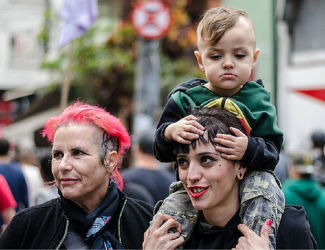
Flickr/Leonardo Veras (CC BY 2.0)

Protection of the Family

The Issue

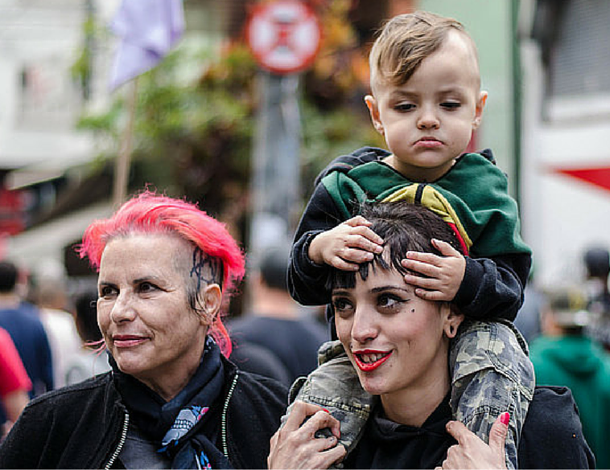
Over the past few years, a troubling new trend at the international human rights level is being observed, where discourses on ‘protecting the family’ are being employed to defend violations committed against family members, to bolster and justify impunity, and to restrict equal rights within and to family life.

The campaign to "Protect the Family" is driven by ultra-conservative efforts to impose "traditional" and patriarchal interpretations of the family, and to move rights out of the hands of family members and into the institution of ‘the family’.

“Protection of the Family” efforts stem from:

  • rising traditionalism,
  • rising cultural, social and religious conservatism and
  • sentiment hostile to women’s human rights, sexual rights, child rights and the rights of persons with non-normative gender identities and sexual orientations.

Since 2014, a group of states have been operating as a bloc in human rights spaces under the name “Group of Friends of the Family”, and resolutions on “Protection of the Family” have been successfully passed every year since 2014.

This agenda has spread beyond the Human Rights Council. We have seen regressive language on “the family” being introduced at the Commission on the Status of Women, and attempts made to introduce it in negotiations on the Sustainable Development Goals.


Our Approach

AWID works with partners and allies to jointly resist “Protection of the Family” and other regressive agendas, and to uphold the universality of human rights.

In response to the increased influence of regressive actors in human rights spaces, AWID joined allies to form the Observatory on the Universality of Rights (OURs).  OURs is a collaborative project that monitors, analyzes, and shares information on anti-rights initiatives like  “Protection of the Family”.

Rights at Risk, the first OURs report, charts a map of the actors making up the global anti-rights lobby, identifies their key discourses and strategies, and the effect they are having on our human rights.   

The report outlines “Protection of the Family” as an agenda that has fostered collaboration across a broad range of regressive actors at the UN.  It describes it as: “a strategic framework that houses “multiple patriarchal and anti-rights positions, where the framework, in turn, aims to justify and institutionalize these positions.”


Related Content

WITM - Refreshed Intro Text - ES

🚨Nuevo informe disponible en español🚨

¿Dónde está el dinero? Un llamado basado en evidencia a dotar de recursos a las organizaciones feministas

Este nuevo informe revela las realidades de los recursos de las organizaciones feministas y por los derechos de las mujeres en una época de turbulencias políticas y económicas sin precedentes. A partir de un análisis de más de una década desde el último informe de AWID ¿Dónde está el dinero?, se hace un balance de las conquistas, las brechas y las amenazas crecientes en el panorama del financiamiento.

¡Descarga el informe!

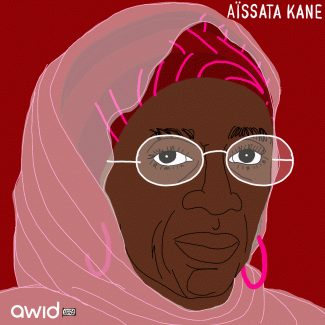
Aïssata Kane

Aïssata Kane, surnommée affectueusement “Yaye Kadia” (Mère Kadia), a de tout temps été une féministe engagée dans la défense des droits des femmes africaines, et particulièrement mauritaniennes.

Au cours de sa carrière politique, en 1975, elle fut nommée ministre de la protection de la famille et des affaires sociales et travailla avec ardeur à l’amélioration du statut des femmes dans son pays; c’était la première fois qu'une femme occupait un tel poste.   

Ce travail consista notamment à promouvoir l’éducation des filles et des femmes, à lutter contre la pratique du gavage sur les jeunes femmes, à faire pression pour l’inclusion d’une disposition sur les droits maritaux et à plaider en faveur de la création d’un quota de représentation féminine au Parlement.  

“[Aïssata] a réalisé toutes ses passions avec humilité, courage et détermination. Elle ne voulait déranger personne avec ce combat qu’elle menait sur tous les fronts à la fois.” Ball Halimata Dem, la nièce d’Aïssata

Ayant fondé l'Union nationale des femmes de Mauritanie (UNFM), elle avait cocréé et publié pour elles le magazine Marienou, dédié à l’émancipation des femmes mauritaniennes. Aïssata dirigea également plusieurs organisations sous-régionales et locales, notamment en tant que présidente de l'Association internationale des femmes francophones (AIFF) et, en écologiste résolue, fut présidente de l'Association pour la protection de l'environnement en Mauritanie (APEM). 

En 2018, on lui décerna le Prix de la Femme africaine pionnière. Ce prix honore son engagement à faire progresser le statut de la femme en Mauritanie et reconnaît son grand leadership et son sens de l'innovation.

Aïssata est décédée le 10 août 2019. 

Workshop Methodology

Coming soon:

Workshop Methodology

Want to bring people together to strengthen resistance? This methodology for workshops offers group exercises to increase collective knowledge and power, with options to adapt to your needs.

Coming soon!

Lettre d’amour aux mouvements féministes #7

Ma très chère communauté féministe,

Je suis ravie de te faire part d’un de mes rendez-vous les plus remarquables en tant que féministe en situation de handicap. C’était le 30 mai 2014. L’Organisation nationale des puissantes dames porteuses d’un handicap visuel (NOVEL) participait aux festivités de la Fashion Week 2014 des Philippines, au profit de notre campagne de plaidoyer pour les cannes blanches. Deux dames aveugles défilaient sur le podium pour promouvoir la canne blanche comme symbole de l’égalité des genres, de l’autonomisation, de l’inclusion totale et de la participation égale des femmes et des filles porteuses de handicap visuel au sein de la société.

J’étais extrêmement nerveuse au moment de leur passage devant la foule, en tant que porte-parole de notre projet auprès des productions Runway (j’avais douloureusement attendu cette approbation pendant une année entière), sachant qu’elles n’étaient pas des mannequins, elles avaient été nommées Madame Philippines Vision et la première dauphine 2013 de Madame Philippines sur Roues, Signe et Vision par Tahanang Walang Hagdanan, Inc. (« Maison sans marches »). Elles n’avaient pas pu participer à leur séance d’orientation et s’étaient entraînées la veille au soir sans pouvoir le faire avec des mannequins professionnelles. Avant que ne commence le spectacle, je les avais appelées pour booster leur confiance et prier ensemble que Dieu les guide. Lorsqu’elles ont quitté le podium, j’ai pris une grande respiration alors que les larmes coulaient sur mes joues. Je me sentais euphorique parce que nous y étions parvenues malgré toutes les difficultés! Notre message au monde disant que les femmes et les filles en situation de handicap visuel pouvaient marcher en toute dignité, liberté et indépendance sur la même base d’égalité que les autres, grâce à notre appareil d’aide – les cannes blanches –  qui était passé! On a parlé de nous sur les réseaux sociaux ainsi que sur les chaînes de télévision.

Love letter to feminist movements from Your dramatically cloaked jungle nymph.

Ma vie de féministe en situation de handicap a débutcé comme un moyen de réparer mon manque de confiance et de trouver une autre trajectoire de réussite pour ma vie après avoir survécu à une vicieuse attaque à l’acide en 2007, alors que j’attendais le véhicule qui devait me ramener chez moi depuis le bureau. Mes yeux ont été fortement touchés, au point où je suis devenue une femme malvoyante.

Ce progrès n’est pas sans coût, tout comme il n’est pas parfait. Les activistes féministes, les groupes et les activistes se retrouvent face aux difficultés typiques rencontrées dans les contextes conservateurs et affectés par des conflits. Mais l’impact du mouvement des jeunes féministes au Soudan mérite d’être encensé. Dépasser les obstacles internes des différences de culture, de religion et des conflits historiques est un défi en soi, que les jeunes féministes au Soudan semblent relever activement. La création d’écoles féministes au Darfour et dans le Kordofan révèle la trajectoire unique du travail des jeunes féministes au Soudan, dont nous pouvons tirer des enseignements.

Je n’avais jamais pensé que ma vie pourrait être aussi joyeuse et pleine de sens avant de rencontrer les femmes leaders du mouvement pour le genre et le handicap, qui n’ont cessé depuis d’exercer une influence positive sur moi. Leurs mots d’encouragement m’ont plu et sont devenus la musique la plus douce à mes oreilles. Mon cœur brisé bondit comme un oiseau qui prend son envol à chaque fois que je pense à elles et au féminisme qui m’a encouragée à contribuer pour que les choses changent pour nos sœurs en situation de handicap qui sont invisibles et pour celles qui continuent à être discriminées. Jusqu’à ce jour, je suis consumée par le désir d’être avec le mouvement. Je ne peux cacher mon excitation chaque fois que je soumets des propositions de projets à différentes parties prenantes pour l’autonomisation, le développement et la promotion de nos sœurs en situation de handicap. Ou à chaque fois que j’interviens dans des conversations locales, nationales et internationales pour faire entendre nos voix, même lorsque cela est à mes dépens.

De manière inattendue, j’ai été choisie pour représenter notre pays à l’assemblée générale de l’Union mondiale des aveugles (UMA) en 2012 en Thaïlande, bien que je venais d’arriver dans le mouvement en faveur du handicap. Cette même année, j’ai été la seule femme élue au comité de l’Union philippine des aveugles (UPA). J’ai eu envie de me rapprocher de nos sœurs ayant un handicap visuel et de les informer sur leurs droits et afin qu’elles connaissent les questions transversales. En 2013, nous avons officiellement lancé NOVEL pour soutenir l’autonomisation de nos sœurs en situation de handicap, constituer des coalitions de mouvements de plurihandicap et de mouvements de femmes et promouvoir le développement inclusif du genre du handicap.

Ma participation en tant que copersonne pour les ressources des femmes en situation de handicap dans notre soumission au rapport alternatif à la CEDAW en 2016 avec les groupes de femmes marginalisées, coordonné par Women’s Legal and Human Rights Bureau (WLB), m’a ouvert de nombreuses portes et également permis de travailler avec différentes organisations de femmes et de participer aux Journées internationales de l’inclusion de Berlin en 2017, aux côtés de trois leaders philippines en situation de handicap; journées au cours desquelles nous avons fait part de nos bonnes pratiques, et principalement de notre engagement auprès de mouvements des femmes d’autres pays.

Ma trajectoire en tant que féministe en situation de handicap a été une véritable montagne russe émotionnelle pour moi. J’en ai retiré beaucoup de joie et un sentiment de valeur lors du travail pour la promotion de nos sœurs en situation de handicap pour une participation totalement inclusive, égale et efficace dans la société, mais je me suis également sentie frustrée et en colère lorsque j’ai tout donné et que j’ai essuyé des remarques négatives. Malgré tout, c’est ce que je ressens parce que je suis amoureuse du mouvement.

Je vois mon avenir dans le travail en solidarité avec le mouvement afin de veiller à ce que nos sœurs, en situation de handicap ou non, puissent profiter de, et participer également et entièrement dans la société.

Plein d’amour,
Gina Rose P. Balanlay
Féministe en situation de handicap
Philippines

Qu'en est-il de la justice climatique? Est-ce vraiment le moment d'effectuer autant de vols internationaux ?

Nous nous posons la même question et nous pensons qu'elle n’admet pas de réponse simple. Le Forum de l’AWID pourrait être, pour de nombreux participant·e·s, l'un des rares voyages internationaux qu'ils·elles effectueront au cours de leur vie. La pandémie nous a révélé les possibilités mais aussi les limites des espaces virtuels pour la construction de mouvements : rien ne vaut une rencontre en personne. Les mouvements ont besoin de connexions transfrontalières pour renforcer leur pouvoir collectif face aux menaces qui pèsent sur eux, notamment la crise climatique. Nous sommes d'avis que le prochain Forum de l'AWID pourrait ouvrir un espace stratégique afin d'organiser ces conversations et explorer les alternatives qui se posent aux voyages internationaux. L'élément hybride du Forum est une composante importante de cette exploration.

Snippet - COP30 - The People's Summit - ES

La Cumbre de los Pueblos

La cumbre por el clima organizada por y para los movimientos.

📅 12 - 16 de noviembre de 2025
📍 Universidad Federal de Pará, Belém

Más información aquí

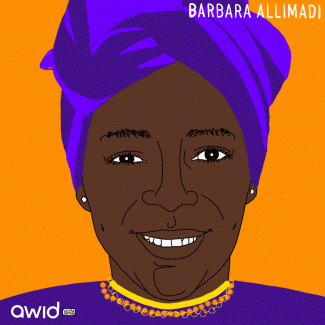
Barbara Allimadi

Barbara Allimadi was a political and human rights activist from Uganda. In 2012, she co-organized a protest against a televised police assault of Ingrid Turinawe, an opposition politician who had her breast squeezed by a police officer.

During the protest, Barbara, along with other fellow activists stripped to their bras in front of the Central Police Station in Kampala. This came to be known as the infamous ‘bra protest’ in Uganda.

“We settled on the bra protest. We thought it would be most appropriate for what had happened. It’s not like we were saying we don’t respect ourselves. We were disgusted by what had been done.” - Barbara Allimadi, 2013 (Daily Monitor)

With a Degree in Electronics and Communications Engineering from the London Metropolitan University, Barbara was a network engineer in the United Kingdom and an avid fan of reggae music. She returned to Uganda In 2007, when her mother passed away.

In 2019, she was appointed Coordinator for International and Diaspora Affairs at the Alliance for National Transformation (ANT), a political party launched that year by an opposition leader.

“We want security of life and property, not pain, injury and even death at the hands of security forces who are meant to protect us. Most importantly, we want a stable and enabling environment where we can realize our dreams and aspirations.” - Barbara Allimadi, ANT video

Barbara passed away on 27 April 2020. 


Tributes:

“I was so proud of my sister for many things but in particular her fearless pursuit of peace, democracy, justice and equality in Uganda. At the height of her activism she led many marches on the streets of Kampala, to police stations, and Parliament.” - Doris Allimadi, Barbara’s sister

“It is with deep sadness that we have learnt of the untimely passing of Barbara Allimadi. She has been a valiant, relentless and courageous force for the liberation movement of Uganda. Our deepest condolences to her family. She will be sorely missed.” - Akina Mama wa Afrika (tweet on 28 April 2020)

“The passing on of Barbara is so sad for us and her entire family. She dedicated herself to fighting for justice, freedom and rights of others while serving in the civil society until she recently joined us at the party.” Maj Gen Mugisha Muntu, ANT national coordinator

“A beautiful, charming, funny, charismatic and inspirational sister. My children lost their aunty. Uganda lost a brave and courageous freedom fighter. Barbara once said, ‘As long as there is still breath in you, keep working towards your dreams.’” - Doris Allimadi, Barbara’s sister

Crear | Résister | Transform: A Walkthrough of the Festival! | Content Snippet EN

As heteropatriarchal capitalism continues to force us into consumerism and compliance, we are finding that our struggles are being siloed and separated by physical as well as virtual borders.

And with the additional challenges of a global pandemic to overcome, this divide-and-conquer strategy has been favorable for the proliferation of exploitation across many areas.

Yet, From September 1 to September 30, 2021, Crear | Résister | Transform: a festival for feminist movements! took us on a journey of what it means to embody our realities in virtual spaces. At the festival, feminist activists from across the world came together, not only to share experiences of hard-won freedoms, resistances, and cross-borders solidarities, but to articulate what a transnational form of togetherness could look like. 

It is this togetherness that has the potential to defy borders, weaving a vision for a future that is transformative because it is abolitionist and anti-capitalist. Spread out over a month, across digital infrastructures that we occupied with our queerness, our resistance, and our imaginaires, the festival showed a way to deviate from the systems that make us complicit in the oppression of others and ourselves. 

Though Audre Lorde taught us that the master’s tools will never dismantle the master’s house, Sara Ahmed showed us that we can misuse them. Because we had to make space for assembly, in spite of all the other demands on our time, it became possible to imagine a disruption to the reality of heteropatriarchal capitalism.

Now, if we understand assembly as a form of pleasure, then it becomes possible to make the link between transgressive pleasure and transnational/transdigital resistance. Between the kinds of pleasure that challenges borders on the one hand, and queerness, campiness, land and indigenous struggle, anti-capitalism, and anti-colonial organizing on the other. 

This issue attempted to capture a sense of how the festival’s exercise in assembly took on multiple shapes and imaginations. Beyond direct collaborations with some of its speakers and dreamers, we brought on a plethora of other voices from the Global South to be in conversation with many of its themes and subjects. Below is a map of some of the festival’s panels that most inspired us.

Love letter to Feminist Movements #9

The body is a powerful entity. As women, our bodies are controlled, oppressed and policed from the womb. The way we look, move, dress, walk, speak, gesture, laugh. I often wondered at what drives patriarchal fears around the power of female bodies. Where I come from sex work and sex workers were whispered of with simultaneous contempt, disgust, fascination, pity and condemnation.

Where I come from sex work and sex workers were whispered of with simultaneous contempt, disgust, fascination, pity and condemnation.

Love letter to feminist movements from Khin Khin.

I first encountered sex work and sex workers at age 22. Simple conversations, sitting in circles, chatting over coffee and tea, we explored each other’s lives, experiences, thoughts and feelings.

For sex workers, sex work was the most worthwhile choice out of all other options to pay bills, to support family, to have more flexible working hours, to have sex. Just as I chose my job as the most worthwhile, to pay bills, to support family, to have more flexible working hours. 

These individuals, women and men, taught me that I made my own decisions about my body… where I focus its life and energy, whether I use it for pleasure or pain, whether I trade it in or give it freely, and how I want to feel about my body. The awareness was as exciting as it was empowering.

Crear | Résister | Transform: a festival for feminist movements – 2021… you accompanied me through a series of life-changing moments (!!!) 
We call these ‘events,’ though in truth, to me, your feminist learning spaces are, where I take a little of what’s inside me, a little of what your speakers say and some from the discussions to go deeper into our understanding.

Sharing… Partaking… Immersing…
in strength, in vulnerability, in pleasure.

Simply being the transformative feminist that I am, without pretentions, without misgivings… 

Welcoming the transformative feminist that I have always been, without even knowing the term or acknowledging it in such a manner or in such terms… 

Finding home for the fiercely transformative feminist living within me… 

Despite the anger, rage and frustration of not being treated as equals and being treated with ‘less __ than,’ 

I did not always consider myself a feminist nor did I recognise myself within the feminist movement or discourse… Truly, I appreciate doors being held open, chairs being pulled out to be seated, acknowledgement as a woman, of my femininity.

At times I dismissed the patriarchy with annoyance, at times, I responded with frustration and anger but I did not address it… I did not notice its sinister, insidious toxicity… I was privileged enough to be able to work through it, to survive it, to overcome it, to excel in spite of it… I did not question enough, challenge enough, push my boundaries enough… I did not do enough…
connecting with sex workers, exploring sexuality, and the women for peace and security...

Until I became fully aware and understood the implications of both privilege and oppression that was intersectional.

Until I realised what it meant to fight for gender justice and not simply ‘equality for all.’

Practitioner and facilitator no longer, I am a transformative feminist practitioner and facilitator.
Being a feminist means that I will act 

  • – through my daily activities: the way I live, the work that I do, the processes that I am invited to lead, the workshops and lectures that I am invited to give – 
  • to push back against patriarchal toxicity, to dismantle patriarchal structures and systems, 
  • to work to decolonise values, beliefs, thoughts, to smash the myths of gender norms and expectations, 
  • to address power imbalances imposed by patriarchal beliefs and socialisation, 
  • to foster relationships built on inclusion, holism, equity, care, reciprocity, accountability and justice, 
  • to stand and act in solidarity in the frontlines of the fight towards inclusion, equity and justice.

Plunging into uncertain, fragile, complex (and possibly quite violent) future…

  • I want to discover myself and be myself more intimately, authentically and deeply through the movement… 
  • I want to be more actively involved in and interconnected through this love relationship. 

I am deeply grateful for you and I promise to remain fierce in addressing and redressing problematic issues around gender, race, ethnicity, social class, sexual orientation and ability, and remain present and faithful to the struggle for inclusion, equity and justice.

Khin Khin
CFA 2023 - breadcrumbs Menu _ awid-forum-fr

Snippet - COP30 - Resistance Hubs Section Title - FR

Pôles de résistance pour la justice climatique

Snippet Kohl - Plenaria | Organizarse para vencer

Plenaria Organizarse para vencer

con Nazik Abylgaziva, Amaranta Gómez Regalado, Cindy Weisner y Lucineia Freitas

YOUTUBE

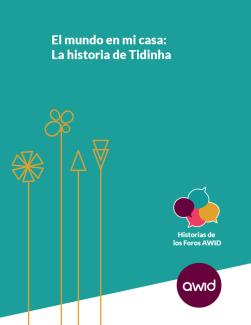
El mundo en mi casa: La historia de Tidinha

Imagen de Portada: El mundo en mi casa: La historia de Tidinha

¿Cómo reaccionas cuando parece que el mundo desciende sobre ti? Tidinha se encontró en una situación en la que logró ser escuchada al cuestionar la elección de la sede, y al mismo tiempo descubrió visiones y sueños compartidos y se dio cuenta de que no está sola.

Descarga esta historia


En su propia voz: mira la entrevista con Sara Abu Ghazal


Conoce todas las historias Descarga el reporte completo

CFA 2023 - Who, where, when - ES

Cuándo: del 2 al 5 de diciembre de 2024
Dónde: Bangkok, Tailandia, y en línea
Quiénes: Aproximadamente unxs 2.500 feministas de todo el mundo participarán en persona, y otrxs 3.000 participarán de manera virtual

Snippet - COP30 - Political Education Toolbox - FR

📚 Boîte à outils d’éducation politique

Dénoncer l’emprise des multinationales. Comprendre les fausses solutions. Construire des alternatives. Tout ce qu’il vous faut pour mener votre propre campagne « À qui appartient vraiment la COP ? ».

Retrouvez les boîtes à outils #1 

Retrouvez les boîtes à outils #2

Sexting Like a Feminist: Humor in the Digital Feminist Revolution | Title Snippet

Sexting como feminista: el humor en la revolución digital feminista

por Chinelo Onwualu