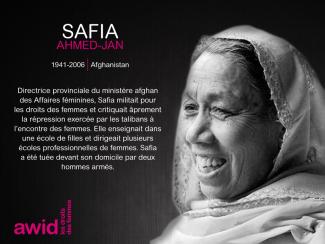
Safia Ahmed-Jan
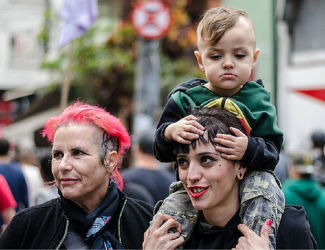
Over the past few years, a troubling new trend at the international human rights level is being observed, where discourses on ‘protecting the family’ are being employed to defend violations committed against family members, to bolster and justify impunity, and to restrict equal rights within and to family life.
The campaign to "Protect the Family" is driven by ultra-conservative efforts to impose "traditional" and patriarchal interpretations of the family, and to move rights out of the hands of family members and into the institution of ‘the family’.
Since 2014, a group of states have been operating as a bloc in human rights spaces under the name “Group of Friends of the Family”, and resolutions on “Protection of the Family” have been successfully passed every year since 2014.
This agenda has spread beyond the Human Rights Council. We have seen regressive language on “the family” being introduced at the Commission on the Status of Women, and attempts made to introduce it in negotiations on the Sustainable Development Goals.
AWID works with partners and allies to jointly resist “Protection of the Family” and other regressive agendas, and to uphold the universality of human rights.
In response to the increased influence of regressive actors in human rights spaces, AWID joined allies to form the Observatory on the Universality of Rights (OURs). OURs is a collaborative project that monitors, analyzes, and shares information on anti-rights initiatives like “Protection of the Family”.
Rights at Risk, the first OURs report, charts a map of the actors making up the global anti-rights lobby, identifies their key discourses and strategies, and the effect they are having on our human rights.
The report outlines “Protection of the Family” as an agenda that has fostered collaboration across a broad range of regressive actors at the UN. It describes it as: “a strategic framework that houses “multiple patriarchal and anti-rights positions, where the framework, in turn, aims to justify and institutionalize these positions.”
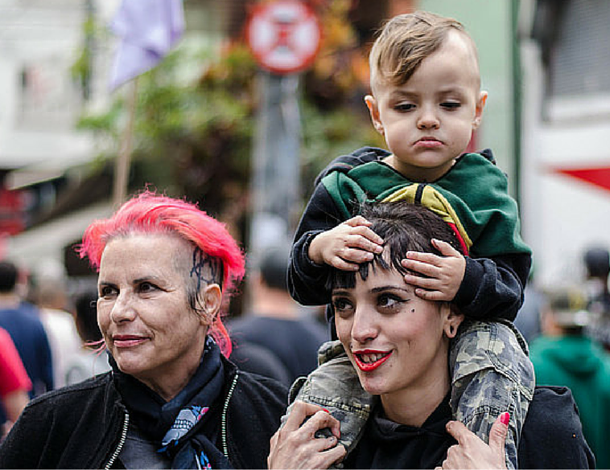
Los movimientos feministas necesitan financiamiento básico y de largo plazo (incluidos ahorros y reservas) para poder mantenerse focalizados en el cambio sistémico. Las reservas no son algo extra: son esenciales para la sostenibilidad.
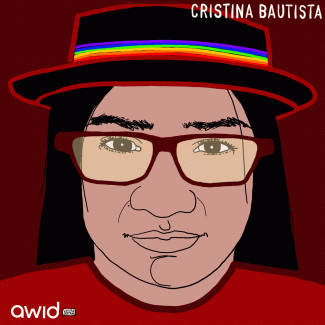
“If we stay quiet they kill us and if we talk [they kill us] too. So, let’s talk.” - Cristina Bautista, 2019
A tireless defender of the rights of Nasa people, Cristina spoke strongly and loudly against the violence directed at her community. In a speech before the United Nations, she called for the protection of Indigenous women’s lives and their involvement in different spheres of life. In 2017, Cristina was a UN Human Rights Office Indigenous fellow and she was awarded a grant from the UN Voluntary Fund for Indigenous Peoples in 2019.
“I would like to bring to light the current situation of the Indigenous people in Colombia, the killing of Indigenous leaders, the repression of social protest. Instead of helping, the peace deal has increased war and the exploitation of sacred territories in Colombia… In the current situation, in almost all Indigenous nations as women we have been working to find a better future for our families. I don’t want more women from the countryside to continue living under these circumstances. We need opportunities for Indigenous women to participate in politics, in the economy, in society and in culture. Today gives me true strength, to see all these women here and that I am not alone.” - Cristina Bautista, 2019
On 29 October 2019, Cristina was murdered along with four unarmed Indigenous guards in an attack which was allegedly carried out by armed members of “Dagoberto Ramos”, a FARC dissident group.
According to Global Witness, “the murder of community and social leaders has risen dramatically in Colombia in recent years.”
“The Nasa community has repeatedly raised the alarm with the authorities about threats to their safety. Despite efforts by successive Colombian Governments, indigenous peoples continue to face great risks, especially religious or community leaders like Cristina Bautista.” - UN press briefing, 1 November 2019
Watch a speech by Cristina Bautista in August 2019 in which she denounced previous murders of Indigenous guards (Spanish only)
We’re beginning a new year--2023. COVID-19 continues to infect and re-infect many, many people around the world. We are witnessing the resurgence of right-wing and fascist governments, even in places we may not have expected like Sweden. War, armed conflict, and dramatic increase in militarization, militarism, and military spending are enabling the unbridled capital accumulation by the few, with participation of seemingly “strange” alliances locking arms, both visibly and invisibly, where economic and political elites of the Global North and Global South are benefitting beyond our wildest imagination. In the meanwhile, our people and the natural environment pay enormous costs and suffer all the expected and unexpected consequences.
As all of you and all of us at AWID know, feminists in multiple movements around the world are resisting and organizing against multiple faces of tyranny, creating alternative structures, implementing grassroots strategies, and building transnational alliances. We are generating joy, inspiring one another, singing, and dancing within and against the prevailing culture of killing and cynicism that seems to have engulfed so much of the world.
We--Staff and Board--of AWID are prepared and inspired more than ever before to face challenges by strengthening our relationships with our members and organizational partners, meeting and getting to know those who we are yet to meet and do what we do best: support the global feminist movements. Although we were sad facing the departures of our beloved former Co-Eds Cindy and Hakima, our wonderful new Co-EDS Faye and Inna along with committed and creative staff have embraced the moment that encapsulates both opportunities and threats.
For sure, all of us at AWID and all our movement folks know: As the Caribbean US poet and activist June Jordan wrote to the South African women activists during the height of the apartheid regime, “We are the ones we have been waiting for”!
¡Sí! Por favor lee la Convocatoria de Actividades y presenta tu propuesta aquí. La fecha límite es el 1ero de febrero de 2024.
While fundamentalisms, fascisms and other systems of oppression shapeshift and find new tactics and strategies to consolidate power and influence, feminist movements continue to persevere and celebrate gains nationally and in regional and international spaces.
Cómo los movimientos resisten las agendas fascistas en relación con el cambio climático.
📅 Martes 11 de noviembre de 2025
📍 Hotel Beira Rio, Belém, Pará
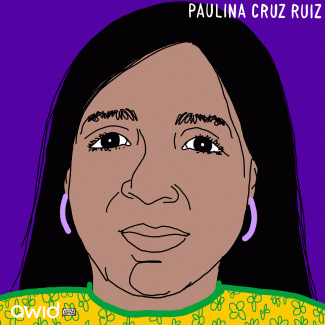
Paulina Cruz Ruiz, de la región de Rabinal, Baja Verapaz, en Guatemala, fue una autoridad ancestral Maya Achí (Indígena) y una defensora de los derechos humanos. Paulina se involucró activamente en la organización comunitaria y la resistencia, lo cual incluyó la adopción de medidas legales contra los proyectos mineros en territorios Indígenas, proyectos que afectarían y perjudicarían severamente el tejido socio ambiental.
"El modelo de industria extractiva promovido por el gobierno guatemalteco y la construcción de proyectos de desarrollo a gran escala en tierras indígenas, sin el consentimiento de la comunidad afectada, ha sido una fuente de disputas permanentes con los movimientos de resistencia". - Minority Rights Group International
Paulina también formó parte de la Marcha por la Dignidad, la Vida y la Justicia, del 1º de mayo de 2019, en la cual miles de guatemaltecxs iniciaron una marcha de ocho días contra la corrupción y la impunidad en la persecución y el asesinato de dirigentes de derechos humanos, líderes campesinxs e indígenas y defensorxs de la tierra.
Paulina fue asesinada el 14 de septiembre de 2019 cerca de su casa en la aldea de Xococ.
Según el Grupo Internacional de Derechos de las Minorías: "actualmente, uno de los principales problemas que afectan a las comunidades mayas es la creciente actividad de la industria minera".
Para leer más sobre la comunidad Maya en Guatemala
Para leer más sobre la Marcha por la Dignidad, la Vida y la Justicia
We know feminists still need and deserve more and better resources! We have revised our funder database.
The Who Can Fund Me? Database is an easy-to-use, practical tool for movements looking for funders from philanthropic foundations, multilateral funders to women’s and feminist funds to support vital lifesaving efforts.
Non, il n'est pas nécessaire d'être membre de l'AWID pour y participer, mais les membres de l'AWID bénéficient d'une réduction sur les frais d'inscription ainsi que d'un certain nombre d'autres avantages.
Una colección viva de recursos para apoyar a los movimientos feministas, a personas que diseñan políticas y a aliadxs que resisten a las tendencias fascistas, fundamentalistas y anti-derechos.
Manifestations mondiales des mouvements pour la justice climatique.
📅 Samedi 15 novembre 2025
📍 Lieux multiples
Site web en anglais
Le Forum a été un espace clé pour le Mouvement des femmes autochtones (Indigenous Women’s Movement, IWM) dans son rapport au féminisme. Aux Forums de l’AWID, elles ont appliqué la même stratégie que celle utilisée pour les Nations Unies. Au cours de ce processus, les deux mouvements ont été transformés : de nouvelles voix et questions ont émergé au sein de l’IWM, et les féministes ont commencé à changer leurs discours et leurs pratiques autour des droits fonciers et de la spiritualité, elles ont mieux compris les droits collectifs et ont inclus l’IWM dans leurs événements et leurs programmes. Mónica Alemán et María Manuela Sequeira, de l’IWM, nous ont raconté cette histoire.
We are in communication with regional, thematic and funder convenings planned for 2023-2024, to ensure flow of conversations and connections. If you are organizing an event and would like to make a connection to the AWID Forum, please get in touch with us!
Vous souhaitez vous rassembler pour renforcer les résistances ? Cette méthodologie de formation propose des exercices de groupes qui renforcent les connaissances et le pouvoir du collectif, avec des adaptations pour répondre à vos besoins.