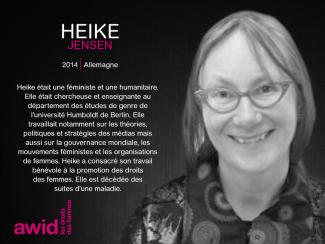
Heike Jensen
Over the past few years, a troubling new trend at the international human rights level is being observed, where discourses on ‘protecting the family’ are being employed to defend violations committed against family members, to bolster and justify impunity, and to restrict equal rights within and to family life.
The campaign to "Protect the Family" is driven by ultra-conservative efforts to impose "traditional" and patriarchal interpretations of the family, and to move rights out of the hands of family members and into the institution of ‘the family’.
Since 2014, a group of states have been operating as a bloc in human rights spaces under the name “Group of Friends of the Family”, and resolutions on “Protection of the Family” have been successfully passed every year since 2014.
This agenda has spread beyond the Human Rights Council. We have seen regressive language on “the family” being introduced at the Commission on the Status of Women, and attempts made to introduce it in negotiations on the Sustainable Development Goals.
AWID works with partners and allies to jointly resist “Protection of the Family” and other regressive agendas, and to uphold the universality of human rights.
In response to the increased influence of regressive actors in human rights spaces, AWID joined allies to form the Observatory on the Universality of Rights (OURs). OURs is a collaborative project that monitors, analyzes, and shares information on anti-rights initiatives like “Protection of the Family”.
Rights at Risk, the first OURs report, charts a map of the actors making up the global anti-rights lobby, identifies their key discourses and strategies, and the effect they are having on our human rights.
The report outlines “Protection of the Family” as an agenda that has fostered collaboration across a broad range of regressive actors at the UN. It describes it as: “a strategic framework that houses “multiple patriarchal and anti-rights positions, where the framework, in turn, aims to justify and institutionalize these positions.”
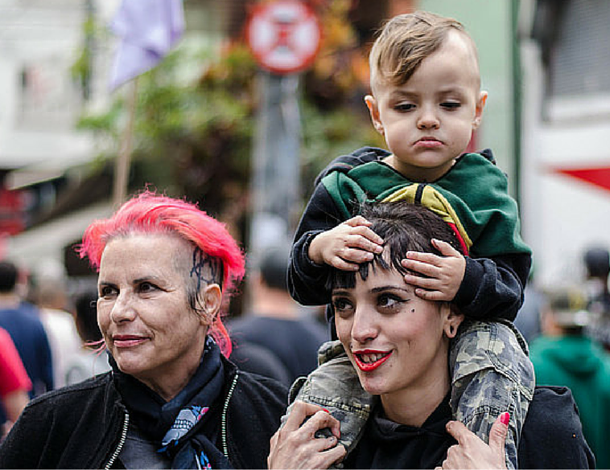
Estamos comenzando un nuevo año: 2023. El COVID-19 continúa infectando y re infectando a muchas, muchas personas en todo el mundo. Estamos siendo testigos del resurgimiento de gobiernos de derecha y fascistas, incluso en lugares que quizás no esperábamos, como Suecia. La guerra, los conflictos armados y el aumento dramático de la militarización, el militarismo y el gasto militar están permitiendo la acumulación descomedida de capital por parte de unos pocos, con la participación de alianzas aparentemente "extrañas" que se arman, tanto de manera visible como invisible, donde las élites económicas y políticas del Norte y el Sur Global se están beneficiando más allá de nuestra imaginación más desenfrenada. Mientras tanto, nuestra gente y el medio ambiente natural pagan enormes costos y sufren todas las esperadas e inesperadas consecuencias.
Como todes ustedes y todes nosotres en AWID sabemos, les feministas en múltiples movimientos alrededor del mundo están resistiendo y organizándose contra las múltiples caras de la tiranía, creando estructuras alternativas, implementando estrategias de base y construyendo alianzas transnacionales. Estamos generando alegría, inspirándonos unes a otres, cantando y bailando dentro y en contra de la cultura predominante de muerte y cinismo que parece haber envuelto a gran parte del mundo.
Nosotres, el personal y la Junta Directiva de AWID, estamos más preparades e inspirades que nunca para enfrentar los desafíos, fortaleciendo nuestras relaciones con nuestra membresía y organizaciones socias, reuniéndonos y conociendo a quienes aún tenemos que conocer y hacer lo que hacemos mejor: apoyar a los movimientos feministas globales. Aunque nos entristeció la partida de nuestras queridas ex-co-eds Cindy y Hakima, nuestras maravillosas nuevas co-eds Faye e Inna, junto con el personal comprometido y creativo, han aprovechado el momento que encapsula tanto las oportunidades como las amenazas.
Sin duda, todes nosotres en AWID y toda la gente de nuestro movimiento lo sabemos… como escribió la poeta y activista caribeña estadounidense June Jordan a las mujeres activistas sudafricanas durante el apogeo del régimen del apartheid: “¡Somos quienes hemos estado esperando!”

Search for funders based on their requirements for groups to be registered.
Nuestro Fondo de Acceso ofrecerá un número limitado de becas para financiar la participación de activistas que de otra manera no podrían asistir y que no tienen relaciones con donantes que puedan cubrir su participación. Por lo tanto, si tienes otras posibilidades, te animamos a explorarlas. Haremos todo lo posible para ofrecer la mayor cantidad de becas y compartiremos más información sobre este proceso y cómo postular a principios de 2024.
« Ce n’était pas une personne. C’était une puissance », compagnes et compagnons de lutte se souvenant de Navleen Kumar
Avec implication et intégrité, elle a œuvré pendant plus d’une décennie à la protection et la restitution des terres aux populations autochtones (les adivasi) dans le district de Thane, une région confisquée sous le régime de la force et de l’intimidation par les promoteurs immobiliers et fonciers. Elle a combattu cette injustice et ces crimes en menant des procédures juridiques au niveau de différents tribunaux, réalisant que la manipulation des registres fonciers était une opération courante dans la plupart des acquisitions de terres. Dans l’un de ces cas, celui des Wartha (une famille tribale), Navleen a entre autres découvert que la famille avait été dupée avec la complicité de fonctionnaires du gouvernement.
Grâce à son travail, elle a aidé les Wartha à récupérer leurs terres, de même que continué à défendre plusieurs affaires de transferts de terres d’adivasi.
« Son rapport sur l’impact de l’aliénation des terres sur les femmes et les enfants adivasi retrace l’histoire et les complexités de l’aliénation tribale depuis les années 1970, alors que les familles de la classe moyenne ont commencé à venir vivre dans les banlieues éloignées de Mumbai, suite à la hausse des prix de l’immobilier dans la ville.
Les complexes immobiliers se sont multipliés dans ces banlieues, et les tribus analphabètes en ont payé le prix. Les meilleures terres le long de la voie de chemin de fer valaient cher et les constructeurs se sont jetés dessus comme des vautours, pour arracher les terres des tribus et autres résidents locaux par des moyens illégaux », Jaya Menon, Justice and Peace Commission.
Au cours de ses actions militantes, Navleen a reçu de nombreuses menaces et survécu à plusieurs tentatives d’assassinat. Malgré tout, elle a continué son travail sur ce qui était non seulement important à ses yeux mais qui contribuait à transformer les vies et les réalités de tant de personnes qu’elle soutenait dans sa lutte pour la justice sociale.
Navleen a été poignardée à mort dans son immeuble le 19 juin 2002. Deux gangsters locaux ont été arrêtés pour son meurtre.
The most recent report from the Observatory on the Universality of Rights unpicks discourses like “gender ideology”, “prenatal genocide”, and “cultural imperialism”. It also digs into CitizenGo, Alliance Defending Freedom, and anti-rights funding flows. You’ll also find analysis on regional human rights systems and successful feminist strategies and wins!
Nuestra base de datos de donantes y patrocinadores se encuentra actualmente en revisión. ¡Sabemos que los movientos feministas todavía necesitan y merecen más y mejores recursos!
Únete a nuestra lista de correo para mantenerte al tanto sobre esta actualización.
También puedes afiliarte a AWID y encontrar y crear conexiones con feministas de todo el mundo.
→Region
→Level of organizing
→Registration status
→Priorities and Agendas
Nous pensons que oui ! Le processus de planification n'en est qu'à ses débuts, alors restez à l'écoute car les plans sont en pleine préparation.
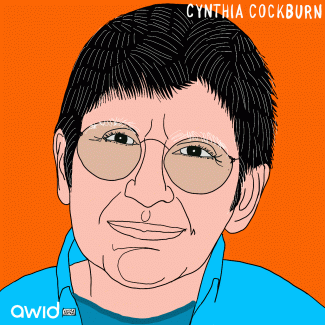
Cynthia Cockburn was a feminist sociologist, writer, academic, photographer and peace activist.
She explored the gendered aspects of violence and conflict and made significant contributions to the peace movement through her exploration of the themes of masculinity and violence as well as her local and international activism.
Cynthia brought a feminist power analysis to militarisation and war, and was among the academics whose writings and analysis clearly demonstrated how gender-based violence played a key part in perpetuating war. Working closely with peace activists in countries experiencing conflict, her findings covered diverse contexts including Northern Ireland, Bosnia-Herzegovina, Israel/Palestine, South Korea, Japan, Spain and the UK. She helped bring in her research and academic writings, an understanding that violence was experienced as a continuum of time and scale and perceived very differently when seen from a gendered lens.
In her words, “Gender helps us to see the continuity, the connection between instances of violence.”
Cynthia bridged her research with the activism she did locally and internationally with movements for demilitarisation, disarmament and peace. She helped start the Greenham Common women’s peace camp, which advocated for universal nuclear disarmament in Britain and was part of establishing the London chapter of Women in Black.
Over the decades, Cynthia organized and participated in local weekly vigils and the political choir Raised Voices, singing in the choir, and writing several of the lyrics to the songs that have made up its repertoire. She was also active in the Women’s International League for Peace and Freedom (WILPF), the European Forum of Socialist Feminists as well as in Women Against Fundamentalism.
“Cynthia shed feminist light, wove together feminist communities, sang songs of peace, listened, listened, listened, watched the birds – and stopped traffic. I’ll be forever and gratefully in her debt, the other ‘Cynthia’” – Cynthia Enloe
Cynthia was born in July 1934 and passed away in September 2019 at the age of 85.
Sigue a nuestra superheroína mientras se embarca en una misión para recuperar las narrativas capturadas por los actores antiderecho en todo el mundo.
Cuando miles de feministas se unen, creamos una fuerza arrolladora de solidaridad que tiene el poder de cambiar el mundo. El Foro de AWID será un momento para que descansemos y nos recuperemos juntas, nos conectemos más allá de las fronteras y descubramos nuevas y osadas direcciones estratégicas.
La fecha y el lugar se anunciarán el próximo año, tan pronto como podamos. Estamos emocionades y sabemos que ustedes también lo están. ¡Manténganse al tanto!
¡Asegúrate de seguirnos en las redes sociales y suscríbete a nuestra lista de correo para mantenerte al día!
This new report shines a light on the resourcing realities of feminist and women’s rights organizations amid unprecedented political and financial upheaval. Drawing on over a decade of analysis since AWID last Where is the Money? report it takes stock of the gains, gaps, and growing threats in the funding landscape.
For additional questions, please use our contact form. We will keep updating this document based on the queries we receive from you!
Hevrin Khalaf fue una destacada líder política siria-kurda de la región autónoma de Rojava, donde las mujeres kurdas están arriesgando sus vidas para resistir la ofensiva turca y construir un sistema feminista.
Hevrin fue Secretaria General del Future Syria Party [Partido de la Futura Siria] (FSP, por sus siglas en inglés), un grupo que tenía como objetivo la construcción de puentes, la reconciliación entre diferentes grupos étnicos y el trabajo hacia una "Siria democrática, pluralista y descentralizada".
Hevrin fue un símbolo de este esfuerzo de reconciliación. También trabajó para promover la igualdad entre mujeres y hombres y fue una representante para periodistas, trabajadorxs de ayuda humanitaria y diplomáticxs que visitaban la región.
Hevrin era también una ingeniera civil de Derik, y fue una de las fundadoras de Foundation for Science and Free Though [(Fundación para la Ciencia y el Libre Pensamiento] en 2012.
El 12 de octubre de 2019 fue torturada y asesinada por la milicia Ahrar al-Sharqiya, sustentada por Turquía, durante una operación militar contra las Fuerzas Democráticas Sirias en Rojava.
"El asesinato de Khalaf es un punto de inflexión en la historia moderna de Siria. Demuestra una vez más el viejo proverbio kurdo "no hay amigxs sino montañas". Siempre seré amigo[NC1] de Khalaf y su visión de un mundo mejor." - Ahed Al Hendi
con Lindiwe Rasekoala, Lizzie Kiama, Jovana Drodevic y Malaka Grant
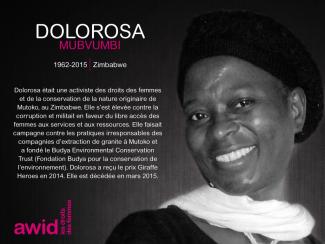
Merci de votre visite sur le site d'AWID. Pour plus d'informations sur AWID rendez-vous sur https://www.awid.org/fr