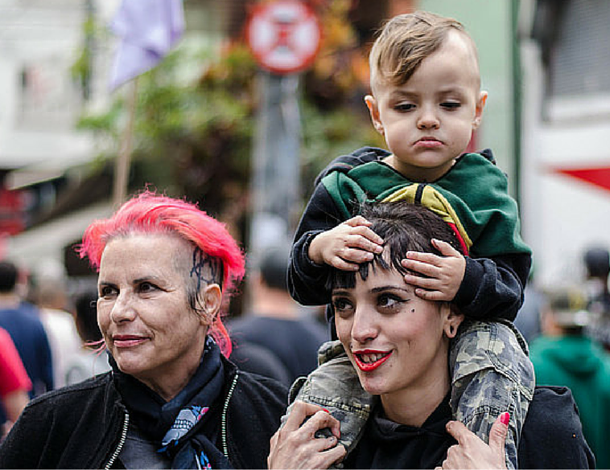
Flickr/Leonardo Veras (CC BY 2.0)

Protection of the Family

The Issue

Over the past few years, a troubling new trend at the international human rights level is being observed, where discourses on ‘protecting the family’ are being employed to defend violations committed against family members, to bolster and justify impunity, and to restrict equal rights within and to family life.

The campaign to "Protect the Family" is driven by ultra-conservative efforts to impose "traditional" and patriarchal interpretations of the family, and to move rights out of the hands of family members and into the institution of ‘the family’.

“Protection of the Family” efforts stem from:

  • rising traditionalism,
  • rising cultural, social and religious conservatism and
  • sentiment hostile to women’s human rights, sexual rights, child rights and the rights of persons with non-normative gender identities and sexual orientations.

Since 2014, a group of states have been operating as a bloc in human rights spaces under the name “Group of Friends of the Family”, and resolutions on “Protection of the Family” have been successfully passed every year since 2014.

This agenda has spread beyond the Human Rights Council. We have seen regressive language on “the family” being introduced at the Commission on the Status of Women, and attempts made to introduce it in negotiations on the Sustainable Development Goals.


Our Approach

AWID works with partners and allies to jointly resist “Protection of the Family” and other regressive agendas, and to uphold the universality of human rights.

In response to the increased influence of regressive actors in human rights spaces, AWID joined allies to form the Observatory on the Universality of Rights (OURs).  OURs is a collaborative project that monitors, analyzes, and shares information on anti-rights initiatives like  “Protection of the Family”.

Rights at Risk, the first OURs report, charts a map of the actors making up the global anti-rights lobby, identifies their key discourses and strategies, and the effect they are having on our human rights.   

The report outlines “Protection of the Family” as an agenda that has fostered collaboration across a broad range of regressive actors at the UN.  It describes it as: “a strategic framework that houses “multiple patriarchal and anti-rights positions, where the framework, in turn, aims to justify and institutionalize these positions.”


Related Content

Carmen Griffiths

Carmen encabezaba el Construction Resource and Development Collective (CRDC, Colectivo de recursos para la construcción y el desarrollo) y fue fundamental para apoyar la participación de las mujeres en la industria de la construcción en Jamaica.

También trabajó con mujeres rurales y urbanas en temas relacionados a la preparación para afrontar desastres naturales. Trabajó de manera cercana con mujeres (especialmente madres solteras) enseñándoles cómo usar los cinturones para huracanes y otras tecnologías para poner sus hogares a resguardo. Trabajó en el área de agua y obras sanitarias y fue una fuerte defensora del manejo y desarrollo ambientalmente sustentable.

Fue parte de la Comisión Huairou y realizó incidencia en favor de las mujeres de base en temas vinculados a refugio, energía y medios de vida sustentables.


Carmen Griffiths, Jamaica

Key opposition discourses

Ultra conservative actors have developed a number of discourses at the international human rights level that call on arguments manipulating religion, culture, tradition, and national sovereignty in order to undermine rights related to gender and sexuality.

Anti-rights actors have increasingly moved away from explicitly religious language. Increasingly, we see regressive actors - who may previously have derided human rights concepts - instead manipulating and co-opting these very concepts to further their objectives.


Protection of the family

This emerging and successful discourse appears innocuous, but it functions as a useful umbrella theme to house multiple patriarchal and anti-rights positions. The ‘protection of the family’ theme is thus a key example of regressive actors’ move towards holistic and integrated advocacy.

The language of ‘protection of the family’ works to shift the subject of human rights from the individual and onto already powerful institutions.

It also affirms a unitary, hierarchical, and patriarchal conception of the family that discriminates against family forms outside of these rigid boundaries. It also attempts to change the focus from recognition and protection of the rights of vulnerable family members to non-discrimination, autonomy, and freedom from violence in the context of family relations.

The Right to Life

The Holy See and a number of Christian Right groups seek to appropriate the right to life in service of an anti-abortion mission.  Infusing human rights language with conservative religious doctrine, they argue that the right to life, as set out in the Universal Declaration of Human Rights and the International Covenant on Civil and Political Rights, applies at the moment of conception.

The discourse has no support in any universal human rights instrument. Yet this is an appealing tactic for anti-rights actors, because the right to life cannot be violated under any circumstances and is a binding legal standard.

Sexual rights

Anti-rights actors use a number of rhetorical devices in their campaign to undermine sexual rights: they argue that sexual rights do not exist or are ‘new rights,’ that they cause harm to children and society, and/or that these rights stand in opposition to culture, tradition or national laws.

Conservative actors engaged in advocacy at the UN attack the right to comprehensive sexuality education from several directions. They claim that CSE violates ‘parental rights’, harms children, and that it is not education but ideological indoctrination. They also claim that comprehensive sexuality education is pushed on children, parents, and the United Nations by powerful lobbyists seeking to profit from services they provide to children and youth.

Attempts to invalidate rights related to sexual orientation and gender identity have proliferated. Ultra conservative actors argue that application of long-standing human rights principles and law on this issue constitutes the creation of ‘new rights’; and that the meaning of rights should vary radically because they should be interpreted through the lens of ‘culture’ or ‘national particularities.’

Reproductive Rights

Christian Right organizations have been mobilizing against reproductive rights alongside the Holy See and other anti-rights allies for several years. They often argue that reproductive rights are at heart a form of Western-imposed population control over countries in the global South. Ironically, this claim often originates from U.S. and Western Europe-affiliated actors, many of whom actively work to export their fundamentalist discourses and policies.

Regressive actors also cite to ‘scientific’ arguments from ultra-conservative think tanks, and from sources that rely on unsound research methodologies, to suggest that abortion causes an array of psychological, sexual, physical, and relational side effects.

Protection of children and parental rights

Just as anti-rights actors aim to construct a new category of ‘protection of the family,’ they are attempting to construct a new category of ‘parental rights,’ which has no support in existing human rights standards.

This discourse paradoxically endeavours to use the rights protections with which children are endowed, as articulated in the Convention on the Rights of the Child, to support the rights of parents to control their children and limit their rights.

Violence against women

Increasingly, anti-rights actors are attempting to infiltrate and subvert standards and discourses developed by women human rights defenders, such as violence against women (VAW).

At the Commission on the Status of Women and other spaces, one rhetorical move is to treat VAW as a concept in which to embed anti-reproductive rights and patriarchal arguments. Ultra conservative actors, for example, have argued that non-heteronormative or traditional intimate partner relationships are a risk factor for violence, and emphasize that fathers are necessary to protect families from violence.

Gender and ‘gender ideology’

The Holy See has set off a sustained critique of gender, ‘gender ideology’, ‘gender radicals,’ and gender theory, and anti-rights actors often read the term as code for LGBTQ rights. Gender is used by the religious right as a cross-cutting concept that links together many of their discourses. Increasingly, the hysteria on this subject fixates on gender identity and trans rights.

Complementarity and human dignity

Complementarity of the sexes is a discourse employed by a number of ultra-conservative actors today. Its rhetoric is structured around an assumption of difference: men and women are meant to have differing but complementary roles in marriage and family life, and with respect to their engagement in the community and political and economic life.

Reference to ‘natural’ roles is meant to fundamentally reject universal human rights to equality and non-discrimination.

It is also used to justify State and non-State violations of these rights, and non-compliance with respect to State obligations to eliminate prejudices and practices based on stereotyped roles for men or women.

National sovereignty and anti-imperialism

This discourse suggests that national governments are being unjustly targeted by UN bodies, or by other States acting through the UN. This is an attempt to shift the subject of human rights from the individual or marginalized community suffering a rights violation to a powerful and/or regressive institution - i.e. the state, in order to justify national exceptions from universal rights or to support state impunity. 

Religious freedom

Anti-rights actors have taken up the discourse of freedom of religion in order to justify violations of human rights. Yet, ultra-conservative actors refer to religious freedom in a way that directly contradicts the purpose of this human right and fundamentally conflicts with the principle of the universality of rights. The inference is that religious liberty is threatened and undermined by the protection of human rights, particularly those related to gender and sexuality.

The central move is to suggest that the right to freedom of religion is intended to protect a religion rather than those who are free to hold or not hold different religious beliefs.

Yet under international human rights law, the right protects believers rather than beliefs, and the right to freedom of religion, thought and conscience includes the right not to profess any religion or belief or to change one’s religion or belief.

Cultural rights and traditional values

The deployment of references to culture and tradition to undermine human rights, including the right to equality, is a common tactic amongst anti-rights actors. Culture is presented as monolithic, static, and immutable, and it is is often presented in opposition to ‘Western norms.’

Allusions to culture by anti-rights actors in international policy debates aim to undermine the universality of rights, arguing for cultural relativism that trumps or limits rights claims. Regressive actors’ use of cultural rights is founded on a purposeful misrepresentation of the human right. States must ensure that traditional or cultural attitudes are not used to justify violations of equality, and human rights law calls for equal access, participation and contribution in all aspects of cultural life for all, including women, religious, and racial minorities, and those with non-conforming genders and sexualities.

Subverting ‘universal’

Anti-rights actors in international policy spaces increasingly manipulate references to universal or fundamental human rights to reverse the meaning of the universality of rights.

Rather than using the term universal to describe the full set of indivisible and interrelated human rights, ultra conservative actors employ this term to instead delineate and describe a subset of human rights as ‘truly fundamental.’ Other rights would thus be subject to State discretion, ‘new’ rights or optional. This discourse is especially powerful as their category of the truly universal remains unarticulated and hence open to shifting interpretation.


Other Chapters

Read the full report
Snippet FEA collaborator and allies Photo 1 (EN)

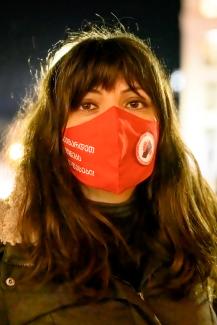
The photo shows Sopo Japaridze, one of the co-founders of the Solidarity Network Union. Sopo has long brown hair, with bangs, and brown eyes, and wears a red mask of the Solidarity Network Union. The picture is taken at night.

Snippet - WITM Acknowledgements - RU

Слова благодарности

AWID выражает признательность всем тем, чьи идеи, аналитические работы и вклад в развитие легли в основу исследования «Где деньги?» и его дальнейшей адвокации.

Прежде всего, мы выражаем глубочайшую благодарность членам AWID и активисткам(-там), которые участвовали в консультациях, и провели этот опрос вместе с нами, щедро поделившись своим временем, аналитикой и теплом.

Мы выражаем признательность феминистским движениям, союзницам(-кам) и феминистским фондам, включая (но не ограничиваясь ими) Black Feminist Fund, Pacific Feminist Fund, ASTRAEA Lesbian Foundation for Justice, FRIDA Young Feminist Fund, Purposeful, Kosovo Women’s Network, Human Rights Funders Network, Dalan Fund and PROSPERA International Network of Women's Funds , за ваше тщательное исследование состояния ресурсного обеспечения, вдумчивый анализ и постоянную адвокацию для достижения более объемного и эффективного финансирования для феминистских организаций и движений за гендерную справедливость во всех контекстах.

Присоединяйтесь к глобальному феминистскому сообществу, которое освещает состояние ресурсного обеспечения, требуя большего финансирования и влияния для феминисток(-ов) во всем мире

Kate McInturff

Active dans l’organisation Peacebuild, en passant par l'Alliance canadienne féministe pour l'action internationale, Amnesty International et au Centre canadien de politiques alternatives (CCPA), Kate était une passionnée des droits des femmes et de l'égalité de genre qui a consacré sa carrière à lutter contre les inégalités et à faire du monde un lieu plus empathique.

Kate a été membre du comité de coordination de Social Watch et a contribué aux rapports nationaux canadiens de Social Watch. En tant que chercheuse principale du CCPA, Kate a été saluée dans son pays pour ses travaux de recherche, ses écrits et la production du rapport annuel intitulé « Les meilleures et les pires endroits du Canada où vivre en tant que femme ».

Entourée de sa famille, Kate est décédée paisiblement après trois ans de lutte contre le cancer du côlon. Ses proches la décrivent comme une « féministe drôle, sans peur et sans complexes ».


Kate McInturff, Canada

When development initiatives, religious fundamentalisms and the state of women’s rights collide

Nuestro nuevo documento de investigación El diablo se esconde en los detalles aborda la falta de conocimientos sobre los fundamentalismos religiosos en el sector del desarrollo, y se propone comprender mejor de qué manera estos fundamentalismos inhiben el desarrollo y, en particular, los derechos de las mujeres. Propone recomendaciones para que quienes trabajan en temas de desarrollo desafíen la labor de los fundamentalismos y eviten fortalecerlos inadvertidamente. [CTA download link: Leer el documento completo]


Seven pointers to consider


Graphic1 1. Control of women’s bodies, sexuality, and choice are “warning signs” of rising fundamentalisms.
2. Neoliberal economic policies have a particularly negative impact on women, and fuel the growth of religious fundamentalisms. Graphic2
Graphic3 3. Choosing religious organizations as default for partnerships builds their legitimacy and access to resources, and supports their ideology, including gender ideology.
4.Everyone has multiple identities and should be defined by more than just their religion. Foregrounding religious identities tends to reinforce the power of religious fundamentalists. Graphic4
Graphic5 5. Religion, culture, and tradition are constantly changing, being reinterpreted and challenged. What is dominant is always a question of power.
6. Racism, exclusion, and marginalization all add to the appeal of fundamentalists’ offer of a sense of belonging and a “cause”. Graphic6
Graphic7 7. There is strong evidence that the single most important factor in promoting women’s rights and gender equality is an autonomous women’s movement.


Auge global de los fundamentalismos religiosos.

El Diablo se esconde en los detalles proporciona detalles de las graves violaciones a los derechos humanos y, en particular, de las violaciones a los derechos de las mujeres, causados por los fundamentalismos auspiciados por los Estados, así como por actores fundamentalistas no estatales como milicias, organizaciones comunitarias confesionales e individuos. La profundización fundamentalista de normas sociales atávicas y patriarcales está provocando el aumento de la violencia contra las mujeres, las niñas y las defensoras de derechos humanos (WHRDs). El informe propuesta estas ideas clave para abordar el problema:

  • [icon] Fundamentalismos religiosos están ganando terreno en el seno de las comunidades
  • [icon] Sistemas políticos
  • [icon] Escenarios internacionales, con efectos devastadores para la gente común y para las mujeres en particular.


Los agentes de desarrollo deben actuar urgentemente.

Quienes trabajan en el desarrollo están de capacidad de asumir una posición más firme. Su capacidad colectiva para reconocer y enfrentar conjuntamente a los fundamentalismos religiosos resulta crucial para promover la justicia social, económica y de género y los derechos humanos de todas las personas en el marco del desarrollo sostenible.   Resulta fundamental promover que el poder y los privilegios se entiendan desde la óptica del feminismo interseccional y aplicar esta comprensión a los interrogantes sobre religión y cultura. Las organizaciones de mujeres ya poseen conocimientos y estrategias para oponerse a los fundamentalismos. Quienes trabajan en el desarrollo deberían apoyarse en estos e invertir en coaliciones enfocadas en múltiples temáticas. Lo anterior, les ayudará a alcanzar nuevos horizontes.

Snippet FEA Workers demonstrations in Georgia 2 (ES)

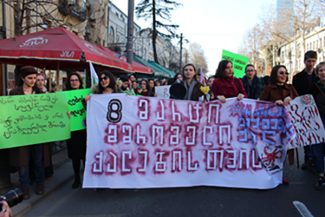
La imagen muestra una protesta en la que una multitud sostiene una pancarta en georgiano que dice: "8 de marzo para las mujeres trabajadoras".

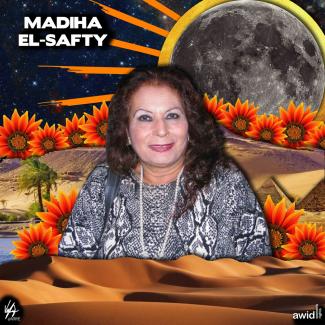
Madiha El Safty

Madiha was a prominent Professor of Sociology who actively engaged with civil society as an advocate for women’s rights in the Arab region.

She chaired the Alliance for Arab Women and was a member of the Committee on Civil Society and the Committee on the Development of Minia Governorate with the National Council for Women. She produced numerous papers that shed light on, and analyzed, gender inequalities and discrimination against women.

She is remembered fondly by colleagues, students and friends.


Madiha El Safty, Egypt

Bureau administratif

Pour toute question administrative, vous pouvez contacter notre bureau :

  • +1 416 594 3773
  • 192 Spadina Avenue, Suite 300 | Toronto, ON, M5T 2C2 | Canada

Snippet FEA lines of work Against (FR)

Illustration d'un livre rose sur lequel est écrit : « Droits du travail » avec un X rouge, l

LES VIOLATIONS DES DROITS DU TRAVAIL

هل على مجموعتنا، منظمتنا أو حركتنا تعبئة الاستطلاع مع أننا لم نحشد أو نأخذ تمويلاً من ممولين/ات خارجيين/ات؟

نعم! نلاحظ ونقدّر الأسباب المختلفة لعدم تلق الحركات النسوية التمويل الخارجي، حيث من الممكن أن تكون غير مؤهلة لتقديم الطلبات للتمويل و\ أو تلقّي المال من خارج البلاد، أو الاعتماد على المصادر التي يتم إنتاجها بشكل مستقل كاستراتيجية سياسية. نريد أن نسمع منكم/ن بعيدا عن تجربتكم/ن مع التمويل الخارجي.

Main image
Story-2-Banner.png
Body

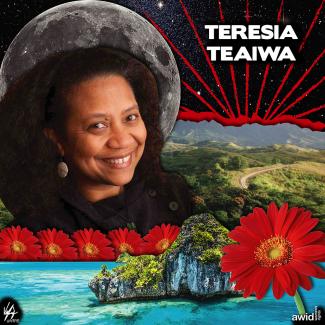
Teresia Teaiwa

Retratada en The Guardian como uno de los íconos nacionales de Kiribati, Teresia fue una valiente activista.

Trabajó estrechamente con los grupos feministas en Fiji y que puso sus investigaciones al servicio de las cuestiones feministas y de género en el Pacífico. Además, fue coeditora de la publicación International Feminist Journal of Politics. Su influencia se extendió desde la frontera académica hasta los movimientos por la justicia social en la región de Oceanía.


Teresia Teaiwa, Fiji

資助建議

本頁面為如何資助您參與第14屆AWID論壇提供一些想法和靈感。 

在您計劃將要在論壇上開展的活動時,請同時考慮如何為參加論壇提供資金支持。典型的費用支出包括:住宿、旅行、簽證、論壇註冊費等。

重要的是請注意,該論壇將有很多“開放空間”和學習、交流運動的機會,而正式會議的數量則少很多。(請參閱下面的“在籌款中如何描述我們的論壇”,以瞭解在您的宣傳中可使用的語言。)

與您目前的資助者合作:

首先聯繫您當前的資助者:最好的選擇始終是求助於當前的捐助者。

請確保提前準備:我們建議最晚在2020年初與這些資助方聯繫。許多支持女權組織的資助者為論壇旅行分配了一些預算。其他的資助方也可能將其囊括在續訂補助金中或包含在其他旅行基金裡。

如果貴組織有資助者,請告訴他們您想參加AWID論壇並學習、體驗、交流和建立網絡,即使您的活動還未被選中。為了能夠支持您的參與,您的捐助者需要提前了解此事,因此請立即告訴她們吧!(她們已經在決定將在2020年分配哪些資金)。

尋求新的資助者:

如果您目前沒有捐助者的支持或無法獲得論壇旅行的贈款,請考慮與新的捐助者聯繫。

各個資助方的申請截止日期和要求不盡相同,並且撥款審查過程可能需要數月的時間。如果您正在考慮申請新的資金,請盡快開始申請。

有創意的靈感:

女權主義運動長期以來在資助我們自己的行動方面保持著創造力。以下是我們收集的一些想法,用於啟發不同的籌款方式:

  •  動員您的社區來支持參與:通過社區晚宴、舞蹈晚會以及本地的表演、活動和遊覽等方式從會員中籌集少量資金。
  • 通過使用 gofundme, indiegogo, plumfund, or kickstarter 等各種在線工具組織捐贈圈和眾包來動員網絡。
  • 獲得本地的收入來源,包括來自個人捐助者和會費的收入。
  • 考慮通過與其他社區和社會正義團體的戰略夥伴關係共同集資。

想瞭解更多靈感,請參閱AWID正在進行的關於自主資源的系列文章,其中包括有關籌集參會資金的具體想法。(in English)

機會補助金:

AWID正在努力使論壇成為一個真正的全球性聚會,保障來自不同運動、地區和年齡層的參會者都可以參與。鑑於此,AWID為參與者調集資源並提供有限數量的機會補助金,以幫助她們支付參加論壇的費用。

AWID的機會補助金將為部分論壇參與者和會議/活動的主持人提供支持。您可以在申請過程中指出是否要申請AWID機會補助金。我們無法保證您能否申請到,所以我們強烈建議您為自己參加會議和論壇尋求其他資助。

即使您已申請了AWID的機會補助金,我們仍鼓勵您繼續探索其他的選擇來資助您參加論壇。機會補助金的申請結果將在2020年6月結束之前得到確認。請記住,這些資源非常有限,我們無法為所有申請人提供支持。


在籌款中如何描述我們的論壇:

當您與資助方或您自己的網絡聯繫時,這裡的一些示例信息可能會有所幫助。您可以隨時以對您有用的任何方式進行調整!

AWID論壇是一個聯合創建的女權運動空間,可激發參與者自身的行動積極性,並在多種權利和正義運動中加強與他人的聯繫。參與者可以從希望、能量和激進的想像力中汲取靈感,加深共享的分析和學習,建立跨領域的運動團結,以製定更加綜合的議程並推進聯合戰略。

我們的組織正在尋求資金參加論壇,以便與來自世界各地的其他活動家和運動聯繫在一起,加強我們的戰略並分享工作成果。我們受到過往參與者的啟發,她們描述了這場全球女權主義聚會的力量:

“在四天的時間裡……各種聲音交織在一起,形成了關於性別平等狀況的全球視角。當我說“全球”一詞時,我是指同時翻譯成七種不同的語言……”

“它提醒著我們,我們並不孤單。論壇提供了必要的途徑幫助我們將集體力量轉化為運動。無論是何種意識形態、身份或邊界,我們的力量都體現在我們的願景和對彼此的支持中。”

重要的是請注意,該論壇將有很多“開放空間”和學習、交流運動的機會,而正式會議的數量則少很多。儘管很多與會者不會參加正式的會議,但仍有寶貴的空間來學習、制定戰略和體驗女權運動在行動中的集體力量。

預算的考慮:

在計算花費以及思考需要募集多少款項時,最重要的是要考慮可能出現的成本。以下是要考慮的關鍵項目支出的示例:

  • 機票
  • 論壇註冊費(請注意,即便AWID授予您機會補助金,您也要自己支付註冊費)
  • 簽證費用
  • 旅遊健康保險
  • 往返機場的本地旅行(出租車或其他交通工具)
  • 中途停留的費用,例如飛機需要長時間中途停留時的住宿費和伙食費
  • 住宿(如果您旅行很遠,可以給自己一天的恢復時間,無論是在之前或之後)
  • 設備(旅行期間需要的WiFi或國際通訊費用,AWID將在論壇期間提供WiFi)
  • 論壇上分享或交換的任何材料(可視教具,報告,藝術品!)的材料費
  • 雜費和/或包括食物與其他花銷的每日津貼(論壇期間,AWID將提供所有午餐和咖啡/茶歇,外加一頓晚餐)
  • 附件,例如可能使您的旅行更加舒適、安全和有重要意義的任何其他支持

我們期待與您在論壇上見面!


論壇是一個協作過程

該論壇不僅僅是一個四天的會議。它更為女權主義現實實踐的運動增強之旅提供了另一個驛站,該旅程早已開始也將在論壇結束後繼續。

加入我們的旅程吧!


Snippet FEA HEALTH CONDITIONS (EN)

An illustration of a white-skinned person in yellow uniform of a nurse with stethoscope in their hand.

HEALTH CONDITIONS