AWID Forum: Co-creating Feminist Futures

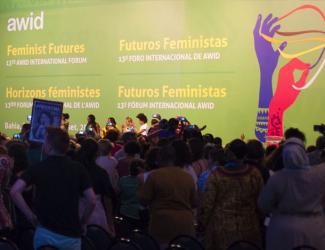
In September 2016, the 13th AWID international Forum brought together in Brazil over 1800 feminists and women’s rights advocates in a spirit of resistance and resilience.

This section highlights the gains, learnings and resources that came out of our rich conversations. We invite you to explore, share and comment!


What has happened since 2016?

One of the key takeaways from the 2016 Forum was the need to broaden and deepen our cross-movement work to address rising fascisms, fundamentalisms, corporate greed and climate change.

With this in mind, we have been working with multiple allies to grow these seeds of resistance:

And through our next strategic plan and Forum process, we are committed to keep developing ideas and deepen the learnings ignited at the 2016 Forum.

What happens now?

The world is a much different place than it was a year ago, and it will continue to change.

The next AWID Forum will take place in the Asia Pacific region (exact location and dates to be announced in 2018).

We look forward to you joining us!

About the AWID Forum

AWID Forums started in 1983, in Washington DC. Since then, the event has grown to become many things to many peoples: an iterative process of sharpening our analyses, vision and actions; a watershed moment that reinvigorates participants’ feminisms and energizes their organizing; and a political home for women human rights defenders to find sanctuary and solidarity.

Learn more about previous Forums

Related Content

WITM - Refreshed INFOGRAPHIC 1 EN

Ever wondered what budgets for feminist organizations look like?

In 2023, feminist and women's rights organizations had a median annual budget of USD 22,000. Behind that median lies disparity and inequality: while a few groups access large-scale resources, the vast majority survive on shoestring budgets. 
A closer look at actual budgets reveals major income diversity and inequality.

Explore the data on the size of feminist budgets 

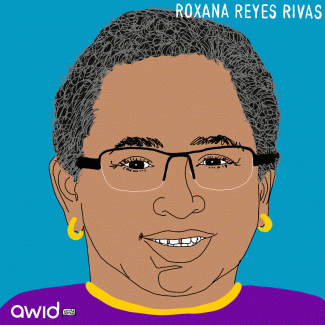
Roxana Reyes Rivas

Roxana Reyes Rivas, philosopher, feminist, lesbian, poet, politician and LGBT and women’s rights activist from Costa Rica. Owner of a sharp pen and incisive humour, a laugh a minute. She was born in 1960 and raised in San Ramón of Alajuela, when it was a rural town, and her whole life she would break away from the mandates of what it meant to be a woman.   

With El Reguero (Costa Rican lesbian group) she organized lesbian festivals for over a decade, fun-filled formative spaces to come together at a time when the Costa Rican government and society persecuted and criminalized the lesbian existence. For hundreds of women the lesbian festivals where the only place they could be themselves and come together with others like them.  

Roxana would often say founding political parties was one of her hobbies. “It’s important for people to understand there are other ways to do politics, that many issues need to be solved collectively”. She was one of the founders of the New Feminist League and VAMOS, a human rights focused political party.

“The philosophical trade is meant to jab, to help people ask themselves questions. A philosopher who doesn’t irritate anyone is not doing her job”. For 30 years Roxana taught philosophy at several Costa Rican public universities. Through her guidance, generations of students reflected about the ethical dilemmas in science and technology.  

Roxana’s favourite tool was humour, she created the Glowing Pumpkin award, an acknowledgement to ignorance that she would bestow upon public figures, through her social media channels, mocking their anti-rights expressions and statements.  

An aggressive cancer took Roxana at the end of 2019, before she could publish a compilation of her poems, a departing gift from the creative mind of a feminist who always raised her voice against injustice.
Cambios sísmicos: un año de finalización, transición y reflexión | Informe anual 2017

Los últimos cinco años han sido muy importantes para AWID.

Hemos contribuido a algunas victorias importantes, como expandir el panorama de financiamiento para los derechos de las mujeres con investigación e incidencia innovadoras y de gran alcance. Al mismo tiempo, hemos sufrido algunos golpes devastadores, como el asesinato de defensoras de derechos humanos como Berta Cáceres de Honduras, Gauri Lankesh de India y Marielle Franco de Brasil, así como el aumento de la movilización de los sectores antiderechos en los espacios de derechos humanos.

Hace cinco años, nos comprometimos con nuestro papel en la construcción de movimientos al generar conocimiento sobre las tendencias de los movimientos antiderechos, así como sobre temas en los que las feministas tienden a involucrarse menos, como los flujos financieros ilícitos. Activamos junto a los movimientos que son nuestrxs compañerxs, fortaleciendo el activismo feminista joven y el activismo intergeneracional y expandiendo la protección integral de lxs defensorxs de derechos humanos. En el cierre del plan estratégico, estamos orgullosxs de nuestros logros y nuestro crecimiento como organización. ¡Terminamos el 2017 con un compromiso renovado, ideas y aprendizaje para sostener la lucha que tenemos por delante!


Snippet Forum Quoate Nicky Mcintyre (FR)

Tous nos processus de changement reposent sur les relations que nous établissons dans des espaces comme les forums de l'AWID, où l'on danse ensemble, où l'on fait ressortir son humour, sa vraie personnalité, où l'on raconte des histoires. C'est ce qui fait la différence.
- Nicky Mcintyre, États-Unis

Film club - The Turtle's rage

The Turtle’s Rage (2012) German | Arabic with English subtitles

THE TURTLE'S RAGE tells the story of a mysterious man, whose life has been molded by flight, expulsion, life in exile and the failed return to Palestine. The film is composed of a daughter's search for answers from her father.


Live Conversation with Pary El-Qalqili, filmmaker of “The Turtle’s Rage”

We Are the Ones We Have been Waiting For!

We’re beginning a new year--2023. COVID-19 continues to infect and re-infect many, many people around the world. We are witnessing the resurgence of right-wing and fascist governments, even in places we may not have expected like Sweden. War, armed conflict, and dramatic increase in militarization, militarism, and military spending are enabling the unbridled capital accumulation by the few, with participation of seemingly “strange” alliances locking arms, both visibly and invisibly, where economic and political elites of the Global North and Global South are benefitting beyond our wildest imagination. In the meanwhile, our people and the natural environment pay enormous costs and suffer all the expected and unexpected consequences.

As all of you and all of us at AWID know, feminists in multiple movements around the world are resisting and organizing against multiple faces of tyranny, creating alternative structures, implementing grassroots strategies, and building transnational alliances. We are generating joy, inspiring one another, singing, and dancing within and against the prevailing culture of killing and cynicism that seems to have engulfed so much of the world.

We--Staff and Board--of AWID are prepared and inspired more than ever before to face challenges by strengthening our relationships with our members and organizational partners, meeting and getting to know those who we are yet to meet and do what we do best: support the global feminist movements. Although we were sad facing the departures of our beloved former Co-Eds Cindy and Hakima, our wonderful new Co-EDS Faye and Inna along with committed and creative staff have embraced the moment that encapsulates both opportunities and threats.

For sure, all of us at AWID and all our movement folks know:  As the Caribbean US poet and activist June Jordan wrote to the South African women activists during the height of the apartheid regime, “We are the ones we have been waiting for”!

Snippet - COP30 Intro - ES

Súmate al movimiento feminista abocado a recuperar la acción por el clima del control corporativo

Con 1773 cabilderos de los combustibles fósiles presentes en la COP29 del año pasado, nos dirigimos, junto con otres feministas a Belém (Brasil) del 10 al 21 de noviembre de 2025. Allí continuaremos denunciando las soluciones falsas, llamando la atención sobre la captura corporativa, y exigiendo que los Estados cumplan sus compromisos bajo las Responsabilidades Comunes pero Diferenciadas y las Capacidades Respectivas (en inglés) para impulsar las alternativas económicas feministas.

USD 2,7 billones para gasto militar. USD 300.000 millones para la justicia climática. Estamos aquí para dar vuelta el relato.

Acciones Nodos Herramientas

Sigue la campaña

Dorothy Masuka

«Yo no planeaba ser una cantante, el canto planeó estar en mí.» - Dorothy Masuka (entrevista de Mail & Guardian)

Dorothy Masuka, nacida en 1935 en Bulawayo (en ese momento Rodesia del Sur, ahora Zimbabue), creció en Sudáfrica, y se convirtió en una reconocida compositora, cantante de jazz, activista, y defensora ferviente de  la lucha contra el apartheid. Definida como «una arquitecta del discurso de la música popular africana de liberación», Dorothy a menudo cantaba sobre política en lenguas indígenas africanas y, a través de todo su trabajo, confrontó las políticas racistas del gobierno sudafricano.

Una de estas canciones, titulada «Dr. Malan» (por el político pro-apartheid D.F. Malan) fue prohibida. Luego, en 1961, grabó «Lumumba», una canción sobre el asesinato del líder anticolonial Patrice Lumumba. El trabajo y el activismo de Dorothy atrajeron la atención de la División Especial de la policía sudafricana, y fue forzada a un exilio político que se prolongaría durante tres décadas. Durante ese tiempo, trabajó con grupos independentistas, incluido el Congreso Nacional Africano. En 1992, cuando el apartheid comenzó a desmoronarse y Nelson Mandela fue liberado de prisión, Dorothy regresó a Sudáfrica.

Su trabajo incluye la primera canción que grabó, en 1953, titulada «Hamba Notsokolo», que fue un éxito durante la década de 1950, y hoy es un clásico muy valorado. También escribió «El Yow Phata Phata», una canción que fue adaptada por Miriam Makeba, quien hizo de «Pata, Pata» un hit internacional.

Arraigados en la resistencia, la música y el activismo de Dorothy (popularmente conocida como «Auntie Dot» [«Tía Dot»]) estaban entretejidos, y dejaron un legado magnífico e inspirador.

Dorothy falleció en Johannesburgo el 23 de febrero de 2019 a la edad de 83 años, por problemas de salud.


Entrevista a Dorothy Masuka de Mail & Guardian (en inglés)

Escucha su música:

Hamba Nontsokolo
El Yow Phata Phata
 

2020: Reporte Anual

En este reporte presentamos aspectos destacados de cómo AWID contribuyó a la cocreación y la resistencia feminista: rescate feminista, contrarrestar a lxs anti-derechos, financiamiento, conversaciones entre movimientos y la revista de las Realidades Feministas


Ve nuestro video del Reporte Anual aquí:

What measures to protect public health and contain risks of Covid19 outbreak will be in place?

We are monitoring this and other risks carefully, and will publish comprehensive health and safety information when the registration opens, so you could make an informed decision. In addition, the hybrid format is designed to provide a meaningful engagement experience to the participants who will prefer not to travel or are not able to travel.

Nos droits en danger - OURs 2021 résumé

Nos droits en danger : il est temps d’agir

Un réseau complexe et mouvant d’acteur·rice·s antidroits exerce aujourd’hui une influence croissante dans les espaces internationaux et nationaux, ainsi qu’au niveau des politiques locales. Les antidroits pénètrent les espaces multilatéraux de collaboration entre pays, dans le but de les transformer et les saboter de l’intérieur. C’est en s’appropriant le langage des droits et de la justice pour travestir leurs véritables intentions qu’ils et elles parviennent à acquérir une certaine légitimité.

Ce rapport est le deuxième d’une série sur les droits humains, produite par l’Observatoire sur l’universalité des droits (OUR). Outre une analyse des principales parties antidroits, de leurs discours, stratégies et impacts, ce rapport inclut des nouvelles féministes pleines d’inspiration et des exercices de renforcement des connaissances qui nous permettront d’assurer notre résistance collective.

Lire le rapport 

Les conséquences sur nos droits sont déjà importantes, mais il est encore possible de réagir. Nous pouvons toutes et tous participer à la résistance face aux programmes antidroits et récupérer nos droits.

Rejoignez l’appel à l’action collective dès aujourd’hui!

Signer l’appel à l’action

Who can fund my women’s rights organizing?

We know feminists still need and deserve more and better resources! We have revised our funder database.

The Who Can Fund Me? Database is an easy-to-use, practical tool for movements looking for funders from philanthropic foundations, multilateral funders to women’s and feminist funds to support vital lifesaving efforts. 

Explore now

Snippet - COP30 - International Eco-Socialist Encounter - ES

Encuentro Ecosocialista Internacional

Paneles, talleres, plenarias y espacios de intercambio entre colectivos, activistas y organizaciones que luchamos para recorrer de forma colectiva el camino hacia una agenda y un programa de lucha por el ecosocialismo.

📅 8 - 11 de noviembre de 2025
📍 Buenos Aires, Argentina

Regístrate aquí

Esther Mwikali

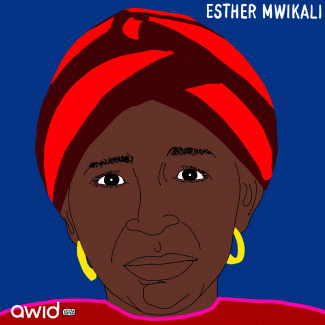
Esther Mwikali habitait dans le village de Mithini, dans le comté de Murang’a au Kenya. Activiste des droits fonciers, importante et appréciée, elle travaillait sur les abus à l’égard de squatters vivant sur des terres revendiquées par des magnats. Esther a participé à une enquête qui comprenait également des violations de droits fonciers à Makaya par de puissants individus.  

Suite à l’absence d’Esther lors d’une réunion de village, une équipe de patrouille est partie à sa recherche. Le 27 août 2019, deux jours après sa disparition, on retrouva son corps dans une ferme proche de sa propriété, montrant des signes de torture. Elle fut sauvagement assassinée. 

« Esther était reconnue pour son travail auprès des membres de la communauté, empêchant les évictions de terres revendiquées des magnats. Les activistes du coin n’ont aucun doute sur le lien entre son meurtre et les luttes constantes pour les terres dans la région. C’est un tragique rappel de la fréquence alarmante d’assassinats extrajudiciaires régulièrement menés au Kenya » - Global Wittness Report, juillet 2020

« Nous associons la mort de Mwikali aux luttes pour les terres par ici. Nous demandons au gouvernement de mener une enquête sur ce sujet au plus tôt. » - James Mburu, porte-parole des squatters

« Des mesures devraient être prises à l’égard des individus suspectés d’avoir menacé les squatters, et notamment la famille Mwikali. » - Alice Karanja, National Coalition of Human Rights Defenders (coalition nationale des défenseur·e·s des droits humains)

« L’impact de son travail et sa ténacité demeureront encore en vie pour les prochaines décennies au Kenya. CJGEA console avec les personnes endeuillées et appelle à la justice. » - Center for Justice and Governmental Action (Centre pour la justice et l’action gouvernementale, CJGEA) communiqué de presse, 13 septembre 2019

Lucy O.

Biography

With over ten years of finance experience, Lucy has devoted her career to for profit and furthering nonprofit missions. She also worked and volunteered at non-for-profit organizations. From the fast-paced world of Finance, Lucy has passion for staying tuned with tech skills in the finance field. Lucy joined AWID in 2014. During her spare time she enjoys music, traveling, and variety sports.

Position
Accounting Coordinator
Add to stories
Off

Diferentes personas de mi organización planean asistir al Foro. ¿Hay algún descuento para grupos en el Foro?

AWID no ofrece descuentos para grupos, pero sí ofrece descuentos en la inscripción a sus afiliadxs. (Haz clic aquí para obtener más información sobre cómo sumarte a la membresía)

ours chapter 6

Chapter 6
Anti-Rights Trends in Regional Human Rights Systems

In the African Commission and the Inter-American System, anti-rights actors push essentialist notions of culture and gender to hamper progress on rights and undermine accountability. As we see, anti-rights actors are exerting influence in regional human rights systems, as well as international spaces.

Read more