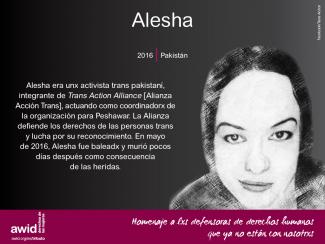
Alesha
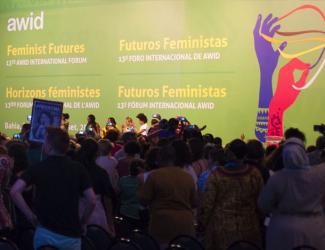
In September 2016, the 13th AWID international Forum brought together in Brazil over 1800 feminists and women’s rights advocates in a spirit of resistance and resilience.
This section highlights the gains, learnings and resources that came out of our rich conversations. We invite you to explore, share and comment!
One of the key takeaways from the 2016 Forum was the need to broaden and deepen our cross-movement work to address rising fascisms, fundamentalisms, corporate greed and climate change.
With this in mind, we have been working with multiple allies to grow these seeds of resistance:
And through our next strategic plan and Forum process, we are committed to keep developing ideas and deepen the learnings ignited at the 2016 Forum.
AWID Forums started in 1983, in Washington DC. Since then, the event has grown to become many things to many peoples: an iterative process of sharpening our analyses, vision and actions; a watershed moment that reinvigorates participants’ feminisms and energizes their organizing; and a political home for women human rights defenders to find sanctuary and solidarity.
"نعم! يرجى قراءة الدعوة للمشاركة والتقدم هنا . الموعد النهائي هو 15 يناير 2024" .
Elina is a young afro-Dominican intersectional feminist and human rights lawyer, committed to use her voice and skills to build a more just, empathic and inclusive world. She started Law school at 16, convinced it would give her the tools to understand and promote social justice. After a J.D. in the Dominican Republic, she pursued an LL.M. in Public International Law and Human Rights in the UK as a Chevening Scholar. She was the only Latinx-Caribbean woman in her class, graduating with honours.
Elina has worked at the intersection of human rights, gender, migration and policy, from government, grassroots collectives and international organizations. She helped litigate cases on gender-based violence before the Inter-American Court of Human Rights. As a member of the Youth Advisory Panel of UNFPA, she contributed to strengthening sexual and reproductive rights in the Dominican Republic. She co-led Amnesty International’s first campaign on sex workers’ rights in the Americas, developing strong partnerships with sex-worker led organizations and using Amnesty’s position to amplify women human rights defenders and sex workers’ voices.
Elina is part of Foro Feminista Magaly Pineda and the Global Shapers Community. She speaks Spanish, French and English. Thanks to her diverse background, Elina brings strong governance and strategic planning skills, substantive expertise on the United Nations and regional human rights mechanisms and her bold determination to keep AWID as an inclusive organization for all women, especially young and Caribbean feminists. With these offerings, joins a global sisterhood of feminist badasses, where she can keep nurturing her feminist leadership and never again feel alone in her path.
إذا تم قبول مقترحك فسيتم الاتصال بك من قبل فريق جمعية حقوق المرأة في التنمية لتقييم احتياجات الترجمة الفورية وإمكانية الوصول والاستجابة لها.
María es diseñadora gráfica y comunicadora visual. Ha trabajado con ONG e instituciones por los derechos humanos como Profamilia y OXFAM. Como mujer del Sur Global, se siente especialmente atraída a usar sus competencias para trabajar con organizaciones que ayudan a proteger el bienestar, así como los derechos de millones de niñas y mujeres de América Latina.
باختصار، نعم! تعمل جمعية حقوق المرأة في التنمية حاليًا مع لجنة إمكانية الوصول لضمان إمكانية الوصول إلى المنتدى قدر الإمكان. نحن نجري أيضًا تدقيقًا لإمكانية الوصول إلى مكان انعقاد المنتدى والفنادق المحيطة ووسائل النقل. ستكون المعلومات التفصيلية حول إمكانية الوصول في منتدى جمعية حقوق المرأة في التنمية متاحة في هذا القسم قبل فتح التسجيل. وفي الوقت نفسه، لأية أسئلة يرجى الاتصال بنا.
Related Content
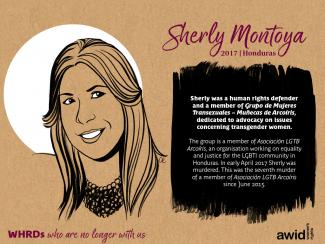
IM Defensoras: Hate crime against Sherly Montoya, LGTTBI defender and member of Transexual Women´s Group “Muñecas de Arcoiris”
Como podrás o no saber, AWID está celebrando su 40º aniversario en 2022 y, para festejarlo, se eligieron los lemas «Reunir, sembrar e irrumpir». En honor a esta ocasión, hemos invitado a lxs afiliadxs, aliadxs y al personal de AWID a escribir sus propias «Cartas de Amor a los Movimientos Feministas». En conjunto, hemos encendido una constelación de movimientos feministas. Nos mantengamos cerca mientras forjamos el viaje y seguimos reuniéndonos, sembrando y desmantelando.
Nota sobre nuestra Colección de Cartas de Amor
Todas estas cartas de amor fueron escritas por activistas que están compartiendo sus diversas experiencias en los movimientos feministas. Algunas pueden incluir contenido delicado o complejo sobre abuso sexual, violencia sexual, conflictos, exclusión, entre otras piezas potencialmente perturbadoras o provocadoras. Aunque las cartas están llenas de amor, cuídate al leerlas.

Leila est une dirigeante, défenseuse et conseillère féministe transnationale qui compte plus de 25 ans d'expérience dans la promotion des droits humains, de l'égalité des genres et de la santé et des droits sexuels et reproductifs, ainsi que de la justice au niveau local et mondial. Née en Algérie, Leila a fait ses études aux États-Unis, en France et au Maroc. Au cours de sa carrière professionnelle, elle a vécu et travaillé en Afrique, en Europe et aux États-Unis.
Elle a occupé le poste de vice-présidente des programmes au Fonds mondial pour les femmes (GFW) pendant plus de cinq ans, où elle a supervisé son octroi de subventions stratégiques, le renforcement des mouvements, le plaidoyer mondial et les collaborations philanthropiques. Au sein du GFW, elle a doublé le montant de ses subventions pour atteindre plus de 17 millions de dollars, a lancé son travail sur les mouvements et les crises féministes et axées sur le genre, a créé un programme pour les adolescentes dirigé par un conseil consultatif de filles et a dirigé son travail de plaidoyer philanthropique. Avant cela, elle a fait partie de l'équipe de direction d'Ipas de 2002 à 2016, où elle a publié de nombreux articles sur le droit à l'avortement et la justice, dirigé des actions de plaidoyer mondiales et établi des partenariats avec des groupes féministes travaillant sur l'autogestion, la mobilisation communautaire et la réduction de la stigmatisation autour de l'intégrité corporelle et des droits sexuels et reproductifs. Alors qu’elle était basée en Afrique du Nord, elle a cofondé une société de conseil féministe intersectionnelle, Strategic Analysis for Gender Equality (SAGE), qui travaillait sur les intersections entre l'économie, le genre et les droits sexuels et reproductifs, et a dirigé le travail national, régional et mondial sur le genre du bureau du Caire de la Fondation Ford pendant 5 ans.
Leila dispose d'une vaste expérience dans les domaines de l'éducation populaire, le plaidoyer, l'organisation à but non lucratif, le développement de conseils d'administration, la philanthropie et le suivi et l'évaluation. C'est une communicatrice compétente qui privilégie une approche intersectionnelle pour centrer et amplifier les voix et les expériences des personnes les plus marginalisées. Elle a reçu la bourse Op-ed Public Voices de la Fondation Ford et a été boursière Fulbright au Maroc. Ses publications couvrent un large éventail de sujets, notamment les approches féministes et décoloniales de la philanthropie, la promotion des droits humains des femmes dans les contextes majoritairement musulmans, les stratégies féministes visant à promouvoir la justice reproductive, la promotion du recours des femmes aux avortements autogérés et la lutte contre la stigmatisation et la discrimination.
Leila est actuellement coprésidente du conseil du Center for Constitutional Rights et membre du conseil de Highlander Research and Education. Elle fait également partie du conseil de responsabilité du Numun Feminist Technology Fund et du comité consultatif de la Plateforme des femmes défenseuses des droits humains d'Afrique. Elle a précédemment siégé aux conseils d'administration de SisterSong Women of Color Reproductive Justice Collective, du Réseau mondial des femmes pour les droits sur la reproduction, du Fonds mondial pour les femmes, du Safe Abortion Access Fund et du Reproductive Health Technologies Project. Elle a été élue trésorière et membre du comité exécutif du conseil d'administration de Prospera et a siégé au comité directeur du Fonds Fenomenal pendant quatre ans. Leila est titulaire d'une maîtrise en santé publique et d'une maîtrise en études sur la région du Moyen-Orient et de l'Afrique du Nord, a étudié le droit islamique au Maroc et a poursuivi des études doctorales en sociologie en France. Elle a étudié l'arabe et l'allemand et parle couramment le français et l'anglais.
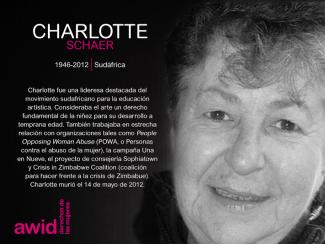
AWID honors feminists and Women Human Rights Defenders (WHRDs) who have died and whose contributions to the advancement of human rights are very much missed.
AWID’s WHRD Tribute is a photo exhibition featuring feminist, women’s rights and social justice activists from around the world who are no longer with us.
The Tribute was first launched in 2012, at AWID’s 12th International Forum, in Turkey. It took shape with a physical exhibit of portraits and biographies of feminists and activists who passed away. The initiative was described by Forum participants as being a unique, moving and energizing way to commemorate our collective history.
At the 13th International Forum in Brazil, we honored activists and WHRDs with a mural unveiling ceremony in four languages, a dance performance and a Brazilian ritual.
In between the events, the Tribute lives as an online gallery that is updated every year as part of the 16 Days Campaign Against Gender Based Violence (25 November – 10 December).
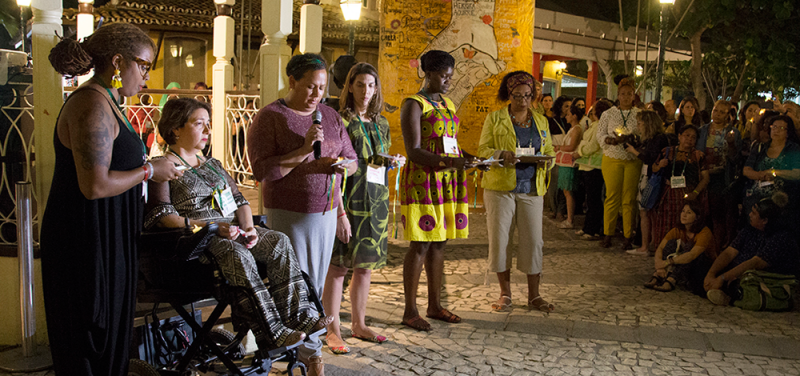
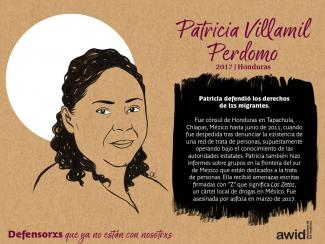
Since 2012, through our annual Tribute to Women Human Rights Defenders (WHRDs) no longer with us, over 400 feminists and WHRDs from 11 regions and 80 countries have been featured.
AWID would like to thank the families and organizations who shared their personal stories and contributed to this memorial. We join them in continuing the remarkable work of these women and forging efforts to ensure justice is achieved in cases that remain in impunity.
Visit the WHRD Tribute online exhibit
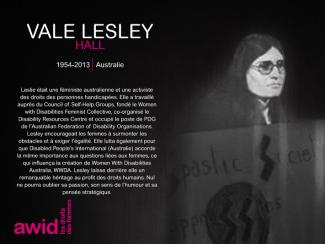
In addition to paying homage to these incredible activists, the Tribute particularly sheds light on the plight of WHRDs who have been assassinated or disappeared.
One third of those featured in the Tribute were activists who have been murdered or disappeared in suspicious circumstances. They were specifically targeted for who they were and the work they did to challenge:
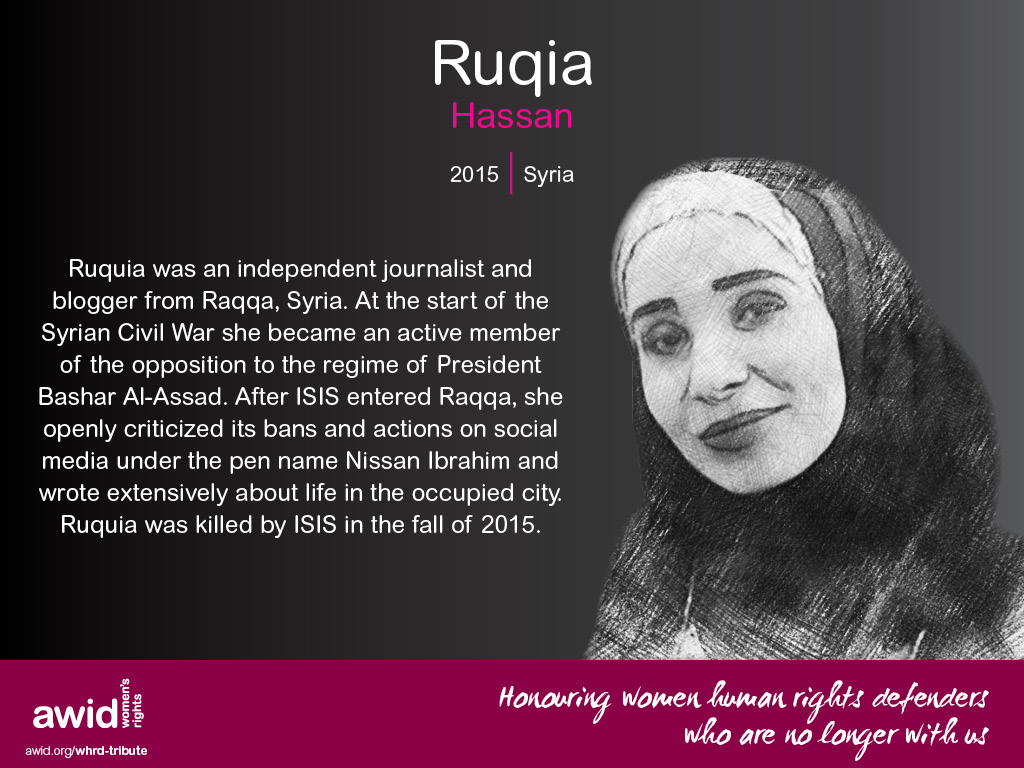
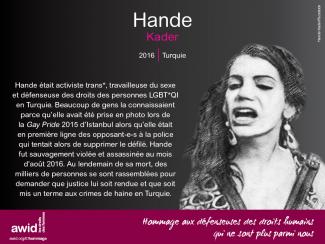
Women like Agnes Torres, from Mexico, was killed because of her gender identity and sexual orientation; or Cheryl Ananayo, an environmental activist from the Philippines was assassinated as she struggled against a mining company; or Ruqia Hassan, a Syrian independent journalist and blogger killed for her criticism of ISIS. And so many others.
With the WHRD Tribute, we bring them all into our collective memory and carry their legacy of struggle as our torch in the feminists’ and women’s rights movements. We recognize that security, safety and self-care must be a priority in all our political agendas. And we call on to governments and international bodies to collectively address violence against feminists and WHRDs.
Este año, junto con activistas feministas de todo el mundo, estaremos en la CSW68 en Nueva York .Estaremos presentes para desafiar las narrativas capitalistas y neoliberales y las falsas soluciones en torno a la pobreza, el desarrollo y la financiación. A través de eventos presenciales, transmisiones en vivo en nuestras redes sociales, un stand de exhibición y más. Nos presentamos para convocar, amplificar y apoyar las voces y la participación de nuestra membresía y aliades.
Conoce más sobre nuestro programa para este año a continuación.
Contenido relacionado
Proceso Digital: Asesinan abogada que fue candidata a diputada en primarias del Partido Nacional
Et si nous ré-imaginons différentes manières de prendre soin de nos communautés?
Et si l'économie n'était pas basée sur le profit d’une petite élite mais sur notre bien-être individuel et collectif, et celui de la Nature?
Les histoires que vous allez découvrir portent sur les collectifs créés par et pour les personnes historiquement et actuellement exclues, privées de leurs droits et déshumanisées par l'État et la société.
Voici les histoires des féministes qui centrent les soins dans l’économie.