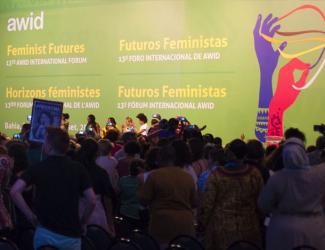
AWID Forum: Co-creating Feminist Futures

In September 2016, the 13th AWID international Forum brought together in Brazil over 1800 feminists and women’s rights advocates in a spirit of resistance and resilience.

This section highlights the gains, learnings and resources that came out of our rich conversations. We invite you to explore, share and comment!


What has happened since 2016?

One of the key takeaways from the 2016 Forum was the need to broaden and deepen our cross-movement work to address rising fascisms, fundamentalisms, corporate greed and climate change.

With this in mind, we have been working with multiple allies to grow these seeds of resistance:

And through our next strategic plan and Forum process, we are committed to keep developing ideas and deepen the learnings ignited at the 2016 Forum.

What happens now?

The world is a much different place than it was a year ago, and it will continue to change.

The next AWID Forum will take place in the Asia Pacific region (exact location and dates to be announced in 2018).

We look forward to you joining us!

About the AWID Forum

AWID Forums started in 1983, in Washington DC. Since then, the event has grown to become many things to many peoples: an iterative process of sharpening our analyses, vision and actions; a watershed moment that reinvigorates participants’ feminisms and energizes their organizing; and a political home for women human rights defenders to find sanctuary and solidarity.

Learn more about previous Forums

Related Content

Snippet - CSW69 - OURs & friends - FR

OURs et ses ami·es à l’Espace de Solidarité Féministe

✉️ Sur invitation uniquement

📅 Mardi 11 mars 2025
🕒 14.00h-16.00h EST

🏢 Chef's Kitchen Loft with Terrace, 216 East 45th St 13th Floor New York

Organisé par : Consortium de l’Observatoire sur l'universalité des droits (OURs)

Binta Sarr

Binta Sarr était une activiste pour la justice sociale, économique, culturelle et politique, en plus d’avoir occupé le poste d’ingénieure hydraulique au Sénégal. Après 13 années de service, celle-ci a choisi de quitter le fonctionnariat pour travailler auprès de femmes rurales et marginalisées. 

Cet engagement a donné lieu à la création de l’Association pour la promotion des femmes sénégalaises (APROFES), un mouvement de base auquel est venu se greffer une organisation fondée par Binta en 1987. L’une de ses approches était la formation au leadership, non seulement dans le cadre d’activités économiques mais également en lien avec les droits des femmes et leur accès à des fonctions décisionnelles.

“« Les populations à la base doivent s’organiser, se mobiliser, assumer le contrôle citoyen et exiger une gouvernance démocratique dans tous les secteurs de l’espace public. La priorité des mouvements sociaux doit aller au-delà de la lutte contre la pauvreté et être axée sur des programmes de développement articulés et cohérents en adéquation avec les principes des droits humains, tout en prenant en compte leurs besoins et leurs préoccupations tant au niveau national, sous régional que dans une perspective d’intégration africaine et mondiale. » – Binta Sarr

Ancrée dans la conviction de Binta, à savoir que les changements essentiels dans le statut des femmes nécessitent la transformation des attitudes masculines, APROFES a adopté une approche interdisciplinaire et s’est appuyée sur la radio, les séminaires et le théâtre populaire, offert une éducation publique innovante et apporté un soutien culturel aux actions de sensibilisation. Sa troupe de théâtre populaire a créé des pièces sur le thème des castes dans la société sénégalaise, de l’alcoolisme et de la violence conjugale. Binta et son équipe ont également pris en compte l’interconnexion essentielle entre la communauté et le monde élargi.

« Pour APROFES, il s’agit d’étudier et de prendre en compte les interactions entre le micro et le macro, le local et le mondial, ainsi que les différentes facettes du développement. De l’esclavage à la colonisation, le néo-colonialisme et la marchandisation du développement humain, qui représentent la majeure partie des ressources d’Afrique et du Tiers-Monde (pétrole, or, minéraux et autres ressources naturelles), demeurent sous le contrôle des cartels financiers et autres multinationales qui dominent ce monde mondialisé. » – Binta Sarr

Binta était également l’une des membres fondatrices de la section féminine de l’Association culturelle et sportive Magg Daan, et a reçu des mentions élogieuses de la part du gouverneur régional et du ministre de l’Hydrologie pour sa « dévotion aux populations rurales ».

Née en 1954 dans la petite ville de Guiguineo, Binta est décédée en septembre 2019.


Hommages:

 « La perte est incommensurable, la douleur est lourde et profonde mais nous allons résister pour ne pas pleurer Binta; nous allons garder l’image de son large sourire en toutes circonstances, pour résister et nous inspirer d’elle, maintenir, consolider et développer son œuvre... » – Page Facebook de l’APROFES, 24 septembre 2019

« Adieu, Binta! Nul doute que ton immense héritage sera préservé. » – Elimane FALL, président de l’ACS Magg-Daan 
Clone of Crear | Résister | Transform: A Walkthrough of the Festival! | Content Snippet AR

مع استمرار الرأسمالية الأبوية الغيريّة في دَفعِنا نحو الاستهلاكية والرضوخ، نجد نضالاتنا تُعزَل وتُفصَل عن بعضها الآخر من خلال الحدود المادّية والحدود الافتراضية على حدٍّ سواء. ومع تحدّياتٍ إضافية يفرضها علينا وباءٌ عالميٌّ علينا تجاوزه، أصبحت سياسة فرِّق تَسُد مواتية للاستغلال المتزايد في مجالات عدّة. 

ومع ذلك، أخذَنا «ابدعي، قاومي، غيٍّري: مهرجان للحراكات النسوية»، الذي نظّمته جمعية «حقوق المرأة في التنمية» AWID في الفترة ما بين 1 أيلول/ سبتمبر وحتى 30 أيلول/ سبتمبر 2021، في رحلةٍ حول ما يعنيه تجسّد حيواتنا في المساحات الافتراضية. اجتمعَت معنا في المهرجان ناشطات نسويات من حول العالم، لأجل مشاركة خبراتهن حول المقاومة والحرّيات المُنتَزَعة بصعوبة، والتضامن العابر للحدود، وكذلك لتوضيح الشكل الذي يمكن أن يبدو عليه التكاتف العابر للحدود القومية. 

يحمل هذا التكاتف إمكانية مقاومة الحدود، ناسجاً رؤية لمستقبل تحويلي، لأنه سيكون إلغائيًا ومناهضًا للرأسمالية. على مدار شهر، وعبر البُنى التحتية الرقمية التي احتللناها بكويريّتنا ومقاومتنا وخيالاتنا، بيّن لنا المهرجان طريقةً للانحراف عن الأنظمة التي تجعلنا متواطئات في قهر أنفسنا وأخريات/ آخرين. 

بالرغم من أن أودري لورد علّمتنا أنّ أدوات السيّد لن تهدم أبدًا منزله، بيّنت لنا سارة أحمد أنه بإمكاننا إساءة استخدام تلك الأدوات عن سبق إصرار. أصبح من الممكن تخيّل خلخلة في واقع الرأسمالية الأبوية الغيريّة، لأننا خلقنا مساحة للاحتشاد، بالرغم من كلّ الأشياء الأُخرى التي تتطلّب وقتنا. 
إذا أدركنا الاحتشاد باعتباره أحد أشكال التمتّع، عندها سيصبح من الممكن خلق الرابط بين المتعة المتجاوزة والمقاوَمة العابرة للحدود القومية/ الرقمية. بين أنواع التمتّع التي تتحدّى الحدود من ناحية، والكويرية والبهرجة والأرض ونضالات السكّان الأصليين ومناهضة الرأسمالية والتنظيم المناهض للاستعمار من ناحية أخرى. 

حاول هذا العدد التقاط كيفية اتخاذ ممارسة الاحتشاد في المهرجان لأشكالٍ وتخيّلات متعدّدة. إلى جانب التعاون المباشر مع بعض الحالمات/ين والمتحدّثات/ين في المهرجان، دعَونا عدداً كبيراً من أصوات أخرى من الجنوب العالمي لنكون في نقاش جماعي حول الكثير من الثيمات والموضوعات المرتبطة بالجنوب. فيما يلي خريطة لبعض جلسات المهرجان التي كانت أكثر إلهامًا لنا. 

Eni Lestari

Biography

Eni Lestari is an Indonesian domestic worker in Hong Kong and a migrant rights activist. After escaping her abusive employer, she transformed herself from a victim into an organizer for domestic workers in particular, and migrant workers in general. In 2000, she founded the Association of Indonesian Migrant Workers (ATKI-Hong Kong) which later expanded to Macau, Taiwan, and Indonesia. She was the coordinator and the one of the spokesperson of the Asia Migrants Coordinating Body (AMCB) - an alliance of grassroots migrants organisations in Hong Kong coming from Indonesia, Philippines, Thailand, Nepal and Sri Lanka. She is also the current chairperson of International Migrants Alliance, the first-ever global alliance of grassroots migrants, immigrants, refugees, and other displaced people.

She has held important positions in various organizations including and current Regional Council member of Asia Pacific Forum on Women, Law and Development (APWLD), former Board Member of Global Alliance Against Traffic in Women (GAATW), spokesperson for Network of Indonesian Migrant Workers (JBMI), advisor for ATKI-Hong Kong and Macau as well as the Association of Returned Migrants and Families in Indonesia (KABAR BUMI). She has been an active resource person in forums organized by academics, interfaith groups, civil societies, trade unions and many others at national, regional, and international arenas.

She has actively participated in United Nations assemblies/conferences on development and migrants’ rights and was chosen as a speaker at the opening of the UN General Assembly on Large Movement of Migrants and Refugees in 2016 in New York City, USA. She received nominations and awards such as Inspirational Women by BBC 100 Women, Public Hero Award by RCTI, Indonesian Club Award, and Non-Profit Leader of Women of Influence by American Chamber Hong Kong, and Changemaker of Cathay Pacific.

Add to stories
Off

Snippet - CSW69 On feminist resourcing today - EN

On feminist resourcing today

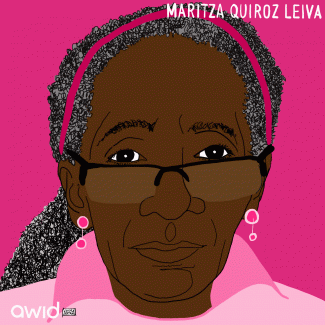
Maritza Quiroz Leiva

Maritza Quiroz Leiva was an Afro Colombian social activist, a community leader and women human rights defender. Among the 7.7 million Colombians internally displaced by 50 years of armed conflict, Maritza dedicated her advocacy work to supporting the rights of others, particularly in the Afro Colombian community who suffered similar violations and displacement.

Maritza was the deputy leader of the Santa Marta Victim's Committee, and an important voice for those seeking justice in her community, demanding reparations for the torture, kidnapping, displacement, and sexual violence that victims experienced during the armed conflict. She was also active in movement for land redistribution and land justice in the country. 

On 5 January 2019, Maritza was killed by two armed individuals who broke into her home. She was 60 years old. 

Maritza joined five other Colombian social activists and leaders who had been murdered just in the first week of 2019. A total of 107 human rights defenders were killed that year in the country. 

Sexting Like a Feminist: Humor in the Digital Feminist Revolution | Content Snippet AR

الصياغات النسوية للرسائل النصّية ذات المحتوى الجنسي: الدُّعابة الجنسانيّة في فضاء الثورة النسوية الرقمية

في الثاني من أيلول/ سبتمير 2021، التمّ شمل مجموعة رائعة من الناشطات النسويات والمناديات بالعدالة الاجتماعية ضمن فعاليات مهرجان (AWID Crear | Résister | Transform). لم يقتصر هدف اجتماعهنّ على مشاركة استراتيجيات المقاومة وعمليات الابتكار الخلّاقة المشتركة التي ترمي إلى تغيير العالم. لقد اجتمعت الناشطات ليتبادلن الغزَل الإباحي على «تويتر». قادت نانا سيكياما النشاط.

نانا من مؤسسي «مغامرات من مضاجع النساء الإفريقيات» وهي كاتبة «حيوات النساء الافريقيات الجنسيّة». لقد جمعت عملها مع عمل المنبر النسائيّ الكويري المنادي بالوحدة الإفريقية (AfroFemHub) للبحث في جواب السؤال التالي: ما هي الصياغات النسوية للرسائل النصّية ذات المحتوى الجنسي؟

أعتقد أن هذا سؤال مهمّ للغاية، لأنه يبحث في القضية الأكبر المتعلّقة بالمقاربة النسوية لكيفية تنقّل المرء في عالم الإنترنت. في ظل الرأسمالية، يمكن للخطاب المُنتَج حول الجسد والجنس، أن يكون مجرّدًا من الإنسانية ومُشوّهًا. كما أن مساحات المتعة الجنسية في الفضاء الافتراضي لها طابع آدائي مبتذل. لذا، فإن البحث عن طرق تُمكّننا من استكشاف رغباتنا باستحسان، يمكن أن تولّد مقاومة للسائد من نماذج العرض والاستهلاك. تباعًا، تُستعاد هذه المساحات كمواقع للتشابك الحَقّ، ويتبيّن أنّ الرسائل النصّية ذات المحتوى الجنسي لا بد وأن تكون نسويّة.

بالإضافة إلى ذلك، فإن السماح للخطاب النسوي بتجسيد وجهه المرِح في فضاء الإنترنت، يساعد على مقارعة السردية الذائعة ومفادها أن التشابك في الفلك النسوي غير مرح وقاسٍ في طابعه العام. ولكن كما نعلم، فإن المتعة والمرح هي من صلب سياستنا وجزء متأصّل مما يعنيه أن يكون المرء نسويًا.

باستخدام وسم #SextLikeAFeminist، تقدَّم الناشطون والأكاديميون من حول العالم بـ»تويتات» تحمل نهمًا نسويًا كبيرًا. أورد لكم في هذا النص التويتات العشرة المفضّلة لدي.

يتبيّن من هذه التويتات الفكاهة المقرونة بالإثارة والاهتياج الجنسيّ، التي تتّسم بها المقاربة النسوية لكتابة الرسائل ذات المضامين الجنسية، دون أن تُسقط عن نفسها الالتزام بالمساواة والعدالة.

Caroline Sin

Biography

Caroline a travaillé régulièrement pour l'AWID, organisant auparavant les forums de 2005 et 2008 à Bangkok et au Cap, et à travers d'autres fonctions au sein de l'organisation. Avant de rejoindre l'AWID, elle a enseigné l'anglais en licence, puis a quitté l’université pour diriger le Reel Asian International festival de film de Toronto et travailler sur d'autres projets. Plus récemment, elle a occupé le poste de responsable des opérations chez Spring Strategies. En dehors du travail, Caroline se retrouve généralement dans son jardin, communiant avec ses chères plantes et faisant la paix avec les insectes et les rongeurs qui s’invitent.

Position
Directrice Adjointe du Forum
Add to stories
Off

Snippet - CSW69 - Challenging the Status Quo - EN

Challenging the Status Quo

A Critical Dialogue on Gender Equality and Human Rights

✉️ Online registration available. Register here

📅 Friday, March 21, 2025
🕒 2.30pm EST

🏢 Church Center of the United Nations, 11th Floor. 777 United Nations Plaza, New York, NY 10017

🎙️AWID speaker: Anissa Daboussi, Manager, Advancing Universal Rights and Justice team

Organizer: IWRAW AP, OURs, AWID, SRI

Roxana Reyes Rivas

Roxana Reyes Rivas, filósofa, feminista, lesbiana, poeta, política y activista por los derechos humanos de las mujeres y las personas LGBTI en Costa Rica. Dueña de una pluma afilada y un humor agudo, con la risa a flor de piel. Nació en 1960 y creció en San Ramón de Alajuela, cuando era una zona rural, y su vida entera rompería con los mandatos de lo que significaba ser mujer. 

Desde El Reguero (grupo de lesbianas en Costa Rica) organizó festivales lésbicos por más de 10 años, espacios lúdico-formativos de encuentro en momentos donde el gobierno y la sociedad costarricense perseguía y criminalizaba la existencia lésbica. Para cientos de mujeres los festivales lésbicos eran el único lugar donde podían ser ellas mismas y encontrarse con otras como ellas.

Roxana decía que fundar partidos políticos era uno de sus pasatiempos. “Es importante que en Costa Rica la gente entienda que hay otras formas de hacer política, que muchos temas es necesario resolverlos colectivamente”. Fue una de lxs fundadores de los partidos Nueva Liga Feminista y VAMOS, un partido centrado en los derechos humanos.  

“El oficio de la filosofía es meter la puya, ayudar a que la gente empiece a preguntarse cosas. La filósofa que no irrita a nadie, no está haciendo bien su trabajo”. Durante 30 años, Roxana fue profesora de filosofía en universidades públicas costarricenses. De su mano generaciones enteras de estudiantes reflexionaron sobre los dilemas éticos en la ciencia y la tecnología. 

La herramienta favorita de Roxana era el humor, ella creó el premio del Chiverre Incandescente, un reconocimiento a la estupidez que otorgaba vía redes sociales a diferentes figuras públicas, ridiculizando sus exabruptos y afirmaciones anti-derechos.

Un cáncer agresivo se llevó a Roxana a fines del 2019, antes de que alcanzara a publicar la compilación de sus poemas, un último regalo de la mente creativa de una feminista que siempre levantó la voz para denunciar la injusticia. 

#MeToo en China

#MeToo en China

La exhibición «#MeToo in China» fue inaugurada en 2019 y recorrió cinco ciudades. Su objetivo es dar mayor prominencia a las experiencias personales de lxs víctimas y lxs activistas, para inspirar al público a unirse a la lucha a través del contacto con estas historias. La exposición misma se ha convertido en parte de la lucha #MeToo: ha debido enfrentar desafíos en su itinerario por toda China y, en más de una ocasión, fue amenazada con la clausura.

Visitar la exposición

Brenda Salas Neves

Biography

Brenda Salas Neves is a feminist queer strategist born and raised in the southern Andes. They organize to shift narratives and mobilize resources to support racial and climate justice movements around the world. They have produced media projects to uplift migrant power and rise against U.S. military intervention across Latin America, with Deep Dish TV and the Portland Central America Solidarity Committee. They are a proud member of the Audre Lorde Project and a graduate of the United World Colleges (UWC) movement.

Position
Secretary
Add to stories
Off

Snippet - WCFM type of funding- EN

Type of funding:

Be it core funding, programmes & projects or rapid response/ emergency grants.

Dorothy Masuka

“Je n’avais pas prévu d’être chanteuse; c’est le chant qui avait prévu de m’habiter”  - Dorothy Masuka (interview avec Mail & Guardian)

Dorothy Masuka, née en 1935 à Bulawayo (alors en Rhodésie du Sud, aujourd’hui le Zimbabwe), a grandi en Afrique du Sud. Elle est devenue une auteure, compositrice, chanteuse de jazz et activiste renommée, et fervente partisane de la lutte contre l’apartheid. Qualifiée d’“architecte du discours de la musique populaire de libération africaine”, Dorothy a souvent chanté la politique dans des langues africaines autochtones et tout au long de son oeuvre, et s’est opposée aux politiques racistes du gouvernement sud-africain. 

L’une de ses chansons, intitulée "Dr Malan" (du nom de l'homme politique pro-apartheid D.F. Malan) a été censurée. Elle a poursuivi avec l’enregistrement de "Lumumba" (1961), une chanson sur l'assassinat du leader anticolonialiste Patrice Lumumba. Le travail et l'activisme de Dorothy ont alors attiré l'attention de la section spéciale de la police sud-africaine, ce qui la contraignit à un exil politique qui s’étendit sur plus de 3 décennies. Tout au long de cette période, elle travailla avec des groupes pro-indépendantistes, dont le Congrès national africain. En 1992, alors que l'apartheid commençait à s'effondrer et que Nelson Mandela fut libéré de prison, elle retourna en Afrique du Sud. 

Parmi ses autres œuvres, on peut citer sa première chanson, enregistrée en 1953 et intitulée "Hamba Notsokolo", qui fut un tube des années 1950 et un grand classique. Elle composa également "El Yow Phata Phata", une chanson adaptée par Miriam Makeba qui contribua à offrir une popularité internationale à "Pata, Pata". 

Ancrés dans la résistance, la musique et l’activisme de Dorothy étaient entrelacés et laissent un merveilleux héritage inspirant. Elle était également très connue sous le nom de “Auntie Dot”.   

Le 23 février 2019, Dorothy s’est éteinte à Johannesburg à 83 ans des suites d’une maladie.


Regardez l'interview de Dorothy Masuka pour Mail & Guardian (seulement en anglais)

Écoutez sa musique :

Hamba Nontsokolo
El Yow Phata Phata

Ika Vantiani Snippet FR

Ika Vantiani

Ika Vantiani est une artiste, conservatrice et créatrice indonésienne basée à Jakarta. Ses œuvres explorent l'idée d'être une femme dans la société d'aujourd'hui où médias et consommation sont inextricablement liés. Ika utilise le principe du collage et l'étend à des ateliers, des installations et au street art. Ika est membre de collectifs d'artistes dont Micro Galleries, The Collage Club et It's In Your Hands Collective.

Visiter l’exposition

Rachel Mabaudi

Biography

Rachel is a financial professional with over two decades of experience. She has overseen financial affairs and projects for private and public entities, non-profits, and international non-governmental organizations. A Chartered Accountant with a Global Master’s in Business Administration, she is also a member of the South African Institute of Chartered Accountants. In her spare time, Rachel designs typography art, enjoys traveling and spending time with family and friends over a bottle of wine.

Position
Finance Manager
Add to stories
Off