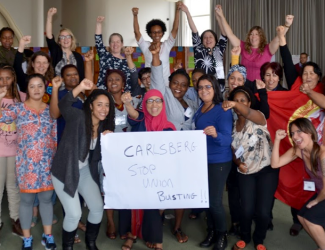
Confronting Extractivism & Corporate Power
Women human rights defenders (WHRDs) worldwide defend their lands, livelihoods and communities from extractive industries and corporate power. They stand against powerful economic and political interests driving land theft, displacement of communities, loss of livelihoods, and environmental degradation.
Why resist extractive industries?
Extractivism is an economic and political model of development that commodifies nature and prioritizes profit over human rights and the environment. Rooted in colonial history, it reinforces social and economic inequalities locally and globally. Often, Black, rural and Indigenous women are the most affected by extractivism, and are largely excluded from decision-making. Defying these patriarchal and neo-colonial forces, women rise in defense of rights, lands, people and nature.
Critical risks and gender-specific violence
WHRDs confronting extractive industries experience a range of risks, threats and violations, including criminalization, stigmatization, violence and intimidation. Their stories reveal a strong aspect of gendered and sexualized violence. Perpetrators include state and local authorities, corporations, police, military, paramilitary and private security forces, and at times their own communities.
Acting together
AWID and the Women Human Rights Defenders International Coalition (WHRD-IC) are pleased to announce “Women Human Rights Defenders Confronting Extractivism and Corporate Power”; a cross-regional research project documenting the lived experiences of WHRDs from Asia, Africa and Latin America.
We encourage activists, members of social movements, organized civil society, donors and policy makers to read and use these products for advocacy, education and inspiration.
-
"Women Human Rights Defenders confronting extractive industries: an overview of critical risks and Human Rights obligations" is a policy report with a gender perspective. It analyses forms of violations and types of perpetrators, quotes relevant human rights obligations and includes policy recommendations to states, corporations, civil society and donors.
-
"Weaving resistance through action: Strategies of Women Human Rights Defenders confronting extractive industries" is a practical guide outlining creative and deliberate forms of action, successful tactics and inspiring stories of resistance.
-
The video “Defending people and planet: Women confronting extractive industries” puts courageous WHRDs from Africa, Asia, and Latin America in the spotlight. They share their struggles for land and life, and speak to the risks and challenges they face in their activism.
-
Challenging corporate power: Struggles for women’s rights, economic and gender justice is a research paper outlining the impacts of corporate power and offering insights into strategies of resistance.
Share your experience and questions!
Tell us how you are using the resources on WHRDs Confronting extractivism and corporate power.
◾️ How can these resources support your activism and advocacy?
◾️ What additional information or knowledge do you need to make the best use of these resources?
◾️ How can these resources support your activism and advocacy?
◾️ What additional information or knowledge do you need to make the best use of these resources?
Thank you!
AWID acknowledges with gratitude the invaluable input of every Woman Human Rights Defender who participated in this project. This project was made possible thanks to your willingness to generously and openly share your experiences and learnings. Your courage, creativity and resilience is an inspiration for us all. Thank you!
Related Content
Clone of Snippet FEA Title Menu (FR)
Les Économies Féministes
QUE NOUS ADORONS
ÉCONOMIES DES SOINS AGROÉCOLOGIE ET SOUVERAINETÉ ALIMENTAIRECOOPÉRATIVISME FÉMINISTESYNDICALISME FÉMINISTE
Sarah Maldoror
“Je n’adhère pas au concept de ‘tiers-monde’. Je fais des films pour que les gens puissent les comprendre indépendamment de leur race ou de leur couleur. Pour moi, il n’y a que des exploiteurs et des exploités, c’est tout. Faire un film, c’est prendre position.” - Sarah Maldoror
Sarah Maldoror, cinéaste française d’origine antillaise, fut une pionnière du cinéma panafricain. Elle plaça ses préoccupations politiques et son engagement de longue date dans les mouvements de décolonisation au coeur de son oeuvre.
Son film révolutionnaire Sambizanga (1972), avec son “image révolutionnaire”, retrace la lutte de libération anticoloniale des activistes angolais et retranscrit le point de vue d’une femme qui se trouve dans ce moment historique.
“Pour beaucoup de cinéastes africains, le cinéma est un outil de la révolution, une éducation politique pour transformer les consciences. Il s’inscrivait dans l’émergence d’un cinéma du Tiers-Monde cherchant à décoloniser la pensée pour favoriser des changements radicaux dans la société.” - Sarah Maldoror
Au cours de sa carrière, Sarah a fondé, aux côtés d’un certain nombre d’artistes africain·e·s et caribéen·ne·s, la première compagnie de théâtre noire en France (1956). Elle a réalisé une quarantaine de films, y compris d’importants documentaires qui mettent en valeur les vies et l’oeuvre d’artistes noir·e·s, notamment celles de son ami et poète Aimé Césaire qui lui écrivit ceci:
“À Sarah Maldoror qui, caméra au poing,
combat l’oppression, l’aliénation
et défie la connerie humaine”.
Sarah a également voulu permettre aux femmes africaines de s'approprier davantage le processus de réalisation des films. Dans une interview, elle faisait remarquer :
"La femme africaine doit être partout. Elle doit être à l'image, derrière la caméra, au montage, à toutes les étapes de la fabrication d'un film. C'est elle qui doit parler de ses problèmes…”
Sarah a laissé un héritage incroyablement puissant qui doit être transmis.
Née le 19 juillet 1929, Sarah est décédée le 13 avril 2020 des suites de complications liées au coronavirus.
Regardez Sambizanga et lisez la critique de film parue dans le New York Times en 1973 (seulement en anglais)
6. Conduct desk research
Desk research can be done throughout your research. It can assist you with framing, help you to choose survey questions and provide insights to your results.
In this section
- Giving context
- Building on existing knowledge
- Potential sources for desk research
1. Donors’ websites and annual reports
2. Online sources of information
Giving context
Conducting desk research throughout your research process can assist you with framing, help you to choose survey questions and provide contextual clarity or interesting insights to your survey results, such as comparing similarities and differences between your survey results and information produced by civil society and donors.
Perhaps you notice trends in your survey data and want to understand them.
For example, your survey data may reveal that organization budgets are shrinking, but it cannot tell you why this is happening. Reviewing publications can give you context on potential reasons behind such trends.
Building on existing knowledge
Desk research also ensures you are building your research on the existing knowledge regarding your topic, confirming the validity and relevance of your findings.
They may be complimentary or contradictory to existing knowledge, but they must speak to existing data on the topic.
To ensure comprehensive research of the entire funding landscape related to your topic, look at a diverse set of funding sectors.
You can consider:
- Women’s Funds
- Private and Public Foundations
- International Non-Governmental Organizations (INGOs)
- Bilateral and Multilateral Agencies
- Private Sector Actors
- Individual Philanthropists
- Crowdfunders
Include any other relevant sectors to this research.
For example, you may decide that it is also important to research local non-governmental organizations (NGOs).
Potential sources for desk research (non-exhaustive)
1. Donors’ websites and annual reports
These are direct sources of information about what funders are actually doing and generally contain information on policies and budgets. Researching this before interviewing donors can result in more focused questions and a stronger interview.
2. Online sources of information
- Alliance Magazine
- Council on Foundations newsletter
- Devex blog & bulletins
- Foundation Center news
- Articles written by activists and organizations in your survey population
- AWID’s Donor list
- Philanthropy Journal
- Institute of Development Studies
Previous step
Next step

Estimated time:
• 1-2 months
People needed:
• 1 or more research person(s)
Previous step
Next step
7. Synthesize your research findings
Ready to Go? Worksheet
Snippet FEA Nadia Echazu (ES)
La Cooperativa Textil Nadia Echazú lleva el nombre de una pionera en la lucha por los derechos de las personas trans y travesti en Argentina. En muchos sentidos, el trabajo de la cooperativa celebra la vida y el legado de Nadia Echazú, que tuvo una notable trayectoria activista.
Era una de las cofundadoras de "El Teje", el primer periódico trans de América Latina, junto a Lohana Berkins, Diana Sacayán y Marlene Wayar. Nadia formó parte de la Asociación de Travestis, Transexuales y Transgéneros de Argentina (ATTTA) y fundó la Organización de Travestis y Transexuales de Argentina (OTTRA).
Poco después de su muerte, sus compañeras activistas fundaron la cooperativa en su nombre, para honrar la profunda huella que dejó en el activismo trans y travesti en Argentina.
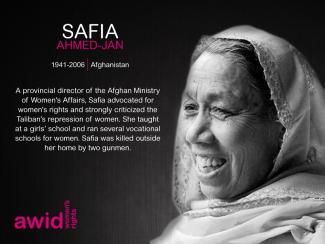
Safia Ahmed-Jan
WITM - Refreshed INFOGRAPHIC 1 FR
Vous êtes-vous déjà demandé à quoi ressemblaient les budgets des organisations féministes ?
En 2023, le budget annuel médian des organisations féministes et de défense des droits des femmes était de 22 000 USD. Cette médiane masque de profondes inégalités : quelques groupes accèdent à des ressources considérables, tandis que la grande majorité survit avec des budgets très limités.
Un examen plus attentif des budgets réels révèle une immense diversité et une grande disparité dans les revenus.
Explorez les données relatives à la taille des budgets féministes
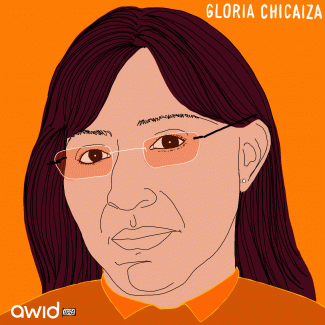
Gloria Chicaiza
Gloria Chicaiza, an Ecuadorian social and environmental activist, was a fervent defender of land and water. She defied the status quo, fighting against a model of development based on extraction and worked tirelessly for ecological justice and the rights of communities affected by mining.
In diverse areas of Ecuador, Gloria was part of resistance actions in favour of protecting the ecosystem. With passion and dedication, Gloria supported the indigenous and environmental movement, its communities and organizations who oppose mining projects and protect their territories and collective life projects. She spoke out, in local and international foras, against the criminalization of dissent and resistance, the pressure and violence being enacted against community activists, in particular, women human rights defenders and in support of community led efforts for food sovereignty and sustainability.
She was the Mining Justice Coordinator at Acción Ecológica, member of the Latin American Network of Women Defenders of the Social and Environmental Rights and a Board member at the Observatory of Mining Conflicts of Latin America.
In October 2010, Gloria was accused by the mining company Curimining / Salazar Resources S.A. (with Headquarters in Vancouver, Canada) of sponsoring an act of terrorism, sabotage and illegal association to commit a crime. Acción Ecológica believed this to be “in retaliation for her work of denouncing the impacts of mining activities in the country.”
In 2014, Gloria supported the coordination of a delegation to the UN COP 20 Dialogue on Climate Change. The group consisted of 25 Indigenous women from Latin America.
Gloria passed away due to complications from a lung transplant on December 28, 2019. She is remembered for her resistance and tireless work.
"The fastest way to achieve sustainability is still resistance." - Gloria Chicaiza (2010 interview)
Tributes:
“Para GLORIA. GLORIA Agua. GLORIA Tierra. GLORIA Madre. GLORIA Revolución. GLORIA Hermana. GLORIA Cielo. GLORIAmiga. GLORIAstral. Thank you for weaving us together.” -Liliana Gutierrez
“Thank you Glorita, for sustaining hope, for keeping the fabric strong, for connecting the community, for the united hands, for solidarity, thank you Glorita for standing with us in the most difficult moments. Thank you for teaching us that throughout life, nobody gets tired.” (Chakana News)
“Gloria Chicaiza cherished and flourished in being one of many. And as humble as she was, she had an uncanny ability to lead and maintain a steady and thunderous beat, a life-affirming pulse that guided, mobilized, and inspired communities and networks in the protection of Mother Earth. She denounced all forms of violence against cuerpos-territorios. She endorsed el buen vivir.” - Gabriela Jiménez, Latin America Partnerships Coordinator, KAIROS
“Thank you Gloria Chicaiza from infinity we are sure that you will continue to support our struggle. You who continued to struggle with us despite your failing health. You will live on in the forests and the water that you defended with such courage. You will live on in our hearts.”- The community of Intag in Ecuador
Body
¿Cómo se originó este proyecto?
Pensamos que la economía, el mercado, el sistema financiero y las premisas sobre las que se basan son todas áreas fundamentales para la lucha feminista.
Por eso, nuestra visión de una economía justa va más allá de promover los derechos y el empoderamiento de las mujeres en una economía de mercado, sino que busca evaluar el rol que juegan las opresiones de género en dar forma al modelo económico y ver como podemos transformarlo para garantizar la justicia de género y económica.
El proceso
No estamos comenzando de cero ni estamos solas en nuestro intento de presentar propuestas feministas para una economía justa. Muchas de nuestras propuestas ya han sido presentadas o existen en la práctica de las diversas comunidades que confrontan y desafían a los sistemas económicos dominantes basados en el mercado y el crecimiento.
También somos concientes de las limitaciones que algunas alternativas presentan para abordar las injusticias del actual sistema capitalista a escala global. No siempre las propuestas a nivel micro son la respuesta a los problemas macro, si bien representan espacios importantes de resistencia y construcción de movimientos.
Metas
Sin embargo, las alternativas feministas para una economía justa son fundamentales para socavar el sistema y para aprender a generar cambios transformadores y sistémicos. No podemos presumir de ofrecer un relato exhaustivo ni completo acerca de cómo crear un modelo económico feminista justo, o varios modelos de esa clase. Lo que sí podemos hacer es recoger elementos de diálogos con otros movimientos (sindicales, ambientales, rurales y de campesinxs) para formular propuestas que nos permitan acercanos a esa visión.
¿Qué queremos cambiar?
El modelo neoliberal que dirige la economía global ha demostrado una y otra vez su incapacidad para hacer frente a las causas estructurales de la pobreza, las desigualdades y la exclusión. Lo que en realidad ha hecho el neoliberalismo ha sido contribuir a crear y exacerbar esas injusticias.
En estas últimas tres décadas, las políticas dominantes para el desarrollo se han caracterizado por la globalización, liberalización, privatizaciones, financialización y ayudas condicionadas, y han destrozado los medios de vida de la población. El recorrido de estas políticas también ha estado marcado por la profundización de desigualdades, las injusticias con marca de género y la destrucción ambiental que el mundo ya no puede continuar soportando.
Hay quienes no dudan en sostener que el crecimiento económico, que debe ser facilitado dando plena libertad a las grandes corporaciones y empresas, puede generar y sostener una una marea alta que (con el tiempo) levante todos los barcos.
Sin embargo, la noción de desarrollo que ha prevalecido durante las últimas décadas, construida sobre la premisa de un crecimiento económico ilimitado, está atravesando una crisis ideológica.
El mito del crecimiento económico como panacea para todos nuestros problemas está perdiendo cada vez más prestigio.
Ver también
Snippet FEA Georgia this is only the beginning (FR)
Géorgie
Syndicat Réseau Solidarité
ON NE FAIT QUE
COMMENCER
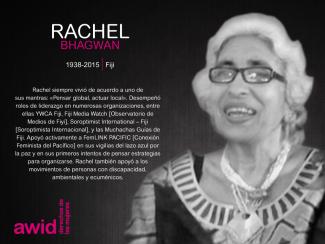
Rachel Bhagwan
Snippet - COP30 - Links
$2.7 trillion for the military. $300 billion for climate justice. We're here to flip the script.
Get started with these resources.
COP30 Political Education Toolbox Play the Climate Justice Organizing Deckgame
Read the Feminist Economic Alternatives Brief Download the Climate Justice Zine
Lorena Borjas
Lorena Borjas, una mujer trans latina y activista, vivía y trabajaba en el barrio de Jackson Heights de Queens, en la ciudad de Nueva York. En esas calles, cuidó de su comunidad durante años, defendiendo los derechos de las personas trans e inmigrantes, apoyando a lxs sobrevivientes del tráfico humano y del abuso, y haciendo campaña por los derechos de lxs trabajadorxs sexuales y de las personas que viven con VIH y SIDA.
Lorena era fuerte e incansable en su lucha por apoyar, defender y proteger a quienes son más marginalizadxs y discriminadxs por la transfobia, la misoginia y el racismo.
«Ella nos empujaba a brillar auténticamente, a convertirnos en un grito de subversión que dice “Aquí estoy, y merezco felicidad también”.» - Cecilia Gentili, activista trans amiga de Lorena
Luego de haber enfrentado ella misma numerosos traumas y dificultades como mujer trans inmigrante y víctima de tráfico humano, recabó conocimientos y memoria emocional de la fuente de sus propias experiencias para ayudar a construir y fortalecer la comunidad de la cual era parte, y que era parte de ella. Algunas de las formas en que llevó esto a cabo fue organizando y movilizando apoyo, que abarcaba desde proveer preservativos y conectar a las mujeres trans con distintos servicios sociales, hasta armar una clínica para el testeo de VIH en su propia casa.
«Era un alma tan bella que ayudaba a otrxs, aun cuando su propio camino era difícil y doloroso como inmigrante, como inmigrante trans. Creía que la comunidad trans necesitaba amor, aceptación, y compasión, y lo daba todo.» - Luchia Dragosh, supervisora de producción de QPTV de un documental sobre Lorena
En sus más de 25 años de activismo, también fundó con Chase Strangio (abogadx y activista por los derechos trans) el Lorena Borjas Community Fund. Este fondo ayuda a lxs diferentes integrantes de su comunidad (y en especial a las personas trans) que lidian con problemas de inmigración, para evitar el ciclo de arresto-cárcel-deportación.
Lorena falleció en marzo de 2020 por complicaciones derivadas del COVID-19.
Su enorme y hermoso legado será llevado adelante a través de las calles de Queens por la red y la comunidad que ella ayudó a crear.
« Continuaremos su trabajo desde donde ella lo dejó, un trabajo que es esencial para el bienestar de “mis pájaras”, como llamaba Lorena a las chicas trans de Queens que protegía bajo su ala.» - Cecilia Gentili
Tributos:
«Lorena nos trajo luz, cuando atravesábamos tiempos muy oscuros aquí en Nueva York. Nos trajo luz cuando tuvimos que enfrentar la epidemia del crack, cuando tuvimos que enfrentar la crisis del SIDA, cuando tuvimos que enfrentar los cambios en las políticas de inmigración.» - Cristina Herrera, fundadora y CEO de Translatina Network y amiga de Lorena
«Lorena ha hecho más que nadie que yo conozca para arrojar luz sobre la epidemia del tráfico en las comunidades transgénero y para ayudar a otras mujeres trans a escapar de la explotación.» - Lynly Egyes, representante de Borjas en nombre del Transgender Law Center
Mira un documental sobre Lorena Borjas (solo en inglés)
Lee un artículo publicado en The New Yorker sobre Lorena Borjas (solo en inglés)
Lee una nota de opinión de Cecilia Gentili publicada en The New York Times (solo en inglés)

Agroécologie et souveraineté alimentaire
Le contexte
La recherche de moyens alternatifs de production alimentaire fondés sur la durabilité environnementale gagne du terrain dans toutes les régions du monde. Cette quête mondiale présente une caractéristique centrale : la nécessité de mobiliser les populations rurales, en particulier les femmes, tenant compte de leurs priorités et de leurs connaissances locales par le truchement de l’agroécologie.
Définition
L’agroécologie est une façon de pratiquer l'agriculture ou de faire appel aux technologies qui ne nuit pas à l'environnement. Cette approche propose de rompre avec le modèle de développement rural hégémonique reposant sur les grandes exploitations et la monoculture qui profitent essentiellement aux entreprises agricoles et renforcent l'exclusion sociale.
Dans le contexte de l'agriculture familiale, l'agroécologie représente une forme de résistance au modèle de développement actuel et aux problèmes sociaux, culturels, environnementaux et économiques que ce modèle implique. L’agroécologie se pose en alternative face au manque d'autonomie financière des agriculteur-trice-s et symbolise une résistance face au modèle d'agroentreprises actuel.
Perspective féministe
Il se pourrait que les efforts uniquement axés sur l'agroécologie ne suffisent pas à résoudre tous les problèmes de la marginalisation et de l'invisibilité des femmes. Il est alors crucial d’adopter une perspective féministe afin d'analyser les normes associées à la notion de famille telle qu'actuellement constituée en tant qu'institution parfaite, ainsi que les normes relatives à la condition de subordination des femmes.
Plus simplement, il importe d'inclure une réflexion sur les rôles de genre socialement construits pour faire avancer le potentiel émancipateur de l'agroécologie dans ce débat.

Pour en savoir plus sur cette proposition :
- Agroecology: Exploring opportunities for women’s empowerment based on experiences from Brazil (Agroécologie : explorer les possibilités d'autonomisation des femmes à partir d’expériences menées au Brésil), AWID et ActionAid, 2011 (article en anglais).
- Semeuses de luttes et d'espoirs : Pour le féminisme et la souveraineté alimentaire! par La Via Campesina. Ce document relate des échanges de la IVe Assemblée des femmes de la Via Campesina, où l’on a discuté de la crise du capitalisme et des défis liés à la construction d’un féminisme rural et ouvrier.
Snippet FEA collaborator and allies Photo 1 (EN)
Yolanda Ordaz
Snippet - COP30 - Global Day of Action - EN
Global Day of Action
Movements marching globally for climate justice.
📅 Saturday, November 15, 2025
📍 Multiple Locations