Confronting Extractivism & Corporate Power

Women human rights defenders (WHRDs) worldwide defend their lands, livelihoods and communities from extractive industries and corporate power. They stand against powerful economic and political interests driving land theft, displacement of communities, loss of livelihoods, and environmental degradation.


Why resist extractive industries?

Extractivism is an economic and political model of development that commodifies nature and prioritizes profit over human rights and the environment. Rooted in colonial history, it reinforces social and economic inequalities locally and globally. Often, Black, rural and Indigenous women are the most affected by extractivism, and are largely excluded from decision-making. Defying these patriarchal and neo-colonial forces, women rise in defense of rights, lands, people and nature.

Critical risks and gender-specific violence

WHRDs confronting extractive industries experience a range of risks, threats and violations, including criminalization, stigmatization, violence and intimidation.  Their stories reveal a strong aspect of gendered and sexualized violence. Perpetrators include state and local authorities, corporations, police, military, paramilitary and private security forces, and at times their own communities.

Acting together

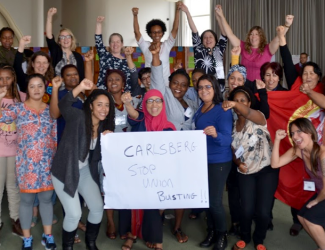
AWID and the Women Human Rights Defenders International Coalition (WHRD-IC) are pleased to announce “Women Human Rights Defenders Confronting Extractivism and Corporate Power”; a cross-regional research project documenting the lived experiences of WHRDs from Asia, Africa and Latin America.

We encourage activists, members of social movements, organized civil society, donors and policy makers to read and use these products for advocacy, education and inspiration.

Share your experience and questions!

Tell us how you are using the resources on WHRDs Confronting extractivism and corporate power.

◾️ How can these resources support your activism and advocacy?

◾️ What additional information or knowledge do you need to make the best use of these resources?

Share your feedback


Thank you!

AWID acknowledges with gratitude the invaluable input of every Woman Human Rights Defender who participated in this project. This project was made possible thanks to your willingness to generously and openly share your experiences and learnings. Your courage, creativity and resilience is an inspiration for us all. Thank you!

Related Content

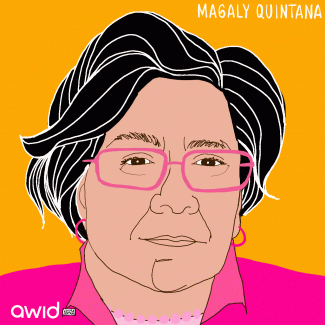
Magaly Quintana

Magaly Quintana was known by many in Nicaragua as ‘La Maga’ (meaning wizard). She was a feminist historian, activist, and an unyielding defender of women’s rights demanding justice for the victims of femicide.

Magaly was committed to documenting and building statistics on women and girls who were killed as a result of sexual violence in the country. 

“She rebuilt the life of each one, of their families, to show those lives that had been torn away.” - Dora María Téllez

Magaly also criticized the government for reforming Law 779 addressing violence against women. A product of the hard work of Nicaraguan women’s movements, this law included important provisions to criminalize femicide before its reform. She argued that legislative reforms weakened the law and limited the definition of femicides to homicides, as a result invisibilizing violent crimes against women.

Magaly’s feminist organizing began in the early 1980s. She was the director of Catholic Women for the Right to Choose, advocating for the right to therapeutic abortion after it was banned in 2006. In 2018, she supported the protests against Daniel Ortega’s government.

Magaly was born in May 1952 and passed away in May 2019.

“See you later, my dearest Magaly Quintana. Thanks so much, thanks for your legacy. We’ll see you again, as strong and powerful as ever.”- Erika Guevara Rosas (American Director of Amnesty International)
2024: Renforcement des mouvements, soutenir le changement

La montée de la droite dans nombre de pays et le déluge de coupes dans les financements frappent durement la société civile de la Majorité mondiale ; le génocide en cours à Gaza, l’intensification des conflits violents au Soudan, la crise climatique à de nombreux endroits de notre planète : nous faisons face à des fascismes qui reviennent en force et un ordre mondial de l’impunité.

Téléchargez le rapport annuel 2024


Renforcement des mouvements, soutenir le changement RAPPORT ANNUEL

Ensemble, nous pouvons construire un monde où la justice, la libération et la bienveillance ne sont pas des aspirations, mais des réalités.

Téléchargez le rapport annuel 2024

Membership why page - Loyiso Lindani

Tengo la convicción de que las mujeres empoderadas dotan de empoderamiento a otras mujeres, y es por ello que la he pasado tan bien como afiliada de AWID. Todo lo que sé y lo que entiendo de feminismo e interseccionalidad se ha ampliado gracias a los contactos que tuve como parte del Equipo de la Calle de la Comunidad AWID. Espero que más mujeres se sumen y compartan temas e ideas que ayuden a otras mujeres. - Loyiso Lindani, Sudáfrica.

Snippet FEA A Caring Economy (ES)

Economías de

CUIDADOS

Feministas Centrando
el Cuidado en la Economía

¿Qué pasaría si volviéramos a imaginar formas de cuidar a nuestras comunidades?

¿Y si la economía no estaría enfocada en la ganancia de una pequeña élite sino en el cuidado de nuestro bienestar individual y colectivo, y de la Naturaleza?

Estas historias tratan de la construcción de comunidades de cuidado con y para las personas que históricamente y actualmente están excluidas, privadas de sus derechos y deshumanizadas tanto por el Estado como por la sociedad.

Estas son las historias de las feministas que centran el cuidado en la economía.

Janet Benshoof

Janet Benshoof fue una abogada de derechos humanos de los Estados Unidos, y defensora de la igualdad de las mujeres y de los derechos sexuales y reproductivos.

Hizo campaña para ampliar el acceso a los anticonceptivos y al aborto en todo el mundo, y luchó contra las sentencias antiaborto y en el territorio estadounidense de Guam. Fue arrestada en 1990 por oponerse a la ley de aborto más restrictiva de su país. Sin embargo, obtuvo una medida cautelar en el tribunal local de Guam que bloqueó la ley y, finalmente, ganó en el Tribunal de Apelaciones del Noveno Circuito, que llevó a la anulación de la ley para siempre.

"Las mujeres de Guam están en una situación muy trágica. No tengo intención de callarme al respecto." - Janet Benshoof para la revista People.

Janet sentó precedentes jurídicos históricos, entre ellos, la aprobación de la anticoncepción de emergencia por parte de la Administración de Alimentos y Medicamentos de los Estados Unidos, así como la aplicación del derecho internacional para garantizar los derechos de las víctimas de violación en el Tribunal Superior de Iraq, durante el procesamiento de los crímenes de guerra de la época de Saddam.

Janet fue Presidenta y fundadora del Centro de Justicia Global, y fundadora también del Centro de Derechos Reproductivos, la primera organización internacional de derechos humanos del mundo centrada en la elección y la equidad reproductiva. Durante 15 años se desempeñó como directora del Proyecto de Derechos Reproductivos de la Unión Americana de Libertades Civiles, donde encabezó litigios que dieron forma a las leyes constitucionales de los Estados Unidos sobre igualdad de género, libertad de expresión y derechos reproductivos. 

"Janet era conocida por su mente jurídica brillante, su agudo sentido del humor y su coraje ante la injusticia". - Anthony D. Romero

Nombrada una de las "100 Abogadas más influyentes de América" por el National Law Journal, Janet recibió numerosos premios y honores.

Nació en mayo de 1947 y falleció en diciembre de 2017. 

Isabel Marler

Biography

Isabel es una feminista del Reino Unido con más de 10 años de experiencia en respuestas feministas a los fascismos, los fundamentalismos y las tendencias antiderechos. En AWID, su trabajo se centra en la construcción de conocimientos, y ha incluido la conducción de la producción de la serie Derechos en riesgo en colaboración con el Observatorio de la Universalidad de los Derechos. Posee una maestría en Estudios de Género de la Escuela de Estudios Orientales y Africanos (SOAS) y, con anterioridad, trabajó con Women Living Under Muslim Laws (Mujeres que viven bajo leyes musulmanas). Es una apasionada del trabajo entre movimientos, la construcción de conocimientos centrados en los movimientos y el uso de la expresión creativa para desmantelar los sistemas de opresión. Fuera del trabajo, Isabel se mantiene activa en distintos espacios dedicados a la justicia para las personas con discapacidad para el cuidado colectivo, el aprendizaje y la incidencia política.

Position
Responsable, Promoción de los Derechos Universales y la Justicia
Add to stories
Off

Snippet - Blog post Quote_EN

"We believe that this is the time for us to continue to organize from a place of solidarity, hope and radical imaginations."

- Beijing+30 & CSW: Feminist meaning-making at a time of polycrisis

Read here

Snippet FEA Carmen Silva (FR)

Ocupação 9 de Julho

Lorsque vous arriverez au centre-ville de São Paulo, vous verrez le bâtiment Ocupação 9 de Julho (Occupation de l’Avenue du 9 Juillet), un espace culturel et un site important dans la lutte pour le logement social.

C'est le travail du Mouvement des Travailleur·euses Sans-Abri (Movimento dos Sem-Teto do Centro, MSTC), un mouvement de plus de 2000 personnes qui agit dans le centre-ville et convertit les espaces abandonnés en logements pour les travailleur·euses à faible revenu, les enfants, femmes, adultes, personnes âgées, migrant·e·s et réfugié·e·s. Dans ce bâtiment en particulier, 122 familles sont nourries et logées.

Juli Dugdale

Juli Dugdale était une féministe australienne pratiquant un leadership intergénérationnel ancré dans les principes du féminisme, de l’inclusion et de l’égalité. Elle était une leader, une pair et une encadrante pour de nombreuses femmes, et particulièrement des jeunes femmes du monde entier.

Juli a été une membre dévouée de l’équipe de l’Association des jeunes femmes chrétiennes (YWCA), bénévole et fervente défenseure du leadership des jeunes femmes pendant plus de 30 ans.

Elle assurait un lien très fort entre le mouvement australien du YWCA et le bureau international. Sa confiance dans les capacités de leadership des jeunes femmes a entre autres donné lieu à un partenariat pluriannuel avec le ministère australien des Affaires étrangères et du Commerce, de même qu’à la rédaction du manuel Rise Up, un guide mondial pour le leadership transformationnel des jeunes femmes, lancé en 2018.

Juli est décédée à Genève, en Suisse, le 12 août 2019.


Hommages :

« Pour celles et ceux qui ont travaillé avec Juli, ce fut un privilège. Pour celles et ceux qui n’ont pas travaillé avec elle, sachez que son héritage perdure dans le travail que nous faisons tous les jours, et dans la mission du mouvement des YWCA. » – YWCA Australie

« Juli Dugdale occupera toujours une place privilégiée dans le cœur de nombreuses personnes du mouvement du YWCA, particulièrement ici en Aotearoa et dans le Pacifique. Juli entretenait une relation particulière avec le Pacifique, et soutenait de manière remarquable les jeunes femmes de la région. De nature humble, aimable, aimante, affectueuse, dévouée et passionnée, elle avait un cœur généreux. Elle incarnait la vision du « leadership transformationnel » du YWCA avec une vision et une clairvoyance extraordinaires, et a de plus aidé à renforcer les capacités de générations de jeunes femmes leaders dans le monde. » – YWCA Nouvelle-Zélande

Marianne Mesfin Asfaw

Biography

Marianne Mesfin Asfaw est une féministe panafricaine qui se consacre à la justice sociale et à la construction communautaire. Elle est titulaire d'une licence en études de genre et en relations internationales de l'Université de la Colombie-Britannique (UBC) et d'un master en études de genre et de droit de l'Université SOAS de Londres. Auparavant, elle travaillait dans l'administration universitaire et le soutien aux étudiant·e·s internationaux·ales, de même qu’à titre de chercheuse et d’animatrice dans des espaces féministes à but non lucratif. Elle a également travaillé et été bénévole auprès d'organisations non gouvernementales, notamment Plan International, dans des rôles administratifs. Avant d'occuper son poste actuel, elle a travaillé dans le soutien logistique et administratif à l'AWID. Elle est originaire d'Éthiopie, a grandi au Rwanda et est actuellement basée à Tkaronto/Toronto, au Canada. Elle aime lire, voyager et passer du temps avec sa famille et ses ami·e·s. Pendant les mois les plus chauds, on peut la trouver en train de se promener dans des quartiers familiers à la recherche de cafés et de librairies obscurs dans lesquels flâner.

Position
Coordonnatrice de l’Initiative de Construction d’Économies Féministes
Add to stories
Off

Snippet - CSW69 - OURs & friends - EN

OURs & friends at the Feminist Solidarity Space

✉️ By invitation only

📅 Tuesday, March 11, 2025
🕒 2.00-4.00pm EST

🏢 Chef's Kitchen Loft with Terrace, 216 East 45th St 13th Floor New York

Organizer: Observatory on the Universality of Rights (OURs) Consortium

Snippet FEA ASOM (EN)

Association of Afro-Descendant Women of the Northern Cauca

Black women community organizing in the Cauca Valley in Colombia can be traced back to the country's colonial past, which is marked by the racism, patriarchy, and capitalism that sustained slavery as a means to exploit the region’s rich soils. These organizers are the heroines of a broad movement for black autonomy - one that fights for the sustainable use of the region's forests and natural resources as vital to their culture and livelihood.

For 25 years, the Association of Afro-Descendant Women of the Northern Cauca (Asociación de Mujeres Afrodescendientes del Norte del Cauca, ASOM) has been dedicated to bringing power to Afro-Colombian women’s organizing in northern Cauca.

They became established in 1997 as a response to ongoing human rights violations, the absence of public policies, inadequate management of natural resources, and the lack of opportunities for women in the territory.

They have forged the struggle to secure ethnic-territorial rights, to end violence against women, and gain recognition of women’s roles change-making peace-building in Colombia.

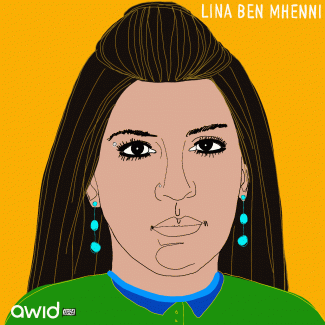
Lina Ben Mhenni

“I want to tell all Tunisians: We have to unite to say no to censorship and opinion trials.” - Lina Ben Mhenni (2013 interview)

Lina Ben Mhenni was a Tunisian blogger, activist and linguistics lecturer. She was vocal against internet censorship, defended the freedom of expression and was an advocate for women’s and human rights. Lina also fought for the release of students arrested under former President Zine El Abidine. 

“It’s true that information and the internet are important but being on the ground is crucial for a revolution. Some people here in Tunisia think that change can occur just by clicking like on the internet. I believe you have to be active on the ground. And of course, join actions on the field with the action on the web.” - Lina Ben Mhenni (Interview in POCIT)

In 2010, she co-organized a protest that challenged the government suppression of media and internet censorship. Lina was widely known for her blog “A Tunisian Girl” and recognized for her work during the Tunisian revolution in 2011. In her blog, she reported on the news from the uprising, shared images documenting protests and was among the few voices who spoke about the killings and crackdown on protesters in Sidi Bouzid. Lina blogged using her real name instead of a pseudonym to protect her identity, one of only a few bloggers to do so. 

“Our freedom of expression is in real danger. I am afraid that we are losing the unique fruits of the revolution: the disappearance of fear and our freedom of speech. We have to keep on fighting to protect and preserve this right.” — Lina Ben Mhenni (2013 interview)

Lina was only 36 years old when she passed away on 27 January 2020, as a result of complications from an autoimmune disease. 


"Freedom, better education and health - that's all we wanted. When we failed, she pushed us." Lina’s school teacher Hala.


Claudia Montserrat Arévalo Alvarado

Biography

Claudia is a feminist psychologist with a Masters degree in Development Equality and Equity. She has been a human rights activist for 30 years, and a women’s rights activist for the last 24.

Claudia works in El Salvador as the co-founder and Executive Director of Asociación Mujeres Transformando. For the past 16 years she has defended labour rights of women working within the textile and garment maquila sector. This includes collaborations to draft legislative bills, public policy proposals and research that aim to improve labour conditions for women workers in this sector. She has worked tirelessly to support organizational strengthening and empowerment of women workers in the textile maquilas and those doing embroidery piece-work from home.

She is an active participant in advocacy efforts at the national, regional and international levels to defend and claim labour rights for the working class in the global South from a feminist, anti-capitalist and anti-patriarchy perspective and class and gender awareness raising. She is a board member with the Spotlight Initiative and its national reference group. She is also part of UN Women’s Civic Society Advisory Group. 

Position
Co-President
Add to stories
Off

Snippet - CSW69 On anti-rights resistance - ES

Sobre la resistencia contra las fuerzas antiderechos

Snippet FEA Mano Cambiada (ES)

Two hands shaking - lighter skinned hand with a yellow shirt and darker skinned hand with a burgundy shirt. The words "Mano cambiada" are written over in cursive.

MANO CAMBIADA

Término de las comunidades negras del Norte del Cauca para la minga, el trabajo colaborativo en fincas, basado en el apoyo mutuo y la solidaridad.