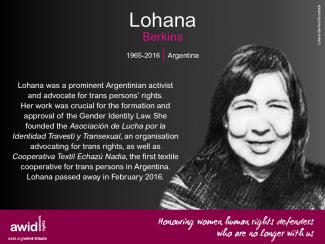
Lohana Berkins
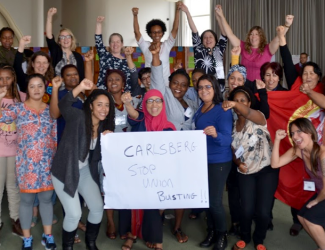
Women human rights defenders (WHRDs) worldwide defend their lands, livelihoods and communities from extractive industries and corporate power. They stand against powerful economic and political interests driving land theft, displacement of communities, loss of livelihoods, and environmental degradation.
Extractivism is an economic and political model of development that commodifies nature and prioritizes profit over human rights and the environment. Rooted in colonial history, it reinforces social and economic inequalities locally and globally. Often, Black, rural and Indigenous women are the most affected by extractivism, and are largely excluded from decision-making. Defying these patriarchal and neo-colonial forces, women rise in defense of rights, lands, people and nature.
WHRDs confronting extractive industries experience a range of risks, threats and violations, including criminalization, stigmatization, violence and intimidation. Their stories reveal a strong aspect of gendered and sexualized violence. Perpetrators include state and local authorities, corporations, police, military, paramilitary and private security forces, and at times their own communities.
AWID and the Women Human Rights Defenders International Coalition (WHRD-IC) are pleased to announce “Women Human Rights Defenders Confronting Extractivism and Corporate Power”; a cross-regional research project documenting the lived experiences of WHRDs from Asia, Africa and Latin America.
"Women Human Rights Defenders confronting extractive industries: an overview of critical risks and Human Rights obligations" is a policy report with a gender perspective. It analyses forms of violations and types of perpetrators, quotes relevant human rights obligations and includes policy recommendations to states, corporations, civil society and donors.
"Weaving resistance through action: Strategies of Women Human Rights Defenders confronting extractive industries" is a practical guide outlining creative and deliberate forms of action, successful tactics and inspiring stories of resistance.
The video “Defending people and planet: Women confronting extractive industries” puts courageous WHRDs from Africa, Asia, and Latin America in the spotlight. They share their struggles for land and life, and speak to the risks and challenges they face in their activism.
Challenging corporate power: Struggles for women’s rights, economic and gender justice is a research paper outlining the impacts of corporate power and offering insights into strategies of resistance.
AWID acknowledges with gratitude the invaluable input of every Woman Human Rights Defender who participated in this project. This project was made possible thanks to your willingness to generously and openly share your experiences and learnings. Your courage, creativity and resilience is an inspiration for us all. Thank you!
It is a community hub, where one can take courses and train in creative income-generation activities like local hairdressing, cooking and artmaking. Children can also enjoy cultural and educational activities. The MSTC doesn't work alone. It collaborates with institutions and art collectives to produce cultural, athletic and educational experiences, alongside critical access to health care. Since its inception, this participatory project has been led and carried out by mostly women, under the leadership of Afro-Brazilian activist Carmen Silva, who was once a homeless person herself.
سيقدم صندوق الوصول الخاص بنا عددًا محدودًا من المنح الدراسية لتمويل مشاركة النشطاء/ الناشطات الذين/ اللواتي لا يستطيعون القيام بذلك، وليس لديهم/ن علاقات مع الممولين/ات الذين/ اللواتي يمكنهم/ن تغطية مشاركتهم/ن. لذلك إذا كان لديك احتمالات أخرى، يرجى استكشافها. سنبذل قصارى جهدنا لتقديم أكبر عدد ممكن من المنح الدراسية، وسنشارك المزيد من المعلومات حول هذه العملية وكيفية التقديم لاحقًا في أوائل العام 2024.
Jessica is a queer artist- activist from Toronto, Canada, but is currently based in Bulgaria. Jessica has over 15 years experience in the HIV response working at the intersections of gender and HIV with key populations (sex workers, women who use drugs, LGBTQI communities, incarcerated people and of course people living with HIV). Jessica loves movement building and thinking/taking/strategizing about arts-based interventions. One fun project she started in 2013 was LOVE POSITIVE WOMEN that engages over 125 community groups and organizations globally every February 1-14th to celebrate women living with HIV in their communities.
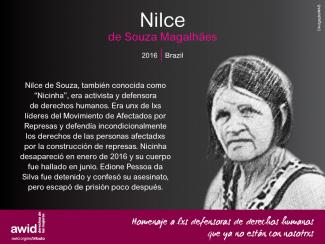
La organización comunitaria de mujeres negras en la región del Norte del Cauca en Colombia se remonta al pasado colonial del país, que está marcado por el racismo, el patriarcado y el capitalismo que sustentaron la esclavitud como un medio para explotar los ricos suelos de la región.
Estas organizadoras son las heroínas de un amplio movimiento por la autonomía negra, que lucha por el uso sostenible de los bosques y los recursos naturales de la región como elementos vitales para su cultura y sustento.
Durante 25 años, la Asociación de Mujeres Afrodescendientes del Norte del Cauca (ASOM) se ha dedicado a impulsar la organización de mujeres afrocolombianas en el Norte del Cauca. Se establecieron en 1997 como respuesta a las continuas violaciones de derechos humanos, la ausencia de políticas públicas, el manejo inadecuado de los recursos naturales y la falta de oportunidades para las mujeres en el territorio.
Han forjado la lucha para asegurar los derechos étnico-territoriales, para poner fin a la violencia contra las mujeres y obtener el reconocimiento del papel de las mujeres en la construcción de la paz en Colombia.
نعم من فضلك. لقد تغير العالم منذ عام 2021 ونحن ندعوك لتقديم مقترح يعكس واقعك وأولوياتك الحالية.
Ȃurea Mouzinho es una activista feminista por la justicia económica de Luanda, Angola, que tiene una carrera de diez años en investigación, otorgamiento de subvenciones, incidencia y construcción de movimientos por los derechos de las mujeres y la justicia económica en toda África y en el Sur global. Actualmente es Directora de Programa para África en Thousand Currents, y es parte del consejo editorial de Feminist Africa. También integra Ondjango Feminista, una colectiva feminista que cofundó en 2016. Recientemente ha sido madre de un niño de Géminis, y disfruta los días tranquilos con su joven familia y los largos paseos por la playa. Ocasionalmente publica tweets con el nombre de usuarie @kitondowe.
.
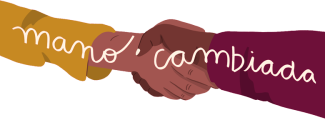
(« main échangée »)
Terme des communautés noires du Cauca du Nord pour la minga, le travail collaboratif dans les fermes, basé sur l'entraide et la solidarité.
เราจับตาดูเรื่องนี้และความเสี่ยงอื่นๆอย่างระมัดระวัง และจะนำเสนอข้อมูลด้านสุขภาพและความปลอดภัยที่คลอบคลุมเมื่อมีการเปิดให้ลงทะเบียน เพื่อให้คุณสามารถตัดสินใจได้อย่างมีข้อมูล มากกว่านั้นการจัดประชุมแบบสองรูปแบบ(ออนไลน์และกายภาพ)ถูกออกแบบให้ให้เกิดการมีส่วนร่วมอย่างมีความหมายสำหรับผู้เข้าร่วมที่เลือกจะไม่เดินทาง หรือผู้เข้าร่วมที่ไม่สามารถเดินทางได้
A nomad of cultures, born in Hong Kong, rooted in Turkish-Pakistani heritage, Fatima’s love for narratives - both in reading and co-creating them - fueled her passion for communications activism. Supported by her education in journalism, Fatima has worked for 7 years in digital and media communications fields with NGOs that provide education opportunities and legal aid to refugee and asylum seekers, as well as with the Muslim feminist movement which applies feminist and rights-based lenses in understanding and searching for equality and justice within Muslim legal tradition. She is a regular op-ed writer on feminist issues in the Global South.
Through storytelling in this hyper-digital age of social media, Fatima continues to collaborate with community organizers and grassroots activists to create audiovisual content with the aim to cultivate bridges of understanding towards collective liberation and decolonization. On days when she’s not working, she intently watches independent feminist films coming from Iran, Morocco and Pakistan and on other days, she performs spoken word poetry with her comrades in Kuala Lumpur.
|
383 people |
Co-create the The 15th AWID International Forum in Bangkok, Thailand.
Nana es una organizadora feminista e investigadora en derechos reproductivos y políticas demográficas que reside en Egipto. Es miembro de RESURJ (organización feminista por la justicia sexual y reproductiva), del Órgano Asesor del Proyecto A del Líbano y de la Comisión de la Comunidad de Mama Cash. Nana tiene una maestría en Salud Pública del Instituto KIT y la Universidad Vrije de Ámsterdam. En su trabajo, da seguimiento y contextualiza las políticas demográficas nacionales, al tiempo que reúne información para abordar la eugenesia moderna, las ayudas internacionales de carácter regresivo y el autoritarismo. Anteriormente, formó parte de la Fundación de Ginebra para la Educación y la Investigación Médica, la Iniciativa Egipcia para los Derechos Personales y el Colectivo Feminista Ikhtyar de El Cairo.