Jean-Marc Ferré | Flickr (CC BY-NC-ND 2.0)
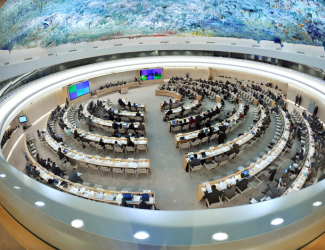
A general view of participants at the 16th session of the Human Rights Council in Geneva, Switzerland.

Human Rights Council (HRC)

The Human Rights Council (HRC) is the key intergovernmental body within the United Nations system responsible for the promotion and protection of all human rights around the globe. It holds three regular sessions a year: in March, June and September. The Office of the UN High Commissioner for Human Rights (OHCHR) is the secretariat for the HRC.

The HRC works by:

  • Debating and passing resolutions on global human rights issues and human rights situations in particular countries

  • Examining complaints from victims of human rights violations or activist organizations on behalf of victims of human rights violations

  • Appointing independent experts (known as “Special Procedures”) to review human rights violations in specific countries and examine and further global human rights issues

  • Engaging in discussions with experts and governments on human rights issues

  • Assessing the human rights records of all UN Member States every four and a half years through the Universal Periodic Review

Learn more about the HRC


AWID works with feminist, progressive and human rights partners to share key knowledge, convene civil society dialogues and events, and influence negotiations and outcomes of the session.

With our partners, our work will:

◾️ Monitor, track and analyze anti-rights actors, discourses and strategies and their impact on resolutions

◾️ Raise awareness of the findings of the 2017 and 2021 OURs Trends Reports.

◾️Support the work of feminist UN experts in the face of backlash and pressure

◾️Advocate for state accountability
 
◾️ Work with feminist movements and civil society organizations to advance rights related to gender and sexuality.
 

Related Content

1. Gather your resources

This section highlights key resources recommended by AWID so you can conduct your own WITM research.

In this section

People needed

  • 1 or more person(s) to lead overall implementation of research methodology and ensure all key pieces are on track (Sections 2-11)
  • 1 or more person(s) to conceptualize the key research objectives and guiding questions
  • 1 or more person(s) to refine and conduct the research methodology, including collecting data
  • 1 or more person(s) to conduct relevant qualitative and quantitative analysis of collected data
  • 1 or more person(s) to document and package research findings for desired audience(s)
  • 1 or more person(s) to serve as an editor to your final products
  • 1 or more person(s) to conduct outreach to spread the word about your survey and advocacy using your research results

Back to top


Potential expenses

  1. Staff and/or consultant salaries
  2. Data analysis software if conducting analysis of large dataset in-house. Options:
    - SPSS
    - Stata
    - R (this is free)
  3. Cost of producing publications and research products
  4. If desired, incentive prize that survey participants can win if they complete the survey
  5. If desired, incentives to offer your advisors

Back to top


Estimated time

  • For research process: 6 to 18 months, depending on size of dataset(s) and staff capacity
  • For advocacy: 1-2 years, as determined by your organizational goals

Back to top


Resources needed

  • List of advisor organizations, donors and activists
  • List of online spaces and events/networks to distribute your survey and present your survey results
  • List of donors, activists, and women’s rights organizations to interview
  • Prepared interview questions
  • List of publication sources to use for desk research

Back to top


Resources available

Online tools

Once you gather these resources, you can estimate the costs for your research using our “Ready to Go? Worksheet”

Back to top


Previous step

Before you begin

Next step

2. Frame your research


Previous step

Before you begin

Next step

2. Frame your research


The Ready to Go? Worksheet helps you estimate resources, staff and budget needed for your research

Download the toolkit in PDF

Pendant combien de temps l’enquête reste-t-elle ouverte?

Elle est ouverte jusqu’à la fin août 2024. Merci d’y répondre avant cette date butoir, afin que vos réponses soient incluses dans l’analyse.

Snippet FEA What Challenges Story 3 (ES)

¿Qué desafíos enfrentan las personas Trans y Travesti en Argentina?

Leticia Eulalia Mary Mukasa- Kikonyogo

Leticia fue una abogada y jueza de Uganda.

Antes de retirarse, ocupó muchas posiciones de alto perfil, como por ejemplo miembrx de la Corte de Apelaciones de Uganda y Presidenta Adjunta de la Corte Suprema de Uganda. Fue la primera mujer ugandesa en ocupar el cargo de Primera Magistrada entre 1973 y 1986, y la primera mujer en ser nombrada jueza de la Corte Suprema en 1986.

Fue una de las primeras mujeres investidas como “Caballero Papal” de la historia de la Iglesia Católica en África. Murió de un paro cardíaco.


Leticia Eulalia Mary Mukasa- Kikonyogo, Uganda

5. Conduct interviews

Interviews produce in-depth information that you cannot easily obtain from surveys. While surveys focuses mainly on quantifiable data and closed questions, interviews allow for expert opinions from activists and donors, and open-ended questions which can provide context to survey data results.

In this section

General tips

1. Before conducting your interviews

Send the interviewees a concept note with your objectives for the interview and for your overall research, as well as a list of questions.

This allows them to prepare answers for more complicated questions and look up information that they may not have immediately on hand.

2. During the interviews

  • You can conduct interviews while your survey is running, in order to save time.
  • Try to keep your interviews as consistent as possible in order to facilitate systematic analysis of results. This means asking the same questions. Coding identical responses to each question will allow you to uncover hidden trends.
  • The interviews can also be used to flesh out some of the survey findings

Do not base your questions on assumptions about your interviewees’ knowledge.
Instead, first clarify what they know – this will reveal information as well.

  • DON’T: “Given the current funding trends in Switzerland, do you know of any opportunities for collaboration? This question assumes that the interviewee knows current funding trends and that their understanding of funding trends matches yours.
  • DO: First ask “What is your understanding of current funding trends in Switzerland?”, followed by “Do you know of any opportunities for collaboration?” This will reveal what their understanding is, giving you even more information than the first question.

Back to top


Specialized interviews

1. Donor interviews

Interviews with donors will allow you to build deeper relationships with them, which will be useful when you conduct post-research advocacy. They will also provide you with deeper insight into funders’ decision-making processes.

Suggested topics of focus for donor interviews:

  • What are their funding priorities? Why and how did they select those priorities? For example, why do they choose project-funding over core support or vice versa?
  • What are annual amounts allocated to the advancement of women’s human rights? This will strengthen overall reliability of data collected.
  • Have they noticed any funding trends, and what do they believe are the origins and politics behind these trends?
  • What is their theory of social change and how does that impact their relationships with women’s rights organizations?
View samples of donor interviews

2. Women’s rights organizations and activists interviews

Interviews with women’s rights organizations and activists will provide you with insight into their on-the-ground realities. Again, these interviews will allow you to build deeper relationships that can be incorporated into your advocacy, particularly to encourage collaboration between donors and activists.

Suggested topics of focus for women’s rights organizations and activist interviews:

  • Long-term funding priority trends noted by women’s organizations and their impact.
  • Successful examples of feminist and collaborative resource mobilization strategies that build strong and complementary movements.
  • “Making the case” for why it is important to support women’s organizations and organizing.
  • How different actors understand the social change process and their role in advancing/achieving gender equality and women’s rights.
View samples of women’s organizations and activists interviews

Back to top


Preliminary findings

Through the course of your WITM research, we recommend analyzing your preliminary findings. Presenting your preliminary findings opens up opportunities to conduct more interviews and get feedback on your research process and initial results. This feedback can be incorporated into your final research.

AWID conducts “WITM convenings” to share preliminary results of survey data and interviews. These gatherings allow participants (activists, women’s rights organizations, and donors) to debate and discuss the results, clarifying the context, creating more ownership amongst members of the movement, and providing more input for final research.

For example, the Resource Mobilization Hub for Indigenous Women’s Rights at the World Summit on Indigenous Philanthropy was used as a space to debut preliminary results.

See the presentation given at the RMH

Back to top


Previous step

4. Collect and analyze your data

Next step

6. Conduct desk research

Estimated time:

• 1.5 - 3 months

People needed:

• 1 or more research person(s)

Resources needed:

• List of donors and women’s rights organizations and activists to interview
• Prepared interview questions
• Concept Note (You can use the research framing you created in the “Frame your research” section)

Resources available:

• AWID Sample Interview Questions: Donors
• AWID Sample Interview Questions: Activists & Women’s Rights Organizations


Previous step

4. Collect and analyze your data

Next step

6. Conduct desk research


Ready to Go? Worksheet

Download the toolkit in PDF

Snippet - WITM Who should - RU

КОМУ СТОИТ ПРОЙТИ ЭТОТ ОПРОС?

Опрос предназначен для групп, организаций и движений, работающих исключительно или главным образом по вопросам защиты прав женщин, ЛГБТКИ+, гендерной справедливости во всех контекстах, на всех уровнях и во всех регионах. Если одно из этих направлений является основным видом деятельности вашей группы, коллектива, сети или любого другого типа организации – независимо от того, зарегистрирована она или нет, недавно создана или существует уже давно, мы приглашаем вас принять участие в этом опросе.

Girl in a jacket

* На данном этапе мы не ожидаем ответов от частных лиц или женских и феминистских фондов.

Узнайте больше об опросе:
загляните в часто задаваемые вопросы

Snippet FEA Nadia Echazu (FR)

La Coopérative Textile Nadia Echazú porte le nom d'une pionnière dans la lutte pour les droits des personnes trans en Argentine. À bien des égards, le travail de la coopérative célèbre la vie et l'héritage de Nadia Echazú, qui a eu une carrière militante remarquable.

La Coopérative Textile Nadia Echazú porte le nom d'une pionnière dans la lutte pour les droits des personnes trans en Argentine. À bien des égards, le travail de la coopérative célèbre la vie et l'héritage de Nadia Echazú, qui a eu une carrière militante remarquable.

Peu de temps après sa mort, ses collègues militantes ont fondé la coopérative en son nom, pour honorer la marque profonde qu'elle a laissée sur l'activisme trans et travesti en Argentine.

Mona Chemali Khalaf

Mona était économiste et consultante indépendante sur les questions de genre et de développement.

Elle a été professeure d'économie et directrice de l'Institut d'études féminines du monde arabe à l'Université libanaise américaine. Elle est décédée subitement le 6 janvier 2018.

Des amis et d'anciens collègues disent de Mona: « Pour lui rendre hommage, la meilleure chose à faire est de continuer à faire ce qu'elle a commencé: l'égalité de genre, à tout prix. 


Mona Chemali Khalaf, Lebanon
Body

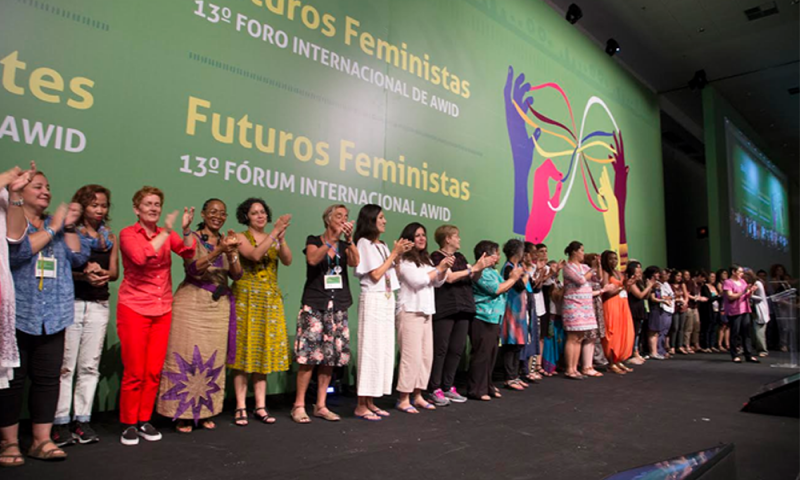
Gracias por participar en la creación de nuestros Futuros Feministas

¡Gracias por haber sido parte del Foro AWID 2016!

AWID agradece enormemente a todxs ustedes que han compartido con nosotrxs estos últimos cuatro días de aprendizaje, celebraciones, ideaciones, sueños y la construcción conjunta de nuestros futuros feministas en el Foro AWID 2016.

Nos sentimos muy inspiradxs, maravilladxs y llenxs de energía con todo el trabajo colectivo que hemos hecho para crear nuestros diversos futuros feministas.

Para más imagen, blogues y recursos:

Visite el sitio del Foro


Conéctate con #AWIDForum

Snippet - WITM To make - PT

Para dar ênfase à complexidade do financiamento de várias formas de organização feminista;

Ursula K Le Guin

Ursula was an American novelist who worked mainly in the genres of fantasy and science fiction.

She found fame with The Left Hand Of Darkness, which imagines a future society where people are ambisexual – they have no fixed sex. It explores the effects of gender and sex in society, and was one of the first major feminist science fiction books. Ursula was inspiring in her subversive and original writing, and also for the themes of feminism and freedom she held so dearly.

In a 1983 address at Mills College in California, she told graduates: “Why should a free woman with a college education either fight Macho-man or serve him? Why should she live her life on his terms? I hope you live without the need to dominate, and without the need to be dominated.”


Ursula K Le Guin, USA

L’économie solidaire

Définition

L'économie solidaire (qui inclut l'économie coopérative et l’économie du don) est un cadre alternatif qui adopte différentes formes dans divers contextes et qui est ouvert au changement continuel.

Ce cadre est fondé sur les principes suivants :

  • la solidarité, l’entraide et la coopération
  • l'équité dans toutes les dimensions
  • le bien-être social
  • la durabilité
  • la démocratie sociale et économique
  • le pluralisme

Dans une économie solidaire, les producteurs mettent en place des processus économiques qui sont intimement liés à leurs réalités, à la préservation de l'environnement et à la coopération mutuelle.

Le contexte

Selon la géographe féministe Yvonne Underhill-Sem, l'économie du don est un système économique dans lequel les biens et les services circulent entre les personnes sans accord explicite de leur valeur, ou sans impliquer de réciprocité ultérieure.

Derrière le don il y a la relation humaine, la bienveillance et l'attention portée à la nurturance* de toute la société, non seulement limitée à soi-même et aux proches. Il s’agit ici de la notion du collectif.

Par exemple, dans la région du Pacifique, cette approche comprend la collecte, la préparation et le tissage de ressources terrestres et marines pour fabriquer des tapis, des ventilateurs, des guirlandes et des objets de cérémonie. Elle comprend également l'élevage du bétail et le stockage des récoltes saisonnières.

Perspective féministe

Pour les femmes, les incitations à s’engager dans des activités économiques sont diverses et multiples, allant de la réalisation d’aspirations de carrière afin de gagner de l'argent pour une vie confortable à long terme, à gagner de l'argent pour joindre les deux bouts, à rembourser une dette ou encore à échapper aux corvées de la vie courante.

Pour s’adapter aux divers environnements au sein desquels les femmes travaillent, le concept d'économie solidaire est en développement permanent et est continuellement discuté et débattu.


Pour en savoir plus sur cette proposition :

Glossaire :

Nurturance : Nourriture et soins émotionnels et physiques donnés à quelqu'un.

Snippet - WITM Survey will remain open - PT

A pesquisa está disponível até 31 de julho de 2024

Participe da pesquisa!