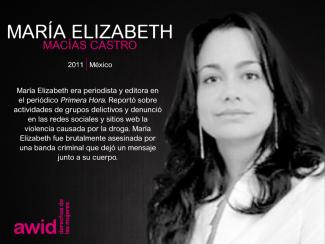
Maria Elizabeth Macias Castro
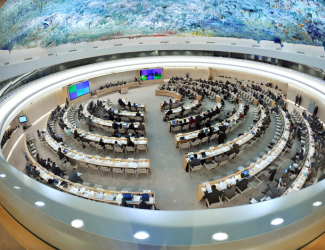
The Human Rights Council (HRC) is the key intergovernmental body within the United Nations system responsible for the promotion and protection of all human rights around the globe. It holds three regular sessions a year: in March, June and September. The Office of the UN High Commissioner for Human Rights (OHCHR) is the secretariat for the HRC.
Debating and passing resolutions on global human rights issues and human rights situations in particular countries
Examining complaints from victims of human rights violations or activist organizations on behalf of victims of human rights violations
Appointing independent experts (known as “Special Procedures”) to review human rights violations in specific countries and examine and further global human rights issues
Engaging in discussions with experts and governments on human rights issues
Assessing the human rights records of all UN Member States every four and a half years through the Universal Periodic Review
AWID works with feminist, progressive and human rights partners to share key knowledge, convene civil society dialogues and events, and influence negotiations and outcomes of the session.
Cada Foro se lleva a cabo en una región diferente, ¡y es hora de que el Foro de AWID regrese a Asia! Visitamos muchos países de la región, consultamos a los movimientos feministas y realizamos evaluaciones detalladas de logística, accesibilidad, seguridad, visas y más. Finalmente, la Junta Directiva de AWID aprobó con entusiasmo Bangkok, Tailandia, como la mejor opción. Nos sentimos muy emocionadxs de volver a Bangkok, donde celebramos el Foro de AWID en 2005.
Today, a complex and evolving network of anti-rights actors is exerting more influence in international and regional spaces as well as domestic politics. Anti-rights actors are entering multilateral spaces (spaces where multiple countries come together for international collaboration) to transform and undermine them from the inside out. They employ a range of persuasive discourses to gain legitimacy, often co-opting the language of rights and justice to hide their true agendas.
This report is the second in a series on human rights trends reports produced by the Observatory on the Universality of Rights (OURs). As well as analysis of key anti-rights actors, discourses, strategies, and impacts, the report features inspiring short stories of feminist action, and knowledge-building exercises to help strengthen our collective resistance.
The effect on our rights has already been grave, but this is not a done deal. We can all play a part in resisting anti-rights agendas and reclaiming our rights.
Join the collective call-to-action today!

Be it core funding, programmes & projects or rapid response/ emergency grants.
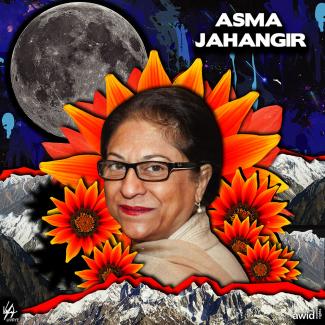
Asma était une militante pakistanaise des droits humains, une critique courageuse de l'ingérence de l'armée dans la politique et une défenseure acharnée de la primauté du droit.
Elle a été la présidente fondatrice de la Commission des droits de l'homme du Pakistan, un groupe indépendant ainsi qu’administratrice de l'International Crisis Group. Elle a remporté des prix internationaux et a été rapporteuse des Nations Unies sur les droits de l'homme et les exécutions extrajudiciaires.
Ses collègues et ami-e-s de l’AWID se souviennent d'elle avec affection
« Grâce à sa vie, Asma a réécrit l'histoire que beaucoup d'entre nous ont racontée en tant que femmes. Asma a changé le monde. Elle l'a changé au Pakistan et elle l'a changé dans notre imaginaire. »
Merci de calculer le coût de votre voyage à Bangkok, vos frais d'hébergement et vos indemnités journalières, le montant de votre visa, vos besoins en matière d'accessibilité et les frais accessoires, en plus des frais d'inscription qui seront annoncés sous peu. Les hôtels du quartier de Sukhumvit à Bangkok coûtent entre 50 et 200 dollars américains par nuit pour une chambre double. Les membres de l'AWID bénéficient d'une réduction lors de l'inscription. Si ce n’est pas encore fait, nous vous invitons à envisager de devenir membre et à rejoindre notre communauté féministe mondiale.
Los actores anti-derechos adoptan una estrategia doble. Además de atacar abiertamente al sistema multilateral, los actores anti-derechos también socavan los derechos humanos desde adentro. Se involucran con el fin de cooptar procesos, consolidar normativas regresivas, y erosionar responsabilidades.
¿Cuánto sabes sobre financiamiento feminista? 📊 Pon a prueba tu conocimiento sobre la movilización de recursos para el financiamiento de la organización feminista, respondiendo al cuestionario "¿Dónde está el dinero?":
Completa el quiz en línea Descarga la versión para imprimir
Queremos expresar nuestro más sincero agradecimiento a todos los diversos grupos, colectivos y organizaciones feministas de todo el mundo que respondieron a la encuesta WITM. Su participación y sus puntos de vista han sido inestimables y enriquecerán enormemente nuestra comprensión colectiva de los recursos feministas a nivel mundial.
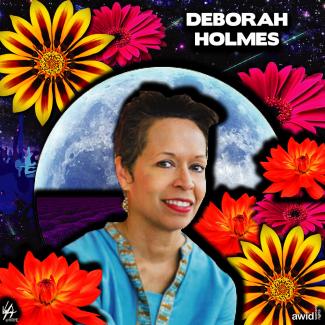
At the time of her death, following a short but aggressive battle with cancer, Deborah was the Chief Communication and Engagement Officer at the Women’s Funding Network (WFN).
Deborah also worked for the Global Fund for Women from 2008 to 2017. Deborah was extremely loved and respected by board, staff, and partners of Global Fund for Women.
Kavita Ramdas, former CEO of the Global Fund for Women aptly noted that Deborah was “a small package exploding with warmth, generosity, intelligence, style, and a passionate commitment to fusing beauty with justice. She understood the power of story. The power of women’s voice. The power of lived experience. The power of rising from the ashes and telling others it was possible. And, still we rise.”
Musimbi Kanyoro, the present CEO of the Global Fund for Women, added, “We have lost a sister and her life illuminates values that unite and inspire us all. As we all come together to mourn Deborah’s passing, let us remember and celebrate her remarkable, bold, and passionate life.”
We know that first time travel can be exciting but also stressful. In recognition of the many challenges involved, we will be providing more information and details about how to get to Bangkok when Registration opens early next year.
Dans cette BD illustrée par Sophia, suivez les aventures de notre super-héroïne féministe qui dément les récits des antidroits dans le monde entier et sauve la mise aux mouvements féministes.
Notre force collective, notre sagesse et notre engagement sont illimités... mais pas nos comptes en banque.
Cette synthèse s’appuie sur les réponses de 1 174 organisations féministes, de défense des droits des femmes, LBTQI+ et alliées (désignées ci-après comme « organisations féministes et de défense des droits des femmes ») issues de 128 pays, ayant participé à l’enquête Où est l’argent pour l’organisation des mouvements féministes ?
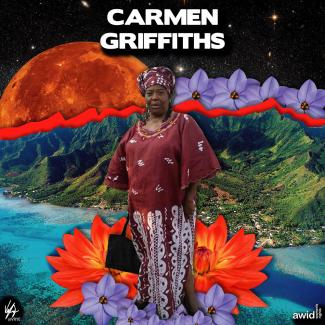
Carmen encabezaba el Construction Resource and Development Collective (CRDC, Colectivo de recursos para la construcción y el desarrollo) y fue fundamental para apoyar la participación de las mujeres en la industria de la construcción en Jamaica.
También trabajó con mujeres rurales y urbanas en temas relacionados a la preparación para afrontar desastres naturales. Trabajó de manera cercana con mujeres (especialmente madres solteras) enseñándoles cómo usar los cinturones para huracanes y otras tecnologías para poner sus hogares a resguardo. Trabajó en el área de agua y obras sanitarias y fue una fuerte defensora del manejo y desarrollo ambientalmente sustentable.
Fue parte de la Comisión Huairou y realizó incidencia en favor de las mujeres de base en temas vinculados a refugio, energía y medios de vida sustentables.
Los idiomas de trabajo de AWID son inglés, francés y español. El tailandés se agregará como idioma local, al igual que el lenguaje de señas y otras medidas de accesibilidad. Es posible que se añadan otras lenguas si la financiación lo permite, así que mantente atentx a las actualizaciones. Nos importa la justicia lingüística y trataremos de incluir tantos idiomas como sea posible y según nuestros recursos lo permitan. Esperamos crear múltiples oportunidades para que muchxs de nosotrxs podamos participar en nuestras lenguas y comunicarnos entre nosotrxs.