Jean-Marc Ferré | Flickr (CC BY-NC-ND 2.0)
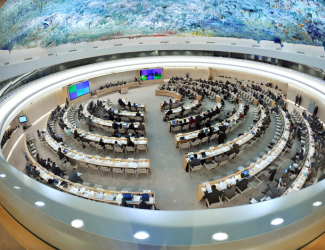
A general view of participants at the 16th session of the Human Rights Council in Geneva, Switzerland.

Human Rights Council (HRC)

The Human Rights Council (HRC) is the key intergovernmental body within the United Nations system responsible for the promotion and protection of all human rights around the globe. It holds three regular sessions a year: in March, June and September. The Office of the UN High Commissioner for Human Rights (OHCHR) is the secretariat for the HRC.

The HRC works by:

  • Debating and passing resolutions on global human rights issues and human rights situations in particular countries

  • Examining complaints from victims of human rights violations or activist organizations on behalf of victims of human rights violations

  • Appointing independent experts (known as “Special Procedures”) to review human rights violations in specific countries and examine and further global human rights issues

  • Engaging in discussions with experts and governments on human rights issues

  • Assessing the human rights records of all UN Member States every four and a half years through the Universal Periodic Review

Learn more about the HRC


AWID works with feminist, progressive and human rights partners to share key knowledge, convene civil society dialogues and events, and influence negotiations and outcomes of the session.


With our partners, our work will:

◾️ Monitor, track and analyze anti-rights actors, discourses and strategies and their impact on resolutions

◾️ Raise awareness of the findings of the 2017 and 2021 OURs Trends Reports.

◾️Support the work of feminist UN experts in the face of backlash and pressure

◾️Advocate for state accountability
 
◾️ Work with feminist movements and civil society organizations to advance rights related to gender and sexuality.
 

Related Content

From “WID” to “GAD” to Women’s Rights: The First Twenty Years of AWID

In 2002 AWID celebrated its 20th anniversary. Given the challenging political, economic and funding environment in which women's organizations must survive, a milestone such as this is worthy of recognition.

In the past two decades the geo-political landscape has been transformed and development theories have come and gone, but approaches to ensure women benefit from development processes have endured.

In its twenty-year history, AWID grew from a volunteer organization for U.S. "Women in Development" (WID) specialists to an international network striving to support proactive and strategic gender equality research, activism and policy dialogue.

On the occasion of its 20th anniversary, this paper charts not only the changes in AWID's organizational structure and goals but also the shifts in policy approaches to gender equality in a changing global environment, through the lens of a membership organization committed to improving the lives of women and girls everywhere.

อะไรคือเกณฑ์ในการคัดเลือกกิจกรรม

สำหรับข้อมูลด้านนี้สามารถอ่านรายละเอียดได้ที่ เปิดรับสมัครกิจกรรม รวมถึงข้อมูลในหัวข้อ “สิ่งที่คุณต้องรู้”
Why did AWID choose Taipei as the location for the Forum?

We see Taipei as the location in the Asia Pacific region that will best allow us to build that safe and rebelious space for our global feminist community.

Taipei offers a moderate degree of stability and safety for the diversity of Forum participants we will convene. It also has strong logistical capacities, and is accessible for many travellers (with a facilitated e-visa process for international conferences).

The local feminist movement is welcoming of the Forum and keen to engage with feminists from across the globe.
Read more about our considerations when choosing Taipei

Snippet Festival Day 5, 6 Fest (EN)

Day, jour, día 5 festival - Sept. 11, 2021
Assembly as Pleasure: Weaving Feminist Collaborative Projects

Ghiwa Sayegh, Kohl: A Journal for Body and Gender Research
J. Daniel Luther 
Jessa Jordan
María Florencia Alcaraz
Nazlee Saif Arbee


Witchcraft, shamanism and other insurgent knowledge against patriarchy

Sofía Blanco Sixtos, Colectiva Feminista MAPAS


Day, jour, día 5 - Sept. 12, 2021
Queering Feminist Imaginaries:
A Workshop for Young Feminists

Nino Ugrekhelidze, AWID
Jorge Davila Akinyi Osanjo


Artivism: a weapon of feminist political resistance in the Haitian context

Pascale Solages, Nègès Mawon
Souzen Joseph, Nègès Mawon
Gaëlle Bien-Aimé, Nègès Mawon


watch video


Workshop
Pleasure Poetry

by Wana Udobang


Workshop
Prison Isn’t Feminist:
Exploring the impact and alternatives to reliance on police and incarceration

Chanelle Gallant
Kai Cheng Thom

watch video

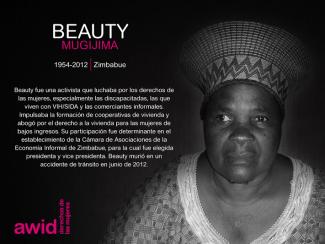
Mujeres indígenas por la defensa de los derechos

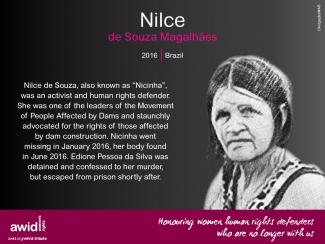
Estas defensoras lucharon por los derechos sobre la tierra, de las mujeres y de los pueblos indígenas; haciendo frente a las industrias extractivas, escribiendo poesía y promoviendo el amor. Una de ellas desapareció hace ya 19 años. Únete a nosotras para recordar y honrar a estas defensoras de derechos humanos, su trabajo y su legado, compartiendo los memes aquí incluidos; y tuiteando las etiquetas #WHRDTribute y #16Días.


Por favor, haz click en cada imagen de abajo para ver una versión más grande y para descargar como un archivo.  


CFA FAQ - Travelling to Bangkok - Thai

การเดินทางไปยังกรุงเทพมหานคร

Snippet Festival Days 8-13_Fest (ES)

Day, jour, día 8 festival - Sept. 16, 2021
Panel
Placer Corporal para Chicas Gordas 

Amy Lin

ver panel


Taller
Ampliar el placer

Hedone

ver taller


Taller
Campaña #emptychairs [#sillasvacías]

Caroline Tagny, Coalition of African Lesbians
Carrie Shelver, Sexual Rights Initiative
Emeline Dupuis, Sexual Rights Initiative
Pooja Badarinath, Sexual Rights Initiative
Pooja Patel, International Service for Human Rights
Antje Schupp


Taller
Realidades Feministas:
Casas de Respiro y Sanación para Defensoras

Ana María Hernández Cárdenas, Consorcio Oaxaca
Nallely Tello Méndez, Red Nacional de Defensoras de Derechos Humanos en México
Jelena Dordevic Liana Funes, National Network of Women Human Rights Defenders in Honduras
Rebeca Girón
Tania Lopes Muri, Movimento de Mulheres da Região dos Lagos
Rogéria Peixinho


Movimiento Fem
Fiesta Bailable Espectacular para Afiliadxs

DJ Cozmic Cat


Day, jour, día 9 festival - Sept. 17, 2021
Historias
Educación sin ataduras:
la historia de Fatoumata

Lina Baaziz

ver video


Instagram Live:

Educación sexual

Oloricoitus

ver video


Taller
Voces desde el frente:
Afianzar el poder colectivo para terminar con el encarcelamiento de mujeres en todo el mundo


Claudia A. Cardona, Mujeres Libres Colombia
Phyllis Hardy, National Council for Incarcerated and Formerly Incarcerated Women and Girls
Grace Natalia, Womxn’s Voice and Women and Harm Reduction International Network
Mónica Marginet Flinch, Metzineres
Kenya Cuevas, Casa de las Muñecas Tiresias A.C.
Dawn Harrington, Free Hearts

ver taller


Taller
Movimiento como sanación,
Sanación para los movimientos


Kimalee Phillip
Luz Stella Uspina Murillo, Fondo Acción Urgente para América Latina y el Caribe
Sara Munarriz-Awad, Fondo Acción Urgente para América Latina y el Caribe
Tai Pelli
Everdith (Evie) Landrau


Taller
Liderazgo feminista emergente:
levantando mientras escalamos

Deborah A, Black LGBTQ Migrant Project (BLMP)
Anima Adjepong, Silent Majority
Maame Adwoa Marfo, FRIDA
Debbie Owusu-Akyeeah, Canadian Centre for Gender and Sexual Diversity


Day, jour, día 10 festival
Panel
El placer a través de las fronteras

Lindiwe Rasekoala
Lizzie Kiama
Jovana Drodevic
Malaka Grant

ver video


Panel
Realidades del aborto:
estrategias para luchar contra la injusticia reproductiva

Lindiwe Rasekoala
Lizzie Kiama
Jovana Drodevic
Malaka Grant


Day, jour, día 11, festival
Taller
Creación de redes y solidaridad entre jóvenes organizadorxs feministas

Nino Ugrekhelidze, AWID
Anwulika Ngozi
Okonjo Pooja Singh


Panel
Sobreviviendo la guerra contra las drogas

Ganna Dovbakh, Eurasian Harm Reduction Association (EHRA)
Priscila Gadelha, Rede Nacional de Feministas Antiproibicionistas (RENFA)
Veronica Russo, Red Latinoamericana y del Caribe de Personas que Usan Drogas (LANPUD)
Diana Edem, Heartland Alliance International
Judy Chang, International Network of People who Use Drugs (INPUD)
Louise Vincent, NC Urban Survivors Union
Aura Roig, Metzineres
Malicia, Live Artist

ver panel


Panel
Feministas jóvenes por el clima construyendo futuros radicales
Lanzamiento del video y Conversatorio

Sanam Amin, Asia Pacific Forum on Women, Law and Development
Maggie Mapondera, Womin African Alliance
Maria Alejandra Escalente, FRIDA
Patricia Miranda Wattimena, Asia Indigenous Peoples Pact
Mara Dolan, WEDO
Andrea Vega Troncoso, WEDO

ver panel


Taller
Antal: universo no binarix

Malicia Sabina, Resistencia No Binarix
Andras Yareth Hernández, Resistencia No Binarix

ver taller


Day, jour, día 12, festival
Panel
Gracias, yo puedo tomar mi decisión

Grace Chang, Taiwan Association for Disability Rights
Angel Hsu, Taiwan Association for Disability Rights
Joyann Peng, Taiwan Association for Disability Rights
Amy Wu, Taiwan Association for Disability Rights

ver panel


Panel
Aprendizajes feministas de seguridad digital en tiempos de crisis socio-política y sanitaria

Paul Nail Ojeda
Paola Moss


Taller
El estado actual de los bosques:
¿cuál es el problema, y por qué es tan importante?

Camila Romero, VientoSur
Kanta Marathe, Navrachna Samaj Sevi Sansthan
Jeanette Sequeira, Global Forest Coalition

Download Resources  Descargar Recursos  Télécharger Les Ressourceses

Visita la sala de afiliadxs de AWID

Jessica Whitbread, AWID


Day, jour, día 13 festival
Taller
Apoyo a la autogestión:
doulas para el aborto, acompañantes, asistencia telefónica y redes radicales de apoyo

Aditi Pinto, Inroads
Daniela Tellez Del Valle, Di RAMONA
Sandra Cardona, Necesito Abortar México
Mickreen Adhiambo, Aunty Jane Hotline and MAMA Network
Zachi Brewster, Dopo Abortion Support
Ika Ayi, Samsara

ver panel


Taller
Jóvenes Feministas Comparten:
Cómo financiar tus ideas

Nino Ugrekhelidze, AWID
Cassie Denbow
Nida Mushtaq


"Yo Imposible"
Proyección y Discusión con Directorxs Latinx/Centro Americanxs del Club de Cine de AWID

Alejandra Laprea
Patricia Ortega
Alejandra Henriquez
Maria Torrellas
Carolina Reynoso
Camila Rodó
Micol Mtzener
Giovana Garcia

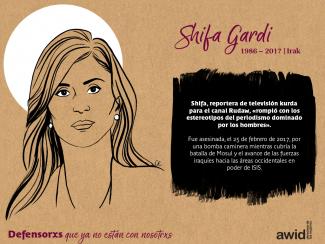
Trans* rights require stronger protection

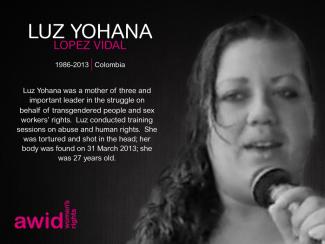
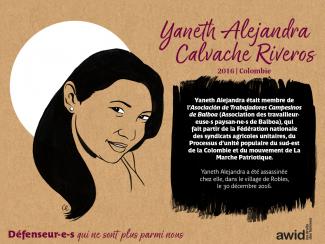
These transgender women were murdered because of their activism and their gender identity. There are insufficient laws recognizing trans* rights, and even where these laws exist, very little is being done to safeguard the rights of trans* people. Please join AWID in honoring these defenders, their activism and legacy by sharing the memes below with your colleagues, networks and friends and by using the hashtags #WHRDTribute and #16Days.


Please click on each image below to see a larger version and download as a file 


ماذا عن العدالة المناخية، هل هذا حقًا هو الوقت المناسب للعديد من الرحلات الجوية الدولية؟

ونحن نسأل أنفسنا نفس السؤال، ونعتقد أنه لا توجد إجابات بسيطة. بالنسبة للعديد من المشاركين/ات، قد يكون منتدى جمعية حقوق المرأة في التنمية (AWID) أحد الرحلات الدولية القليلة التي يقومون بها في حياتهم/ن. علمتنا الجائحة الإمكانيات والقيود التي تفرضها المساحات الافتراضية لبناء الحركة: لا يوجد شيء أفضل من الاتصال الشخصي. تحتاج الحركات إلى التواصل عبر الحدود لبناء قوتنا الجماعية في مواجهة التهديدات التي نواجهها، ولا سيما أزمة المناخ. نعتقد أن منتدى حقوق المرأة في التنمية القادم يمكن أن يكون مساحة استراتيجية لعقد هذه المحادثات واستكشاف بدائل للسفر الدولي. ويشكل العنصر المختلط للمنتدى جزءًا مهمًا من هذا الاستكشاف.
Club de cinéma féministe: Leitis in Waiting & programmation d'Amérique latine et d'Amérique centrale

Dans cette sélection de films, vous découvrirez les voix de réalisatrices qui ne se contentent pas de restituer les réalités féministes palpitant dans chaque recoin de ce territoire vaste et divers, mais explorerez aussi des oeuvres qui, dans leur conception même, s'interrogent sur le pourquoi, le qui et le comment du cinéma ou de l'audiovisuel. Ces femmes comprennent le cinéma comme un outil de lutte, comme quelque chose de plus que de simples images à apprécier sur un écran. Pour ces réalisatrices ou collectifs de cinéastes, le cinéma et l'audiovisuel constituent un outil capable de promouvoir la discussion, d'ouvrir un débat, bref, une ressource pour la pédagogie populaire et féministe.

1. Gather your resources

This section highlights key resources recommended by AWID so you can conduct your own WITM research.

In this section

People needed

  • 1 or more person(s) to lead overall implementation of research methodology and ensure all key pieces are on track (Sections 2-11)
  • 1 or more person(s) to conceptualize the key research objectives and guiding questions
  • 1 or more person(s) to refine and conduct the research methodology, including collecting data
  • 1 or more person(s) to conduct relevant qualitative and quantitative analysis of collected data
  • 1 or more person(s) to document and package research findings for desired audience(s)
  • 1 or more person(s) to serve as an editor to your final products
  • 1 or more person(s) to conduct outreach to spread the word about your survey and advocacy using your research results

Back to top


Potential expenses

  1. Staff and/or consultant salaries
  2. Data analysis software if conducting analysis of large dataset in-house. Options:
    - SPSS
    - Stata
    - R (this is free)
  3. Cost of producing publications and research products
  4. If desired, incentive prize that survey participants can win if they complete the survey
  5. If desired, incentives to offer your advisors

Back to top


Estimated time

  • For research process: 6 to 18 months, depending on size of dataset(s) and staff capacity
  • For advocacy: 1-2 years, as determined by your organizational goals

Back to top


Resources needed

  • List of advisor organizations, donors and activists
  • List of online spaces and events/networks to distribute your survey and present your survey results
  • List of donors, activists, and women’s rights organizations to interview
  • Prepared interview questions
  • List of publication sources to use for desk research

Back to top


Resources available

Online tools

Once you gather these resources, you can estimate the costs for your research using our “Ready to Go? Worksheet”

Back to top


Previous step

Before you begin

Next step

2. Frame your research


Previous step

Before you begin

Next step

2. Frame your research


The Ready to Go? Worksheet helps you estimate resources, staff and budget needed for your research

Download the toolkit in PDF