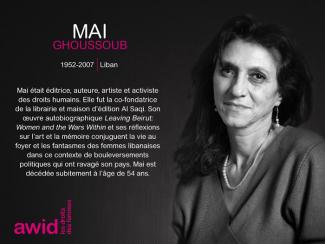
Mai Ghoussoub
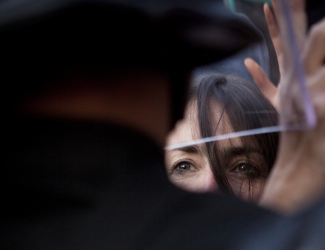
WHRDs are self-identified women and lesbian, bisexual, transgender, queer and intersex (LBTQI) people and others who defend rights and are subject to gender-specific risks and threats due to their human rights work and/or as a direct consequence of their gender identity or sexual orientation.
WHRDs are subject to systematic violence and discrimination due to their identities and unyielding struggles for rights, equality and justice.
The WHRD Program collaborates with international and regional partners as well as the AWID membership to raise awareness about these risks and threats, advocate for feminist and holistic measures of protection and safety, and actively promote a culture of self-care and collective well being in our movements.
WHRDs are exposed to the same types of risks that all other defenders who defend human rights, communities, and the environment face. However, they are also exposed to gender-based violence and gender-specific risks because they challenge existing gender norms within their communities and societies.
We work collaboratively with international and regional networks and our membership
We aim to contribute to a safer world for WHRDs, their families and communities. We believe that action for rights and justice should not put WHRDs at risk; it should be appreciated and celebrated.
Promoting collaboration and coordination among human rights and women’s rights organizations at the international level to strengthen responses concerning safety and wellbeing of WHRDs.
Supporting regional networks of WHRDs and their organizations, such as the Mesoamerican Initiative for WHRDs and the WHRD Middle East and North Africa Coalition, in promoting and strengthening collective action for protection - emphasizing the establishment of solidarity and protection networks, the promotion of self-care, and advocacy and mobilization for the safety of WHRDs;
Increasing the visibility and recognition of WHRDs and their struggles, as well as the risks that they encounter by documenting the attacks that they face, and researching, producing, and disseminating information on their struggles, strategies, and challenges:
Mobilizing urgent responses of international solidarity for WHRDs at risk through our international and regional networks, and our active membership.
 Le financement des mouvements féministes est indispensable à la mise en place d’une présence plus juste et pacifique et d’un avenir libéré. Au cours de la dernière décennie, les bailleurs de fonds se sont engagés à verser bien plus d’argent en faveur de l’égalité des genres, mais 1 % seulement des financements philanthropiques et de développement a réellement été destiné à financer directement les changements sociaux menés par des féministes (ressource en anglais).
Pour viser l’abondance, et rompre ce cycle d’insuffisance chronique, l’enquête WITM est une invitation pour les activistes féministes et défenseur·ses de la justice de genre à se lancer dans l’aventure de la collecte de données probantes et d’arguments en faveur de la mobilisation de davantage d’argent, de meilleure qualité, et de réappropriation du pouvoir au sein de l’écosystème actuel du financement. En solidarité avec les mouvements qui continuent à être invisibilisés, marginalisés et empêchés d’accéder à des financements de base, à long terme, flexibles et reposant sur la confiance, l’enquête WITM souligne l’état actuel de la mobilisation de ressources, remet en question les fausses solutions, et identifie les changements à opérer au sein des modèles de financement afin que les mouvements s’épanouissent et relèvent les défis complexes de notre époque.
Caroline a travaillé régulièrement pour l'AWID, organisant auparavant les forums de 2005 et 2008 à Bangkok et au Cap, et à travers d'autres fonctions au sein de l'organisation. Avant de rejoindre l'AWID, elle a enseigné l'anglais en licence, puis a quitté l’université pour diriger le Reel Asian International festival de film de Toronto et travailler sur d'autres projets. Plus récemment, elle a occupé le poste de responsable des opérations chez Spring Strategies. En dehors du travail, Caroline se retrouve généralement dans son jardin, communiant avec ses chères plantes et faisant la paix avec les insectes et les rongeurs qui s’invitent.
1 |
Fournir aux membres de l’AWID, partenaires du mouvement et financeurs une analyse actualisée, robuste, éprouvée et orientée sur l’action des réalités du financement des mouvements féministes et de l’état actuel de l’écosystème du financement féministe. |
2 |
Identifier et expliquer les occasions d’orienter davantage de financement de meilleure qualité vers l’organisation des mouvements féministes, mettre en lumière les fausses solutions et mettre un frein aux tendances à cause desquelles les financements ne parviennent pas et/ou vont à l’encontre des programmes de justice de genre et féministes intersectionnels. |
3 |
Formuler les visions, propositions et programmes féministes en faveur de la justice du financement. |
Ekaete Judith Umoh is an international disability rights advocate and inclusive development expert with astute analysis of issues regarding gender, disability and inclusive development. Her dream is to see increased visibility of women and girls with disabilities in the global feminist movement, as well as in all development efforts around the world.
Ekaete enjoys activism and politics, and went on to become the first elected female President of the Joint National Association of Persons with Disabilities (JONAPWD) in Nigeria, where she led Organizations of Persons with disabilities in the struggle to sign the Nigerian Disability Bill into Law in 2019, after over 17 years of consistent advocacy. Thereafter, she joined CBM Global as a pioneer Country Director and led her team for about 3 years, contributing towards ending the circle of poverty and disability in Nigeria. Aside from disability activism, Ekaete has served as consultant to several development agencies, providing technical assistance on disability inclusion in program and project design.
Votre participation à l’enquête WITM est importante à plusieurs égards. Vous aurez, notamment, l’occasion de faire part de votre expérience vécue de la mobilisation de fonds pour soutenir votre organisation, de réclamer votre autorité en tant qu’experte sur la manière dont l’argent est transféré et qui il atteint réellement, et de contribuer à un plaidoyer collectif et cohérent auprès de financeurs afin que les fonds circulent davantage et soient de meilleure qualité. Au cours des deux dernières décennies, la recherche WITM de l’AWID s’est révélée être une ressource clé pour les activistes et les financeurs. Nous vous invitons chaleureusement à participer à sa troisième édition pour souligner la situation actuelle des ressources, remettre en question les fausses solutions, et identifier les modifications nécessaires dans le financement afin que les mouvements s’épanouissent et relèvent les défis complexes de notre époque.
Alejandra is passionate about women’s rights and gender justice. She dreams of creating a world that centers care – for people and nature. As a feminist human rights expert, she’s worked at the intersections of gender, climate, social and economic justice at various international organizations. Her areas of expertise include knowledge building and co-creation, research, facilitation, and advocacy. She holds a MA in Human Rights from the University of Essex and has authored and co-developed many publications, including the article “Enraged: Women and Nature”. The campaign Feminist Activism Without Fear draws on interviews and research carried out by Alejandra.
Originally from Argentina, she has lived and worked in several countries in Europe and Latin America over the past two decades. Alejandra loves photography, the sea, baking with her daughter, and enjoying food from around the world. As a mother, she aims to be a cycle breaker. Alejandra draws energy and inspiration from the amazing women in her life, who are spread in many corners of the world.
Nous Sommes la Solution eleva y multiplica el liderazgo de las mujeres rurales que trabajan por soluciones realmente africanas para la soberanía alimentaria.
Yes! We recognize and appreciate different reasons why feminists, in their respective contexts, don’t have external funding: from being ineligible to apply for grants and/or receive money from abroad, to relying on resources generated autonomously as a political strategy in its own right. We want to hear from you regardless of your experience with external funding.
Nuestrxs afiliadxs conforman una dinámica red de personas de todo el mundo, que se desempeñan como investigadorxs, académicxs, estudiantes, educadorxs, activistas, empresarixs, diseñadorxs de políticas públicas, personas que trabajan en desarrollo, donantes, y más. La membresía - de todas las edades – es lo que hace de AWID una asociación feminista mundial única.
Ofrecemos diferentes tipos de membresía según el nivel de ingresos y también según quieras afiliarte a título individual o institucional. En la actualidad contamos con más de 5000 afiliadas/os, individuales e institucionales, de 164 países.
Ofrecemos diferentes tipos de membresía según el nivel de ingresos y también según quieras afiliarte a título individual o institucional. En la actualidad contamos con más de 5000 afiliadxs, individuales e institucionales, de 164 países.
Colaboramos en acciones de incidencia sobre temas específicos; la membresía vota y elige a la Junta Directiva y también puede participar y contribuir en las Áreas Prioritarias, por ejemplo, a través de webinarios, encuestas o acciones urgentes.
La membresía institucional la constituye una amplia gama de organizaciones interesadas en el avance de la justicia de género y los derechos humanos de las mujeres, incluyendo organizaciones por los derechos de las mujeres del ámbito local al mundial, de redes de base, instituciones internacionales de gran escala, departamentos gubernamentales, programas universitarios y más. El 63% de lxs afiliadxs pertenece al sur global y el 38% es menor de 30 años de edad.
Coopérative Textile Nadia Echazú
Por el momento, la encuesta en KOBO está disponible en árabe, español, francés, inglés, portugués y ruso. Tendrás oportunidad de seleccionar el idioma de preferencia al inicio de la encuesta.
Nous ne pouvons pas examiner les propositions ou les demandes de financement.
Nous vous invitons à consulter notre liste de bailleurs fonds pouvant potentiellement financer votre organisation pour les droits des femmes
Voir notre liste de bailleurs de fonds (en anglais)
Plus de ressources sont disponible depuis la page de Domaine prioriataire Ressources des mouvements féministes
1 of 3 trans and travesti people in Argentina live in a poor household