Related Content
IM Defensoras: Hate crime against Sherly Montoya, LGTTBI defender and member of Transexual Women´s Group “Muñecas de Arcoiris”
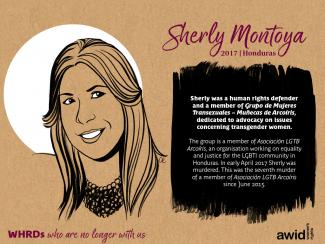
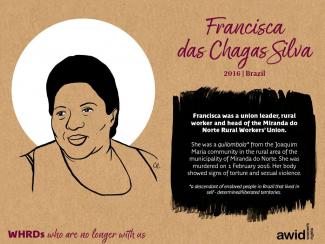
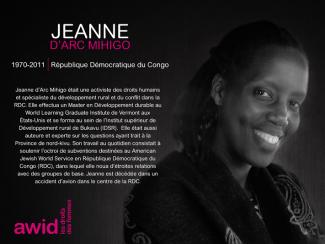
WHRDs are self-identified women and lesbian, bisexual, transgender, queer and intersex (LBTQI) people and others who defend rights and are subject to gender-specific risks and threats due to their human rights work and/or as a direct consequence of their gender identity or sexual orientation.
WHRDs are subject to systematic violence and discrimination due to their identities and unyielding struggles for rights, equality and justice.
The WHRD Program collaborates with international and regional partners as well as the AWID membership to raise awareness about these risks and threats, advocate for feminist and holistic measures of protection and safety, and actively promote a culture of self-care and collective well being in our movements.
WHRDs are exposed to the same types of risks that all other defenders who defend human rights, communities, and the environment face. However, they are also exposed to gender-based violence and gender-specific risks because they challenge existing gender norms within their communities and societies.
We work collaboratively with international and regional networks and our membership
We aim to contribute to a safer world for WHRDs, their families and communities. We believe that action for rights and justice should not put WHRDs at risk; it should be appreciated and celebrated.
Promoting collaboration and coordination among human rights and women’s rights organizations at the international level to strengthen responses concerning safety and wellbeing of WHRDs.
Supporting regional networks of WHRDs and their organizations, such as the Mesoamerican Initiative for WHRDs and the WHRD Middle East and North Africa Coalition, in promoting and strengthening collective action for protection - emphasizing the establishment of solidarity and protection networks, the promotion of self-care, and advocacy and mobilization for the safety of WHRDs;
Increasing the visibility and recognition of WHRDs and their struggles, as well as the risks that they encounter by documenting the attacks that they face, and researching, producing, and disseminating information on their struggles, strategies, and challenges:
Mobilizing urgent responses of international solidarity for WHRDs at risk through our international and regional networks, and our active membership.
Premier Dialogue de haut niveau sur le financement du développement, 29-30 octobre 2003.
Les dialogues de haut niveau de l’Assemble générale des Nations Unies sur le financement du développement, tenus tous les deux ans, sont l’un des mécanismes de suivi de la Conférence de Monterrey. À la suite de ce premier dialogue, huit tables rondes ont été organisées autour de différentes questions comprenant les subventions agricoles, le commerce, l’allègement de la dette et le financement des OMD. Toutes les discussions se concentraient sur les manières de faire face aux obstacles structurels qui pesaient sur ces questions et défavorisaient les nations « en développement ».
D'autres mécanismes de suivi de la Conférence de Monterrey :
Related Content
IM Defensoras: Hate crime against Sherly Montoya, LGTTBI defender and member of Transexual Women´s Group “Muñecas de Arcoiris”
The Fifth High- Level Dialogue on Financing for Development, 7 – 8 December 2011, marked the beginning of the Post 2015 development agenda discussions, and the link to financing for development. The conference gave a special focus to increasing aid to finance the MDG’s. In his closing remarks, the Secretary General called on members to begin to consider the post-2015 development framework.
📅Lundi 11 mars
🕒16 h 30 - 18 h HNE
Organisateurs : AWID, IJSC et NAWI
🏢 Church Center des Nations Unies, 777 United Nations Plaza, New York, 11e étage
(Interprétation en français et en espagnol disponible)
Come meet the feminist economies we LOVE.
The economy is about how we organize our societies, our homes and workplaces. How do we live together? How do we produce food, organize childcare, provide for our health? The economy is also about how we access and manage resources, how we relate with other people, with ourselves and with nature.
Feminists have been building economic alternatives to exploitative capitalist systems for ages. These alternatives exist in the here and now, and they are the pillars of the just, fairer and more sustainable worlds we need and deserve.
We are excited to share with you a taste of feminist economic alternatives, featuring inspiring collectives from all around the world.
Contenido relacionado
Proceso Digital: Asesinan abogada que fue candidata a diputada en primarias del Partido Nacional

Jour 3
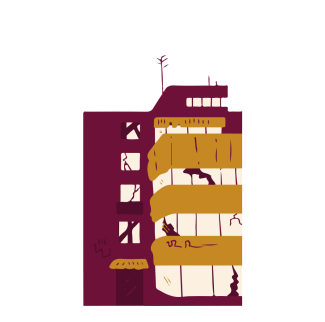
Fuente: Censo de População de Rua, Prefeitura de São Paulo
 |
Edificios abandonados/desocupados |
 |
||
Personas que viven en la calle |
||||
|
31,000 |
40.000 |
Le financement du développement est, pour les droits des femmes et les droits humains de toutes et tous, un champ qui comporte des menaces et des possibilités spécifiques. Le financement du développement et des politiques à visées transformatrices peut être un facteur déterminant dans la mise en œuvre des changements systémiques nécessaires pour garantir le respect, la protection et la réalisation des droits humains des femmes.
L’année 2015 est une année importante pour le processus sur le FdD. La troisième Conférence internationale sur le FdD (site en anglais) a eu lieu du 13 au 16 juillet à Addis Abeba, en Éthiopie. En outre, les gouvernements mettent actuellement la dernière main au programme de développement pour l'après-2015 et notamment aux accords qui détermineront les modalités de financement des nouveaux objectifs pour le développement durable.
L’étape actuelle du processus sur le FdD est une occasion importante pour définir un cadre de financement susceptible de garantir le financement efficace de la mise en œuvre du programme de développement de l’après-2015 et des Objectifs pour le développement durable (ODD). Elle pourrait également permettre d’aborder les conditions structurelles et les changements systémiques nécessaires à la pleine réalisation d’autres priorités et engagements, tels que les conventions sur les droits humains et le Programme d'action de Beijing.
Au cours de ces treize dernières années, les organisations féministes et de défense des droits des femmes se sont résolument engagées dans le processus sur le FdD.
Thanks to our global feminist community! From May to August 2024, nearly 1,200 organizations working for Women's rights, gender justice, and LBTQI+ equality shared their experiences in the WITM survey. The results offer a unique picture of how feminist movements are resourced and where gaps remain.
 |
 |
 |
 |
 |
 |
 |
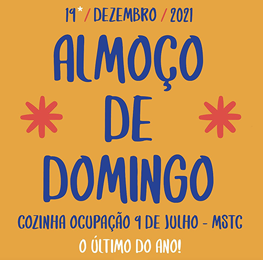 |
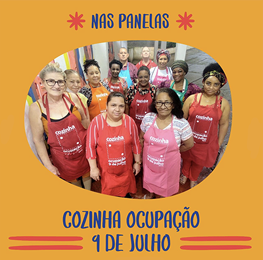
Les Femmes Maintiennent les Soins | Les Soins Soutiennent la Vie | La Vie Soutient l'Économie | Qui s'Occupe des Femmes ? | Pas Une de Moins1 | Ensemble | Déjeuner du Dimanche
1Nenhuna a menos se traduit littéralement par « pas une femme de moins » ou « ni una menos » en espagnol - un célèbre slogan féministe en Amérique latine qui a émergé en Argentine en réponse à l'augmentation de la violence sexiste.