Confronting Extractivism & Corporate Power

Women human rights defenders (WHRDs) worldwide defend their lands, livelihoods and communities from extractive industries and corporate power. They stand against powerful economic and political interests driving land theft, displacement of communities, loss of livelihoods, and environmental degradation.


Why resist extractive industries?

Extractivism is an economic and political model of development that commodifies nature and prioritizes profit over human rights and the environment. Rooted in colonial history, it reinforces social and economic inequalities locally and globally. Often, Black, rural and Indigenous women are the most affected by extractivism, and are largely excluded from decision-making. Defying these patriarchal and neo-colonial forces, women rise in defense of rights, lands, people and nature.

Critical risks and gender-specific violence

WHRDs confronting extractive industries experience a range of risks, threats and violations, including criminalization, stigmatization, violence and intimidation.  Their stories reveal a strong aspect of gendered and sexualized violence. Perpetrators include state and local authorities, corporations, police, military, paramilitary and private security forces, and at times their own communities.

Acting together

AWID and the Women Human Rights Defenders International Coalition (WHRD-IC) are pleased to announce “Women Human Rights Defenders Confronting Extractivism and Corporate Power”; a cross-regional research project documenting the lived experiences of WHRDs from Asia, Africa and Latin America.

We encourage activists, members of social movements, organized civil society, donors and policy makers to read and use these products for advocacy, education and inspiration.

Share your experience and questions!

Tell us how you are using the resources on WHRDs Confronting extractivism and corporate power.

◾️ How can these resources support your activism and advocacy?

◾️ What additional information or knowledge do you need to make the best use of these resources?

Share your feedback


Thank you!

AWID acknowledges with gratitude the invaluable input of every Woman Human Rights Defender who participated in this project. This project was made possible thanks to your willingness to generously and openly share your experiences and learnings. Your courage, creativity and resilience is an inspiration for us all. Thank you!
Related Content

Snippet - WITM Survey will remain open - AR

سيبقى الاستطلاع مفتوحاً حتى 31 يوليو (تموز) 2024

لتعبئة الاستطلاع

الرجاء اختيار لغتك في الزاوية اليمنى الرجاء اختيار اللغة المفضلة للإجابة على الاستطلاع في أقصى يمين الصفحة

 ذا كنت ترغب في معرفة المزيد، انضم إلى لقاء للأعضاء/ العضوات: أين المال؟ يوم الاثنين 27 مايو (أيار) الساعة 9:00 بالتوقيت العالمي - مع ترجمة
 فورية باللغتين الفرنسية والإنجليزية.
14:00 بالتوقيت العالمي - مع ترجمة فورية باللغتين الإسبانية والإنجليزية
سنستمع إلى فريق الحركات النسوية لتوفير الموارد التابع لجمعية حقوق المرأة في التنمية (جمعية حقوق المرأة في التنمية) حول خصوصيات وعموميات تمويل التنظيمات النسوية.

انضم/ي إلينا كعضو/ة في وكن/وني جزءًا من جلسة التواصل هذه.
الرد على الدعوة هنا

(Registration only available in English)

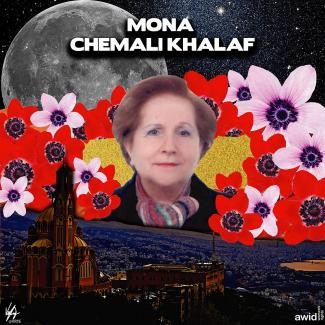
Mona Chemali Khalaf

Mona was an economist and an independent consultant on gender and development issues.

She was  a former Professor of Economics and Director of the Institute for Women's Studies in the Arab World at the Lebanese American University. 

She passed away suddenly on January 6, 2018. 

Friends and former colleagues say of Mona: “When we celebrate her life, the best thing we can do is commit to continuing what she started: gender equality no matter what.”


Mona Chemali Khalaf, Lebanon

June 2015

Further drafting sessions on the Addis Ababa outcome document

Learn more from the CSO Hitchhiker’s Guide

Snippet FEA Workers demonstrations in Georgia 1 (FR)

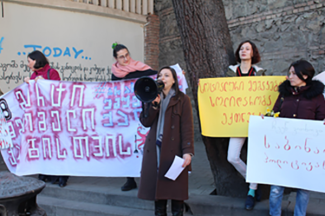
Quatre personnes avec des affiches lors d'une manifestation et, au milieu, une femme avec un mégaphone qui parle.

Snippet - WITM FAQ - RU

Часто задаваемые вопросы

Ursula K Le Guin

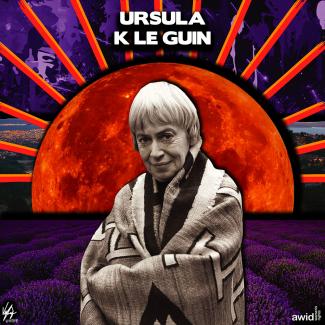
Ursula fue una novelista estadounidense que trabajó principalmente con los géneros de fantasía y ciencia ficción.

Encontró la fama con La mano izquierda de la oscuridad, novela en la cual imagina una sociedad futura donde la gente es ambisexual: no tienen un sexo fijo. Indaga en los efectos del género y el sexo en la sociedad, y fue uno de los primeros grandes libros feministas de ciencia ficción. Ursula fue una inspiración por su escritura subversiva y original y también por los temas sobre feminismo y libertad a los que les daba tanta importancia.

En un discurso que pronunció en 1983 en el Mills College, en California, les dijo a las graduadas: «¿Por qué una mujer libre con formación universitaria debería o luchar contra el macho o servirlo? ¿Por qué ella debería vivir su vida en los términos de él? Espero que ustedes vivan sin la necesidad de dominar y sin la necesidad de ser dominadas».


Ursula K Le Guin, USA

¿Cuáles son algunos de los debates y las áreas conflictivas?

Snippet FEA Workers demonstrations in Georgia 2 (EN)

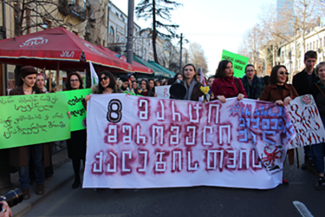
The photo shows a demonstration where a crowd of people is holding a banner in Georgian that reads as follows: “8th of March for worker women”.

Sou uma ativista individual, não colaboro com qualquer grupo, organização e/ou movimento neste momento. Devo participar no inquérito mesmo assim?

Não, apreciamos o seu trabalho, mas, de momento, não solicitamos respostas de indivídues.

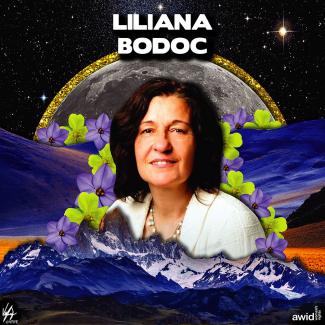
Liliana Bodoc

Liliana était enseignante argentine, tisseuse et également une écrivaine reconnue.

Sa trilogie « La saga des confins » a reçu plusieurs prix. Son œuvre est la seule dans le domaine littéraire fantastique à avoir eu recours et ré-imaginé la mythologie autochtone sud-américaine.

L’engagement de Liliana envers le féminisme s’est exprimé à travers les voix féminines diverses, riches et fortes de ses écrits, et en particulier dans le cadre de ceux à destination du jeune public. Elle a également pris position publiquement en faveur de l'avortement, de la justice économique et de l’égalité de genre.


Liliana Bodoc, Argentina

Je ne suis pas en mesure de soumettre une proposition écrite, acceptez-vous d’autres formats?

Dans le cadre de notre engagement en faveur de l’accessibilité dans tous les aspects du Forum de l’AWID, nous acceptons les formats audio/vidéo pour tous les individus/organisations/groupes qui ne peuvent soumettre de candidature écrite. Si vous décidez d’envoyer votre proposition sous format audio/vidéo, nous vous prions de bien vouloir répondre aux questions dans le même ordre, telles que détaillées dans le Formulaire de proposition d’activité.

Pour soumettre un fichier audio/vidéo, merci de nous contacter via notre formulaire de contact en choisissant « Proposition d'activité » comme sujet de votre message.

Contactez-nous


Snippet FEA Workers Persecution S4 (ES)

Un agente de la ley con equipo antidisturbios rosa sosteniendo un palo

PERSECUCIÓN DE LOS TRABAJADORES

La Revista de las Realidades Feministas

La Revista de las Realidades Feministas

Les presentamos una inspiradora selección de historias e imágenes poderosas de transformación y resistencia creadas por activistas, escritorxs y artistas feministas de todo el mundo.

Explora la Revista

كيف يمكنني الوصول للاستطلاع؟

الاستطلاع متواجد في KOBO وهي منصة برمجيات مفتوحة المصدر لجمع وإدارة المعطيات. لتعبئة الاستطلاع، يمكنكم/ن الضغط على هذا الرابط. اتبعوا/ن التعليمات لتكملة الاستطلاع. 

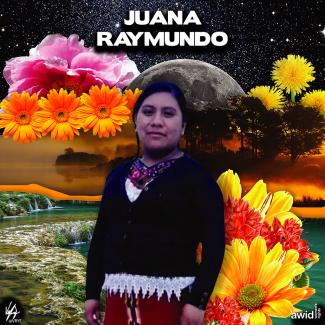
Juana Raymundo

Juana was an Indigenous Mayan Ixil, professional nurse and coordinator of the Farmers’ Development Committee (Comité de Desarrollo Campesino – CODECA).

CODECA is a human rights organisation of Indigenous farmers dedicated to promoting land rights and rural development for Indigenous families) in the Nebaj Quiché micro-region. She first joined CODECA as a member of its youth branch (Juventud de CODECA). At the time of her death had been elected to be part of the Executive Committee of the Movement for the Liberation of Peoples (MLP).

Juana’s body was found by neighbours by a small river on the road near Nebaj and Acambalam Village, Guatemala. According to CODECA, her body showed signs of torture.


Juana Raymundo, Guatemala

Que comprennent les frais d’inscription ?

Les frais d’inscription au Forum de l’AWID pour tou-te-s les participant-e-s couvrent : 

  • Accès complet aux quatre jours du Forum 
  • Déjeuners et pauses café/thé pendant les journées du Forum 
  • Documentation
  • Traduction simultanée lors des sessions plénières et quelques sessions/activités sélectionnées en petits groupes (anglais, français, espagnol et langue locale) 
  • Participation au dîner/à la fête de célébration 
  • Application mobile avec programme final et fonction “chat” intégrée 
  • Service WiFi gratuit dans les locaux du Forum  
  • Accueil à l’aéroport et transport hôtel-site-hôtel. 


Snippet FEA HEALTH CONDITIONS (FR)

Illustration d'une personne blanche en uniforme jaune d'infirmière avec un stéthoscope à la main

DE BONNES CONDITIONS SANITAIRES