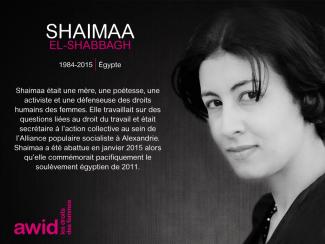
Shaimaa El-Shabbagh
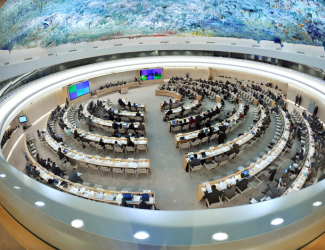
The Human Rights Council (HRC) is the key intergovernmental body within the United Nations system responsible for the promotion and protection of all human rights around the globe. It holds three regular sessions a year: in March, June and September. The Office of the UN High Commissioner for Human Rights (OHCHR) is the secretariat for the HRC.
Debating and passing resolutions on global human rights issues and human rights situations in particular countries
Examining complaints from victims of human rights violations or activist organizations on behalf of victims of human rights violations
Appointing independent experts (known as “Special Procedures”) to review human rights violations in specific countries and examine and further global human rights issues
Engaging in discussions with experts and governments on human rights issues
Assessing the human rights records of all UN Member States every four and a half years through the Universal Periodic Review
AWID works with feminist, progressive and human rights partners to share key knowledge, convene civil society dialogues and events, and influence negotiations and outcomes of the session.
A través de la organización laboral y sindical, Sopo, Sabrina y Linda no solo luchan por los derechos de lxs mujeres, lxs trabajadorxs esenciales, lxs trabajadorxs migrantes y lxs trabajadores sexuales, sino por los derechos de todxs lxs trabajadorxs.
La lucha para acabar con la explotación de lxs trabajadores es una lucha feminista, y nos muestra que no hay economías feministas sin sindicatos feministas.
por Nandini Tanya Lallmon
Olajumoke «Jay» Abdullahi y Kym Oliver son feministas revolucionarias en más de un sentido. (...)
arte: «Bloomed» [En flor], de Titash Sen >
✉️ Sur inscription pour les grands groupes. Espace ouvert pour les petits groupes. Inscrivez-vous ici
📅 Mardi 11 mars 2025
🕒12.00h-14.00h et 16.00h-18.00h EST
🏢 Chef's Kitchen Loft with Terrace, 216 East 45th St 13th Floor New York
Organisé par : AWID
Mena Mangal fue una destacada periodista de televisión, defensora de los derechos de las mujeres y asesora cultural de la Wolesi Jirga, la cámara baja del parlamento nacional de Afganistán.
Durante más de una década, trabajó para Ariana TV, el canal Lamar de lengua Pashto de Tolo TV, y para la emisora privada de televisión nacional afgana Shamshad TV. Como presentadora, Mena se enfocó en los derechos de las mujeres y en los programas de entrevistas culturales.
"La defensora de los derechos de la mujeres Wazhma Frogh dijo que Mangal "tenía una voz fuerte" y se pronunció activamente como defensora de su pueblo".
Fuera de la pantalla, también dirigió páginas populares de redes sociales que defendían los derechos de las niñas y mujeres afganas a la educación y el trabajo. En lo que concierne a su vida privada, Mena escribió extensamente acerca de cómo había sido forzada a contraer un matrimonio arreglado en 2017, y sobre el proceso que tuvo que atravesar para poder obtener finalmente el divorcio.
En un post de Facebook, Mena escribió que estaba recibiendo amenazas de muerte de fuentes desconocidas, pero que aun así continuaría llevando a cabo su trabajo.
El 11 de mayo de 2019, Mena fue atacada por hombres armados desconocidos y asesinada a tiros a plena luz del día en un espacio público del sudeste de Kabul.
"Estamos preocupadxs por la situación actual ya que está teniendo un impacto directo en las mujeres que trabajan fuera de sus casas... Las mujeres periodistas están cambiando de profesión debido a los crecientes riesgos que enfrentan". - Robina Hamdard, defensora de los derechos de las mujeres en Kabul.
par Prinka Saraswati
Les cycles menstruels sont généralement d’une durée de 27 à 30 jours. Pendant cette période, les règles elles-mêmes ne durent que 5 à 7 jours. L’épuisement, les sautes d’humeur et les crampes sont le résultat de l’inflammation qui se produit alors. (...)
< illustration : « Mouvement féministe », Karina Tungari
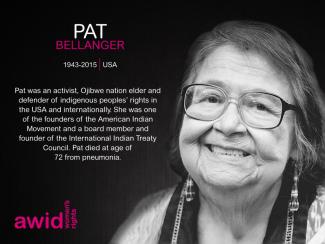
« Je veux dire à tou·te·s les Tunisien·ne·s : Nous devons nous rassembler pour dire “non” à la censure et aux procès d’opinion. » - Lina Ben Mhenni (entretien de 2013)
« Un cyberactiviste doit aller sur le terrain, sentir ce que vivent les autres. On dit que la Révolution tunisienne est celle du Net, mais si elle n’était que ça, elle n’aurait jamais abouti ! » » Lina Ben Mhenni (article dans Ouest-France)
Elle a co-organisé en 2010 une manifestation en réaction à la suppression des médias et la censure sur Internet imposées par le gouvernement. Lina était très connue pour son blog « A Tunisian Girl » et son travail pendant la révolution tunisienne en 2011 était reconnu. Elle s’est servie de son blog pour transmettre des informations sur la révolte, partager des images documentant les manifestations, et a été parmi les rares voix qui s’élevèrent pour dénoncer les assassinats et la répression des manifestant·e·s à Sidi Bouzid. Lina était une des rares blogueuses à utiliser son vrai nom sur Internet, et non un pseudonyme pour protéger son identité.
« Notre liberté d’expression est vraiment en danger. Je crains que nous ne soyons en train de perdre les fruits magnifiques de notre révolution : la disparition de la peur et la liberté d’expression. Nous devons continuer de nous battre pour protéger et préserver ce droit. » - Lina Ben Mhenni (entretien de 2013)
Lina n’avait que 36 ans lorsqu’elle est décédée, le 27 janvier 2020, de complications d’une maladie auto-immune.
« La liberté, une meilleure éducation et la santé - c’est tout ce que nous voulions. Lorsque nous échouions, elle nous incitait à continuer. » Hala, l’institutrice de Lina.
by Sophia Armen
Like it or not fierce ungerhouis have been part and parcel to our histories of resistance and are here to stay. (...)
✉️ By registration only. Register here
📅 Thursday, March 13, 2025
🕒 09.30-11.30am EST
🏢 Outright International Office, 17th Floor, 216 E 45th Street, New York
🎙️AWID speaker: Inna Michaeli, Co-Executive Director
Organizer: Outright International
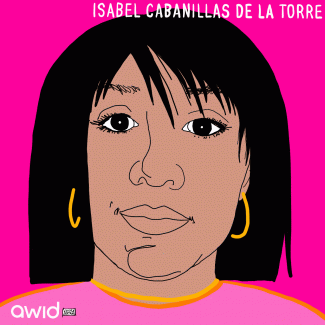
Isabel Cabanillas de la Torre was a much loved young feminist artist and activist from Ciudad Juárez, Mexico, known for her beautiful and evocative hand-painted clothing with eyes being an emblematic feature in her work. Her murals transformed the run down and vacant buildings in Ciudad Juarez’s downtown, bringing life and political commentary to their walls.
Through her art and political activism Isabel sought to draw attention to the gender based violence pervasive in her hometown. She volunteered with the women’s network Mesa de Mujeres on the Citizen Observatory on Gender to monitor the performance of judges, prosecutors and public defenders on cases of femicides and other gender based violations. She was also a member of Hijas de su Maquilera Madre, a feminist collective whose name makes reference to the daughters of mothers who are maquila workers. Some of these mothers were among the first victims of femicide in the city.
Isabel’s latest project, still in progress, was an art installation to protest a Canadian company that was looking to mine copper in the Samalayuca Desert.
On 18 January, 2020 Isabel was shot while riding her bike back home in Downtown Juárez, in what appeared to be a targeted killing, her body found beside her bike.
Isabel’s murder, sparked a new wave of outrage against femicides in the region, hundreds marched to the US-Mexico border bridge, blocking it for hours and chanting “Ni una mas” (Not one more) as feminist collectives continue to protest the murders of women throughout Mexico. In 2019 alone, 3142 women and girls were killed in Mexico, many of whom were targeted specifically because of their gender.
She loved riding her bike.
"The bike for her was a symbol of freedom. A symbol of being free in the streets." - Marisol (a friend of Isabel’s)
por Ana María Belique
El Batey Naranjo es una comunidad un poco retirada de la ciudad, pero repleta de personas trabajadoras, llenas de entusiasmo. (...)
< arte: «Tejedoras de sueños», Diana Mar
| Nature of funding: Due to global funding cuts and freezes |
|
 |
Recipient type: Filter for organizations or individual funding opportunities |
 |
Preferred languages: Boil them down to communications language preferences |
| Funding type: Be it rapid response, grantmaking, seed, direct aid and more |
|
 |
Movement and Struggle: Connect with funders that speak to your movement |