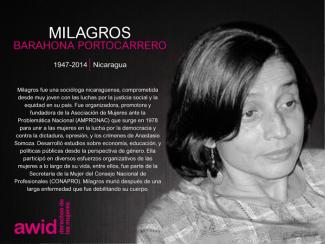
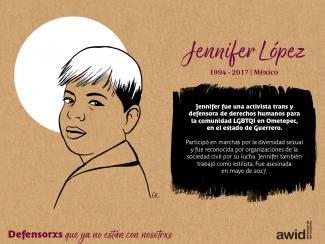
Magalie Marcelin
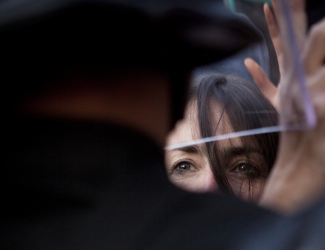
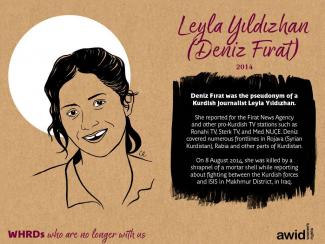
WHRDs are self-identified women and lesbian, bisexual, transgender, queer and intersex (LBTQI) people and others who defend rights and are subject to gender-specific risks and threats due to their human rights work and/or as a direct consequence of their gender identity or sexual orientation.
WHRDs are subject to systematic violence and discrimination due to their identities and unyielding struggles for rights, equality and justice.
The WHRD Program collaborates with international and regional partners as well as the AWID membership to raise awareness about these risks and threats, advocate for feminist and holistic measures of protection and safety, and actively promote a culture of self-care and collective well being in our movements.
WHRDs are exposed to the same types of risks that all other defenders who defend human rights, communities, and the environment face. However, they are also exposed to gender-based violence and gender-specific risks because they challenge existing gender norms within their communities and societies.
We work collaboratively with international and regional networks and our membership
We aim to contribute to a safer world for WHRDs, their families and communities. We believe that action for rights and justice should not put WHRDs at risk; it should be appreciated and celebrated.
Promoting collaboration and coordination among human rights and women’s rights organizations at the international level to strengthen responses concerning safety and wellbeing of WHRDs.
Supporting regional networks of WHRDs and their organizations, such as the Mesoamerican Initiative for WHRDs and the WHRD Middle East and North Africa Coalition, in promoting and strengthening collective action for protection - emphasizing the establishment of solidarity and protection networks, the promotion of self-care, and advocacy and mobilization for the safety of WHRDs;
Increasing the visibility and recognition of WHRDs and their struggles, as well as the risks that they encounter by documenting the attacks that they face, and researching, producing, and disseminating information on their struggles, strategies, and challenges:
Mobilizing urgent responses of international solidarity for WHRDs at risk through our international and regional networks, and our active membership.
Le 11 juillet 2024, nous avons eu une conversation étonnante avec de grandes féministes sur l'état de l'écosystème du financement et le pouvoir du recherche « Où est l'argent ? ».
Un merci spécial à Cindy Clark (Thousand Currents), Sachini Perera (RESURJ), Vanessa Thomas (Black Feminist Fund), Lisa Mossberg (SIDA) et Althea Anderson (Fondation Hewlett).
N'oubliez pas que l'enquête restera ouverte jusqu'au 31 août 2024 !
Marta est chercheur·se et activiste queer, transféministe et non binaire, originaire de l'ex-Yougoslavie, actuellement basé·e à Barcelone. Iel facilite des mouvements transnationaux, tisse des alternatives systémiques et est économiste féministe. Iel a cofondé et coordonné avec d’autres la Tapisserie mondiale des alternatives, un processus mondial qui cherche à identifier, documenter et relier les alternatives aux niveaux local, régional et mondial. À l’échelle locale, Marta est engagé·e au sein d’organisations antiracistes, transféministes, queer et migrantes. Iel détient également un doctorat en sciences et technologies environnementales de l'Université autonome de Barcelone, consacré aux perspectives féministes décoloniales d'une pluralité d'alternatives systémiques et à la création de systèmes alternatifs féministes basés sur les soins et la pérennité de la vie. Pendant son temps libre, iel aime boxer, jouer de la guitare et de la batterie dans un groupe de samba, faire de la photographie, de la randonnée, cuisiner pour ses proches et gâter ses deux chats.
5 de la tarde, hoy.


La escritura a mano de la invitación—
enroscada y brusca—
la he visto cinco veces en cinco años.
Mi cuerpo se activa,
afiebrado.
Necesito cogerme a mí misma antes.
La marea está alta esta noche y
yo
acabo/me corro.
Quiero bajar la velocidad de todo,
saborear el tiempo y el espacio, grabarlos
en la memoria.
*
Nunca he estado antes en esta parte de la ciudad.
Los lugares desconocidos me excitan,
la forma en que las extremidades y las venas
y los huesos
resisten a la descomposición,
su destino incierto.
En la puerta, lo pienso dos veces.
El vestíbulo está oscuro como el carbón
y me hace detenerme.
Del otro lado,
un portal de olor y color
se abre como una maldición
a una tarde soleada.

La brisa
hace bailar mi cabello,
despierta su curiosidad,
lo obliga a moverse.
Oigo chirriar la silla de ruedas,
dando forma a las sombras.
Entonces lx veo:
un rostro de lince
y un cuerpo como el mío
y me encuentro deseando a ambos
de nuevo.
La criatura me hace señas para que me acerque.
Sus gestos escriben una oración;
mientras me muevo hacia ellx
noto sus detalles:
marchitarse, carne, deleite
A su orden, la enredadera que cubre el vestíbulo
abrazando piedras tibias
serpentea hacia arriba por la pared.
Se convierte en un verbo,
«trepar»,
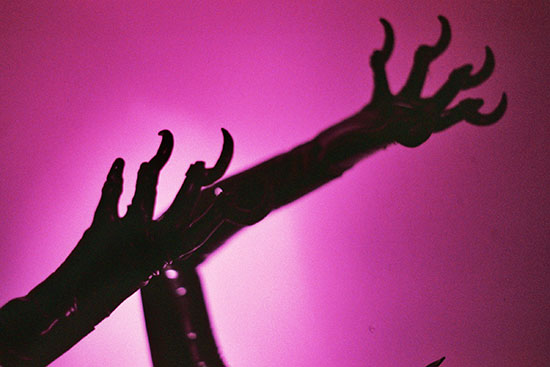
y me reoriento cuando sus garras apuntan
al cantero de la enredadera en el centro.
Oigo las ruedas detrás de mí,
luego ese sonido.
Reverbera
como ningún otro.
Sus largas alas negras
se elevan hacia el cielorraso
y después se lanzan hacia adelante.
La visión felina examina cada detalle,
cada cambio,
cada anhelo.
¿Puede el deseo licuar tus músculos?
¿Puede actuar más dulce que el
tranquilizante más potente?

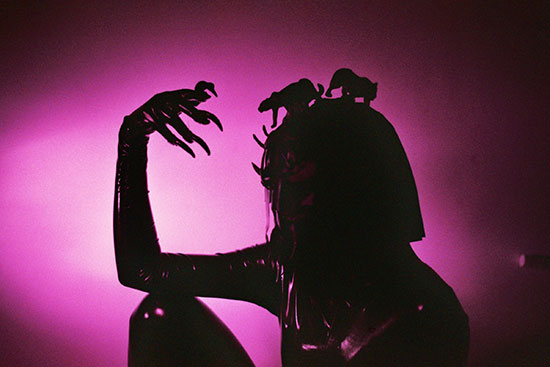
Un lince cose el mundo
a través de nuestras diferencias
tejiendo encaje alrededor de mis rodillas.
¿Puede el deseo aplastar la distancia del mundo, comprimiendo los segundos?
Se acerca todavía más,
el ojo de lince encontrando el ojo humano,
olfateando el aire,
convirtiendo al cuerpo en
urgencia.
Ellx agita sus alas.
Atizadas,
las lianas se enmarañan alrededor de mi cintura/residuo.
Su lengua adelgaza el tiempo,
moviendo los suelos,
calma, con su magia,
lo que se aviva debajo.
Veo el mundo en ti, y el mundo
está exhausto.
Entonces ellx suplica:
Déjame hacer de tí mi banquete.
Sanyu is a Pan-African feminist based in Nairobi, Kenya. She has spent the last decade supporting labour, feminist and human rights movements advocating for corporate accountability, economic justice and gender justice. She has worked with the Business & Human Rights Resource Centre, IWRAW Asia Pacific and the Commonwealth Human Rights Initiative. She has a Master’s of Laws in Human Rights Law and a Bachelor’s of Laws from the University of Nottingham. Her writing has been published in the Business and Human Rights Journal, Human Rights Law Review, Open Global Rights, Open Democracy and more. In her free time, she loves walking in the forest and chasing butterflies.
Trauma is not the event; it is how our bodies respond to events that feel dangerous to us. It is often left stuck in the body, until we address it. There’s no talking our body out of this response – it just is.

Non, nous reconnaissons l’importance de votre travail, mais nous ne collectons pas les réponses fournies à titre individuel à l’heure actuelle.
Veena Singh es una isleña de Fiyi, feminista y mujer de color Nacida y criada en un pequeño pueblo rural de Fiyi, su fuerza proviene de su rica herencia mixta (su madre es una mujer fiyiana indígena y su padre es fiyiano de ascendencia India). La identidad y las experiencias vividas de Veena han influido profundamente en su compromiso con la justicia, la equidad y la inclusión. Con más de dos décadas de experiencia en derechos humanos, igualdad de género, desarrollo comunitario e inclusión social, Veena es una activista apasionada por la reconfiguración del poder para crear un cambio transformativo y construir una «economía de la amabilidad» Su trabajo se expande por diversas áreas que incluyen: desarrollo comunitario, mujeres, paz y seguridad, políticas sociales, derechos humanos y defensa de políticas.
Veena está profundamente comprometida en hacer avanzar la inclusión, la paz y la justicia, los derechos sexuales y por la justicia reproductiva (SRHR, por sus siglas en inglés), la justicia climática y los derechos humanos. Aporta un gran acervo de experiencia trabajando con redes de base, organizaciones internacionales e instituciones gubernamentales, siempre con foco en los abordajes locales y liderados por la comunidad y los principios feministas.
Fuera de su ‘vida de oficina’, Veena es activista por el medio ambiente, defensora de la salud mental y escritora. Es la mamá de 11 gatos, se viste con sari y es amante del correo postal y las postales. Como observadora atenta de los movimientos feministas en Fiyi y el Pacífico, Veena está en un recorrido personal para «decolonizar la mente y el yo a través de la autoreflexión radical» Sobre todo, la impulsa el deseo y el sueño de producir una escritura convocante y resonante que conecte con la diáspora del Pacífico y difunda las voces de los márgenes.
Unless there are accessibility issues and/or you are filling the survey in other languages, we strongly encourage you to use KOBO for WITM standardized data collection and analysis.
Avec plus de 30 ans d'expérience en finance, Christine a consacré sa carrière à développer les missions non lucratives à l'échelle mondiale. Ses contributions vont jusqu’au poste de trésorière du conseil d'administration d'une ONG. Christine a rejoint l'AWID en 2007 comme contrôleuse, puis en tant que directrice des finances depuis 2023. Pendant son temps libre, elle aime voyager, jardiner et faire de la randonnée.
جلسة عامة | إنّها قادمة: بدائل وأشكال متعددة من النسوية وعالم آخر
مع د. فاندانا شيفا ود. ديلار ديريك ونانا أكوسوا هانسو